A bad argument from a good man

Grace Community Church, where John MacArthur serves, has released a statement announcing its intent to defy California’s latest rollback of church gatherings due to concerns of a resurgent COVID-19.

The statement is a disaster.

If MacArthur wishes to defy the California government, he needs to do better than this. Here are some relevant excerpts:

As pastors and elders, we cannot hand over to earthly authorities any privilege or power that belongs solely to Christ as head of His church. Pastors and elders are the ones to whom Christ has given the duty and the right to exercise His spiritual authority in the church (1 Peter 5:1–4; Hebrews 13:7, 17)—and Scripture alone defines how and whom they are to serve (1 Corinthians 4:1–4). They have no duty to follow orders from a civil government attempting to regulate the worship or governance of the church. In fact, pastors who cede their Christ-delegated authority in the church to a civil ruler have abdicated their responsibility before their Lord and violated the God-ordained spheres of authority as much as the secular official who illegitimately imposes his authority upon the church.

He continues:

History is full of painful reminders that government power is easily and frequently abused for evil purposes. Politicians may manipulate statistics and the media can cover up or camouflage inconvenient truths. So a discerning church cannot passively or automatically comply if the government orders a shutdown of congregational meetings—even if the reason given is a concern for public health and safety.

MacArthur explains:

When officials restrict church attendance to a certain number, they attempt to impose a restriction that in principle makes it impossible for the saints to gather as the church. When officials prohibit singing in worship services, they attempt to impose a restriction that in principle makes it impossible for the people of God to obey the commands of Ephesians 5:19 and Colossians 3:16. When officials mandate distancing, they attempt to impose a restriction that in principle makes it impossible to experience the close communion between believers that is commanded in Romans 16:16, 1 Corinthians 16:20, 2 Corinthians 13:12, and 1 Thessalonians 5:26. In all those spheres, we must submit to our Lord.

Unfortunately, MacArthur made no substantive case, here.

In the New Covenant, without a Yahweh-mandated theocracy, we find precedent for defying the State in the Book of Acts. That volume shows the Church (1) being ordered to not preach the Gospel because the quasi-civil authorities do not like the Gospel, and (2) the Church refusing to obey (Acts 4:15-20).

In order to take advantage of this precedent, the Church must argue a local jurisdiction is acting in a way that fits the pattern. Specifically, persecution or otherwise discriminatory treatment because of religion. Of course, Luke is not on hand to take us into the minds of civil authorities, so we must use a “reasonable person” standard.

So, you must separate government directives into two broad categories of impetus for our context; (1) public health, and (2) persecution or otherwise discriminatory treatment because of religion. In order to trigger civil disobedience, a church must make a plausible case Scenario #2 is happening. In this, MacArthur has not succeeded.

He’s essentially advocating civil disobedience whenever a church disagrees with civil authorities. In fact, on his argument, why should any Christian ever obey his government? This logic is a blank cheque for anarchy, for those looking for it. I expected better from MacArthur.

What about Nevada?

Consider the situation in Nevada.

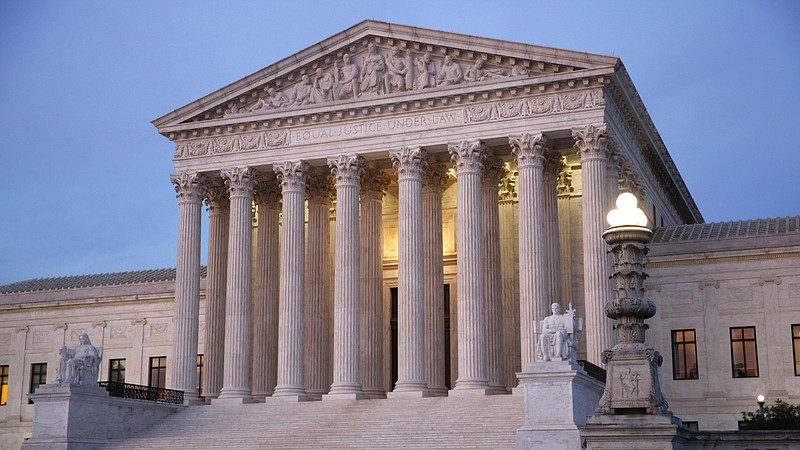
The Supreme Court (“SCOTUS”) declined last week to hear arguments from Calvary Chapel Dayton Valley alleging religious discrimination by the State of Nevada. Calvary Chapel sought to hold services with 90 people, with appropriate social distancing. However, Nevada restricts churches (and certain other institutions) to 50 people flat. But certain other public facilities, including casinos, are limited to 50% of the fire code capacity. Clearly, these are different metrics. When SCOTUS declined to hear the case, it let the lower court decision stand. In Justice Alito’s dissent, he noted:

The Constitution guarantees the free exercise of religion. It says nothing about the freedom to play craps or black-jack, to feed tokens into a slot machine, or to engage in any other game of chance. But the Governor of Nevada apparently has different priorities.

Claiming virtually unbounded power to restrict constitutional rights during the COVID–19 pandemic, he has issued a directive that severely limits attendance at religious services. A church, synagogue, or mosque, regardless of its size, may not admit more than 50 persons, but casinos and certain other favored facilities may admit 50% of their maximum occupancy—and in the case of gigantic Las Vegas casinos, this means that thousands of patrons are allowed.

That Nevada would discriminate in favor of the powerful gaming industry and its employees may not come as a surprise, but this Court’s willingness to allow such discrimination is disappointing. We have a duty to defend the Constitution, and even a public health emergency does not absolve us of that responsibility.

If I were in Nevada, I would give serious consideration to defying the State’s order. To return to California, if Grace Community Church feels it’s in an analogous situation, it should explain. Perhaps it cannot.

In short, MacArthur (et al) has made a bad argument. No doubt, some evangelicals will gleefully post it as though Christ has spoken and the matter is settled.

It is not settled.

Perhaps there is an argument to be made that churches can defy the California governor. John MacArthur just hasn’t made it. No Christian should rely on this statement as a basis for defying his State government. We must do better than this.

Return to California

In response to questions about what, precisely, has changed to warrant this reaction, Grace Community Church released a clarification appended to the original article. It reads, in part:

But we are now more than twenty weeks into the unrelieved restrictions. It is apparent that those original projections of death were wrong and the virus is nowhere near as dangerous as originally feared.

This appears to be the beginning of an argument for civil disobedience based on government incompetence. But, again, the examples from the Book of Acts show us quasi-civil authorities who order the Church to not preach the Gospel because they doesn’t like the message. We have no example of the Church disobeying civil authorities simply because it disagrees with public policy. If Grace Community Church believe otherwise, it ought to prove its case.

Still, roughly forty percent of the year has passed with our church essentially unable to gather in a normal way. Pastors’ ability to shepherd their flocks has been severely curtailed. The unity and influence of the church has been threatened. Opportunities for believers to serve and minister to one another have been missed. And the suffering of Christians who are troubled, fearful, distressed, infirm, or otherwise in urgent need of fellowship and encouragement has been magnified beyond anything that could reasonably be considered just or necessary.

To be sure, this is hard. Every pastor feels it. But, is there really nothing that can be done? A full, corporate worship service in your auditorium is the only solution to this problem? You can’t do visitation? You can’t have smaller gatherings in homes? You can’t have outdoor services?

Major public events that were planned for 2021 are already being canceled, signaling that officials are preparing to keep restrictions in place into next year and beyond. That forces churches to choose between the clear command of our Lord and the government officials. Therefore, following the authority of our Lord Jesus Christ, we gladly choose to obey Him.

If MacArthur believes California is doing this to deliberately target religious institutions, then he must provide evidence. If he has none, then he’s encouraging any Christian on earth to disobey the State whenever he disagrees or otherwise finds civil authority inconvenient. This is puzzling coming from MacArthur, who believes (rightly, in my view) there was no biblical warrant for the Colonies to revolt against the British!

This is a terrible document. Too many Christians will accept it uncritically. Some of them will do so because they’re anxious for theological cover, any cover, to justify what they already want to do. Others, perhaps some of the same, will be moved by conspiracy theories or animated by political animus. Given MacArthur’s stature in the evangelical world, the bad arguments here are particularly disappointing. Even worse, MacArthur encourages you to “add your signature to the statement,” regardless of whether California’s civil context is your own.

I shall close with a summary from Phil Johnson, of Grace Community Church, made in the context of a dispute with Mark Dever about a 9Marks article which disagreed with the decision:

This is not an argument that triggers Scenario #2. Again, I say it’s possible there is an argument to be made for civil disobedience in California’s context. MacArthur just hasn’t made it.

Read the statement here.

Godspeed, Dr. Houghton!

Dr. Myron Houghton, longtime Chair of Theological Studies at Faith Baptist Bible College and Seminary in Ankeny, IA, has passed away from complications from COVID-19.

Dr. Houghton was a legend in the more mature, balanced flavors of Baptist fundamentalism. His major written work was Law & Grace, which presented perhaps the most extensive and learned dispensational perspective on this issue yet in print. The publisher explains:

Law and Grace explores a misunderstood theological subject from several perspectives. After discussing Roman Catholic and Reformed views of law, gospel, and grace, the book uses an exposition of Romans to present a dispensational framework for distinguishing key theological concepts.

Pastors, church leaders, and ministry students will appreciate Myron Houghton’s thorough exegesis and practical applications, including practical advice on tithing, Sabbath keeping, and the believer’s responsibility to follow grace principles for godly living.

You can read several moving tributes to Dr. Houghton from former students and others:

I never met Dr. Houghton. I’ve read his Law & Grace twice, and need to read it again. I disagreed with it, and may well disagree again. However, his learned presentation of a dispensational view of the issue, and his more than fair representation of the other side, will likely never be equaled. In that respect, his work has and will continue to be rightly esteemed among dispensationalists like Alva McClain’s Greatness of the Kingdom.

I wish he’d written more. I wish I’d taken some theology classes with him.

A (unwelcome?) blast from the past

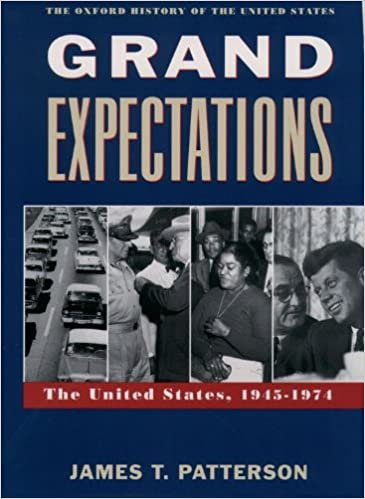
Here is another uncomfortable and disturbing excerpt about race relations in the post-war years from James Patterson’s wonderful book Grand Expectations: The United States 1945 – 1974, part of the famed Oxford History of the United States series:

By 1944 the protests of blacks—for Randolph and other leaders military desegregation was a top priority—had a modest effect on the armed services. The navy slowly moved toward integrated units. The army, at a loss for manpower during the Battle of the Bulge in December 1944, pressed blacks into combat, with positive results. But segregation persisted in the army, and racial tensions became intense.

“My God! My God!” army chief of staff General George Marshall exclaimed, “I don’t know what to do about this race question in the Army.” He added, “I tell you frankly, it is the worst thing we have to deal with. . . . We are getting a situation on our hands that may explode right in our faces.”

Though Marshall did nothing about the situation, he correctly assessed the more militant mood. A black Alabama corporal explained in 1945, “I spent four years in the Army to free a bunch of Dutchmen and Frenchmen, and I’m hanged if I’m going to let the Alabama version of the Germans kick me around when I get home. No sirreee-bob! I went into the Army a nigger; I’m comin’ out a man.”

Expectations such as these unavoidably sharpened racial conflict in the postwar South, where more than two-thirds of American Negroes still lived—mass migrations notwithstanding—in the late 1940s. There, little had changed since the late nineteenth century. Most southern blacks—at least 70 percent—lived in poverty in 1945.

Virtually everything remained segregated: schools, churches, parks, beaches, buses, trains, waiting rooms, restaurants, hotels, rest rooms, drinking fountains, and other public accommodations. All but a few white southerners believed theirs was the superior race, with a natural right to supremacy. Mississippi senator James Eastland, later to become an influential national spokesman for white racism, expressed this view without embarrassment in a wartime speech against the FEPC: “What the people of this country must realize is that the white race is a superior race, and the Negro race is an inferior race.”

Myrdal conceded that whites in the South “do not see the handwriting on the wall. They do not study the impending changes; they live again in the pathetic illusion that the matter is settled. They do not care to have any constructive policies to meet the trends.” Racist feelings promoted institutional discrimination and a virtual totality of white power. Deep South states in the early 1940s admitted almost no black lawyers, judges, or policemen.

Notwithstanding the Supreme Court decision against white primaries, Negroes in the lower South faced a range of ruses and outrages—poll taxes, impossibly designed “literacy” tests, violent intimidation—that deprived them of any voice in politics. The emblem of the Democratic party in Alabama (Republicans did not matter) was a lusty gamecock under a scroll that read WHITE SUPREMACY.

Resting very close to the surface of these white concerns, especially in the South, were complicated feelings about sex between the races. There was irony here, of course, for white men continued, as they had throughout American history, to demand sexual favors from economically and legally defenseless black women. Miscegenation was the great open secret of sexual life in the South. But state laws criminalized interracial sex as well as racially mixed marriages. (Until 1956 Hollywood’s Motion Picture Code forbade interracial marriage to be shown; no black man embraced a white woman on screen until 1957.)

And woe to black men in the South who seemed too friendly with white women. By 1945 whites less often retaliated against such behavior by lynching—there were nineteen reported lynchings of Negroes between 1940 and 1944, compared to seventy-seven between 1930 and 1934 and forty-two between 1935 and 1939—but all black American men knew that white violence was an ever-present possibility following any kind of “uppity” behavior, no matter how exaggerated by whites, especially if it was thought to threaten the supposed purity of southern white womanhood. Southern blacks who escaped violence, only to be brought to trial for such alleged offenses, faced all-white judges and juries and had virtually no possibility of justice.

Patterson, Grand Expectations, 24-25.

Uncomfortable Vignettes

I’m reading James Patterson’s volume Grand Expectations: The United States 1945 – 1974. The work is part of the acclaimed Oxford History of the United States series, which is perhaps the most authoritative historical survey available. Ditch your partisan sources and read some volumes in this series. It will open your eyes and make you a more responsible and informed citizen.

I wish to offer an excerpt from Patterson’s discussions of race in America in the post-war period. Specifically, the murder of Emmett Till in August 1955:

One of the most shocking incidents involved the killing in August of Emmett Till, a fourteen-year-old African-American boy who was visiting relatives in Tallahatchie County, Mississippi, an area that was two-thirds black and where no black person was on the rolls of registered voters or of juries. Till’s “crime” was to whistle at a white woman in a grocery store.

Hearing of the transgression—a taboo in much of the Deep South—the woman’s husband, Roy Bryant, and his half-brother, John Milam, drove to the sharecropper shack of Moses Wright, Till’s great-uncle, snatched Till, and drove off with him. Three days later Till was found dead in the Tallahatchie River. He had been shot in the head and tied to a cotton gin fan so that he would sink. His body was badly mangled.

Till’s mother, Mamie Bradley, had the body shipped back to Chicago, where she displayed it in an open casket for four days. Thousands of people paid their respects.

National media carried the story to the country. To the surprise of many Americans who understood what Mississippi “justice” was like in such cases, Bryant and Milam were actually arrested and charged with murder. The trial, which took place before crowds of reporters, took place in September. But it was heard before an all-white all-male jury and was a charade and a circus.

The sheriff greeted black people attending the trial with “Hello, niggers.” Blacks, including reporters, were segregated in the courtroom. Wright courageously testified and identified Bryant and Milam as the abductors.

But the defense attorney played openly to local white prejudices, reminding the jurors in his summation, “I am sure that every last Anglo-Saxon one of you has the courage to free these men.” The jury took only an hour to deliver verdicts of not guilty. “If we hadn’t stopped to drink pop,” a juror explained, “it wouldn’t have taken that long.”

A grand jury, ignoring Wright’s eyewitness account, later declined to indict Bryant and Milam for kidnapping; their bail was returned, and they went free. Wright dared not return to his shack, moved to Chicago, and never came back home.

Patterson, Grand Expectations, 395-396

1: The Age of Zealots

1: The Age of Zealots

This article is a short preface to my forthcoming series about critical race theory (“CRT”). This series will offer some reflections about CRT based on a chapter by chapter analysis of this primer written by CRT advocates.

But, first, I offer this observation. CRT can be a religion.

People are very, very religious. Don’t let secularism fool you. It’s a religion, too. Everybody has a religion. You may have seen statistics that say there is a rise in people who claim no religious affiliation. Those statistics are misleading. Religion is alive and well. It’s just a different kind of religion that’s thriving. The religious economy has changed, but it’s still kicking.

Why do I say CRT can be a religion? Why do I say there are lots of religions floating around in the petri dish that is the secular West? Why do I believe that even Communism, as articulated by Marx and Engels in The Communist Manifesto, is a religion?

Well, it begins by explaining what religion is. For that, I offer you the words of two sociologists and a well-respected theologian:

  1. Kerry Ferris and Jill Stein (The Real World: An Introduction to Sociology, 6th ed. [New York: W.W. Norton, 2018], 313) explain that religion is “any institutionalized system of shared beliefs and rituals that identify a relationship between the sacred and the profane.”
  2. Rodney Stark (Sociology, 10th ed. [Belmont: Wadsworth, 2007], 388-389) defines religion as “any socially organized pattern of beliefs and practices concerning ultimate meaning that assumes the existence of the supernatural.”

Millard Erickson, a Christian theologian, offers some complementary thoughts. Religion, he explains, is:

belief or doctrine, feeling or attitudes, and a way of life or manner of behaving. Christianity fits all these criteria of religion. It is a way of life, a kind of behavior, a style of living. And it is this not in the sense of merely isolated individual experience, but in giving birth to social groups. Christianity also involves certain feelings, such as dependence, love, and fulfillment. And Christianity most certainly involves a set of teachings, a way of viewing reality and oneself, and a perspective from which all of experience makes sense.

Christian Theology, 3rd ed. (Grand Rapids: Baker, 2013), 6. Emphasis added.

These are all very helpful; particularly Erickson’s insistence on religion as a prism to understand reality. Here’s what we learn from these definitions about religion:

  1. An organized system
  2. with beliefs, rituals and practices
  3. that explains the relationship between the sacred and the ordinary,
  4. provides the basis for ultimate meaning and purpose,
  5. acts as a prism to interpret and explain reality,
  6. and identifies a particular deity or ideology as a Sacred object of worship.

You’ll notice I adapted Stark’s insistence on the supernatural (which, for him, is key to religion [Sociology, 389]; contra. Ferris and Stein) in criteria #6. I think this is a very good definition that anybody can understand.

Now, perhaps you can see why many flavors of religion are alive and well. CRT can be one such religion, but that’s the sterile name for it. The populist version of this CRT religion is anti-racism which, ironically, can be racist to its core. It’s particularly alive in the streets of our cities, in our universities, amongst our politicians and in our local, state and Federal governments.

Writing for National Review (06 July 2020), Kyle Smith penned an article titled “The White-Guilt Cult” that accurately summarizes the religious nature of the worst elements of this new McCarthyism that has captured the West. Here’s some teasers:

Anti-racism is the most critical element of a broader new Woke Orthodoxy whose other elements include environmental apocalypticism, feminism, and a severing of sexual identity from genetic indicators. Settling on a term for the new religion will take some time. Wesley Yang’s suggestion (seconded by Ross Douthat) of “the Successor Ideology” is clunky, anodyne, and a bit euphemistic given the righteous, roiling fervor and unnerving credulousness that define the cult. As Dmitri Solzhenitsyn writes in National Review Online, a YouTube prankster named “Smooth Sanchez” who walks the streets of New York demanding that white people kneel before him and declare their privilege receives surprising compliance, even as he signals his charlatanry by referring to George Floyd as “George Foreman.” 

Ben Shapiro notes astutely that the new woke religion rushes in to fill a “God-shaped hole” in secular hearts. Devotees immerse themselves in the sacred texts of Ta-Nehisi Coates and Ibram X. Kendi (né Ibram Henry Rogers of Queens), books designed to make white wokesters writhe with a kind of ecstatic anguish. Indoctrination in early childhood is taken up as a parental duty (Kendi’s new board book for toddlers, Antiracist Baby, is a hot seller), parishioners engage in ritualistic incantation of sacred phrases (“Hands up, don’t shoot,” “I can’t breathe”), and there are mass displays of penitential self-abasement. All over the country, guilty white crowds have gathered to reenact the circumstances of George Floyd’s horrifying death. Scores, even hundreds, of parishioners in the new faith prostrate themselves on the ground, hands behind their back, repeating “Mama” and “I can’t breathe.” Sometimes police officers joined these displays, kneeling or prostrating themselves for the sanctified period of time: eight minutes, 46 seconds. Floyd’s death is a kind of new Crucifixion, his final words the new “My God, my God, why have you forsaken me?”

An objective observer of the madness of 2020 would likely concede the quasi-religious overtones of this movement, whatever one thinks of its merits. The National Museum of African American History and Culture somehow managed to summarize the ideological content, the divine revelation, of this new anti-racism religion in its unfortunate article entitled “Whiteness.” This racist screed culminated in a truly horrifying PDF chart which purports to showcase systemic white racism baked into our culture:

This is an ideology; a religion. It’s a racist and warped prism that interprets reality. It’s been popularized most recently and explicitly in corporate boardrooms and in government human resources offices by Robin DiAngelo’s White Fragility and Ibram Kendi’s How to be an Anti-racist.

I’ll tackle the first chapter of the CRT primer in the next article. For now, it’s enough to understand that religious zealots are still with us. Their religion is just a bit different, that’s all. And, like all zealots, they sully the moderates who have legitimate points to make.

5: Bostock and Wile Coyote

5: Bostock and Wile Coyote

Read the series about Bostock v. Clayton County.

The most important thing to know about Bostock is that it demonstrates the pillars of Western society no longer have anything anchoring them to reality. When your way of interpreting the world isn’t tied to a real, concrete revelation that explains reality, then you slowly drift away from the shore into madness.

Think of revelation as the eyeglasses that allow you to see the world and understand it. Now, think of the shoreline as reality. Then, think of that line holding your boat fast to the dock as the lifeline that connects you to reality.

In the West, we have cut the line and smashed the eyeglasses. We’re drifting away from the shore. At first, our boat bobbed aimlessly pretty close to the dock. That went on for several decades. But, we’ve now edged ever further away and the current has us. The dock is gone. The shoreline is gone.

We’re in the open sea. We’re done.

That’s what Bostock shows us. This Court decision is that last speck of land fading from sight as the horizon flattens into nothingness. It’s when we realize that this is really happening. We really are alone.

Let me explain.

You’ll recall, from the last article, that Bostock’s attorney at oral arguments made the case that Title VII includes discrimination “because of … sexual orientation” because Clayton County, by terminating Bostock allegedly because he was a homosexual, was penalizing him for not fulfilling stereotypes about what it means to be a man.

Justice Ginsburg knows the framers of Title VII did not understand “sex” to include “sexual orientation.”

Ms. Karlan -Ms. Karlan, how do you answer the argument that back in 1964, this could not have been in Congress’s mind because in –in many states male same-sex relations was a criminal offense; the American Psychiatric Association labeled homosexuality a –a mental illness?

Transcript of oral arguments; 6:13-19

Bostock’s attorney, Pamela Karlan (“Attorney Karlan”), pivoted to precedent; particularly Price Waterhouse v. Hopkins (see the last article for context). The Court has already expanded “sex” to include sexual harassment. It’s also expanded it to include discrimination for failure to live up to stereotypes about sex (Oral arguments; 6:20 – 7:10). This is what happened to Bostock, Attorney Kaplan says.

She goes further, too. She declares:

Title VII was intended to make sure that men were not disadvantaged relative to women and women were not disadvantaged relative to men.

Oral arguments; 7:21-24

She frames it this way on purpose. Now, quick as you please, she makes application to her client:

And when you tell two employees who come in, both of whom tell you they married their partner Bill last weekend, when you fire the male employee who married Bill and you give the female employee who married Bill a couple of days off so she can celebrate the joyous event, that’s discrimination because of sex.

Oral arguments, 7:25 – 8:6

Attorney Karlan wants to make Bostock about stereotypes. As I mentioned in the previous article, her argument goes like this:

  1. Men must only have sex with women.
  2. But, Bostock wants to have sex with men.
  3. This means Bostock fails to act like a man.
  4. Clayton County fired Bostock because he wasn’t acting like a man.
  5. So, Clayton County discriminated against Bostock because of sex; because he wasn’t acting as the County felt a man should act.

She’s only asking the Court, she claims, to make one more analogous extension of principle to read “sexual orientation” into “sex” in Title VII. However, as I explained in the previous article, words have meanings and discrimination “because of … sex” and “because of … sexual orientation” are completely different things.

But, even if we grant Attorney Karlan’s argument, we’re immediately confronted with a problem. With several problems:

  1. Who decides what a “stereotype” is?
  2. Who decides what is socially acceptable and what isn’t?
  3. And, if you don’t acknowledge an authority, a standard, a revelation that stands above our society, above our own personal preferences and opinions, then how can you possibly answer this question?

Attorney Karlan can’t answer that question. The Court asks her repeatedly. She can’t muster a coherent answer. She retreats to social customs. For example, people call her “Ms.” and assume her gender, “[b]ut that’s not discriminatory because neither of us has been subjected to a disadvantage,” (Oral arguments, 12:23-24). The key, she asserts, is that the victim must suffer an “injury,” (Oral arguments, 13:2-5).

But, who gets to determine whether an “injury” occurred? By whose standard? By the victim’s? Or, is there something objective, something concrete, something tangible that tells us what an “injury” is, so we don’t drown in subjectivism and hurt feelings?

Justice Gorsuch sees the conundrum, and asks her about it (Oral arguments, 13:12-15). Attorney Karlan again fails to answer. She explains, by way of example, that people “know” what is normal and what isn’t:

MS. KARLAN: So there’s no categorical rule about these. For example, the fact that all of the men sitting at counsel table knew that they had to wear ties today and I was free not to didn’t cause an injury. On the other hand, even the dissenters in the Second Circuit said, if the Court said women who come to argue should argue in Hooters outfits and the men should wear —

JUSTICE GORSUCH: — No —

MS. KARLAN: — ties —

JUSTICE GORSUCH: — we’re not – we’re not — I mean —

MS. KARLAN: I know.

JUSTICE GORSUCH: —we can talk absurd examples —

MS. KARLAN: No, but I can —

JUSTICE GORSUCH: —or we can talk real world examples.

Oral arguments, 13:16 – 14:9

Justice Gorsuch, who appears exasperated at this point by Attorney Karlan’s deliberately absurd strawman, gets to right to it:

JUSTICE GORSUCH: All right. What I’m –what I’m suggesting, counsel, is that there are male and female bathrooms, there are dress codes that are otherwise innocuous, right, most –most people would find them innocuous.

But the affected communities will not. And they will find harm. And how does your test deal with that one way or the other? That’s what I’m asking you to address, if you’d like to.

Oral arguments, 15:4-13. Emphasis added.

He gets it. How does Attorney Karlan avoid subjectivism? Where is the concrete test for “injury” in order to determine whether discrimination happened? Without it, you just have one person saying another person hurt his feelings! And, by what standard can we say, “No, that’s not good enough?”

Attorney Karlan has no answer. To be fair, no answer is possible.

MS. KARLAN: Yes. My test says that you have treated the people differently because of sex, which is what we are asking you to hold here. When you treat a gay man who wants to date a woman differently than a man –woman who wants to date a woman, that –that’s discrimination.

Oral arguments, 15:14-20

Yes, but who says the discrimination happened? How do you figure out whether what the stereotype is and whether the victim was fired for not living up to it? Is there some book, manual or pamphlet; some something that tells us what men and women are? What “sex” is?

Karlan then retreats behind the “reasonable person” concept and founders on the reef under Justice Gorsuch’s questions:

MS. KARLAN: Then you get to what I’ve said, which is you have to ask whether a reasonable person under these circumstances would be injured by the imposition of the particular sex-specific world. So when the Chief Justice calls me Ms., I am not injured. When I go to a –when I —

JUSTICE GORSUCH: You are not, but another —

MS. KARLAN: It –it —

JUSTICE GORSUCH: —person might be —

MS. KARLAN: Right. And the question —

JUSTICE GORSUCH: Are they reasonable or not? And –and I’m –I’m –I’m just -I’m wondering, how do you decide those cases?

MS. KARLAN: An idiosyncratic preference does not void an otherwise valid dress code or bathroom rule.

Oral arguments, 15:21 – 16:13

This is amazing. She doesn’t see it. Do you see it? Read it again.

How do you determine whether a “reasonable person” would be injured by the actions of the employer? By whose standard? What’s reasonable to one person might be pretty unreasonable to another. Attorney Karlan waves her hands and claims an “idiosyncratic preference” has no merit.

Again, who determine what that is? Society? 50 years ago transgenderism was more than idiosyncratic; it was perverse. Is this the route we ought to go? Whatever culture says is “good” is good? And, when culture changes than the laws need to change, too?

Attorney Karlan fares no better when Justice Sotomyor asks the same questions. I’ll quote the exchange in whole because it’s worth it:

JUSTICE SOTOMAYOR: But you’re begging Justice Gorsuch’s question. We were following up on the same thing —

MS. KARLAN: I truly am not trying to —

JUSTICE SOTOMAYOR: —which is —

MS. KARLAN: —beg the question.

JUSTICE SOTOMAYOR: —how do we differentiate the two? What is the legal test that you propose to say this is discrimination because of sex, as you said, calling you one thing and your friend another is discriminatory, but it’s okay because there’s no harm. So what’s the test we apply to, say, when it is harm and when it isn’t?

MS. KARLAN: Let –let me try to be clear.

JUSTICE SOTOMAYOR: Let’s be —

MS. KARLAN: It’s not discrimination to call me Ms. Karlan and to call Mr. Harris, Mr. Harris. It is –it is because of sex that we were treated differently.

But as this Court has made it clear several times, discrimination consists in an injury that the law is prepared to recognize. And generally across all statutes, this isn’t a Title VII, and this is why I’m really not begging the question here, the Court has said de minimis effects are exempted from statutes presumptively. So if this Court thinks or if another court —

JUSTICE SOTOMAYOR: So why —

MS. KARLAN: —thinks —

JUSTICE SOTOMAYOR: —is a dress code for Hooters that requires all women to wear a scantily –a scant dress, is that discriminatory?

MS. KARLAN: Yes, it is.

JUSTICE SOTOMAYOR: Is it discriminatory for the woman who just doesn’t want to wear it because it’s demeaning?

MS. KARLAN: Yes, it is.

JUSTICE SOTOMAYOR: So how about, is it discriminatory for the restaurant not to hire a transgender man who wants to wear the uniform?

MS. KARLAN: Well, you’re going to get —

JUSTICE SOTOMAYOR: The scant uniform.

MS. KARLAN: I –I mean, I do want to get to the question of sexual orientation

JUSTICE SOTOMAYOR: No, no, no —

MS. KARLAN: –here, but I understand –I understand.

JUSTICE SOTOMAYOR: But I think what you’re alluding is, and I still haven’t heard —

MS. KARLAN: Yeah.

JUSTICE SOTOMAYOR: — the explanation, which is the question of how do we tell what’s actionable and not?

MS. KARLAN: Well, if —

JUSTICE SOTOMAYOR: At what –when does that discrimination become an issue?

Oral arguments, 17:15 – 20:2.

The line has been cut. The eyeglasses smashed. The boat has drifted away, been caught by the current, and has lost sight of land. Now that we’re adrift, we have nothing holding us to reality.

What is that objective standard, that anchor, that line holding us fast to the dock of reality? It’s God’s revelation to us, in the form of the Christian scriptures. Suffice it to say that morality can and will be legislated. Always has and always will be. Why else do you think it’s against the law to murder someone? The only question is which morality, and its claim for authority in our lives and in society. But, that’s an article for another time. For now, I leave you with this article outlining the Christian mission to this secular age.

In the next article, we’ll examine Justice Gorsuch’s opinion.

4: Bostock’s bad blunders …

Read the series so far.

As we consider the oral arguments, let’s reset and consider what Bostock is all about. It’s always refreshing to set aside the rhetoric, the passion and the partisanship and just look at the text of the statute. It clarifies things. Makes them simple.

Note: I’m not concerned with the conventions of American legal interpretation. I’m writing as a sane layperson who has spent his life in law enforcement and investigations, in criminal and civil contexts in both Federal and State government.

The point at issue is whether Clayton County, by allegedly firing Bostock because he was a homosexual, violated Title VII of the 1964 Civil Rights Act. So, the very first thing is to look at what the statute says. Here’s what it says:

EMPLOYER PRACTICES It shall be an unlawful employment practice for an employer

(1) to fail or refuse to hire or to discharge any individual, or otherwise to discriminate against any individual with respect to his compensation, terms, conditions, or privileges of employment, because of such individual’s race, color, religion, sex, or national origin; or

42 USC 2000e-2(A)

That’s it. It all comes down to that. Remember this.

The linchpin of Bostock’s argument is that you can’t separate discrimination “because of … sex” from discrimination “because of … sexual orientation.” Of course, the phrase “sexual orientation” is not in the text. Bostock argues that we must read it into “sex.”

In a previous post, I explained how to understand what, exactly, the phrase “discrimination because of sexual orientation” means. You may think you understand. After all, doesn’t everybody?

No. We can’t assume anything. We must define our terms. This is the way it works with these things. Interestingly, Bostock doesn’t try to define the phrase. Not in the petition. Not during the oral arguments. The phrase just exists as this … thing. I’m not sure whether this is deliberate. I’m surprised Clayton County didn’t define it either. I think it would have helped. Neither did the Solicitor General on behalf of the U.S. Justice Department, in support of Clayton County.

So, here is a reasonable way to understand “discrimination because of sexual orientation:”

Cobbling together the relevant OED definitions for “sex,” “orientation” and “discriminate,” we can construct an objective definition for “discrimination because of sexual orientation” as something like this:

treating a person in an unfair or prejudicial manner (OED, s.v. “discriminate,” v., 4) because of his emotional attitude and appetite with respect to sexual partners (see OED; s.v. “orientation,” n., 3).

This is a fair and conclusive definition of the concept at issue in Bostock, whose case hinges (in large part) on proving that discrimination “because of … sex” (i.e. being male or female; OED, s.v. “sex,” n., 1a, 2) is analogous to discrimination “because of … emotional attitude with respect to sexual partners.”

Words have semantic domains or broad ranges of meaning. The right meaning of a word depends on context. Some may attempt to interpret “discriminate” in Bostock’s context as something innocuous, perhaps merely to differentiate or distinguish (OED, s.v. “discriminate,” v., 1). This will not do. The context for Title VII is to treat a person or group in an unjust or prejudicial manner, which is why I selected the definition I did (OED, s.v. “discriminate,” v., 4).

Now, we get down to it. Bostock argues:

When a employer fires a male employee for dating men but does not fire female employees who date men, he violates Title VII. The employer has, in the words of Section 703(a), discriminated against the man because he treats that man worse than women who want to do the same thing. And that discrimination is because of sex, again in the words of Section 703(a), because the adverse employment action is based on the male employee’s failure to conform to a particular expectation about how men should behave; namely, that men should be attracted only to women and not to men.

Oral Arguments, 4:13-25. Emphasis added.

This is the argument:

  1. Men must only have sex with women.
  2. But, Bostock wants to have sex with men.
  3. This means Bostock fails to act like a man.
  4. Clayton County fired Bostock because he wasn’t acting like a man.
  5. So, Clayton County discriminated against Bostock because of sex; because he wasn’t acting as the County felt a man should act.

Bostock hangs its hat on the precedent in Price Waterhouse v. Hopkins (1989), in which a woman claimed she was denied a partnership at a law firm because she didn’t act like a prototypical woman. Specifically, one superior advised the woman in Price that, if she wanted to improve her chances to make partner:

Hopkins should “walk more femininely, talk more femininely, dress more femininely, wear make-up, have her hair styled, and wear jewelry.”

In that case, the U.S. Supreme Court ruled that sex stereotyping was discrimination “because of … sex” under Title VII of the 1964 Civil Rights Act:

Discrimination against an employee on the basis of sex stereotyping–that is, a person’s nonconformity to social or other expectations of that person’s gender–constitutes impermissible sex discrimination, in violation of Title VII of the Civil Rights Act of 1964.

In the same way, Bostock argues, his termination was also because of his failure to conform to societal expectations about his gender; specifically, that as a man he must only have sex with women. As a homosexual, he obviously does not comply with this “stereotype” and was thus discriminated against by Clayton County when it fired him:

when a man is discriminated against for being gay, he is discriminated against for not conforming to an expectation about how men should behave.

Oral Arguments, 5:20-23

There is much more, and I’ll cover it in the next article. But, this is the essence of the argument. There are several problems here.

Different words. Discrimination “because of … biological sex” (OED, s.v. “sex,” n., 1a, 2) is not the same thing as discrimination “because of … emotional attitude with respect to sexual partners” (see OED, s.v. “discriminate,” v., 4; s.v. “orientation,” n., 3). They are completely different. The words don’t lie. They mean something. In this case, they mean different things.

Different concepts. It’s true that both scenarios involve a gendered individual. But, discrimination “because of … sex” happens because of a biological status (OED, s.v. “sex,” n., 1a). It is to treat someone in an unjust and prejudicial manner (OED, s.v. “discriminate,” v., 4) because of the nature of his reproductive functions. Orientation, however, is about one’s emotional attitude and feelings with respect to sexual partners (OED; s.v. “orientation,” n., 3). These are completely different concepts.

Must prove intent. If it’s a violation to discriminate “because of … sex,” then someone must prove intent. What does “because of” mean? It means that the discrimination happened because of biological sex. There may well be other factors at play. But, in some form or fashion, the termination must have happened because of sex. Bostock’s case should not have been considered unless he could prove specific intent “because of … sex” in Clayton County’s termination. It doesn’t matter that it’s hard to prove which one happened; if anything even “happened” at all. That’s why the burden of proof is on the accuser. If Bostock wishes to tie the two together, he must prove they’re the same thing. They’re not. This leads us to the next problem.

No standing. In order for this case to have any merit, Bostock must prove the following:

  1. That a discrimination occurred. If the word “discriminate” is not defined by the statute, Bostock should have used an authoritative lexicon such as OED, s.v. “discriminate,” v., 4 to define his terms.
  2. That Clayton County committed this discrimination.
  3. That Clayton County committed this discrimination against Bostock because of his sexual orientation.
  4. That “sexual orientation” is reasonably analogous to the term “sex.” Again, if the statute did not define these terms, Bostock should have used the OED (or another authoritative lexicon) to define these terms and show they’re analogous.

If Bostock had proven these elements, he could have plausibly demonstrated that Clayton County violated Title VII of the 1964 Civil Rights Act.

None of this happened. At best, Bostock attempted to argue #4. He did this badly and superficially. It’s difficult to understand why this case ever arrived at the U.S. Supreme Court. The attorney who argued Bostock’s case during oral arguments, Pamela Karlen, betrayed a superficial understanding of the issue in response to probing questions from the Court during oral arguments. We will turn to that in the next article.

I’ve made these arguments in a rather detached, clinical way. I haven’t even brought reality, as defined by the Christian scriptures, into this discussion. I’ll do that once I finish the series. For now, it’s enough to see the bankruptcy of Bostock’s argument.

Against Christian nationalism

In the latest issue of Christianity Today, one article deals with Christian nationalism by surveying three books on the phenomenon. The article offers up about as good a summary of the plague of Christian nationalism in America that I’ve yet seen:

… a movement committed to preserving its own privilege and power, favoring the interests of native-born white people over immigrants and ethnic minorities, and using legal authority to impose a Christianized moral order.

The article explains:

In the mid-2000s, it was fashionable among journalists and academics to worry that America was on the verge of becoming a theocracy. Conservative white evangelicals had fueled the election of George W. Bush and helped turn Mel Gibson’s The Passion of the Christ into a box-office smash. They seemed poised for renewed political and cultural dominance. And so books and articles poured forth warnings about the peculiar dangers of “Dominionism,” “Christian Reconstructionism,” and various other movements conspiring to impose Christian beliefs on an unsuspecting populace.

This narrative came crashing down with the election of Barack Obama. Almost overnight, fears of America descending into a theocracy evaporated. Pundits began forecasting the death of the Religious Right, and the same evangelicals who had helped propel Bush to power spent the next eight years playing defense. More and more, they saw themselves not as ascendant governing partners but as targets of a crusading secularism.

And then Donald Trump broke everything. His surprising election, enabled in part by white evangelical support, reawakened fears that religious conservatives would mobilize underneath a theocratic banner. Margaret Atwood’s 1985 novel The Handmaid’s Tale, which imagines a fundamentalist dystopia where women are forced to breed, enjoyed a second life repurposed as a Trump-era cautionary tale (and a hit Netflix series).

Yet the idea of America descending into a genuine theocracy lacked the same surface plausibility it had during the Bush years. Though white evangelicals enthusiastically carried Trump into the White House, his lack of personal piety made him an unlikely candidate to preside over a thoroughly Christianized commonwealth. Nor, by and large, did his evangelical supporters mistake him for a godly statesman. Rather than King David, Trump was Cyrus, the pagan Persian emperor who, after conquering Babylon, allowed the Israelite captives to resettle in their homeland and rebuild the temple in Jerusalem.

Still, with Trump in office, the political fortunes of religious conservatives appeared to improve. This set the stage for a new journalistic and academic preoccupation: uncovering why white evangelicals flocked so fervently to Trump. The books and articles that typify this genre still feature concerns about conservative Christians manipulating the levers of power. But with the specter of full-dress theocracy having dimmed—and with Trump styling himself more as a champion of American greatness than a vindicator of the faith—attention has shifted to a distinct but overlapping phenomenon: Christian nationalism.

There is a generational shift in conservative Christianity. Older Christians, who lived through the heyday of the Religious Right, Jerry Falwell, Sr., James Dobson and the Moral Majority, are often confused about why younger Christians (including younger pastors) don’t echo the Christian nationalism that arguably had its last meaningful victory in the second election of George W. Bush. Some argue that Christian nationalism had its most grotesque perversion of principle in the election of Donald J. Trump.

Russel Moore explained some of this generational shift in his 2015 book Onward:

The typical younger pastor is less partisan than his predecessor, less likely to speak from the pulpit about “mobilizing” voters and “reclaiming Judeo-Christian values” through political action and economic boycotts. This is not because he is evolving leftward. It is because he wants to keep Christianity Christian. As a matter of fact, the center of evangelical Christianity today is, theologically speaking, well to the right of the old Religious Right.

It’s true that the typical younger pastor of a growing urban or suburban church doesn’t look like his cuff-linked or golf-shirted forefather. But that doesn’t mean he’s a liberal. He might have tattoos, yes, but they aren’t of Che Guevara. They’re of Hebrew passages from Deuteronomy.

His congregation’s statement of faith isn’t the generic sloganeering of the last generations’ doctrinally oozy consumerist evangelical movements, but is likely a lengthy manifesto with points and subpoints and footnotes rooted in one of the great theological traditions of the historic church …

He is pro-life and pro-marriage, although he is likely to speak of issues like homosexuality in theological and pastoral terms rather than in rhetoric warning of “the gay agenda.” Unlike the typical Bible Belt congregation of the twentieth century, the new kind of evangelical church has strict membership requirements, both in terms of what it takes to enter the believing community and what it takes to say there. There aren’t likely to be four-year-olds baptized after repeating sinner’s prayers in a backyard Bible club, and the unrepentant often face what their parents never seemed to notice in their red-and-black-lettered Bibles: excommunication. If this is liberalism, let’s have more of it.”

Onward by Russell Moore; Kindle Location 363-377.

Amen to all that.

Good advice from a guy who oughta know

William Still was pastor of the same church in Scotland for 52 years. He died in 1997. He wrote a little book titled The Work of the Pastor. In it, he wrote the following:

Make sure you are called to the ministry, because the world gets worse and worse, and if ever there was a day when an evangelical minister could become a conventional member of society and fulfil a merely social role or occupy an official status, it is not today.

In which land is the church not in a real missionary situation as pilgrims and strangers in an alien, enslaved world? Even places with a rich evangelical heritage can take nothing for granted. When the superficially evangelistic community exhausts the solid biblical capital it has inherited from its forefathers, what is there to fall back upon?

There is more likelihood that it will become increasingly worldly in ostensible attempts to maintain communication with the lost world than that it will be willing to be led back to a solid biblical diet by ministers called of God to give it what it needs and not what it wants.

You need to be called of God to stick out from a complacent, alien community like a sore thumb. Nor will you need to try to stick out. Just be faithful, and God will arrange it, and you will be the talk of the community, however self-effacing you try to be.

Work of the Pastor; Kindle Location 1164.

He also says this, which many American ministers who grotesquely marry a peculiar civil religion to the Word of God need to heed:

Because of the nationalisation of the church under Constantine, and the institutionalisation of it subsequently, she has failed to see that as a remnant church, gathering and building up a hidden Kingdom in an ever alien world, she is always in a missionary situation. The hope of the Christianisation of the state, or even the Christianisation of a complete community, is vain.

Work of the Pastor; Kindle Location 801.

Hoping in nothing

David Brooks has an opinion piece out this morning in the New York Times. It’s an excellent summary of the confluence of multiple crises hitting all at once.

There are five gigantic changes happening in America right now. The first is that we are losing the fight against Covid-19. Our behavior doesn’t have anything to do with the reality around us. We just got tired so we’re giving up.

Second, all Americans, but especially white Americans, are undergoing a rapid education on the burdens African-Americans carry every day. This education is continuing, but already public opinion is shifting with astonishing speed.

Third, we’re in the middle of a political realignment. The American public is vehemently rejecting Donald Trump’s Republican Party. The most telling sign is that the party has even given up on itself, a personality cult whose cult leader is over.

Fourth, a quasi-religion is seeking control of America’s cultural institutions. The acolytes of this quasi-religion, Social Justice, hew to a simplifying ideology: History is essentially a power struggle between groups, some of which are oppressors and others of which are oppressed. Viewpoints are not explorations of truth; they are weapons that dominant groups use to maintain their place in the power structure. Words can thus be a form of violence that has to be regulated.

Fifth, we could be on the verge of a prolonged economic depression. State and household budgets are in meltdown, some businesses are failing and many others are on the brink, the continuing health emergency will mean economic activity cannot fully resume.

Very good. I’ve been casting about, trying to sum up everything that’s been happening over the past few months. This about covers it all.

And yet … this article is also very sad. Like all who don’t know Christ, Brooks finds hope in an illusion. For him, it’s better government through the promises of Joe Biden:

Dealing with these problems is going to take government. It’s going to take actual lawmaking, actual budgeting, complex compromises — all the boring, dogged work of government that is more C-SPAN than Instagram.

I know a lot of people aren’t excited about him, but I thank God that Joe Biden is going to be nominated by the Democratic Party.

How sad. I don’t mean that in a nasty, social media sort of way. In that context, comments like this usually mean, “what an IDIOT!” That’s not what I mean.

I actually mean that this is sad; as in depressing. This is what Brooks looks to for a solution. It’s sad not because Brooks’ hope is in Joe Biden. It’s sad because this kind of naive hope is all you have when your framework for reality is anchored in the slime of transient things.

What’s your framework for understanding reality? For understanding this world and yourself? How do you make sense of (1) origins and (2) suffering, (3) what’s your hope to fix you and the world, (4) how will that actually happen, and (5) how will everything end? See my article about why these questions matter now, more than ever, here.

How sad it is if you look at the madness in the world and find hope in a politician. The Church’s job is to explain reality to the world; to explain things as they are to a people who’ve become deluded by the spirit of this mad age. The Christian faith and message has answers for each of the ills Brooks so ably summarizes in his article. It has better answers than faith in Joe Biden. It also has much, much better answers than faith in Donald Trump.

Thank God for that.