Good Book

bookIf you’ve traveled in Baptist fundamentalist circles, then you’ve likely encountered various flavors of King James Only-ism. This is a movement which, to a greater or lesser extent, promotes the King James Bible as the only English translation of the Scriptures for Christians to use.

I do not agree with this movement. I cannot support any movement which elevates a translation above the original Greek and Hebrew text.

If you prefer the Textus Receptus for the New Testament, that is lovely. Good men, like Kent Brandenburg, have written helpful books promoting this printed Greek text, which underlies the KJV, NKJV and the newer Modern English Version. If you prefer the Byzantine Text, fine. If you prefer the eclectic text, such as the UBS-5 or the NA-28, even better!

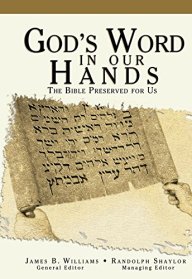
I wanted to recommend a good book about the preservation of Scripture to folks who may want some resources on this issue. What makes this volume unique is that is was written by fundamentalists for people in fundamentalist churches. Here is a synopsis:

The solid facts of the process by which the Bible has come to its present form are explained in detail. The book includes textual criticism of the existing manuscripts and autographs, including the Textus Receptus, the Majority, Eclectic, and Minority texts, and the Masoretic Text. It also provides needed answers to the arguments of those who adhere to extreme or exclusive positions. This book is excellent for pastors, teachers, and laypersons alike. It will prove that all conservative versions are, without a doubt, translations of the plenary verbally inspired Word of God.

The book is entitled God’s Word in Our Hands: The Bible Preserved for Us, and it costs 99 entire cents on Kindle. It’s written in an easy-going, conversational style. You can understand it. Buy it. Read it. Understand it. Use multiple English Bible versions to compare during your devotional reading. Grow in the Lord. 

Goodbye.                                                                   

Freedom!

I have been plugging away at my own translation and exegesis of Romans 8:1-4 for about a week or so now. I’m not quite finished, but I thought I’d post the translation anyway. It is a marvelous passage for all those who have been declared righteous by faith, and therefore “have peace with God through our Lord Jesus Christ,” (Romans 5:1-2). If you do not know this peace, please read about the Good News and find out how to have it.

rom-8-1-4

Response to Bro. Johnson (pt. 1)

Don Johnson was gracious enough to respond to the most pressing questions from my article entitled “Questions for Dan Unruh, John Vaughn and the FBFI from a Confused Brother.” This is my overdue response to continue this important discussion.

What is a Fundamentalist?

It is clear this issue of “Convergents” is an important one for some in the FBFI. Johnson wrote, “In my view, someone who is convergent is not a fundamentalist. He once may have claimed to be a fundamentalist, but he has changed his views and really exhibits disdain for fundamentalism now, regardless if he continues to claim the label.”

This cannot be more clear, and I appreciate it. If you are a “Convergent,” then Johnson does not consider you to be a fundamentalist. It doesn’t matter if a man still claims the label and travels in fundamentalist circles; if he exhibits the marks of a “Convergent” then he is not a fundamentalist. He is claiming membership in a movement he doesn’t actually belong to.

This naturally leads us to ask, “What on earth is a fundamentalist, in this context?” This is really the crux of issue. Before we start mentioning movements and assessing claims to titles, we need to understand what we’re talking about. Let me offer my own definition:

Fundamentalism is a philosophy of ministry characterized by a militant apologetic defense and passionate, unashamed proclamation of the Christian faith from the Scriptures in the face of pagan unbelief, liberal theology and compromise.

This is a mouthful, so here is the bottom line:

  1. If you believe the Bible and actively seek to defend it against unbelievers, liberal skeptics and theological compromise, and
  2. if you believe the Bible and seek to passionately and unapologetically proclaim all of it to the world, and
  3. if all this motivates and shapes your entire approach to Christian ministry and everyday Christian life,
  4. then you are a “fundamentalist.”

People within the fundamentalist realm will immediately recognize this as a “big-tent” definition of the movement. I suspect this is a dividing line for some people. Please note I did not make mention of the so-called “fundamentals” of the faith. This list of fundamentals came out of the 1878 Niagara Bible Conference, and was later shortened to the infamous “five fundamentals” of the faith:

  1. The virgin birth of Christ
  2. The inerrancy of the Bible
  3. Substitutionary atonement of Christ
  4. The bodily resurrection of Christ
  5. The authenticity of miracles

I don’t find this list particularly useful, because it creates an artificial hierarchy for Bible doctrines. For example, the Trinity is not even mentioned! Those who cling to “The List” as the defining document of the fundamentalist movement have actually got it backwards.

The fundamentalist “movement” grew out of the conflict with theological liberalism and apostasy in the mid to late 19th century. Bible believers were willing to stand and fight back against this liberalism and apostasy in Bible Colleges, Seminaries and local churches across America. During the course of this conflict, certain doctrines came to the forefront as particular “flash points.” The “list” arose out of this context, but it really reflects a basic fidelity to all of the Bible and a willingness to militantly defend the Scriptures and passionately and unapologetically proclaim what the Bible teaches.

This movement has always been interdenominational. Dr. Larry Oats provides this brief definition of the movement:[1]

Fundamentalism as a definable movement is the organization of primarily American Bible believers who between the late nineteenth century and the mid-twentieth century strongly opposed and resisted the progress of modernism within the major denominations of America and thus tried to keep those denominations orthodox.

From the middle of the twentieth century on, fundamentalism may be defined as those Bible believers who desire to maintain a purity of doctrine and personal life and stand in positional and doctrinal opposition to various forms of compromise.

Likewise, Dr. Fred Moritz has written:

 At its best fundamentalism is a ‘back to the Bible’ movement to proclaim and contend for the truth. Fundamentalism is therefore a theological and militant movement. It was interdenominational by definition. Fundamentalists also allowed each other latitude in the use of Bible versions and in their understanding of Calvinism and Arminianism.[2]

So, when we consider what Bro. Johnson has written, we need to understand where the other is coming from. Is a “fundamentalist” necessarily a Baptist, premillennial dispensationalist? I asked Bro. Johnson this question:

 Q: Do you believe in “big-tent” fundamentalism; that is, is this movement bigger than Baptists? If so, how do, how would these “big-tent” fundamentalists avoid being “Convergent” from your point of view.

This was his response:

Fundamentalism is a philosophy that transcends denominations. There are fundamentalists among the Presbyterians and among other groups, though the majority of fundamentalists today are probably Baptists. Convergence isn’t denominational, like the New Evangelicalism, it is a mood or philosophy that affects how the ministry is conducted, what issues and ideas are promoted, what actions are taken individually and through church ministries (assuming the convergent is in a leadership role in the church).

The most important way to avoid being convergent is to be committed to personal and ecclesiastical separation. That commitment will manifest itself in various ways, but the other marks I mention above will dissipate if that biblical commitment is made and applied consistently.

Bro. Johnson agrees fundamentalism is interdenominational. However, he zeroes in on a mood or philosophy which he believes is opposed to everything fundamentalism stands for. He believes this mood or philosophy is primarily characterized by ignoring the Bible’s commands for personal and ecclesiastical separation.

We appear to agree on what a “fundamentalist” is. It is an interdenominational movement which stands for Biblical truth against pagan unbelief and theological compromise. However, Bro. Johnson has also written that a “convergent” is not a fundamentalist. Therefore, we should expect his “marks of a convergent” to reflect some basic defection or capitulation to apostasy and/or theological compromise – the very thing the fundamentalist movement has always fought against.

If a Christian is not committed to personal separation from unholy influences, activities or associations, then he is in sin. If a local church does likewise, its leadership is in sin. It is certain that some men have left fundamentalism and “fled” to the broader evangelical sphere, jettisoning the doctrines of personal holiness and personal separation along the way. This is tragic, and it is wrong.

However, there are also other men who still identify themselves as fundamentalists, but who have made some common cause with the most conservative elements of right-wing evangelicalism. Larry Oats, a true authority on Baptist fundamentalism, has observed:

I suggest that a fifth stage [of the fundamentalist movement] is now present: the separation of conservative evangelicalism from the left wing of evangelicalism, along with the reunion of some elements of fundamentalism with the right-wing of evangelicalism.[3]

He is correct. Is this necessarily a “bad thing”? I suspect Bro. Johnson and many others agree that it is. It is unclear how, given his acknowledgement of a “big-tent” fundamentalism, the most conservative right-wing evangelicals should not simply be considered fundamentalists in philosophy and practice.

We will turn to that issue, and discuss Bro. Johnson’s “marks of a convergent,” in the next article.

Notes

[1] Larry Oats, “Fundamentalism and Evangelicalism,” unpublished class notes (Watertown, WI: Maranatha Baptist Seminary, n.d.).

[2] Fred Moritz, “Maranatha is Fundamentalist,” in Maranatha Baptist Theological Journal (MBTS 01:01), Spring 2011. 65.

[3] Larry Oats, The Church of the Fundamentalists (Watertown, WI: Maranatha Baptist Press, 2016), 68-69, fn. # 8.

The LXX as a Commentary

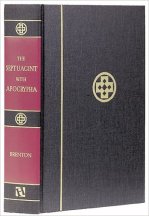
lxxThe LXX is an Roman numeral abbreviation which means “70.” It’s a shorthand way to refer to the Greek translation of the Hebrew Bible which Jesus and the apostles used and quoted from. Many of the Old Testament quotations the New Testament writers used did not come from the Hebrew translation. Many of them came from the Greek translation of the Old Testament. Verbatim. Exactly.

The LXX (also known as the “Septuagint”) is referred to this way because, allegedly, 70 translators worked on the translation from Hebrew into Greek. I recently picked up a copy of the LXX because I wanted a chance to study Greek a bit more, and because if this is the text Jesus and the apostles quoted from, then it would make sense to own a copy.

If you’ve done translation work, then you know it is difficult to resist putting a bit of interpretation into your translation. Sometimes this isn’t too bad an idea. For example, I’ve noticed that Mark often didn’t use Jesus’ actual name to refer to Him. He usually just wrote “he.” That means you’ll have an entire chapter (or two!) where Jesus’ name isn’t even mentioned. All you really have is “he . . . he . . . he . . . he.” Some translations clean this up a bit by throwing Jesus’ name into the mix occasionally. I don’t see anything wrong with that.

I noticed something interesting in Isaiah 42:1 from the LXX yesterday evening. Here is the English text:

Isaiah 42:1 “Here is my servant whom I support, my chosen one in whom I take pleasure. I have placed my spirit on him; he will make just decrees for the nations.

Christians understand Isaiah to be referring to Jesus of Nazareth. Got it. What does the LXX read? Behold the bit of commentary they tossed into their translation:

Ιακωβ ὁ παῖς μου ἀντιλήμψομαι αὐτοῦ Ισραηλ ὁ ἐκλεκτός μου

Jacob, my servant whom I will help; Israel, my chosen one . . .

How interesting! This gives us some insight into how the Israelites interpreted the Hebrew Bible during the inter-testamental period before Messiah came. They interpreted this Messianic passage to be referring to the nation of Israel. I haven’t done enough study in the LXX to know how much of a trend this is, but I’ve read elsewhere that it is very common.

It’s always a joy to stumble across something by accident and confirm something for yourself, rather than read about it in a book.

A Word from the Apostle John

Then the seventh angel blew his trumpet, and there were loud voices in heaven saying:

“The kingdom of the world has become the kingdom of our Lord and of his Christ, and he will reign for ever and ever.”

Then the twenty-four elders who are seated on their thrones before God threw themselves down with their faces to the ground and worshiped God with these words:

“We give you thanks, Lord God, the All-Powerful, the one who is and who was, because you have taken your great power and begun to reign. The nations were enraged, but your wrath has come, and the time has come for the dead to be judged, and the time has come to give to your servants, the prophets, their reward, as well as to the saints and to those who revere your name, both small and great, and the time has come to destroy those who destroy the earth.”

Revelation 11:15-18 (NET)

Repent and believe the Gospel.

Questions for Dan Unruh, John Vaughn and the FBFI from a Confused Brother

cover-pictureIn the September/October issue of Frontline magazine, the Fundamental Baptist Fellowship International (FBFI) published a number of articles critical of what it called a “Convergent” form of fundamentalism. One article in particular stands out for its bluntness and its tone. That article is entitled, “Why I Left My Fundamental Baptist Church,” by Dan Unruh, Pastor of Westside Baptist Church in Greeley, CO. The FBFI observed Bro. Unruh’s article was “provocative.” Indeed!

Bro. Uhruh published his article openly, so I feel free to openly post these honest questions to him, John Vaughn (President, FBFI) and to the FBFI as an organization as a whole. These are honest questions, asked without malice or scorn. They are sincere questions from one Christian brother to another. They are questions from one Pastor to another. If you do not travel in fundamentalist Baptist circles, these questions and the linked teaser editorial (above) may not make too much sense to you. My apologies; this post is very much an “in-house” discussion.

The following questions are directly based off of Bro. Unruh’s article.

  1. What, precisely, is a “Convergent” fundamentalist? That is, what are the “marks” of a “Convergent” fundamentalist? Could you provide real-world examples, including names of men and their ministries?

You wrote, “How is it possible for a church to get to the place that it is being controlled by those who seem to have little appreciation, and in some cases even disdain, for the strong separatist Fundamental position upon which it was founded?”

  1. Does this indicate your complaint is directed only against churches which were deliberately founded as “fundamentalist?” If so, please describe what “fundamentalism” looks like, from your point of view. Would a Bible Presbyterian Church, for example, fit this category?
  2. What do you mean when you mention “strong separatist Fundamentalism?” Separation from what people, what groups and what organizations?
  3. When does a Pastor begin to have “little appreciation” for the separatist stand you mention? That is, when is the line crossed, from your point of view?
  4. At what point does a Pastor begin to have “disdain” for “strong separatist fundamentalism?” That is, which alleged compromises must occur before this line is crossed?

You wrote, “Some of the answers may be found by comparing those doing the ‘controlling’ with the Old Testament character of Absalom. His father, David, after many years of great trials, hard work, numerous battles, and miraculous victories, was used of God to unite and establish the great nation of Israel. And yet that which took him years of blood, sweat, and tears to establish was taken away from him by someone very close to him who, ‘stole the hearts of the men of Israel’ (2 Sam. 15:6b). To this day when Bible students hear the name ‘Absalom,’ they associate it with a heart-stealer.”

  1. How, precisely, does a “Convergent” Pastor “steal” hearts within a congregation?
  2. Does the use of the word “steal” indicate you believe a “Convergent” Pastor’s actions are deliberately motivated by deception and wickedness?
  3. How do you tell the difference between Biblical reformation (as understood by the autonomous congregation and their Pastor) and alleged “heart-stealing”? How can your readers better understand your distinction? Your critics?
  4. Absalom deliberately rebelled against the anointed King of God’s theocratic Kingdom. In this parallel, do you intend to suggest “Convergent” fundamentalists are rebelling against Jesus Christ? If so, how?

You wrote, “The purpose of this article is not to warn the heartstealer but rather to warn those who are susceptible to having their hearts stolen—a warning that must oft be repeated even as the apostle Paul ‘ceased not to warn every one night and day with tears’ (Acts 20:31) about those of their own assembly who would arise to attract disciples to come behind them. If there were heart-stealers in David’s day and in Paul’s day, it is certain they exist today.”

  1. In the passage you cited from Acts 20:29-31, the Apostle Paul was warning the Ephesians about false teachers, “fierce wolves” who will teach “perversions of the truth.” This “truth” is generally understood to be a synonym for “the Gospel.” Do you intend to suggest “convergent” fundamentalists are false teachers who pervert the Gospel?
  2. Do you intend to suggest “heart-stealing” and influencing congregations away from a particular flavor of Baptist fundamentalism is a perversion of the Gospel?

You wrote, “A fitting lesson is provided in the story of Absalom, a man whose methods seemed to be virtues but were actually vices. Absalom employed at least four vices that had the face of virtues.”

  1. By comparing “Convergent” fundamentalists to Absalom, you seem to be implying that, like Absalom, “Convergents” are motivated by deceit, wickedness, and a sinful lust for power which they do not have any legitimate claim to – is this correct? If so, why do you assume this?

Under the heading “The Vice of Laziness as the Virtue of Integrity and Privilege,” you wrote, “Absalom therefore had the privilege of growing up with perceived integrity and surrounded by royalty, facts that he effectively used as a means to avoid having to face difficulty.”

  1. Is this alleged “vice” only applicable to “Convergents” who have grown up in Baptist fundamentalism, since childhood? What about “Convergents” who were never raised in a Christian home and became believers and entered Baptist fundamentalism as adults?

You wrote, “It is often observed that one who has a life of privilege strives to avoid work, struggle, and difficulty. One of the self-admitted characteristics of some of the misnamed ‘young fundamentalists’ is that they ‘are products of Christian schools’ and, as used in an illustrated case, ‘have no idea how to relate to lost people.’ Sadly, the spirituality they were perceived to have possessed from the privilege of having a lifetime of Christian education was also the cause of many of them being isolated from the difficulty of head-on confrontation with sin and brazen sinners, an adversity that previous generations of Fundamentalists met, with the welcomed reinforcement of their Fundamental churches, by having to take a noticeable stand in secular schools.”

  1. Again, it seems as if you are only targeting “Convergents” who were raised in Baptist fundamentalism. What about “Convergents” who came to Baptist fundamentalism as adults?
  2. What do you say to “Convergent” fundamentalists who work in the secular world every single day, maintain a godly testimony and Christian witness among these “brazen sinners,” and yet still honestly disagree with you? For example, as an insurance fraud investigator, I interview criminals on a daily basis, speak to victims on a daily basis who have had their life savings swindled from them, and still maintain a historic fundamentalist philosophy to ministry and my Christian life.
  3. Why do you capitalize “fundamentalist’? Does the movement function as a defacto denomination, from your point of view?

You wrote, “The fact that a lot of these privileged individuals did not have to challenge worldliness during their growing-up years may explain why today, as adults, they are so eager to experiment with and sometimes defend the beverage use of alcohol, accept any style of music in home and even in worship, join hands with rebels in so-called ‘social justice’ causes, consider the battles against sexual perversions as ‘lost,’ and generally poke fun at the practice of biblical separation that was so clear-cut to their predecessors.”

  1. Please explain what a “privileged individual” is, in this context.
  2. Again, it seems you assume all “Convergents” grew up in Christian homes. What do you say to “Convergents” who did not grow up as Christians, and yet still “challenge worldliness” in their own lives and in their local churches on a daily basis?
  3. Please explain who the “rebels” are, in this context.
  4. Which “social justice” causes do you refer to?
  5. Which self-identified “Convergent” fundamentalists consider the battles against sexual perversions as ‘lost’?
  6. How do you define “biblical separation,” in this context? Separation from what, precisely? What aspects of biblical separation do the “Convergents” poke fun at?
  7. Do you distinguish between the practice of biblical separation in general, and your particular implementation of this doctrine? That is, is it possible for men to believe in the doctrine of separation but apply it differently than you do?
  8. Have you, the FBFI, or Dr. Vaughn publically condemned the heresy of (for example) the re-inspiration view of the King James Bible, semi-pelagianism, or Charles Finney? If not, why not?

Under the heading, “The Vice of Hypocrisy as the Virtue of Transparency,” you wrote, “Absalom’s second vice was hypocrisy, a hypocrisy he concealed behind efforts to give the impression that he was transparent. Absalom did not state his intentions up front. He had a hidden agenda . . .”

  1. Do you mean to imply all “Convergent” fundamentalists are motivated by deceit and wickedness? Why do you appear to assume that is the case?
  2. Is it possible, from your point of view, to legitimately and honestly disagree with your position? If so, why do you appear to assume all “Convergent” fundamentalists are hypocritical?

You wrote about Absalom, “From this strategic location Absalom was able to send his spies throughout his father’s kingdom to incite a successful rebellion.”

  1. Do you mean to suggest all “Convergent” fundamentalists are strategically plotting to incite rebellions in local churches?
  2. What, precisely, is the alleged orthodoxy “Convergent” fundamentalists are inciting rebellion against? Where can one go to find a concise statement of this alleged orthodoxy to weigh suspected “Convergent” fundamentalists against?

You presented a hypothetical “unethical” Pastor, and wrote, “Instead of truly being transparent up front by honestly informing a church or institution about his philosophy of ministry and the changes he would make, a candidate for a leading position can couch his hidden agenda with boisterous talk of ‘transparency.’”

  1. Please explain what you mean by your hypothetical “Convergent” fundamentalist hiding his alleged “hidden agenda,” and provide real-world examples.
  2. Do you mean to suggest all “Convergent” fundamentalists deliberately hide their “hidden agendas” behind a smokescreen of alleged “transparency?” Why do you assume their motives are sinful?
  3. How would the reader you seek to influence distinguish whether a Pastor is motivated by (1) an ongoing spiritual growth and maturity through study and prayer, or (2) an alleged “hidden agenda” intended to deceive the congregation?

Under the heading, “The Vice of Conspiracy as the Virtue of Concern,” you wrote, “The fact that a heart-stealer cannot accomplish his work alone brings us to Absalom’s third vice: conspiracy with the virtuous face of concern. Absalom’s concern for his father’s subjects was a camouflage for the formation of a conspiracy.”

  1. Absalom was involved in a criminal conspiracy against God’s appointed theocratic King. In this parallel, do you intend to suggest that, by disagreeing with the FBFI, “Convergent” fundamentalists are engaging in a criminal conspiracy against Jesus Christ?
  2. One of the elements of the criminal offense of conspiracy is deliberate intent; the conspirators intend to collude together to commit an act they know to be against the law. Do you mean to suggest all who agree with “Convergent” fundamentalists, and disagree with the FBFI’s particular flavor of Baptist fundamentalism, are criminal conspirators in active rebellion against Jesus Christ and His Father’s law?

You wrote, “There are those within churches and institutions who are easily flattered into facilitating the installation of a heart-stealer . . . Any of these types of people are ripe fruit for the picking by the heart-stealer.”

  1. Do you mean to suggest all people within autonomous local churches and Christian institutions who agree with “Convergent” fundamentalists do so only because they have been deliberately seduced (i.e. “flattered”) by these “Convergents” for sinful reasons?
  2. Do you mean to suggest somebody who disagrees with the FBFI’s particular flavor of Baptist fundamentalism has sinful and wicked intent?

Under the heading, “The Vice of Craftiness as the Virtue of Patience,” you wrote, “Lastly, Absalom was a man of patience, a virtue that allowed him to craftily scheme for two years until he found opportunity to murder his half-brother Amnon.”

  1. The Merriam-Webster dictionary defines “crafty” as “clever in usually a deceptive or dishonest way.” Did you intend to suggest “Convergent” fundamentalists operate with a philosophy and mindset of deliberate dishonesty and deceptiveness? Why do you assume sinful intent?
  2. By use of the adjective “craftily,” did you intend to make an implicit comparison between “Convergent” fundamentalists and Satan as the serpent?

You wrote, “A heart-stealer never comes at his victim displaying who he really is. He will wear the garment of patience to make others think he has intentions of peace. And then once he is in power his patience morphs into impatience with those who are obstacles to his agenda.”

  1. Who are the victims, from your point of view?
  2. Why do you assume wicked, sinful intent on the part of “Convergent” fundamentalists?

You provide several quotations from an article Jason Janz wrote, then you remarked, “Then he becomes impatient to make the changes quickly. By not stating his intentions up front he can take the time to steal the hearts of as many people as possible, and when it is his time, his ‘moment in the sun,’ he can begin to institute his fundamental transformation.”

  1. Why do you assume sinful, wicked intent? That is, why do you not assume “Convergent” fundamentalists want to grow and learn from both sides and use their influence to effect positive change?

You wrote, “The Convergent can pretend he is sorry to see them go because he will by then have confederates like Shimei who will on their own shame the ‘old-time religion’ adherents for being hateful, intolerant, and men ‘of Belial’ (2 Sam. 16:7) . . . In essence they are saying, ‘You, your viewpoints, and your ways are old and worn out.’”

  1. Do you believe it is possible to disagree with you, and not be considered wicked and sinful? If so, what would that disagreement look like?
  2. Do you believe it is possible for a “Convergent” fundamentalist to not think your views are old and worn out, but to simply honestly disagree with you on some points of doctrine? If so, why do you appear to assume sinful and wicked intent on those who do disagree with you?

After explaining that you do not feel it is necessary to attempt to “keep” younger fundamentalists in the movement, you wrote, “Rather than letting them leave to endure on their own the hard work of founding their own ministries, there has instead been an ongoing, never-before-seen pandering that has resulted in their eventual installation in and transformation of Fundamental ministries.”

  1. Please define “pandering,” in this context.
  2. Please define “transformation,” in this context.
  3. Which fundamentalist ministries have been transformed, in your opinion?
  4. Who are the men responsible for this alleged “pandering,” which has resulted in “transformation” of certain fundamentalist ministries?

You wrote, “On the campaign trail in June of 2008 Barack Hussein Obama declared, ‘This is our moment. This is our time, our time to turn the page on the policies of the past . . . to offer a new direction for this country.’ Then five days before the election he spoke, not of restoring America, but of ‘fundamentally transforming the United States of America.’ How sad that Convergents have become to Fundamental churches and institutions what Barack Obama has become to the United States of America.”

  1. Why did you use President Obama’s middle name?
  2. Why do you believe “Convergent” fundamentalists are motivated by deliberate cunning, craftiness, deceit and wickedness?

Brethren, you wrote:

However, if anything in this issue comes as a rebuke to those who are dividing their churches over changes they promised not to make when they were called, or to those who have brought their churches to the brink of ruin with premature change, we pray it will be taken as a loving rebuke to be considered carefully.

I pray you’ll answer some of these honest questions, and help a confused brother better understand where you’re coming from. Bro. Unruh graciously agreed to have a telephone discussion with me in the next few days, and I look forward to it.
The Law and the Christian

sinai
Exodus 19:18: “Now Mount Sinai was completely covered with smoke because the Lord had descended on it in fire, and its smoke went up like the smoke of a great furnace, and the whole mountain shook violently.”


How does the Old Covenant law (Exodus 19 – Deuteronomy 34) function in the life of a Christian today? Let me get real practical, real fast – why should a Christian even care about the Book of Leviticus? Why should you care about the laws regarding Hebrew slavery? The year of Jubilee? The Day of Atonement?  Jesus quoted from it. the apostles were raised with it. James seemed to think it still had some kind of a role in a believer’s life. In short, what role does the Old Testament law play in your life as a Christian?

I haven’t quite answered this question yet. Just like the Grinch, I’ve puzzled and puzzled ’till my puzzler was sore. But, I have jotted down some overarching principles. I am not presenting this as a definitive answer to the question. It is simply where I am at right now, in October 2016, when it comes to the question of the Law and the Christian. It will probably change!

My Nifty Chart

This very short chart is here so you (the reader) can understand my presuppositions coming into this discussion:

chart

As an entire, indivisible code, the Old Covenant has become obsolete and has passed away. Certain laws within the Old Covenant code transcend covenantal arrangements because they reflect a timeless truth or principle rooted in who God is and how He expects His adopted children to behave. For example, it is always sinful to kill somebody you don’t like or to have sexual relations with your sister.

There is a clear parallel to this in our society today between, for example, the Uniform Code of Military Justice (UCMJ) and the laws of the State of Washington:

Laws Which Transcend Codes:

It is against the UCMJ to commit sexual assault, involuntary manslaughter, burglary, and many other crimes. It is also against the laws of the State of Washington to commit these acts. These actions are morally wrong, intrinsically sinful, and their prohibition transcends the “code” of the UCMJ or the “code” of the State of Washington. They’re always wrong. And they always will be wrong.

Laws Which Have Applicable Principles:

Under military law, it is a criminal offense to arrive for duty while intoxicated (Article 112). You may be apprehended by Security Forces, advised of your rights in accordance with Article 31(b), questioned as a criminal suspect, charged as a criminal suspect by legal and receive non-judicial punishment or, if circumstances warrant it, a summary courts-martial.

However, under the laws of the State of Washington it is not a criminal offense to show up for work drunk. To be sure, it is a very bad idea, but there are no criminal penalties or consequences for this action. There will probably be penalties, but they will not be criminal and the government has no interest in your drunkenness at all.

Can laws which have absolutely no parallel to civilian life be used as general principles for life today? Again, we turn to the UCMJ for an example. True, it is not a criminal offense to show up to your job at Safeway drunk. But, it certainly isn’t a good idea! Just because the statute isn’t binding doesn’t mean it isn’t a holy and wise principle to follow. Context will determine whether an appropriate principle can be drawn.

For instance, the law for the purification of sins for the common Israelite reads:

If an ordinary individual sins by straying unintentionally when he violates one of the Lord’s commandments which must not be violated, and he pleads guilty, or his sin that he committed is made known to him, he must bring a flawless female goat as his offering for the sin that he committed (Lev 4:27-28).

This regulation is for sinful actions which were not premediated. It tells an Old Covenant believer how to restore fellowship with God after this sinful act is committed, and how atonement is made to satisfy God’s righteous anger and “set things right” between the sinner and his holy God. What is the prerequisite for the sinner? He acknowledges it. He “pleads guilty.” He does not try to minimize or hide his sin. In other words, the man is repentant.

This is a universal principle. This is why God did not accept sacrificial offerings which were not accompanied by sincere repentance (cf. Isa 1)!

Why should New Covenant believers care about this passage? After all, I hope nobody loads up a female goat in their minivan on Sunday morning on their way to church! Well, you should care because of the basic principle which can be extracted from this ceremonial law – repentance is the prerequisite to the forgiveness, reconciliation and atonement of a believer. This is about sanctification.

To extract this principle, this is why you cannot cheat on your wife and then utter a quick and insincere “prayer for forgiveness” to “square things away” while your mistress freshens up in the motel bathroom. God hears your “prayer,” but He is not happy about it. It isn’t efficacious. Discipline is coming.

However, some UCMJ offenses are so clearly irrelevant that there is little use trying to find a parallel; for example, “improper hazarding of a vessel” (Article 110). No parallel. Irrelevant. This leads to another category.

Laws Which Are Completely Irrelevant:

There are other punitive offenses under the UCMJ which have absolutely no parallel to civilian life. They are irrelevant. For example, you may be charged with “misbehavior of a sentinel” (Article 113). This is clearly not applicable to civilian life in the State of Washington. It is completely useless and meaningless. The context of life as a civilian makes this clear to everybody.

The Old Covenant laws governing Hebrew slavery are a good example of this.

What to Do!?

In other words, as you read your Bible and come across a particular passage in the Old Covenant Scriptures, you may wonder, “What does this have to do with me, today!?” The answer is, well . . . it depends!

  • Where is the law?
  • What is the context?
  • How would the original audience have understood it?
  • What kind of law was this under the Old Covenant; e.g. moral, ceremonial, civil?
  • Why did this law exist? That is, why do you believe God instituted this law for the Old Covenant believer?
  • Did this law, or a form of it, exist before the Covenant at Sinai (Ex 19)? What about in the New Covenant?
  • Understanding the New Covenant, how does this particular law function for the believer today?

These are difficult questions, and let me be blunt – if you rarely ever read your Bible and only attend church twice per month, you will never be able to answer these questions. Never. Give up now. Better yet, repent of your sloth and submit yourself to the accountability and authority of the Pastor(s) of a Bible-believing local church.

You need to know God to answer these questions.

You need to know the Bible in a deep, systematic and comprehensive way to answer these questions.

You need to know the Pentateuch thoroughly. This means you have to read, study and understand Exodus 20 – Deuteronomy 24. Many Christians do not know this portion of Scripture, and therefore the Law is a closed book to them, a vast morass of confusion and tedium. It shouldn’t be.

If you’re a dispensationalist, you need to decide what you believe about the New Covenant. You also need to decide how the law functioned in the life of an Old Covenant believer. You need to decide what the impetus for sanctification and obedience to God’s Word was for the Old Covenant believer. Let me be frank – dispensationalists struggle with this question. A lot. A. Lot.

Basically, you must analyze each passage on a case-by-case basis. This isn’t an easy answer. But, I believe it is the best answer.

Notes (from chart):

[1] The Old Covenant, as a complete code encompassing moral, ceremonial and civil laws, functioned as a governing rule of life for Old Covenant members from Exodus 19 – Acts 1. This code is preserved in Exodus 19 – Deuteronomy.

[2] The New Covenant, as a complete code governing moral, ceremonial and civil laws, became operative as a rule of life for New Covenant members from the date of Pentecost (50 days after Jesus’ execution) until the present. This code is preserved in the relevant passages in the Gospels – Acts 1, and explicitly in the New Testament from Acts 2 – Revelation 22.

[3] It is very possible certain Old Covenant saints explicitly understood everything about Messiah’s future work in the incarnation, to include His perfect life, sacrificial death, burial and resurrection. See the Apostle Peter’s commentary on King David’s prophesy about the Messiah in Psalm 16 (cf. Acts 2:22-33).

A Word from Isaiah

Here is the message about Judah and Jerusalem that was revealed to Isaiah son of Amoz during the time when Uzziah, Jotham, Ahaz, and Hezekiah reigned over Judah:

Listen, O heavens, pay attention, O earth! For the LORD speaks: “I raised children, I brought them up, but they have rebelled against me! An ox recognizes its owner, a donkey recognizes where its owner puts its food; but Israel does not recognize me, my people do not understand.”

“The sinful nation is as good as dead, the people weighed down by evil deeds. They are offspring who do wrong, children who do wicked things. They have abandoned the LORD, and rejected the Holy One of Israel. They are alienated from him.”

“Why do you insist on being battered? Why do you continue to rebel? Your head has a massive wound, your whole body is weak. From the soles of your feet to your head, there is no spot that is unharmed. There are only bruises, cuts, and open wounds. They have not been cleansed or bandaged, nor have they been treated with olive oil. Your land is devastated, your cities burned with fire. Right before your eyes your crops are being destroyed by foreign invaders. They leave behind devastation and destruction. Daughter Zion is left isolated, like a hut in a vineyard, or a shelter in a cucumber field; she is a besieged city.”

“If the LORD who commands armies had not left us a few survivors, we would have quickly become like Sodom, we would have become like Gomorrah. Listen to the LORD’s word, you leaders of Sodom! Pay attention to our God’s rebuke, people of Gomorrah!”

“Of what importance to me are your many sacrifices?” says the LORD. “I am stuffed with burnt sacrifices of rams and the fat from steers. The blood of bulls, lambs, and goats I do not want. When you enter my presence, do you actually think I want this – animals trampling on my courtyards? Do not bring any more meaningless offerings; I consider your incense detestable! You observe new moon festivals, Sabbaths, and convocations, but I cannot tolerate sin-stained celebrations!”

“I hate your new moon festivals and assemblies; they are a burden that I am tired of carrying. When you spread out your hands in prayer, I look the other way; when you offer your many prayers, I do not listen, because your hands are covered with blood.”

Wash! Cleanse yourselves! Remove your sinful deeds from my sight. Stop sinning! Learn to do what is right! Promote justice! Give the oppressed reason to celebrate! Take up the cause of the orphan! Defend the rights of the widow!

“Come, let’s consider your options,” says the LORD. “Though your sins have stained you like the color red, you can become white like snow; though they are as easy to see as the color scarlet, you can become white like wool. If you have a willing attitude and obey, then you will again eat the good crops of the land. But if you refuse and rebel, you will be devoured by the sword.”

Know for certain that the LORD has spoken.

How tragic that the once-faithful city has become a prostitute! She was once a center of justice, fairness resided in her, but now only murderers. Your silver has become scum, your beer is diluted with water. Your officials are rebels, they associate with thieves. All of them love bribery, and look for payoffs. They do not take up the cause of the orphan, or defend the rights of the widow.

Therefore, the sovereign LORD who commands armies, the powerful ruler of Israel, says this: “Ah, I will seek vengeance against my adversaries, I will take revenge against my enemies. I will attack you; I will purify your metal with flux. I will remove all your slag. I will reestablish honest judges as in former times, wise advisers as in earlier days. Then you will be called, ‘The Just City, Faithful Town.’ ” Zion will be freed by justice, and her returnees by righteousness.

All rebellious sinners will be shattered, those who abandon the LORD will perish. Indeed, they will be ashamed of the sacred trees you find so desirable; you will be embarrassed because of the sacred orchards where you choose to worship. For you will be like a tree whose leaves wither, like an orchard that is unwatered. The powerful will be like a thread of yarn, their deeds like a spark; both will burn together, and no one will put out the fire.”

  • Isaiah 1 (NET)

Christ’s Armies

Who will return with Christ when He comes to establish His kingdom? Dispensationalists usually have a simple, pat answer – the church. End. Of. Discussion. Maybe not.

Here is one excerpt from the crucial passage:

Then I saw heaven opened and here came a white horse! The one riding it was called ‘Faithful’ and ‘True,’ and with justice he judges and goes to war. His eyes are like a fiery flame and there are many diadem crowns on his head. He has a name written that no one knows except himself. He is dressed in clothing dipped in blood, and he is called the Word of God. The armies that are in heaven, dressed in white, clean, fine linen, were following him on white horses. From his mouth extends a sharp sword, so that with it he can strike the nations. He will rule them with an iron rod, and he stomps the winepress of the furious wrath of God, the All-Powerful. He has a name written on his clothing and on his thigh: ‘King of kings and Lord of lords,’ (Revelation 19:11-16).

Which people comprise these “armies?” The standard dispensational interpretation is this is the corporate church, the figurative “bride of Christ.” I am not convinced. There are many reasons, but one in particular stands out – people who become Christians and die for their faith during the great tribulation are said to be with the Lord in heaven, dressed identically to these “armies” who will return with Christ:

After these things I looked, and here was an enormous crowd that no one could count, made up of persons from every nation, tribe, people, and language, standing before the throne and before the Lamb dressed in long white robes, and with palm branches in their hands. They were shouting out in a loud voice, ‘Salvation belongs to our God, who is seated on the throne, and to the Lamb!’ (Revelation 7:9-10).

Who are these people? The Bible tells us:

Then one of the elders asked me, ‘These dressed in long white robes—who are they and where have they come from?’ So I said to him, ‘My lord, you know the answer.’ Then he said to me, ‘These are the ones who have come out of the great tribulation. They have washed their robes and made them white in the blood of the Lamb!’ (Revelation 7:13-14).

So, I am not at all convinced only “the church” returns with Christ. Some will object; “but . . . but, the only people who have resurrected bodies yet are Christians from the church!” Yes, but so what? The Bible just told us tribulation martyrs are wearing white robes, yet have not been reunited with their glorified bodies.

Are we to believe the corporate church heads off with Christ to war, while every single other believer from every age simply stays behind in heaven? Like impatient husbands waiting for their wives in the Michael’s parking lot?

I am tempted to see every believer from every age as returning with Christ to defeat the antichrist and the false prophet. I could be wrong. If I am, let me know why . . .

Talk is Cheap

If you’re a Christian, you must prove your faith by the way you live your life. Love God with all your heart, soul, mind and strength . . . and then keep His commandments because you love Him. It’s easy to spot a fake. You know, somebody who talks a good game but doesn’t actually do anything. James knew this. It’s why he wrote this:

jas 1(26).png

Controlling your speech is just one common example which makes a wider point. Talk is cheap. Prove your repentance and faith in the Gospel of Jesus Christ by your life of habitual, loving obedience to His law.