This pretty much sums it all up:
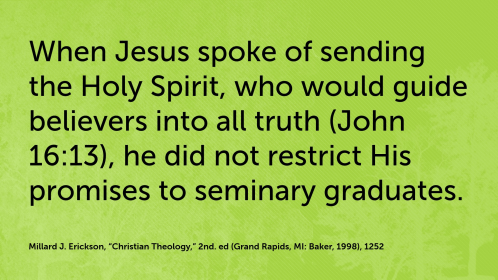
This pretty much sums it all up:

 Read the series on the 1833 New Hampshire Confession of Faith so far.
How do Christians learn doctrine? Hopefully, they learn it in church. But, how should a church teach doctrine? Should you pass around copies of systematic theology texts, announce a new and “exciting” Sunday School series, and dig out some extra chairs for the sell-out crowd that is sure to come?
Well, that is one way to do it. Another way is to teach basic doctrine by using the creeds and confessions. Or, better yet – use your local church’s statement of faith.
Towards that end, this little series is a brief exposition of each article of the 1833 New Hampshire Confession of Faith. Like many confessions, it packs a whole lot into a short paragraph. Today, I’m covering Article 3 – Of the Fall of Man:
We believe that man was created in holiness, under the law of his Maker;[1] but by voluntary transgression fell from that holy and happy state;[2] in consequence of which all mankind are now sinners,[3] not by constraint, but choice;[4] being by nature utterly void of that holiness required by the law of God, positively inclined to evil; and therefore under just condemnation to eternal ruin,[5] without defense or excuse.[6]
Here are my thoughts:
God created man in His image. Theologians have spent a lot of time puzzling over what on earth this means. The confession sums it up nicely – Adam and Eve were created in holiness. They were perfect. They were “very good,” (Gen 1:31). In short, God made Adam and Eve more than a bit like Himself.[7] They were “created in holiness,” in the sense that His “marks of resemblance” were impressed upon them at creation.[8]
Adam and Eve were created “upright,” (Ecc 7:29). They had every advantage, every incentive and every reason to love their Creator. They were not morally “neutral.” They were positively holy, and were under the loving and just law of God, their Maker.
This sounds like pious “churchy talk,” but it simply means that Adam and Eve were happy living in God’s creation, under His rules. Obedient children love their parents, and don’t look at the “rules of the house” as some sinister burden to be borne until “freedom” comes. The law was God’s, therefore the law was good, and so Adam and Eve were made in a state of holiness to live and thrive under that law.
But, that holiness was untested. What would Adam and Eve do when temptation struck?
They decided to rebel. There is no nice way to put this. They broke God’s law. They broke the rules of the house. They did it on purpose. They wanted to do it. They planned to do it. They did it. They were guilty. To be blunt, Adam and Eve became criminals. By way of their “voluntary” sin, they “fell from that holy and happy state.”
Again, this original arrangement which God declared “very good” (and He would know, wouldn’t He!?) was not a state of malicious slavery. They were happy. Life was perfect. They knew precisely what they could do, and exactly what they could not do. But, they chose rebellion. They chose treason. They chose death.
Adam and Eve’s sin broke the mold. This first couple, the prototype, ruined themselves and thus brought ruin and damnation on the entire creation. Here is an office analogy – they are the original document defaced with pen, and all copies (i.e. descendants) bear their marks. Adam and Eve became sinners, and they passed this status along to all their descendants – all the way to you and I today. They are the poisonous root which produced poisonous people. Everybody is now born as a child of wrath (Eph 2:3), actively hating God and rebelling against His law, His Son, and the Good News He suffered and bled and died to bring.
People are not forced to be sinners. They were made sinners by Adam and Eve, who broke that perfect mold so long ago, and each man, women, boy and girl voluntarily and enthusiastically acts on and proves this status as soon as they’re able.[9]
Because of what Adam and Eve did, they poisoned themselves with the infection and festering sore of sin. Their status changed from “holiness” to “sinfulness.” That poison was passed on, generation to generation. The result is that we are not holy anymore. Adam and Eve ruined us, and we each do our very best to continue that ruin by the way we live, what we think, what we do, and what we wish we could do.
God is holy, and we cannot ever be holy in our own power. That was all over long ago. There is no bridge which can be built, no ladder which can be ordered and no escape pod which can safely transport us off this doomed ship. You are not good enough for God. There is nothing you can ever do to be good enough. You are doomed. You are a criminal, and you are “void of that holiness required by the law of God.”
You want to do evil. You want to be a criminal. You want to cut the cords which bind you to the Father and Son’s authority, jurisdiction and power. You do not want God. You do not want Jesus. You do not want salvation. You do not want anything but more rebellion.
This means nobody “cries out to God” unless the Holy Spirit is already calling that person to salvation. People don’t like the Gospel. People don’t want the Gospel. People don’t want Jesus and His Good News. It is a fundamentally counter-cultural message.
This world is under the power and influence of Satan, and the Gospel brings light into that darkness. Cockroaches don’t like darkness – they flee from it. We are born sinners, criminals, traitors, “sovereign citizens” in rebellion against the King. We are cockroaches who flee from the Gospel. God, in His grace, changes some of our minds and draws us to the light, saving us despite ourselves.
We deserve to be punished. This escapes most people, even many Christians. God owes you nothing. He doesn’t owe you mercy, love, grace or kindness. He owes you nothing at all. He should crush you, like man crushes a spider. You deserve to be crushed. You deserve to be punished. You have broken God’s laws, and we all know criminals deserve an appropriate punishment. Because we’re all born as sinners:
we deserve to suffer the just and appropriate punishment for our crimes. You choose to reject God every day. You are not good enough for God. You want to do evil, and you act on those desires every day. You deserve the worst punishment possible.
You have no excuse. God exists. He has made Himself known by His creation, and by His own moral law which is written on your heart. You are still made in His image, and reflect His own character and qualities. He has given us a sacred Book, in which are hidden all the treasures of heavenly wisdom.
Now that Jesus has come and His work was finished so very long ago, you no longer have any pretense of an excuse. You no longer have any cloak for your sin. You are without defense or excuse.
This is the truth about man. This is who you are. This is why the Jesus came – to save you from yourself, in spite of yourself.
[1] Gen. 1:27; 1:31; Eccles. 7:29; Acts 16:26; Gen. 2:16.
[2] Gen. 3:6–24; Rom. 5:12.
[3] Rom. 5:19; John 3:6; Psa. 51:5; Rom. 5:15–19; 8:7.
[4] Isa. 53:6; Gen. 6:12; Rom. 3:9–18.
[5] Eph. 2:1–3; Rom. 1:18; 1:32; 2:1–16; Gal. 3:10; Matt. 20:15.
[6] Ezek. 18:19, 20; Rom. 1:20; 3:19; Gal. 3:22.
[7] “The simple declaration of the Scripture is that man at his creation was like God,” (Charles Hodge, Systematic Theology, 3 vols. [reprint; Peabody, MA: Hendrickson, 2011], 2:96).
[8] See John Calvin, Institutes of the Christian Religion, trans. Henry Beveridge (reprint; Peabody, MA: Hendrickson, 2008), 1.15.3.
[9] For the nerds who read this, I hold to a Natural Headship view of imputation.

It’s normal in Baptist circles to interpret the so-called Jerusalem Council (Acts 15) as a local church business meeting. I remember when I first came across this interpretation in Paul Jackson’s little book on Baptist polity. More recently, Kevin Bauder wrote:
Sometimes called the Jerusalem Council, this assembly was not really a church council at all. It was a business meeting of the local church in Jerusalem. The need for the meeting developed when teachers from Jerusalem came to Antioch with the message that circumcision was essential to salvation.[1]
Acts 15 was a church business meeting? Where, pray tell, was the potluck? I don’t think this argument really holds up, and Acts 16:4 is one reason why. But first – a brief survey of the text.
Certain men “from Judea” (not necessarily the Jerusalem church) came down to Antioch and began teaching that people had to follow the Mosaic law (specifically ritual circumcision) in order to be saved (Acts 15:1). Paul wrote against this heresy in the book of Galatians.
After Paul and Barnabas “had no small dissension and debate” with these brigands, the church at Antioch appointed them to head to Jerusalem and go “to the apostles and elders about this question,” (Acts 15:2). It seems Antioch recognized the apostles’ inherent authority, and the Jerusalem church’s status as the “mother church.” A church plant naturally looks up to the parent church. The leaders in Antioch looked up to the apostles in Jerusalem. They sought advice and consensus.
They arrived in Jerusalem and “were welcomed by the church and the apostles and the elders,” (Acts 15:4). Paul and Barnabas explained how God’s grace had clearly gone out to the Gentiles. This was too much for some of the Christians “who belonged to the party of the Pharisees.” They protested, “It is necessary to circumcise them, and to charge them to keep the law of Moses,” (Acts 15:5).
The fight was on. It is interesting that James and the others in the Jerusalem church had to know this was simmering below the surface, yet they apparently did nothing. The Jerusalem church was always characterized by a velvet-glove approach to this issue (cf. Acts 21:20-25).
The church did not gather to hash this out; only “the apostles and elders” did (Acts 15:6). “Much debate” ensued (Acts 15:7). Peter spoke (Acts 15:7-11). Paul and Barnabas gave testimony (Acts 15:12). Then James issued his judgment – “we should not trouble those of the Gentiles who turn to God,” (Acts 15:19).
James didn’t mention Antioch. He mentioned “Gentiles” in a generic sense, indicating he was speaking to a much larger issue. The dispute in Antioch was the impetus for a decision which had implications far beyond that single city. The letter the council sent with Paul and Barnabas was not for Antioch – it was for the entire region encompassing “the brethren who are of the Gentiles in Antioch and Syria and Cilicia,” (Acts 15:23). This was a circular letter.
The letter read, “it seemed good to the Holy Spirit and to us to lay upon you no greater burden than these necessary things . . .” (Acts 15:28). This is not the language of a friendly suggestion. It is the language of an ecclesiastical superior to an inferior. A Pastor of a church cannot “lay upon you” a burden to another church. He can offer friendly advice. This is not what happened here.
If Acts 15 simply depicts a Baptist church business meeting (minus the casserole potluck and fried chicken), then why does Acts 16:4 read thus:
As they went on their way through the cities, they delivered to them for observance the decisions which had been reached by the apostles and elders who were at Jerusalem (Acts 16:4).
This is strong language. Paul and Timothy are passing through Syria and Cilicia (Acts 15:41), apparently revisiting “the brethren in every city where we proclaimed the word of the Lord,” (Acts 15:36). As they passed through these cities, they “delivered to them for observance the decisions which had been reached by the apostles and elders who were at Jerusalem.”
It is very possible this circular letter hadn’t yet reached the region beyond Antioch. Paul and Timothy were making sure it did. Notice the language Luke used. This letter is not a suggestion. It is a dogma. It is an ordinance, an order, a decree. It was a decision reached by the “apostles and elders” at Jerusalem. It carried authority. It was “delivered to them for observance.”
Does Acts 15 still sound like a local church business meeting?
To make matters worse, the word the RSV translates as “decision” is actually much stronger than that.[2] It was more than a decision – it was an order.
The phrase here is τὰ δόγματα (“the dogma”). It is well attested in the LXX, the NT and the early post-apostolic era. Silva wrote the semantic range encompasses the concepts of decree, ordinance or doctrine.[3]
So, how should we understand “the dogma” which Paul and Timothy delivered for observance to these churches? It is clear from this short survey that something anemic like “decision” is a poor fit. It is doubtful the translation law will do; the Jerusalem Council was not a civil body with legislative authority. Perhaps regulation or ordinance is best. To be even more blunt, perhaps we can bring things down to the bottom shelf, so to speak, and drop ordinance in favor of order. After all, the very word “ordinance” means an authoritative decree or a law.[6]
The word originally meant opinion or belief in the early classical period, and its usage gradually morphed into something like judgment, decision or resolution (NIDNTTE, 1:752). But, don’t see evidence to suggest Luke was using the word to convey this weak of a meaning.
Basically, I don’t think you can escape the fact that this was not a suggestion from the Jerusalem Council; it was a decree, an order. Some might seek to soften it and say decision, but I don’t believe you can justify that weak of a translation from the word’s usage in the LXX, the NT or the early apostolic era (contra. NASB, RSV, ESV, NIV).
I am a Baptist who leans heavily towards a dual-elder congregational view of church government. But, I think there are two ditches to avoid here:
There are no apostles today. There is no “mother church.” The situation in the Eastern Mediterranean in those days was a one off, a non-repeatable event. Robert Reymond, a Presbyterian, wrote, “Clearly, these congregations were not independent and autonomous. Rather, they were mutually submissive, dependent and accountable to each other.”[7] This is correct. But remember – this was an apostolic situation, not a normative situation. James is dead, and the Jerusalem church is gone. I fear Baptists are reading polity back into Acts 15 that simply isn’t there.
There was no business meeting in Acts 15, and there was no potluck following. Maybe next week.
[1] Kevin Bauder, Baptist Distinctives and New Testament Church Order (Schaumberg, IL: RBP, 2012), 97.
[2] For a grammatical discussion of Acts 16:4-5, see my translation here.
[3] For a full discussion, see Moises Silva, NIDNTTE, 5 vols. (Grand Rapids, MI: Zondervan, 2014), 1:752-753.
[4] Gerhard Kittel, “δόγμα, δογματίζω,” in Theological Dictionary of the New Testament, ed. Gerhard Kittel, Geoffrey W. Bromiley and Gerhard Friedrich (Grand Rapids, MI: Eerdmans, 1964–), 2:231.
[5] Michael Holmes (The Apostolic Fathers, 2nd ed. [Grand Rapids, MI: Baker, 1989]) translated this as “precepts.”
[6] Merriam-Webster Collegiate Dictionary, 11th ed. (Springfield, MA: Merriam-Webster, 2003), s.v. “ordinance,” 1a, 1b.
[7] Robert Reymond, A New Systematic Theology of the Christian Faith (Nashville, TN: Thomas Nelson, 1998), 901.

 Read the rest of the series.
Sin is more than an external action. It is also a thought. It is also a state of being; a status or condition. You are either pregnant or you are not. You are either a male or a female. You are either a condemned sinner in God’s universe – an individual made in God’s image who stands guilty and has the status of “criminal” . . . or you are not.
So much is clear. But, is there still another layer here? After all, why do people break God’s moral law? What is at the heart of this transgression? What drives the sinful action? That is, what is the motive?
This matter of intent is important. It lies at the heart of our legal system. The difference between murder and, say, involuntary manslaughter is the issue of intent. In the former case, you plan to kill somebody and you do it. In the latter scenario, you kill somebody in the heat of a sudden passion. Both are wicked and wrong. But, we all recognize that murder carries greater condemnation. We recognize this because we understand that intent means something.
Moral value is assigned to the act, thought or state based on the intent of the action. That criterion is motive. An act is “sinful” (i.e. “tainted with, marked by, or full of sin”[1]) because of the wicked motivation which drives the behavior. So, consider yourself:
It should be clear there is an intent, a motive and a drive which produces (1) a sinful action, (2) a sinful thought or (3) the state of “sinfulness” and condemnation in the unregenerate. The act, thought or state is merely the fruit of something far deeper. One theologian observed, “It may be admitted along with the speculative ideals that sin is an action of the will – either an overt omission or commission – but back of the will is the evil heart.”[2]
The act, thought or state of sin is not “sinful” in and of itself – it is merely the fruit of some other poisonous tree. My question today is – what is that tree?
There have been several answers. We’ll focus on three:[3]
This view hold that sin is really about lust. There are physical desires which every man recognizes are part of the material world, and there are spiritual virtues everybody recognizes are higher, nobler and more virtuous. Sin is a capitulation to the physical lusts (i.e. “sensuality”) at the expense of spiritual truth.[4]
This view is clearly wrong-headed. There are many sinful actions which have nothing to do with physical lust. Pride, discord, jealousy, envy and arrogance (to name a few) are certainly not about lusting after physical things. This concept of sin also tends to favor aestheticism; that is, the idea that a monk living in the desert is somehow more “spiritual” than the Christian who lives in the city. This is nonsense.[5]
We prefer God to ourselves. We want what we want, not what God wants. We are petulant, spoiled and wicked children who want a Burger King god – one who makes things our way. After all, God commanded His people to love Him supremely (cf. Deut 6:5). Christ sought the Father’s will, not His own. A true Christian does not live for Himself, but for the Lord. Satan’s main point of attack in the Garden of Eden was an appeal to selfish independence. The antichrist himself, the “man of sin,” is so named because he will exalt himself against God.[6] “[S]elfishness can be understood as the root cause of all other expressions of sin.”[7] One theologian wrote, “[W]hen selfishness is considered as an undue preference of our interests to God’s interests, we have in selfishness the essence of all sin.”[8]
This view has a lot to commend it. But, I don’t believe it quite goes far enough. There is still another layer to this onion.
But, there is something deeper:
In effect, I’m asking:
This leads us to the next option; the best option
At the heart of all this is a willful rejection of God. You commit sinful acts, think sinful thoughts, and are born by nature as a child of wrath in the state of sin because you are in rebellion against God.[9] Even one theologian who advocated for selfishness as the poisonous tree wrote, “this selfishness is simply man’s desire for autonomy.”[10]
Because this is true, sin is really more than an act, a thought or a state of being. It is a willful desire for complete independence from God. This unending quest for autonomy manifests itself in:
Adam and Eve’s great sin was the start of it all. That sin was that “they became, in their understanding, their own authority, and their fallen descendants ever since that time have claimed a similar autonomy from God.”[11] A “willful ambition against God” was also Satan’s sin, and it is ours, too.[12] When you get down to brass tacks, Adam and Eve were disobedient – “[h]ence infidelity was at the root of the revolt.”[13] The Apostle Paul confirmed this:
Then as one man’s trespass led to condemnation for all men, so one man’s act of righteousness leads to acquittal and life for all men. For as by one man’s disobedience many were made sinners, so by one man’s obedience many will be made righteous (Rom. 5:18-19).
Adam’s trespass led to condemnation; his disobedience resulted in a fundamental change in status. He and his wife lost their status of moral innocence and gained the new status of “rebellious criminal.” Christ’s perfect righteousness is designed to reverse this tragedy for all who repent and believe in Him and His Gospel. Disobedience did this. What is disobedience but a deliberate rejection of authority?
The Psalmist wrote the same thing:
Why do the nations conspire, and the peoples plot in vain? The kings of the earth set themselves, and the rulers take counsel together, against the LORD and his anointed, saying, ‘Let us burst their bonds asunder, and cast their cords from us.’ He who sits in the heavens laughs; the LORD has them in derision (Ps 2:1-4).
People are born in rebellion against God, and their entire life is spent desperately trying to cut the ties which bind them to the Father and the Son’s jurisdiction and authority.
The poisonous tree which produces the fruit of sinful actions, sinful thoughts and a sinful status before God is a quest for independence, for autonomy – a deliberate rejection of God. “In short, it is failing to acknowledge God as God.”[16]
What does this mean for you? What does this mean for Jesus and His sinlessness? Until next time . . .
[1] Merriam-Webster (s.v. “sinful”).
[2] Lewis S. Chafer, Systematic Theology, 8 vols. (reprint; Grand Rapids, MI: Kregel, 1976), 2:254.
[3] See Erickson (Christian Theology, 596-598) for short summaries of these theories.
[4] See Charles Hodge, Systematic Theology, 3 vols. (reprint; Peabody, MA: Hendrickson, 2011), 2:140-144 for a detailed discussion of this view, and its various flavors.
[5] John Calvin remarked, “the common idea of sensual intemperance is childish,” (Institutes of the Christian Religion, trans. Henry Beveridge [reprint; Peabody, MA: Hendrickson, 2012], 2.1.4.
[6] These points are from Augustus H. Strong, Systematic Theology, 3 vols. (Old Tappan, NJ: Revell, 1907), 572.
[7] Rolland McCune, A Systematic Theology of Biblical Christianity, 3 vols. (Detroit, MI: DBTS, 2009), 2:57.
[8] Theissen (Systematic Theology, 247).
[9] “Now there is no doubt that the great central demand of the law is love to God. And if from the material point of view moral goodness consists in love to God, then moral evil must consist in the opposite. It is separation from God, opposition to God, hatred of God, and this manifests itself in constant transgression of the law of God in thought, word, and deed,” (Louis Berkhof, Systematic Theology, combined ed. [Grand Rapids, MI: Eerdmans, 1996], 2:232).
[10] McCune (Systematic, 2:57).
[11] Robert Reymond, A Systematic Theology of the Christian Faith, revised ed. (Nashville, Thomas Nelson, 1998), 445.
[12] See the discussion by Chafer (Systematic, 2:242-248). “All human beings acting independently who are not concerned to fulfill the divine purpose for them are re-enacting this same sin, and their destiny is that of the devil and his angels (Rev 20:10-15), unless they come under the saving grace of God,” (2:248).
[13] Calvin (Institutes, 2.1.4.).
[14] 1833 NHCF, Article 1.
[15] Berkhof (Systematic, 2:231).
[16] Erickson (Christian Theology, 598).

 Read the series so far.
This seems to be a simple question, with a simple explanation. I’m willing to bet when you read this question, you immediately started thinking of sin as an action in contradiction to an established norm. You aren’t alone – I did the same thing. We instinctively answer this question as if sin is an act. Even the Merriam-Webster dictionary, the closest thing we have in America to a recognized lexical standard, defines sin as, “an offense against religious or moral law.”[1]
It is true that a sin is a transgression against a moral law. From the Christian worldview, the very idea of objective morality, and the universal human ability to differentiate between the concepts of “right” and “wrong” are proof that:
But, that’s not the whole story. It isn’t enough to craft a definition based on external actions and call it a day. Is sin just about externalism? Is it possible to think about something, and commit a sin? Is temptation still a sin, because it’s purely an internal lust? To get down to brass tacks, consider this:
If sin is simply an outward action, the answer to each of these is, “Yes!” Unfortunately, some popular theology texts do define sin as externalism. Consider these examples:
Back to externals – is sin more than an act? In the Sermon on the Mount, Jesus proclaimed the Old Covenant law as it was meant to be understood.[4] It was not meant to be a checklist; it was a Covenant to be obeyed from the heart. This is why Jesus said:
You have heard that it was said to the men of old, ‘You shall not kill; and whoever kills shall be liable to judgment.’ But I say to you that everyone who is angry with his brother shall be liable to judgment; whoever insults his brother shall be liable to the council, and whoever says, ‘You fool!’ shall be liable to the hell of fire. (Matt 5:21-22).
You might not really shoot your nosy neighbor (or his annoying dog) twice in the chest with your trusty 9mm, but if you thought about it, you’re just as guilty. I’m being slightly silly, but you get the point. Here is a more pedestrian example:
You have heard that it was said, ‘You shall not commit adultery.’ But I say to you that everyone who looks at a woman lustfully has already committed adultery with her in his heart. (Matt 5:27-28).
Yes, it is true you didn’t sleep with your co-worker. But, you thought about it. A lot. You are just as guilty.
It seems as if It seems sin is much more than mere action. Behold this good definition of sin from a conservative Baptist theologian:
Sin is any lack of conformity, active or passive, to the moral law of God. This may be a matter of act, of thought, or of inner disposition or state. [5]
There is a lot which could be written from this, but I’ll focus on a few components:
The last bit is particularly important. You can commit a sinful action. You can think a sinful thought. But, sin is also described in Scripture as a state of being. “Acts of sin spring from a principle or nature that is sin.”[6] We are born by nature as children of wrath, which means we’re born as sinful people, in active rebellion against our Creator. As the 1833 New Hampshire Confession of Faith put it:
We believe that man was created in a state of holiness, under the law of His Maker; but by voluntary transgression fell from the happy and holy state; in consequence of which all mankind are now sinners, not by constraint but choice, being by nature utterly void of that holiness required by the law of God, wholly given over to the gratification of the world, of Satan, and of their own sinful passions, therefore under just condemnation to eternal ruin, without defense or excuse.[7]
Consider also the Apostle Paul’s words:
What then? Are we to sin because we are not under law but under grace? By no means! Do you not know that if you yield yourselves to any one as obedient slaves, you are slaves of the one whom you obey, either of sin, which leads to death, or of obedience, which leads to righteousness? But thanks be to God, that you who were once slaves of sin have become obedient from the heart to the standard of teaching to which you were committed, and, having been set free from sin, have become slaves of righteousness. (Rom 6:15-18).
Sin here is not an abstract action. It is a state of being. In this passage, it is a taskmaster people are naturally enslaved to – a master who only brings death. In contrast, God is the good master who distributes righteousness to His slaves.
So, when you think about sin, remember it is much more than an action. It is also a thought in your mind and heart. It is also a status which brings eternal damnation and everlasting condemnation, unending hostility and anger from the Holy God who made you, fashioned you, sustains you and calls you even now to repentance and faith in His one and only Son, Jesus Christ.
But, is there something even more fundamental, more basic, to the idea of “sin?” There is. For, now, however . . . ciao.
[1] Merriam-Webster Collegiate Dictionary, 11th ed. (Springfield, MA: Merriam-Webster, 2003), s.v. “sin,” 1a.
[2] Charles Ryrie, Basic Theology: A Popular Systematic Guide to Understanding Biblical Truth (Chicago, IL: Moody, 1999), 243-244.
[3] Emery Bancroft, Christian Theology, second revised ed. (Grand Rapids, MI: Zondervan, 1976), 218-226.
[4] See Leon Morris, The Gospel of Matthew, in PNTC (Grand Rapids, MI: Eerdmans, 1992), 112-113. D.A. Carson quibbled a bit, and wrote, “The contrast between what the people had heard and what Jesus taught is not based on distinctions like casuistry versus love, outer legalism versus inward commitment, or even false interpretation versus true interpretation, though all of them impinge collaterally on the text. Rather, in every case Jesus contrasts the people’s misunderstanding of the law with the true direction in which the law points, according to His own authority as the law’s ‘fulfiller’ . . . (Matthew, in EBC, vol. 8 [Grand Rapids, MI: Zondervan, 1984], 148).
[5] Millard Erickson, Christian Theology, 2nd ed. (Grand Rapids, MI: Baker, 1998), 596.
[6] Henry C. Theissen, Lectures in Systematic Theology (Grand Rapids, MI: Eerdmans, 1949), 244.
[7] 1833 NHCF, Article 3, quoted in William L. Lumpkin, Baptist Confessions of Faith, revised ed. (Valley Forge, PA: Judson, 1969), 362.

I was early for a dentist appointment. I didn’t like the idea of sitting idly in the waiting room, listening to bad elevator music, so I darted into a used bookstore across the way. I found a curious little volume entitled The Christ.
The author, Charles Guignebert, passed away in August of 1939, just five days before the thunderclouds of war burst open upon the continent. He’d been Professor of the History of Christianity at the University of Paris since 1919. He was also a theological liberal, and likely a complete unbeliever. I cannot be certain, of course, but the odds don’t look good. Not at all.
I picked up the book and looked at the jacket synopsis. The publisher proclaimed Guignebert’s tome was the “classic presentation of the historical origins of Christianity.” I skimmed down past the usual rapturous fluff and spotted the following endorsement:
Many critical scholars remain in [Guignebert’s] debt – Christian Century
Ah, the Christian Century. That publication was about as subtle with its theological sympathies as Breitbart News is with its politics. But, I always enjoy a good bit of heresy, especially when it’s on sale for $1.00.
I opened the book, careful to avoid the cloud of stale dust which burst forth from its pages, and skimmed the first bit of the introduction. Here is what I found:
Since Jesus did not want to found a new religion, he did not found Christianity. However, without knowing it, he did father the faith of which he is the center and the Church which was soon to be accounted him. This paternity, in fundamental contradiction with all that he beelieved, desired, and expected, would have driven him to dispair if he had but foreseen it (p.2).
I can’t wait to read this book. It’s right behind Harry E. Fosdick’s Christianity and Progress on my list. Both works are rank heresy. Christians up for a challenge can learn from heresy.
I spotted one more thing, though – something truly awful. On the inside flap of the book, I saw a little message jotted in neat, block letters:
Happy Easter ’90. Kareen, I hope this will help you in your search for Jesus. Love, Jim.
Let me spare you the suspense, Jim. This book did not help Kareen. It depicts a Jesus the New Testament knows nothing about. It reflects the hostility of satanic unbelief, and the hyper-critical skepticism of liberal elitism. Heresy can be useful. It challenges presuppositions, and forces you to strengthen your own convictions. But, it isn’t what a new or prospective believer needs.
I wish Jim had found something better for Kareen.
On a regular basis, an allegedly “Christian” leader engages in some form of theological and moral blasphemy. The result is always predictable, and follows a well-known pattern:
Of course, this is not a matter of “conservative Christians” vs. “liberal” or “progressive Christians.” It is a matter of Christianity vs. paganism. It is a matter of two entirely different religions, which just happen to share the same vocabulary.
This is where J. Gresham Machen comes in. In 1923, he published his little book Christianity and Liberalism. It is a powerful book, and so little has changed since his day. Harken to this faithful Presbyterian who, though being dead, yet speaketh:
It is no wonder, then, that liberalism is totally different from Christianity, for the foundation is different. Christianity is founded upon the Bible. It bases upon the Bible both its thinking and its life. Liberalism on the other hand is founded upon the shifting emotions of sinful men.[1]
[1] J. Gresham Machen, Christianity and Liberalism (New York, NY: Loiseaux Bros., 1923; reprint, CrossReach Publications, n.d.; Kindle ed.), KL 1030-1032.
 Read the series on the 1833 New Hampshire Confession of Faith so far.
Who is God? What is He like? Is He a subjective being, able to be shaped, interpreted and re-made in our own image, at our own whim, according to the latest flight of our own fancy? Or, is He an objective reality, a personal, relational, and real Being who must be reckoned with?
Here, I take a look at what the 1833 New Hampshire Confession of Faith has to say about God:
We believe that there is one, and only one, living and true God, an infinite, intelligent Spirit, whose name is JEHOVAH, the Maker and Supreme Ruler of heaven and earth;[1] inexpressibly glorious in holiness,[2] and worthy of all possible honor, confidence, and love; [3] that in the unity of the Godhead there are three persons, the Father, the Son, and the Holy Ghost;[4] equal in every divine perfection,[5] and executing distinct and harmonious offices in the great work of redemption.[6]
The Christian faith has answers. Historically, Christians have preserved systematic statements of bible doctrine in confessions. These documents quickly and accurately outline what a particular Christian group believes the Bible teaches about certain topics. The doctrine of God is obviously an important topic! Let’s take a closer look at what this confession of faith says:
This is the great statement of Christian monotheism. There are not “gods.” There is simply one, single God. He is alive. He has always been alive, and He will always be alive. He is the one true God. By this, the creed directly states all others “gods” are false, counterfeit frauds.
It is not enough to say, “I believe in God.” You must believe in the right God. You must believe in the one, true God. The term “God” is not a flighty, ethereal vapor of a concept. He is concrete and knowable. As J. Gresham Machen wrote,
. . . if religion consists merely in feeling the presence of God, it is devoid of any moral quality whatever. Pure feeling, if there be such a thing, is non-moral. What makes affection for a human friend, for example, such an ennobling thing is the knowledge which we possess of the character of our friend. Human affection, apparently so simple, is really just bristling with dogma. It depends upon a host of observations treasured up in the mind with regard to the character of our friends.
But if human affection is thus really dependent upon knowledge, why should it be otherwise with that supreme personal relationship which is at the basis of religion? Why should we be indignant about slanders directed against a human friend, while at the same time we are patient about the basest slanders directed against our God? Certainly it does make the greatest possible difference what we think about God; the knowledge of God is the very basis of religion.[7]
God has revealed Himself through the Holy Scriptures, that “perfect treasure of heavenly instruction; that . . . has God for its author, salvation for its end, and truth without any mixture of error for its matter.”[8] You can learn about God through His word. You know God spiritually and experientially through the regenerating work of the Holy Spirit, which then results in repentance and faith in the Gospel of His dear Son, Jesus Christ.
God does not have concrete form. He does not physically look like us. He is Spirit. To be sure, God can take whatever form He wishes to suit the occasion. He has appeared as a burning bush (Ex 3:1 – 4:17). He has appeared in the likeness of human form (Eze 1:26-27). But, that is not His natural state.
“Jehovah” was the old-fashioned way of pronouncing the Divine Name in Hebrew. Now, the preferred pronunciation is YHWH. True, it doesn’t have quite the same ring to it, but it is the better pronunciation. The very idea of a name indicates God is personal, relational, knowable and understandable – up to a point. It also personifies Him.
There was only one Abraham Lincoln, and this name bears all the freight of that man’s character, personality and achievements. The very reference of the name conjures up old Civil War photos of the tired President, wearied and beaten down by years of the most torturous and tragic war this country has yet known.
Likewise, the very name “JEHOVAH” carries with it all the freight and theological implications of who the Holy Scriptures reveal Him to be – and what He has promised for all those who love Him, who are called according to His purposes.
God created creation itself. It is a fact.[9] He did not use raw materials already at hand; He created creation out of literally nothing. It also means creation was originally “very good.” The fact that it is not so any longer is our fault, not His. This means He is Lord of all, because He is Creator of all. He is the “Supreme Ruler” of heaven and earth. There is nothing and nobody who is not under His jurisdiction and authority. His word is law, and His edicts demand obedience.
His promises of perfect salvation, forgiveness, reconciliation, cancellation of righteous hostility, adoption and heavenly citizenship in His current and future kingdom are sure and steadfast. You can count on them. Likewise, His promises of eternal destruction in flaming fire, away from His presence, for those who do not obey the command of the Gospel are true. They are just. They are right.
When you were a child, your father might have once said to you, “I brought you into this world, and I can take you out of it!”
Well, God is your “Father” in the sense that He created you, sustains you, and has given you all the blessings you enjoy – whether you have obeyed the command to repent and believe the Gospel, or not. He brought you into this world. He has the right to tell you what to do, how to do it, and to demand obedience to the Gospel message He sent His One and Only Son into this world to live, die and rise from the dead for.
Because God is who He is, He deserves all praise, honor, love and respect. Holiness is His most fundamental and definitional attribute. It is the attribute from which all others flow. His love never comes at the expense of His holiness. It is why He cannot “forgive and forget.” That would be unjust, in light of our crimes and the appropriate punishment we all deserve.
Nobody in their right mind would suggest a murderer be set free without punishment, that the victims should just “forgive and forget.” That would be wicked. It would be an “injustice.” Likewise, God will not forgive without appropriate punishment for our crimes; a propitiation to “set things right” and pay for the evil committed.
When it comes to man’s natural standing with God, the crime is far greater than a worldly murder – we have sinned again the Holy God, the Maker and Supreme Ruler of heaven and earth! With a victim so holy, how swift, terrible and far-reaching must our just punishment be!?
And yet, the fact is that God provided a way to have forgiveness, through the substitutionary and sacrificial work of His only-begotten Son. This shows His mercy, love, grace and kindness. It is infinite. It is undeserving. We – all of us – owe Him our loyalty and allegiance. We all must bow the knee to Christ as Lord, and God as Creator and King. We do this through repentance and faith in the Good News of Jesus Christ. God has made a way of salvation which does not impugn His perfect holiness, and thus He is “worthy of all possible honor, confidence, and love.”
Here is the precious and great truth of Trinitarian monotheism. This sets the Christian faith apart from the heresy of the Socinians, who have a human Jesus. It sets the faith apart from the Modalist heretics, who have a unitarian “god” who plays different roles on cue, whose Jesus had a beginning and will have an end.
The definition of the Trinity is this: In the One Being that is God, there eternally exists three co-equal and co-eternal divine Persons; namely, the Father, Son and the Spirit.[10]
Father, Son and Spirit are co-equal. The Father is not greater than the Son, who is not greater than the Spirit. They are equals. There is no hierarchy of honor, majesty, glory, holiness or intrinsic status and worth in God. “But the Godhead of the Father, of the Son, and of the Holy Ghost, is all one: the Glory equal, the Majesty coeternal.”[11]
This is the concept of the “economic Trinity.” There is no distinction of power, glory, majesty or worth. But, there is a clear differentiation of roles and responsibilities. These roles do not reflect on the relative status of the one assigned; rather, they simply allow us to see the perfect, complementary and harmonious ways each Person works to achieve the ends of the other.
We have one, single, true God, who has revealed Himself to consist of three distinct Divine Persons, each exercising His own distinct and harmonious office in the great work of redemption. I have never seen a better explanation of this marvelous truth than the one Millard Erickson offered:[12]
There may seem to be a conflict between attributing creation to the Father, the Son, and the Holy Spirit, and maintaining that each member of the Trinity has his own distinctive work. Yet there is not a problem, unless we think that there is but one form of causation.
When a house is built, who actually builds it? In one sense, it is the architect who designs and creates the plans from which it is to be constructed. In another sense, it is the contractor who actually carries out the plan. Yet the contractor himself probably does none of the actual construction. It is the construction workers who build the house. But without the materials that go into the making of the house there would be no structure. Thus, the building-material suppliers may be said to be the cause of the house’s construction. Or the lending agency that supplies the money for the construction and holds the mortgage might be said to have built the house. Finally, the owners, although they may not drive a single nail, are in a sense the ones who build the house, since they sign the legal papers authorizing the construction and will make the monthly mortgage payments.
Each one, in a unique way, is the cause of the house.
This is who your God is. He is yours, you know – whether you confess Him as Lord, or not.
[1] John 4:24; Psa. 147:5; 83:18; Heb. 3:4; Rom. 1:20; Jer. 10:10.
[2] Exod. 15:11; Isa. 6:3; 1 Pet. 1:15, 16; Rev. 4:6–8.
[3] Mark 12:30; Rev. 4:11; Matt. 10:37; Jer. 2:12, 13.
[4] Matt. 28:19; John 15:26; 1 Cor. 12:4–6; 1 John 5:7.
[5] John 10:30; 5:17; 14:23; 17:5, 10; Acts 5:3, 4; 1 Cor. 2:10, 11; Phil. 2:5, 6.
[6] Eph. 2:18; 2 Cor. 13:14; Rev. 1:1, 5; comp. 2, 7.
[7] J. Gresham Machen, Christianity and Liberalism (New York, NY: Loiseaux Bros, 1923; reprint; CrossReach, n.d.; Kindle ed.), KL 717-723.
[8] 1833 New Hampshire Confession of Faith, Article 1.
[9] See especially the discussion by Millard Erickson, Christian Theology, 2nd ed. (Grand Rapids, MI: Baker, 1998), 391-411.
[10] See the excellent book by James R. White, The Forgotten Trinity (Minneapolis, MN: Bethany House, 1998).
[11] Athanasian Creed, Clause 6.
[12] Erickson, Christian Theology, 398-399.

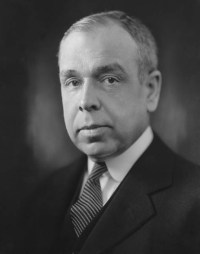
Ponder this bit of wisdom from J. Gresham Machen:
Clear-cut definition of terms in religious matters, bold facing of the logical implications of religious views, is by many persons regarded as an impious proceeding. May it not discourage contribution to mission boards? May it not hinder the progress of consolidation, and produce a poor showing in columns of Church statistics? But with such persons we cannot possibly bring ourselves to agree. Light may seem at times to be an impertinent intruder, but it is always beneficial in the end.
The type of religion which rejoices in the pious sound of traditional phrases, regardless of their meanings, or shrinks from “controversial” matters, will never stand amid the shocks of life. In the sphere of religion, as in other spheres, the things about which men are agreed are apt to be the things that are least worth holding; the really important things are the things about which men will fight.
J. Gresham Machen, Christianity & Liberalism (New York, NY: Loiseaux Bros., 1923; reprint; CrossReach Publications, n.d., Kindle ed.), KL 41-47.

The Bible sounds weird to people today. There is no denying that. It is a compilation of 66 individual books, written over a very long period of time, in three different languages. It communicates God’s word in the idiom, speech and garb of a culture that perished long ago. This is why, in every seminary text on homiletics, there is a lot of discussion about how to communicate the Bible’s message to a contemporary culture.
In fact, in my sermon notes, I always included this picture from a preaching textbook[1] as a reminder about what my role was – to faithfully communicate God’s word to the people in the congregation.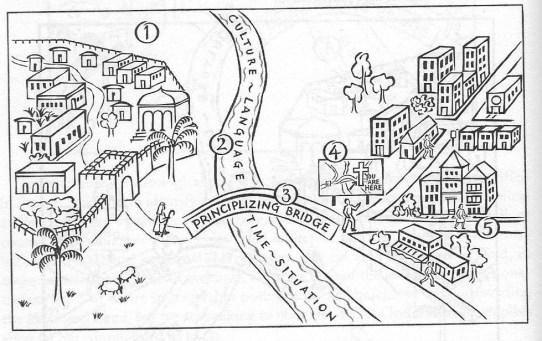
Millard Erickson wrote a good bit about this conundrum, and the unbelieving response of the theological liberals. What he wrote is worth pondering:
One problem of particular concern to the theologian, and of course to the entire Christian church, is the apparent difference between the world of the Bible and the present world. Not only the language and concepts, but in some cases the entire frame of reference seems so sharply different . . .[2]
The average Christian, even the one who attends church regularly, lives in two different worlds. On Sunday morning, from eleven o’clock to noon, such a person lives in a world in which axheads float, rivers stop as if dammed, donkeys speak, people walk on water, dead persons come back to life, even days after death, and a child is born to a virgin mother. But during the rest of the week, the Christian functions in a very different atmosphere.
Here technology, the application of modern scientific discoveries, is the norm. The believer drives away from church in a modern automobile, with automatic transmission, power steering, power brakes, AM-FM stereo radio, air conditioning, and other gadgets, to a home with similar up-to-date features. In practice the two worlds clash. In the Christian’s biblical world, when people are ill, prayer is uttered for divine healing, but in this secular world, however, they go to the doctor. For how long can this kind of schizophrenia be maintained?[3]
All this is surely true. Thus, Erickson continues:
Here we must ask the question, What must we retain in order to maintain genuine Christianity, or to remain genuinely Christian?[4]
Erickson went on to list a few of the answers different people and institutions have given to this problem. What makes somebody a Christian? What is it about “the faith” which transcends cultures, from the 1st century to the 21st?[5]
The Christian has always replied that doctrine defines what the faith is, and that doctrine is contained in the Holy Scripture, that “perfect treasure of heavenly instruction . . . the true centre of Christian union, and the supreme standard by which all human conduct, creeds, and opinions should be tried.”[6]
So, then, how do we contemporize the Christian message for men, women, boys and girls in 2017? Here we come to the great divide, the great chasm.
Erickson wrote that some men see themselves as translators; they seek to retain the same Biblical content, but re-package it in a more intelligible form. Anybody who has tried to teach older people how to use a computer has done this. I remember (years ago) trying to explain “File Manager” from Windows 3.11 to my grandfather.
“Imagine it’s a big file cabinet,” I said. “Inside this cabinet are all sorts of files, where everything on your computer is organized.”
I translated “File Manager” for my grandfather. I accurately explained what it was, but I used his own contemporary phrases and reference points as a bridge to explain this mysterious technology to him.
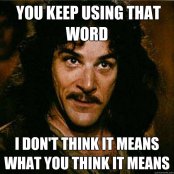 Others, however, are transformers. These people seek to make major and systemic changes to the content in order to communicate it the modern listener. “[T]hey do not really regard the essence of Christianity as bound up with the particular doctrines that were held by ancient believers. Thus, it is not necessary to conserve or preserve these doctrines.”[7] Often, these folks use Christian language, but they mean something completely different. As the learned Spanish philosopher Inigo Montoya remarked, “You keep using that word. I don’t think it means what you think it means . . .”
You find these transformers in the so-called “mainline denominations.” These are those denominations which have been hemorrhaging members for decades, dying a slow and pitiful death, because they abandoned true Christianity a long, long time ago. These men do not regard doctrine as containing the true essence of Christianity. They cling to other things, like personal experiences, a perpetual reinterpretation of God’s in biblical history, subjective shared experiences, or an external social ethic.
As J. Gresham Machen noted so long ago, this is not Christianity at all – it is another religion. It is opposed to everything Jesus taught and came to fulfill:
It is perfectly clear, then, that the first Christian missionaries did not simply come forward with an exhortation they did not say: “Jesus of Nazareth lived a wonderful life of filial piety, and we call upon you our hearers to yield yourselves, as we have done, to the spell of that life.” Certainly that is what modern historians would have expected the first Christian missionaries to say, but it must be recognized that as a matter of fact they said nothing of the kind.[8]
Hear, hear!
When we preach and teach the Bible, whether as loving parents, long-suffering Sunday School teachers, bible study leaders or Pastors, we must be committed to be translators of the Word, not transformers. We must read the text, study the text, understand the essence of the doctrine being taught in a particular passage, and build a strong bridge from the Bible to 2017 – and back again.
Note that we are not giving a ‘dynamic equivalence’ of the biblical statement. What we are doing instead is giving a new concrete expression to the same lasting truth that was concretely conveyed in biblical times by terms and images that were common then.[9]
Amen.
NOTE: For an excellent discussion of this “interpretive journey,” see J. Scott Duvall and J. Daniel Hays, Grasping God’s Word: A Hands-On Approach to Reading, Interpreting, and Applying the Bible, 3rd ed. (Grand Rapids, MI: Zondervan, 2012), 39-49.
[1] J. Scott Duvall & J. Daniel Hays, Grasping God’s Word: A Hands-on Approach to Reading, Interpreting and Applying the Bible, 3rd ed. (Grand Rapids, MI: Zondervan, 2012), 46.
[2] Millard J. Erickson, Christian Theology, 2nd ed. (Grand Rapids, MI: Zondervan, 1998), 116.
[3] Ibid, 117-118.
[4] Ibid, 118.
[5] The list which follows is from Erickson (Christian Theology, 118-122).
[6] 1833 New Hampshire Confession of Faith, Article 1, “Of the Scriptures.”
[7] Erickson (Christian Theology, 123).
[8] J. Gresham Machen, Christianity & Liberalism (reprint; CrossReach Publications, Kindle ed.). KL 359-362.
[9] Erickson (Christian Theology, 129).

 The Eccentric Fundamentalist