Some Thoughts on God’s Decree

Last week, I posted the relevant article from the 1689 London Baptist Confession about God’s decree. Don’t be frightened by the word “decree.” The nifty Merriam-Webster Collegiate Dictionary (11th ed.) provides the definition “foreordaining will.” It means God has determined what happens in this world.

Now, any Christian would probably agree with that statement in general. Its when we move beyond vague statements to brass tacks that we begin to have problems. Some of the reasons why Christians have developed creeds and confessions are because (1) they wanted a comprehensive document which could be used as a teaching tool for new believers, and (2) they wanted to lay out their systematic theology in a comprehensive and thorough way, in a binding document which could be used as a standard for orthodoxy.

  • By the way, if you want to understand what a particular group of Christians actually believe, look to that group’s creed or confession. Forget Pastor Google; he’s usually wrong. 

Thus, we have the 1689 London Baptist Confession, and it’s section on God’s decree. I will reproduce the excerpt from last week, with some brief comments. These comments are not necessarily my own views; I’m simply explaining what I understand the creed to mean:

  1. God hath decreed in himself, from all eternity, by the most wise and holy counsel of His own will, freely and unchangeably, all things, whatsoever comes to pass;[1] yet so as thereby is God neither the author of sin nor hath fellowship with any therein;[2] nor is violence offered to the will of the creature, nor yet is the liberty or contingency of second causes taken away, but rather established;[3] in which appears His wisdom in disposing all things, and power and faithfulness in accomplishing His decree.[4]

Remarks on Paragraph 1:

  • God decided what would happen before creation itself (“from all eternity”)
  • These decisions were free and voluntary (‘by the most wise and holy counsel of His own will”). There is nothing which can bind or constrain God from doing what He wants, in accordance with His holy character and attributes.
  • Once God decided what would happen in creation, that decision was set in stone and irrevocable (“freely and unchangeably”). This usually makes Christians wince, and it isn’t long before charges of “fatalism” are issued. The folks who wrote this confession of faith understood that. Behold what cometh next . . .
  • Yet, despite this, God did not create sin and does not partake of sin (“neither the author of sin nor hath fellowship with any therein”). He has nothing to do with sin. He is the exact opposite of sin.
  • More than that, this does not result in fatalism. Do you see this? Calvinists do not believe in fatalism (“nor is violence offered to the will of the creature”). Men and women are not compelled or forced to do evil. They do it because they want to. Period. Men and women have free will to sin, and they choose to do it. Every. Single Day. Free. Will. Do. You. See. This? How, then, does God’s decree come to pass? Behold . . .
  • God’s will is done through secondary causes (“nor yet is the liberty or contingency of second causes taken away, but rather established”). He often does not act directly. He acts through intemediaries upon intermediaries. Jesus was executed by the people who wanted to kill Him. Yet, He “was handed over by the predetermined plan and foreknowledge of God,” (Acts 2:23).
  • By operating this way, in a way far above our own capacity to understand or fathom, God shows Himself to be far wiser than any of us, His creatures, could ever be (“in which appears His wisdom in disposing all things”). He also proves that His will actually will be done, and nothing can thwart it (“and power and faithfulness in accomplishing His decree”). If God be for us, who can be against us?

Notes:

[1] Isa. 46:10; Eph. 1:11; Heb. 6:17; Rom. 9:15,18

[2] James 1:13; 1 John 1:5

[3] Acts 4:27,28; John 19:11

[4] Num. 23:19; Eph. 1:3-5

God’s Plan and You

In church this morning, I happened on James 1:18. No, I wasn’t day-dreaming. The Pastor was actually preaching James 1:12-18! I read from my English translation:

  • James 1:18 By his sovereign plan he gave us birth through the message of truth, that we would be a kind of firstfruits of all he created.

I immediately latched onto the rendering “sovereign plan.” I suspected this was a bit of an interpretative gloss, so I reached for my tablet to look at what the Greek text had to say. Unfortunately, I had forgotten to charge the battery, and I had no sooner found the text than the whole thing died. Drat. I plan to ditch the tablet and bring my hardbound UBS-5 to church from now on.

But, that doesn’t matter and you don’t care anyway. What does matter is what on earth James 1:18 is saying, and what that ought to mean for your life, if you’re a Christian. Because I’m an incurable nerd, I came home and translated the verse straightaway. It’s interesting, to say the least.

Here is my pitiful translation, and below are some thoughts I had on this verse:

Baptist Confessions of Faith – God’s Decree

I am beginning a series where I will post excerpts from various Baptist Confessions of Faith. I agree with some, and disagree with others. Regardless, I’ll post them anyway. I’m beginning this series by taking a look at what Baptists have said down through the years about God’s decree – or lack thereof!

This excerpt is from the 1689 London Baptist Confession of Faith, Chapter 3 – God’s Decree. It will be immediately clear this is a Particular Baptist (i.e. Calvinist) document. It is largely a recitation of the 1647 Westminster Confession of Faith, with Baptist flavor added. This excerpt is verbatim from the 1647 Westminster Confession.

I, personally, am in complete and total agreement with this statement on God’s decree. Here it is:

Paragraph 1

God hath decreed in himself, from all eternity, by the most wise and holy counsel of His own will, freely and unchangeably, all things, whatsoever comes to pass;[1] yet so as thereby is God neither the author of sin nor hath fellowship with any therein;[2] nor is violence offered to the will of the creature, nor yet is the liberty or contingency of second causes taken away, but rather established;[3] in which appears His wisdom in disposing all things, and power and faithfulness in accomplishing His decree.[4]

Paragraph 2

Although God knoweth whatsoever may or can come to pass, upon all supposed conditions,[5] yet hath He not decreed anything, because He foresaw it as future, or as that which would come to pass upon such conditions.[6]

Paragraph 3

By the decree of God, for the manifestation of His glory, some men and angels are predestinated, or foreordained to eternal life through Jesus Christ,[7] to the praise of His glorious grace;[8] others being left to act in their sin to their just condemnation, to the praise of His glorious justice.[9]

Paragraph 4

These angels and men thus predestinated and foreordained, are particularly and unchangeably designed, and their number so certain and definite, that it cannot be either increased or diminished.[10]

Paragraph 5

Those of mankind that are predestinated to life, God, before the foundation of the world was laid, according to His eternal and immutable purpose, and the secret counsel and good pleasure of His will, hath chosen in Christ unto everlasting glory, out of His mere free grace and love,[11] without any other thing in the creature as a condition or cause moving Him thereunto.[12]

Paragraph 6

As God hath appointed the elect unto glory, so He hath, by the eternal and most free purpose of His will, foreordained all the means thereunto;[13] wherefore they who are elected, being fallen in Adam, are redeemed by Christ,[14] are effectually called unto faith in Christ, by His Spirit working in due season, are justified, adopted, sanctified,[15] and kept by His power through faith unto salvation;[16] neither are any other redeemed by Christ, or effectually called, justified, adopted, sanctified, and saved, but the elect only.[17]

Paragraph 7

The doctrine of the high mystery of predestination is to be handled with special prudence and care, that men attending the will of God revealed in His Word, and yielding obedience thereunto, may, from the certainty of their effectual vocation, be assured of their eternal election;[18] so shall this doctrine afford matter of praise,[19] reverence, and admiration of God, and of humility,[20] diligence, and abundant consolation to all that sincerely obey the gospel.[21]


Scripture References

[1] Isa. 46:10; Eph. 1:11; Heb. 6:17; Rom. 9:15,18

[2] James 1:13; 1 John 1:5

[3] Acts 4:27,28; John 19:11

[4] Num. 23:19; Eph. 1:3-5

[5] Acts 15:18

[6] Rom. 9:11,13,16,18

[7] I Tim. 5:21; Matt. 25:34

[8] Eph. 1:5,6

[9] Rom. 9:22,23; Jude 4

[10] 2 Tim. 2:19; John 13:18

[11] Eph. 1:4, 9, 11; Rom. 8:30; 2 Tim. 1:9; I Thess. 5:9

[12] Rom. 9:13,16; Eph. 2:5,12

[13] 1 Pet. 1:2; 2; Thess. 2:13

[14] 1 Thess. 5:9, 10

[15] Rom. 8:30; 2 Thess. 2:13

[16] 1 Pet. 1:5

[17] John 10:26, 17:9, 6:64

[18] 1 Thess. 1:4,5; 2 Pet. 1:10

[19] Eph. 1:6; Rom. 11:33

[20] Rom. 11:5,6,20

[21] Luke 10:20

Approaching the Throne of Grace

numUnder the Old Covenant, the covenant community had to stay away from God. He lived in their midst, first in the tabernacle and later in the temple. He dwelt in the inner compartment, the Holy of Holies. Yet, only certain chosen men had very limited and prescribed access to Him:
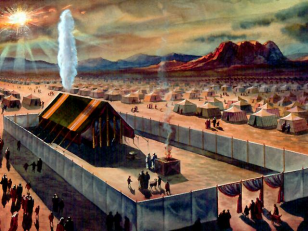
  • Only the High Priest could enter the Holy of Holies, and then only once per year (Leviticus 16).
  • Only the Levites could enter into the outer compartment to trim the lamps, arrange the bread of the presence, and perform other duties

The rest of the community could not enter at all. In fact, they were commanded to stay away from the tabernacle altogether:

Numbers 18:22 No longer may the Israelites approach the tent of meeting, or else they will bear their sin and die.

Think about this. Under the Old Covenant, God was kept at arms-length. He lived among His chosen people, but could not be approached directly. He made Himself known through intermediaries. Yahweh was personally unapproachable. A believer could not dare to even approach Him in His dwelling-place.

We could draw a whole lot of implications here, but one thing is particularly clear – God is holy, and in our sinful and criminal state, we are not fit to approach Him. Under the temporary arrangements of the Old Covenant, God’s people had to come to Him through intermediaries, expressing their thankfulness, love, repentance and worship through a series of sacrificial offerings, via an ordained priesthood.

Is this the way it was meant to be forever? Being promised certain death if you dared to draw near to God in reverent worship? Being kept at arms-length by God Almighty? Only offering praise, thanksgiving, repentance and worship through an intermediary? Not at all! Today, all who are “partakers of the heavenly calling” (Heb 3:1), who have repented and believed the Gospel, enjoy the blessings of Jesus’ superior ministry, based on a better covenant complete with better promises.

What a change from this dire warning

Numbers 18:22 No longer may the Israelites approach the tent of meeting, or else they will bear their sin and die.

to this glorious exhortation?

Hebrews 4:14-16 Therefore since we have a great high priest who has passed through the heavens, Jesus the Son of God, let us hold fast to our confession. For we do not have a high priest incapable of sympathizing with our weaknesses, but one who has been tempted in every way just as we are, yet without sin. Therefore let us confidently approach the throne of grace to receive mercy and find grace whenever we need help.

Instead of being warned to stay far away from Yahweh, Christians are now commanded to confidently approach the very throne of grace! Figuratively speaking, Christians are invited to march right up to the heavenly tabernacle, walk right through the first compartment, fling the veil to the Holy of Holies aside, and kneel before the very mercy seat on the ark of the covenant itself. There is no need for a censer of incense to mask yourself from the divine presence. There is no command to “stay back!” Instead, there is a warm invitation to “confidently approach the throne of grace to receive mercy and find grace whenever we need help.”

The New Covenant is better. The New Covenant is what the object lessons of the Old were always pointing to. The New Covenant is ours now, and will be Israel’s later. Perhaps now, this bit from the Book of Hebrews begins to make a little more sense:

Hebrews 10:19-22: Therefore, brothers and sisters, since we have confidence to enter the sanctuary by the blood of Jesus, by the fresh and living way that he inaugurated for us through the curtain, that is, through his flesh, and since we have a great priest over the house of God,  let us draw near with a sincere heart in the assurance that faith brings, because we have had our hearts sprinkled clean from an evil conscience and our bodies washed in pure water.

If you have repented of your sins and believed the Gospel message, then you will join the angels in heaven as they sing praises to Jesus the Christ. If you continue in criminal rebellion against Him, Jesus will break you with His iron scepter and smash you like a potter’s jar (cf. Ps 2:9). I pray you’ll join God’s family, so you, too, can have access to the throne of grace to find mercy and help in time of need.

No Respect!

tentMoses is an important prophet. Aaron and Miriam forgot that once. They probably didn’t forget again. God struck Miriam with leprosy for her sedition and rebellion against Moses, His appointed prophet and leader of His covenant people. Behold! Here is the passage (Numbers 12:1-10):
Then Miriam and Aaron spoke against Moses because of the Cushite woman he had married (for he had married an Ethiopian woman). They said, “Has the LORD only spoken through Moses? Has he not also spoken through us?” And the LORD heard it. (Now the man Moses was very humble, more so than any man on the face of the earth.)

The LORD spoke immediately to Moses, Aaron, and Miriam: “The three of you come to the tent of meeting.” So the three of them went. And the LORD came down in a pillar of cloud and stood at the entrance of the tent; he then called Aaron and Miriam, and they both came forward.

The LORD said, “Hear now my words: If there is a prophet among you, I the LORD will make myself known to him in a vision; I will speak with him in a dream. My servant Moses is not like this; he is faithful in all my house. With him I will speak face to face, openly, and not in riddles; and he will see the form of the LORD. Why then were you not afraid to speak against my servant Moses?”

The anger of the LORD burned against them, and he departed. When the cloud departed from above the tent, Miriam became leprous as snow. Then Aaron looked at Miriam, and she was leprous!”

Aaron and Miriam didn’t like Moses’ wife. It’s even possible the phrase they used to refer to her (“Cushite woman”) was a racist, derogatory term. But, their problem wasn’t really her – it was Moses and the unique position he had.

“Are you really that special?” they asked. “Does God really only speak through you? What about us!?”

God heard what they said. God hears everything you say. He knows everything you think. He understands what you’re plotting. He knows what you’ve done, what you are doing, and what you will do. I wonder how far sin would go if each Christian paused before doing something wicked and stupid, and thought about this:

  • “And the Lord heard it.”
  • “And the Lord saw it.”
  • “And the Lord knew it.”

Yikes.

God calls for a meeting. He isn’t happy. I want to spend the rest of our time considering what God says about Moses.

God speaks to prophets in visions; in dreams. We get this. Daniel had visions. The Apostle John had visions. Ezekiel had visions. The Holy Spirit moved these men (and others) to write down their prophetic messages in books. We have those books today. They’re hard books, full of hard sayings. This is why the pop-prophesy industry will always be busy churning out slop for the gullable masses who throng the Christian bookstores. Yesterday it was silliness about blood moons. Perhaps vanilla locusts are next!

With Moses, however, things are different. God speaks to him plainly, simply, forthrightly. This is why John Hagee will never write a pop prophesy volume about the Book of Numbers. Never happen. It’s too plain, too clear, too . . . open. God said:

Numbers 12:8 With him I will speak face to face, openly, and not in riddles; and he will see the form of the LORD. Why then were you not afraid to speak against my servant Moses?”

God speaks to Moses face to face. He doesn’t use riddles or difficult sayings. He’s plain, clear, concise, direct. Moses even saw the form of the Lord. He didn’t see Yahweh in His unveiled glory, of course, but he came much closer than any man has ever come to that glory (Ex 33:22-23) – until perhaps Peter, James and John (cf. Mk 9:2-3).

Why, then, are Aaron and Miriam not afraid to rebel against Moses, their appointed leader? This is a rhetorical question; the kind of thing your mother asked you before she “corrected” you. This is a serious matter. They just rebelled against the jurisdiction and authority of the only man in human history since Adam whom God has ever spoken to openly, plainly, face to face with. What happened next couldn’t have been very comforting:

Numbers 12:9 The anger of the LORD burned against them, and he departed.

Not a good sign.

In many ways, Moses is a shadow of the promised Messiah, Jesus. Remember what Moses prophesied, and consider how clear it is when compared to, say, Revelation 12!

Deuteronomy 18:15 The LORD your God will raise up for you a prophet like me from among you – from your fellow Israelites; you must listen to him.

Deuteronomy 18:18-19 I will raise up a prophet like you for them from among their fellow Israelites. I will put my words in his mouth and he will speak to them whatever I command. I will personally hold responsible anyone who then pays no attention to the words that prophet speaks in my name.

Here is what Moses told the Israelites a very, very long time ago:

  • God will raise up another prophet
  • This prophet will be like Moses – having the same kind of personal, close and direct relationship with God Almighty
  • This prophet will be an Israelite (“from among you”)
  • The Israelites will have to listen to him
  • This prophet will communicate God’s message perfectly
  • Everybody will be held responsible to listen to and obey this coming prophet, who will speak in God’s name

Who is this prophet? Read the Book of Acts and see the inspired, inerrant answer (Acts 3:21-23, 7:37). It is Jesus, the Messiah. The Christ.

Think about this. If you do not listen to Jesus and obey His command to repent and believe the Gospel, God will essentially ask you the same question; “Why then were you not afraid to speak against my servant?” What will you say? Were you busy? Tied up? Didn’t care? Don’t fool yourself. Remember what the Scripture says: “And the LORD heard it.”

If Aaron and Miriam were punished for rebelling against Moses, how much more will rebellious, criminal sinners be punished for their continued hatred of God and His annointed One, Jesus?

Read the Gospel. Repent and believe the Gospel. Listen to the angel from the Book of Revelation:

Revelation 14:7 Fear God and give him glory, because the hour of his judgment has arrived, and worship the one who made heaven and earth, the sea and the springs of water!

Don’t be a fool.

  • You’re worthless to God (Rom 3:12).
  • You’ll never be good enough for Him. If it were possible to be good enough, then Christ died for nothing (Gal 2:21).
  • Jesus willingly and voluntarily emptied Himself, left heaven and came here for His children’s sake.
  • He lived the perfect, sinless, holy, righteous and lawful life you can never live.
  • He was tortured and murdered, suffering the penalty for the crimes you deserve to pay for.
  • He died, was put in a tomb, and rose from the dead three days later to defeat the curses of sin and death for you, in your place. When He rose from the dead, He defeated Satan for you, too.
  • He was seen by hundreds of eyewitnesses, and ascended back to heaven where He is seated beside the Father, interceding and working on behalf of all His children, all those who are “partakers of the heavenly calling,” (Heb 3:1).

Why are you not afraid to speak against God’s servant, Jesus? To echo the words of the learned philosopher Rodney Dangerfield, why does Jesus “get no respect” from you?

If you repent and believe the Good News He came, lived, died, and rose again to bring to you, then you will be reconciled to God, perfectly and completely forgiven. God’s anger against you will be gone. You’ll be adopted into His family.

Of course, you don’t have to obey Jesus’ command (Mk 1:15) to repent and believe the Gospel. There’s always this alternative:

Numbers 12:9 The anger of the LORD burned against them, and he departed.

The Blessed Man and the Gospel

Because I’ve been too busy to write much lately, I thought I’d make a short video, instead! I recently spoke to a group of young boys at our local Trail Life USA troop. I spoke briefly, but was able to share the Gospel from Psalm 32. In this video, I offer some important thoughts about King David’s words, and why they matter for you today:

Are You Blessed?

How blessed is the one whose rebellious acts are forgiven, whose sin is pardoned!

How blessed is the one whose wrongdoing the Lord does not punish, in whose spirit there is no deceit.

When I refused to confess my sin, my whole body wasted away, while I groaned in pain all day long. For day and night you tormented me; you tried to destroy me in the intense heat of summer.

Then I confessed my sin; I no longer covered up my wrongdoing. I said, “I will confess my rebellious acts to the Lord.” And then you forgave my sins.

For this reason every one of your faithful followers should pray to you while there is a window of opportunity. Certainly when the surging water rises, it will not reach them.

You are my hiding place; you protect me from distress. You surround me with shouts of joy from those celebrating deliverance.

I will instruct and teach you about how you should live. I will advise you as I look you in the eye. Do not be like an unintelligent horse or mule, which will not obey you unless they are controlled by a bridle and bit.

An evil person suffers much pain, but the Lord’s faithfulness overwhelms the one who trusts in him.

Rejoice in the Lord and be happy, you who are godly! Shout for joy, all you who are morally upright!

  • Psalm 32 (NET)

Watching out for One Another

lev 5(1)Christians are supposed to act like Christians. Christians are commanded to gather together in local churches, wherever they happen to live, and worship the Lord as part of a congregation. If Christians within that congregation don’t act like, well . . . Christians, then the Lord expects God’s people to police themselves like adults.

Now, of course, the New Testament gives us specific guidelines about how to do this the right and proper way. The Lord Jesus Himself talked about how to handle disputes between brethren (Mt 18:15-17). The Apostle Paul gave very specific instructions for how a congregation should handle a case of known, obvious and public sin  (1 Cor 5).

This isn’t a popular topic in churches today. Our culture encourages softness and timidity. The one unpardonable sin is to be certain about anything, and many Christians today would rather tolerate blatant sin under the mushy and ethereal banner of “love” than actually try and do anything about it.

Pastors don’t do church discipline. Christians don’t expect church discipline. People gasp in horror at the very idea of actually holding other Christians accountable for their behavior within a local congregation.

Once, in the midst of a very unfortunate church discipline process, a woman scolded me, saying, “Kicking somebody out of a church is a Catholic doctrine!!” Sure, and the sky is neon green and Elvis still lives . . . But, the point is that the concept of Christians lovingly holding each other accountable to, well . . . act like Christians is a scandalous idea in churches today.

This is where a well-rounded, whole-Bible approach to individual and corporate conduct can help us out. Behold this tidbit from the long section in the Book of Leviticus on sin and trespass offerings to the Lord:

Leviticus 5:1 (NET) When a person sins in that he hears a public curse against one who fails to testify and he is a witness (he either saw or knew what had happened ) and he does not make it known, then he will bear his punishment for iniquity.

Consider what this means:

  1. If an Israelite is aware that a particular sin occurred in the congregation,
  2. and this Israelite is a witness to that sin and has knowledge of it,
  3. and the Israelite knows he has a legal duty to cough up what he knows
  4. and he doesn’t say anything about it (i.e. “I know NOTHING!!!“)
  5. then this Israelite will be punished by God

In other words, if you don’t speak up when you know sin is in the congregation, then you’re guilty, too. Ouch. Yikes. This is pretty harsh and direct.

The Old Covenant has been replaced by the New and better covenant. But, several key principles carry right over – because they transcend temporary covenant arrangements and reflect how God has always dealt with His people. This is one of these key principles:

  • God elects and saves each of His people
  • God expects His people to walk worthy of their new heavenly citizenship
  • God expects His people to want to do this because they love Him, and are eternally grateful
  • This means God’s people will have an honest, heartfelt desire for personal holiness and corporate holiness – today, that means local congregations should want to be holy as a collective group
  • Part of this honest desire for personal holiness means God’s people police one another for their own individual and corporate good

God’s people don’t police each other out of a spirit of malice or pettiness (e.g. “I’m gonna git somethin’ on ole’ Mrs. Smith this time!!”). If you do this, you’re a fool. But, the fact remains that God’s people have always been expected to police each other for both (1) the offender’s own good, and (2) the corporate good of the entire congregation. Let me offer an application for today:

  1. If a Christian is a member of a local congregation (and the New Testament presupposes this),
  2. and that Christian is aware of an unrepentant, deliberate sin another member is committing, in that he either witnessed it or has knowledge of it,
  3. and the Christian knows he has a legal duty (both from Scripture and, very likely, his local church covenant) to lovingly confront that brother or sister,
  4. and that Christian doesn’t say anything about it and pretends everything is great,
  5. then that Christian is being deliberately disobedient to God’s word and will likely be cursed (i.e. God will discipline him through a variety of different means)

Read Leviticus 5:1 for yourself, and consider how easy this is to swallow in the modern American church. It probably wouldn’t go over too well. When I was a Pastor, I had planned to tackle Leviticus in about six sermons or so; to do a short survey so I could at least expose the congregation to this important book and all the insight it gives us into Jesus Christ and how God expects His people to live their daily lives. I regret that I wasn’t able to get to it.

I wish more Pastors would tackle this wonderful book, and help Christians understand why it matters to read it and understand it.

Help from the Lord!

mountain

I look up toward the hills. From where does my help come? My help comes from the LORD, the Creator of heaven and earth! May he not allow your foot to slip! May your protector not sleep! Look! Israel’s protector does not sleep or slumber! The LORD is your protector; the LORD is the shade at your right hand. The sun will not harm you by day, or the moon by night. The LORD will protect you from all harm; he will protect your life. The LORD will protect you in all you do, now and forevermore.

  • Psalm 121 (NET)

Reading a “Boring” Section of Scripture

big deal

Exodus is boring after all the Egyptians die. Leviticus is just weird. Numbers is all about, well . . . numbers and is best skipped. Deuteronomy is about as enjoyable as reading orthodontist trade journals. Joshua is kinda cool, because a lot of people start dying. This is what many Christians think about the Torah.

Of course, Christians don’t actually say this aloud. That would be “bad.” But, they think it. They’re wrong.

If Scripture came about because men “carried along by the Holy Spirit spoke from God,” (2 Pet 1:21), then we should at least be able to agree that the Torah is important. It’s in your Bible for a reason. It’s “kind of a big deal.” It’s not boring. You just don’t understand it.

You can fix this.

I was reading from the Book of Exodus this morning. Most Christians are familiar with the early portion of this book. They make for good Sunday School lessons. But, many Christians skip the last half of the book. It’s considered “strange.” They don’t know what on earth it has to do with them. It’s all about laws and regulations which don’t seem to have any connection to the contemporary Christian life. It’s boring. It’s weird. It’s all about “law,” and now we have “grace.” Wrong. You couldn’t be more wrong.

The Book of Hebrews, for example, will always be a mystery to you if you don’t read the Torah. Always. You’ll never understand it, and that means you’ll never truly understand what Christ did for you. Oh, sure – you can understand what Christ did, but only on a superficial level. Sort of the way a 10-yr old boy looks at a handcrafted wooden jewelry box and thinks, “Dude, that’s cool!” He knows it’s neat. He knows it took skill. But, he won’t truly appreciate the jewelry box until understands the incredible skill it took to make it. If you’re a Christian, don’t stay a spiritual child (cf. Heb 5:12-6:3). Read the Torah. It’s, like, kind of important.

Consider this bit, from the instructions about building the tabernacle:

Exodus 26:31-33 (NET): You are to make a special curtain of blue, purple, and scarlet yarn and fine twisted linen; it is to be made with cherubim, the work of an artistic designer. You are to hang it with gold hooks on four posts of acacia wood overlaid with gold, set in four silver bases. You are to hang this curtain under the clasps and bring the ark of the testimony in there behind the curtain. The curtain will make a division for you between the Holy Place and the Most Holy Place.

All this talk of curtains, fabric, linen, artisans and golden hooks and clasps seems irrelevant. Is God telling Moses to head to Michaels? Why were there two compartments which segregated the Israelites into three different groups of people, each with different levels of access to God?

  1. The High Priest alone had access to the Holy of Holies, in the innermost compartment of the tabernacle, behind the veil.
  2. The Levite priests alone could minister inside the first compartment, arranging the Bread of the Presence, trimming the lamps, etc.
  3. The rest of the congregation had to remain outside the tent of meeting. They could not boldly approach near to God.

Why these elaborate cultic instructions and minutely prescribed rituals? Why did God preserve this and providentially lead the Jewish people and the Christian church to regard them as part of inspired and inerrant Scripture?

These questions evaporate and take on new significance when you read the Book of Hebrews. Behold . . .

Now the first covenant, in fact, had regulations for worship and its earthly sanctuary. For a tent was prepared, the outer one, which contained the lampstand, the table, and the presentation of the loaves; this is called the holy place. And after the second curtain there was a tent called the holy of holies. It contained the golden altar of incense and the ark of the covenant covered entirely with gold. In this ark were the golden urn containing the manna, Aaron’s rod that budded, and the stone tablets of the covenant. And above the ark were the cherubim of glory overshadowing the mercy seat. Now is not the time to speak of these things in detail.

So with these things prepared like this, the priests enter continually into the outer tent as they perform their duties. But only the high priest enters once a year into the inner tent, and not without blood that he offers for himself and for the sins of the people committed in ignorance. The Holy Spirit is making clear that the way into the holy place had not yet appeared as long as the old tabernacle was standing. This was a symbol for the time then present, when gifts and sacrifices were offered that could not perfect the conscience of the worshiper. They served only for matters of food and drink and various washings; they are external regulations imposed until the new order came.

But now Christ has come as the high priest of the good things to come. He passed through the greater and more perfect tent not made with hands, that is, not of this creation, and he entered once for all into the most holy place not by the blood of goats and calves but by his own blood, and so he himself secured eternal redemption. For if the blood of goats and bulls and the ashes of a young cow sprinkled on those who are defiled consecrated them and provided ritual purity, how much more will the blood of Christ, who through the eternal Spirit offered himself without blemish to God, purify our consciences from dead works to worship the living God.

And so he is the mediator of a new covenant, so that those who are called may receive the eternal inheritance he has promised, since he died to set them free from the violations committed under the first covenant. For where there is a will, the death of the one who made it must be proven. For a will takes effect only at death, since it carries no force while the one who made it is alive. So even the first covenant was inaugurated with blood. For when Moses had spoken every command to all the people according to the law, he took the blood of calves and goats with water and scarlet wool and hyssop and sprinkled both the book itself and all the people, and said, “[This is the blood of the covenant that God has commanded you to keep].” And both the tabernacle and all the utensils of worship he likewise sprinkled with blood.

Indeed according to the law almost everything was purified with blood, and without the shedding of blood there is no forgiveness. So it was necessary for the sketches of the things in heaven to be purified with these sacrifices, but the heavenly things themselves required better sacrifices than these. For Christ did not enter a sanctuary made with hands – the representation of the true sanctuary – but into heaven itself, and he appears now in God’s presence for us. And he did not enter to offer himself again and again, the way the high priest enters the sanctuary year after year with blood that is not his own, for then he would have had to suffer again and again since the foundation of the world.

But now he has appeared once for all at the consummation of the ages to put away sin by his sacrifice. And just as people are appointed to die once, and then to face judgment, so also, after Christ was offered once to [bear the sins of many], to those who eagerly await him he will appear a second time, not to bear sin but to bring salvation (Hebrews, chapter 9).

Read the Book of Hebrews in conjunction with the Torah, particularly Exodus 19-Deuteronomy. It will open your eyes. It will enrich your theology. It will deepen your eternal gratitude to God. It will lead you to a closer daily walk with the Lord. You’ll know Him better, and appreciate all the blessings and future promises of this new and better covenant, which has been established on better promises.