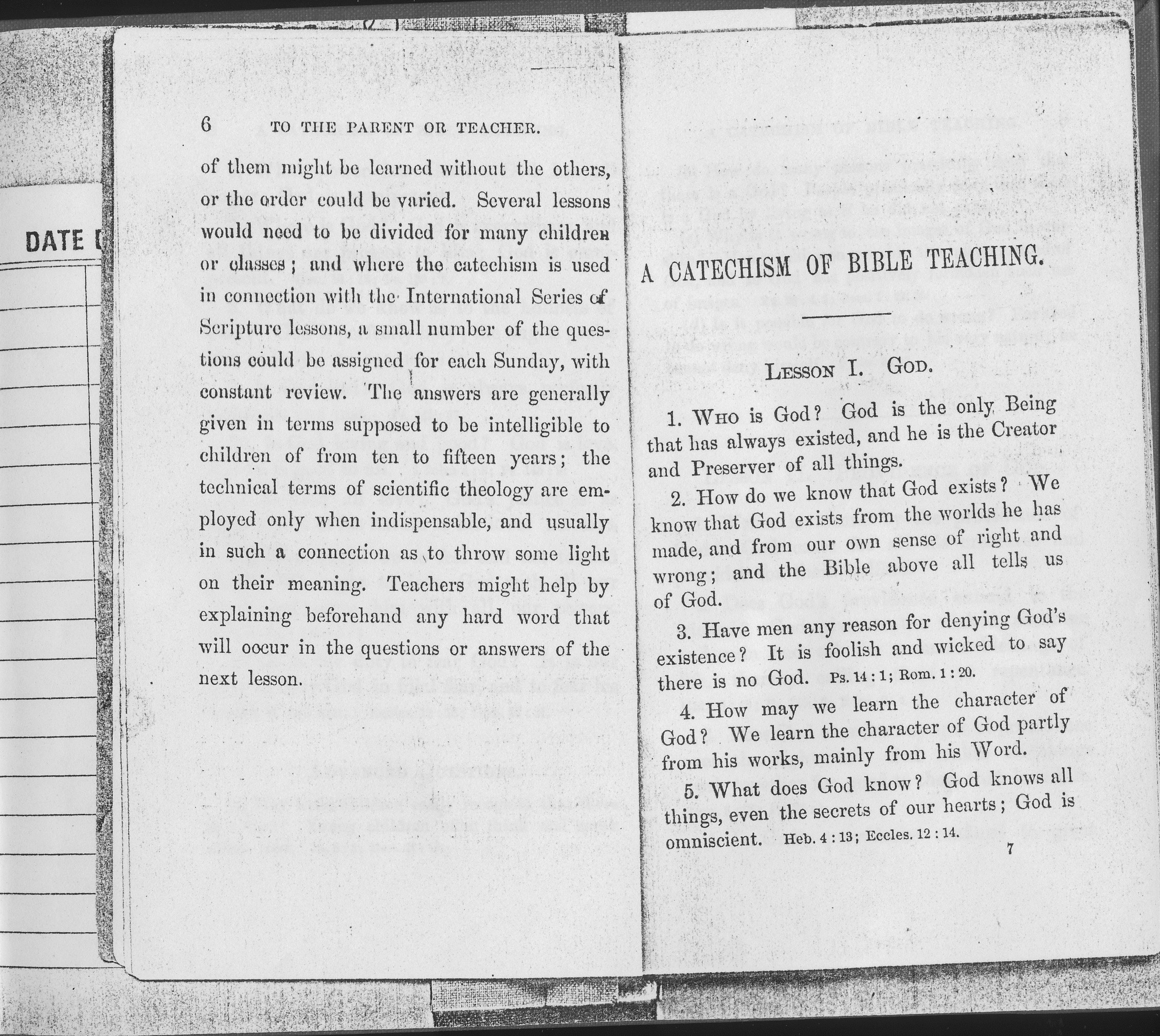
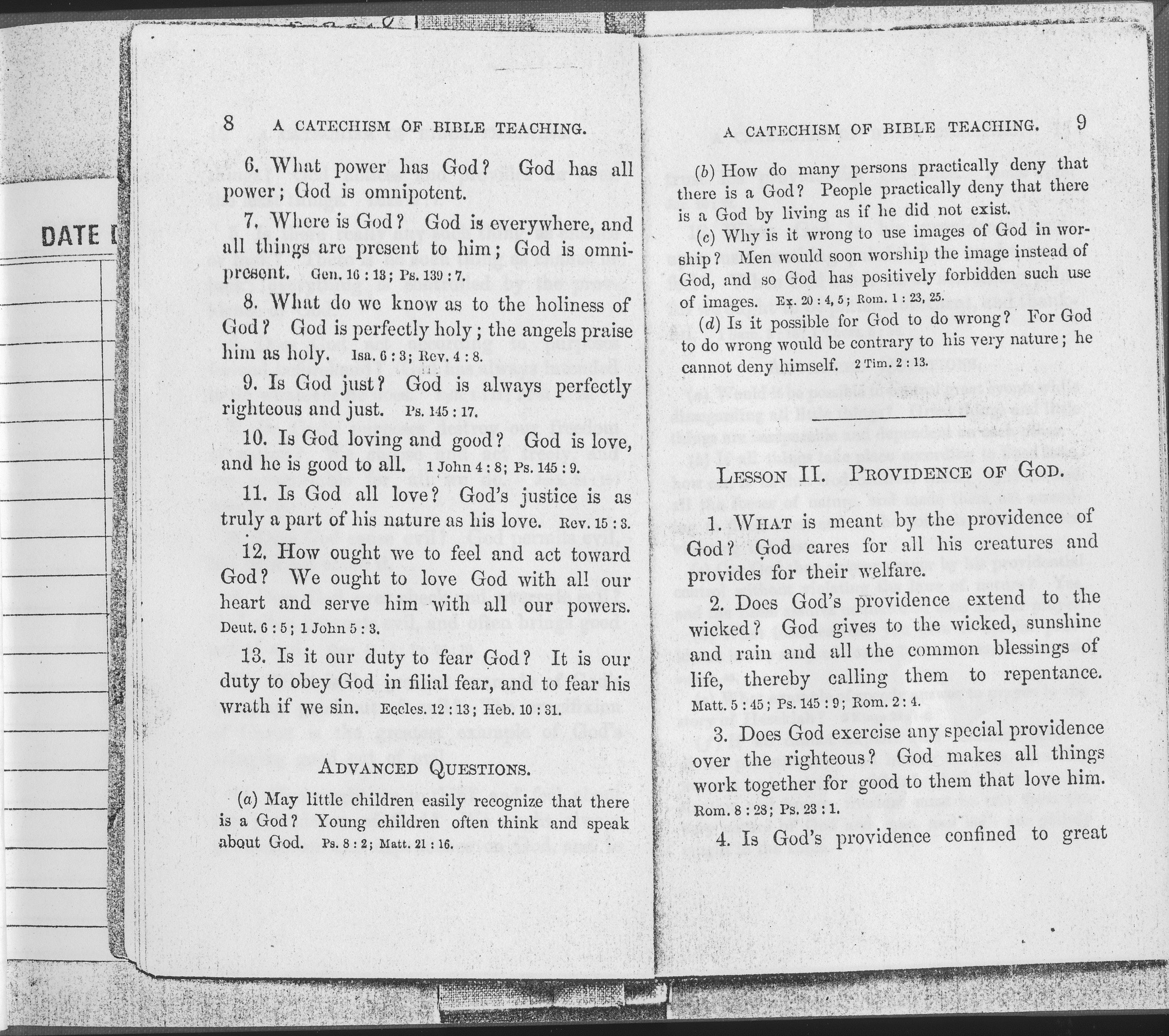
I’m working on a catechism that I intend to self-publish. It’ll be an amalgamation of the Heidelberg Catechism, the Westminster Larger Catechism, Spurgeon’s catechism (itself an edited, not original, work), Keach’s catechism and a few odds and ends from me.
I intend to give it away to new members who join the congregation where I minister, and to have it available as a cheap, inexpensive resource I can point people towards. I self-published my last book, and I am very happy with Amazon’s self-publishing options. They produce a quality trade paperback that’s quite a bargain if you have the patience to do your own editing and layout.
I’m using the Heidelberg Catechism as my base, lightly editing some of the questions and answers as I go. Occasionally, I’m adding significant portions of material. One of them is regarding Christ and His Sonship. Compare the original material and my revisions, below:
Original
Q: Why is he called God’s “only begotten Son” when we also are God’s children?
A: Because Christ alone is the eternal, natural Son of God. We, however, are adopted children of God—adopted by grace through Christ.
My revision
Q: Why is He called God’s one and only (or “begotten”) Son, since Christians also are children of God?
A: Christ is not God’s “Son” in a biological sense, but in a different sense. It means He has the same nature as the Father, which means the same power, glory majesty and honor. Thus, Luke calls Barnabas a “son of encouragement,” which means he has an encouraging nature. This is the way in which Jesus is God’s “Son;” He is equal.
Christians, however, are children of God by adoption, through grace, for Christ’s sake. We do not naturally belong to Him. Instead, He wrests sinners from Satan’s grasp, brings us into His family and clothes us in His Son’s perfect righteousness.
Differences
The original kept the unfortunate rendering “only begotten,” which really means “unique” or “one and only.” So, I changed it.
It also, I believe, retained a wrong idea of what “sonship” means. I don’t believe in the doctrine of eternal generation, and I don’t believe most people (even theologians) can really explain what it means in normal language without conveying the idea of derivation. I am certainly not alone here; no less a theologian than Millard Erickson (see his excellent Who’s Tampering with the Trinity?) criticizes the doctrine. See especially David Beale’s discussion of eternal generation’s doctrinal development (Historical Theology In-Depth, 2 vols. [Greenville: BJU Press, 2013], 2:142-170).
So, I don’t believe Christ’s sonship has anything to do with an eternal generation from the Father. The very idea smacks of some kind of derivation. I believe Christ’s sonship refers primarily to His equality with the Father, and I made sure to bring this out.



 The Eccentric Fundamentalist