What is Providence?

What is Providence?

Providence is what Christians call “God governing things to turn out like He decided.” Either God is trying really hard to make something work, or He directs and controls reality. The scriptures tell us the second option is the right one. But, how does this work? This bible study considers what the scriptures have to say about this issue, and why it matters for your life.

Here are three resources that you might find helpful when considering this topic:

  1. Thomas Watson, “A Body of Divinity,” pp. 89-95.
  2. 1689 London Baptist Confession of Faith, ch. 5.
  3. 1618 Belgic Confession of Faith, Article 13.

Romans 11 and the parable of the olive tree

Romans 11 and the parable of the olive tree

In Romans 11, Paul finally answers the question he’s been dancing around since ch. 9: what is God’s plan for the people of Israel?

  • He’s defended God against false accusations (Rom 9:6-29).
  • He’s told us the nations have obtained righteousness from God, even though they didn’t pursue it. However, the people of Israel have come up empty. “But Israel, chasing after law as the means of righteousness, didn’t achieve that goal. Why not? Because they’re chasing righteousness not by means of faith, but as if by means of works,” (Rom 9:31-32; my translation).
  • Paul explained: “… because they don’t know the special righteousness which God offers and are trying to set up their own righteousness, they haven’t submitted themselves to this one-of-a-kind righteousness from God,” (Rom 10:3; my translation).[1]

So, in Romans 11, Paul at last answers the question. But we’re making a mistake if we reduce this to an academic question about “Israel.” The real question is: “how will God’s divine rescue plan come together?” Christians sometimes have incomplete ideas about this—they either ignore His promises to the people of Israel or maximize those promises and lose sight of the whole. So, how will God’s plan come together, and what will it look like when it’s finished?

1. God hasn’t rejected the people of Israel (vv. 11:1-6)

God has not rejected His people.[2] Perhaps a better translation is “repudiate,”[3] which gives the idea of to thrust or drive away[4]—to cast off, disown, to refuse to be associated with.[5] How could God have disowned His people if Paul himself is a native Israelite (Rom 11:1)? God has known the people of Israel for a long time[6]—He has a relationship with them (Rom 11:2). It is not over for them.

So, what’s happening, then? Why have the people of Israel not accepted Jesus as their Messiah? Does God intend to rescue (a) all the people of Israel, or (b) a group from within the larger number?

Paul explains that, for the moment, God is working through a remnant. Just as He reserved a small core of people for Himself during the prophet Elijah’s day, “[s]o too, at the present time there is a remnant chosen by grace,” (Rom 11:5). And, then and now, these are people God has reserved for Himself—salvation is ultimately the result of God’s specific grace(Rom 11:4).[7] Whatever God is up to, for right now He’s only rescuing a smaller group of Jewish people.

This rescue is by means of grace, not by means of works[8]—or else it wouldn’t be called “grace” (Rom 11:6). This is what the people of Israel had missed (Rom 9:30 – 10:4). If I owe you money, when I pay you it’s not an expression of love or friendship—it’s a business transaction. With God, His divine favor and love is a gift, not a business transaction.

2. Instead, God is punishing the people of Israel (vv. 11:7-10)

So, if God hasn’t repudiated the people of Israel, what is He doing with them?

The people of Israel had chased after righteousness but missed the boat. The chosen ones among them had made it, “but the others were hardened,” (Rom 11:7). The idea here is a divine blinding, a veil of sorts, a darkening of the mind—a mental block that makes them “not get it.”[9]

This is a punishment which follows the failed chase—“God permits them to become entangled in their own No.”[10] If God is God, then He has the power to act upon our hearts and minds so that we make real, voluntary decisions, but in the manner He wants (cp. Jn 12:39-40). God channels our desires towards the goal He’s determined. This is not a new thing:

  • When Moses preached to the people of Israel on the eastern banks of the Jordan River, he recounted Israel’s long and sad tale of disobedience. Paul quotes Moses here in support: “God gave them a spirit of stupor, eyes that could not see and ears that could not hear, to this very day,” (Rom 11:8; quoting Deut 29:4).
  • King David called out to God in misery and asked for judgment on his enemies: “May the table set before them become a snare; may it become retribution and a trap. May their eyes be darkened so they cannot see, and their backs be bent forever,” (Rom 11:9-10; quoting Ps 69:22-23).

Paul says the same thing has happened to the people of Israel. God hasn’t repudiated or disowned them—He’s punishing them.

3. What’s the point of God’s punishment? (vv. 11:11-32)

Paul writes:

So, I’m asking: “they didn’t stumble and ruin themselves, did they?” May it never be! Instead, because of their false step, the divine rescue [goes] to the nations, so that it will make the people of Israel jealous.[11]

Romans 11:11; my translation

There you have it. Israel’s “false step” or “trespass—their rejection of Christ as the long-promised prophet, rescuer, and king—triggers God’s pivot to the nations. God is making the people of Israel jealous, envious (cp. Rom 10:19). Interestingly, Paul’s focus is not the nations per se. Instead, he frames the people of Israel as the hinge upon which God’s whole rescue plan turns.[12] The idea is that the people of Israel will see God showing love + grace to the nations, become jealous, re-evaluate, then choose divine rescue through Jesus.

This obviously hasn’t yet happened. Right now, the people of Israel either (a) don’t care, or (b) reject Christ. The people of Israel will never become jealous unless they first agree that Jesus is their Messiah. For example, one kid won’t be jealous of the other’s cookie unless they both agree the cookie is worth having! I’m not jealous if my wife eats plain Lays potato chips, because I don’t like plain Lay’s potato chips.

So, when will God change their minds and make the people of Israel jealous, so they’ll want Jesus as their king, too? During the Millennium (see Zech 12:10ff). But Paul ignores this question—he homes in on “the nations” who will read his letter. He deploys a sort of parable to explain God’s divine rescue plan.

3.1. The parable of the olive tree (vv. 11:13-24)

Paul is the apostle to the nations. But, along the way, he hopes to “somehow arouse my own people to envy and save some of them,” (Rom 11:14). Remember that, for the moment, God is saving a remnant of the people of Israel and Paul aims to scoop some of them up as he goes along. He declares “if the root is holy, so are the branches” (Rom 11:16). That is, if the people of Israel are the channel for all the covenants, the patriarchs, the promises (Rom 9:3-5)—i.e., “the root” of the Christian family—then surely the “branches” downstream of the patriarchs (the people of Israel alive in this present age) have a future, too.[13] Their restoration will be like a resurrection from the dead (Rom 11:16)!

Paul now segues into the olive tree parable:

If some of the branches have been broken off, and you, though a wild olive shoot, have been grafted in among the others and now share in the nourishing sap from the olive root, do not consider yourself to be superior to those other branches.

Romans 11:17-18

God has broken some of these downstream Israelite “branches” off, and grafted non-native “olive shoots” into the tree. They “now share in the nourishing sap from the olive root.” This is not a substitution or a replacement—it is an unexpected addition. Both (a) the native branches which remain, and (b) the non-native branches which God has added to the tree, partake of the same nutrients from the same root. “The Gentiles nourish themselves on the rich root of the patriarchal promise”[14] because, as the apostle writes elsewhere, “if you belong to Christ, then you are Abraham’s seed, and heirs according to the promise,” (Gal 3:29).

Because these new “olive shoots” are non-native, they mustn’t become arrogant. “You will say then, ‘Branches were broken off so that I could be grafted in,’” (Rom 11:19). This is true, but the people of Israel were “hardened” or “blinded” (i.e., branches cut off from the tree) because of their unbelief. In contrast, the nations (i.e., the non-native olive shoots) only remain “in” this tree and stand firm because of faith. Faith is the determining factor, so “[d]o not be arrogant, but tremble,” (Rom 11:20).

If you ever get to the point that you think your relationship with God is because of who you are, what you’ve done, what you bring to the table—that it’s about something other than faith + trust in Jesus (Rom 11:20)—then you’ll be cut out of the tree just as surely as the people of Israel have been (Rom 11:22).

The players in the parable are now clear:

One olive tree → One family of God

Two types of branches on this tree → Two different people groups within God’s family

There is (a) one family of God, (b) from two different places, (c) drawing on the same Lord, the same faith, the same baptism (Eph 4:5; i.e., the same sap). There is one flock, governed by the same shepherd and king. There is the same divine rescue, the same love, the same grace, the same forgiveness. This is the secret or mystery which has now been revealed by the Holy Spirit to God’s apostles and prophets: “the secret is that, through the Good News, the nations are fellow-heirs, and united in one family, and sharers together in God’s promise in relationship with Christ Jesus,” (Eph 3:6, my translation).

  • Jesus spoke of “other sheep” that were not native to His flock: “I must bring them also. They too will listen to my voice, and there shall be one flock, and one shepherd,” (Jn 10:16).
  • John wrote that the high priest Caiphas spoke better than he knew when he suggested it would be for the greater good if they killed the troublesome Jesus: “[H]e prophesied that Jesus would die for the Jewish nation, and not only for that nation but also for the scattered children of God, to bring them together and make them one,” (Jn 10:51-52). This refers to the nations.
  • The prophet Isaiah records the words of the mysterious “suffering servant” as he recalls Yahweh’s instructions. It wasn’t enough for the Servant to just rescue the people of Israel: “I will also make you a light for the Gentiles, that my salvation may reach to the ends of the earth,” (Isa 49:6).

This means Paul’s olive tree parable is a restatement of an old promise in new clothes. And to be sure, it’s not over for the people of Israel (cp. Rom 11:11)—“if they do not persist in unbelief, they will be grafted in, for God is able to graft them in again,” (Rom 11:23).

3.2. This parable means the people of Israel have a future (vv. 11:25-32)

Paul is using the parable of the olive tree to explain God’s rescue plan—how does the tree come to its finished form? It will be a three-step process:

I do not want you to be ignorant of this mystery, brothers and sisters, so that you may not be conceited: Israel has experienced a hardening in part until the full number of the Gentiles has come in, and in this way all Israel will be saved.[15]

Romans 11:25-26

It’s never been a secret that God plans to rescue His people. What has been a secret is the specific way this rescue plan happens. Paul doesn’t want the nations to be in the dark any longer, else they might become arrogant and think themselves wiser than they are. Here, Paul writes, is the mystery:

  • First, the most people of Israel do not believe God’s good news of righteousness as a gift, by means of faith. Instead, they choose to pursue it by means of “resume-ism.” So, this majority of Israelites are the branches whom God has “broken off” and to whom He’s temporarily sent “blindness” and “hardness of heart”—a dullness of spirit.
  • So, second, God has now pivoted to the nations and to the Jewish remnant—the “wild olive shoots” are being grafted into the tree. This present stage of God’s rescue plan will last “until the full number of the nations have entered in” and joined God’s kingdom family, at which time God lifts the divine “blindness” and rescue operations will proceed for the people of Israel.
  • And so, third, this is how “all Israel will be rescued.”

The “all Israel” refers to the ethnic Jewish people who are alive at the time God moves to the third stage, after the full number of the nations have entered the family.[16]

  • It cannot mean “every Jewish person who ever lived.” God isn’t a universalist (even at the sub-category level), and it would be absurd to suppose Caiphas will be walking the streets of glory.
  • Paul isn’t referring to a re-defined “Israel” consisting of all true believers (cp. Gal 3, 6:16; Rom 4). His focus here in Romans 9-11 is ethnic Jewish people.
  • He isn’t referring to all “true” ethnic Jewish people from all time, because Paul’s burden in Romans 9-11 is to explain what’s happening to the people of Israel right now in relation to His divine timetable.

But, through it all, it’s still the same Jesus, the same king, the same divine rescue mission. Two people groups merged into the same family, the same tree, partaking of the same “sap.” God has not pushed away the people of Israel—there is (a) the remnant which can meanwhile choose to pursue God by means of faith, and (b) the entire number of Jewish people who will embrace Jesus as Messiah after the full number of the nations have come in. The people of Israel “are loved on account of the patriarchs, for God’s gifts and his call are irrevocable,” (Rom 11:28-29).

This three-stage rescue plan, culminating in God rescuing all the ethnic people of Israel then alive when Christ returns, is just what scripture foretold (“as it is written,” Rom 11:26). The prophet Isaiah tells us that one day the Lord looked about and saw the human situation was hopeless—that He Himself must enter the arena to set things right. “So his own arm achieved salvation for him, and his own righteousness sustained him,” (Isa 59:16). And so the Redeemer would one day come to Zion—“to those in Jacob who repent of their sins” (Isa 59:20). The covenant Yahweh swore to make with His people would take away their sins, because “My Spirit, who is on you, will not depart from you,” (Isa 59:21). The apostle quotes the former citation and paraphrases the latter as support for a future for the people of Israel (Rom 11:26b-27).

4. One God and father of all

Paul never again probed so far behind the divine curtain. The see-saw of God’s rescue plan—Israel, then the nations, then Israel again (Rom 11:12, 30-32)—overwhelms him. “How unsearchable his judgments, and his paths beyond tracing out!” (Rom 11:33).

Commentators have spilt gallons of ink and gigabytes of megapixels on interpreting this passage—especially Romans 11:25-26. What is clear is that the people of Israel have a future. It’s not a “blank cheque” future which encourages a laissez-faire life of spiritual fakery. Nor is it a “I’ll never get tickets to the show!” kind of defeatism that one has when trying to purchase Taylor Swift concert tickets. There will be more than a “lucky few” Israelites grafted back into God’s olive tree! It is a real future—(a) the remnant chosen by grace now, followed by (b) “all Israel” present here when Christ returns later.

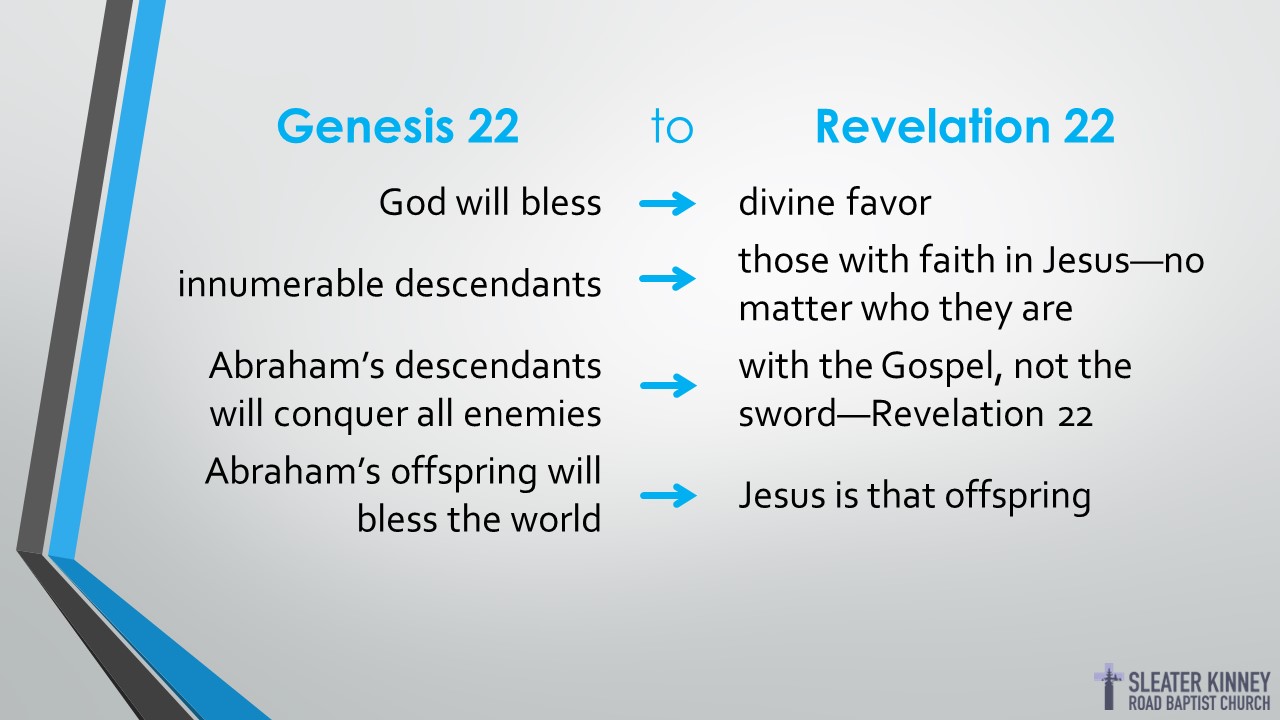
Yes, God has unfinished business with Israel during the Millennium, but that is merely the last stop before journey’s end. The “Israel maximizers” make a mistake if they hop off the train here,[17] because there is yet one more stop to go. The train decommissions in Revelation 22, when there will be one family, one tree, “one God and Father of all, who is over all and through all and in all,” (Eph 4:6). God will restore Eden, and the tree of life will be available to all “for the healing of the nations” (Rev 22:1-5).

Of course, Paul doesn’t discuss that here. But the people of Israel will be there … along with all the other nations who are blessed through Abraham (Gal 3:8) and have become His offspring.


[1] Gk: ἀγνοοῦντες (adverbial, causal) γὰρ (explanatory) τὴν (monadic) τοῦ θεοῦ (gen. source) δικαιοσύνην καὶ τὴν ἰδίαν (δικαιοσύνην) ζητοῦντες (adverbial, causal—paired with ἀγνοοῦντες) στῆσαι (BDAG, s.v., sense 3; anarthrous, complementary), τῇ δικαιοσύνῃ (monadic) τοῦ θεοῦ (gen. source) οὐχ ὑπετάγησαν (passive w/middle sense, constative).

[2] The fact that the people of Israel are “his people” (τὸν λαὸν αὐτοῦ; Rom 11:1) is significant.

[3] BDAG, s.v. “ἀπωθέω,” sense 2; p. 126.

[4] LSJ, s.v. “ἀπωθέω,” senses 1, 2; p. 232.

[5] OED, s.v. “repudiate,” senses 1a, 2a.

[6] It goes too far to plead that “foreknow” here (προέγνω) means something like “to choose beforehand.” The word can bear that meaning (e.g. 1 Pet 1:20), but the more common use is just “to know beforehand or in advance” (BDAG, s.v., sense 1, p. 966) or to “foreknow” (LSJ, s.v., sense 3). Reformed exegetes who wish to carry water for unconditional single election will find fertile ground elsewhere in scripture, but Romans 11:2 is not the place to plant that flag.

[7] The 1833 New Hampshire Confession explains: “… regeneration consists in giving a holy disposition to the mind; that it is effected in a manner above our comprehension by the power of the Holy Spirit, in connection with divine truth, so as to secure our voluntary obedience to the gospel,” (Article VII).

[8] Gk: εἰ δὲ χάριτι (dative of means), οὐκέτι ἐξ (means) ἔργων.

[9] See BDAG, s.v. “πωρόω,” and LSJ, s.v., sense 3.

[10] Emil Brunner, The Epistle to the Romans, trans. H.A. Kennedy (Philadelphia: Westminster, 1959), p. 94.

[11] Λέγω οὖν, μὴ ἔπταισαν (fig. for “sin”) ἵνα πέσωσιν (result clause; BDAG, s.v., sense 2b); μὴ γένοιτο· ἀλλὰ τῷ αὐτῶν (dir. obj) παραπτώματι (dat. reason) ἡ σωτηρία (monadic article) τοῖς ἔθνεσιν (implied verb of “going,” dir. obj.) εἰς τὸ παραζηλῶσαι (purpose clause) αὐτούς (dir. obj. of infinitive—refers to people of Israel).

[12] John Murray, The Epistle to the Romans, vol. 2 (Grand Rapids: Eerdmans, 1965), p. 76.

[13] Leon Morris, The Epistle to the Romans (Grand Rapids: Eerdmans, 1988), pp. 411-412.

[14] Brunner, Romans, p. 96.

[15] Gk: Οὐ γὰρ θέλω ὑμᾶς ἀγνοεῖν, ἀδελφοί, τὸ μυστήριον τοῦτο (dir. obj.), ἵνα μὴ ἦτε (purpose clause) παρʼ ἑαυτοῖς φρόνιμοι. ὅτι (appositional—explains the mystery) πώρωσις ἀπὸ μέρους (paired to τῷ Ἰσραὴλ) τῷ Ἰσραὴλ (dative of reference) γέγονεν ἄχρι οὗ τὸ πλήρωμα τῶν ἐθνῶν (partitive) εἰσέλθῃ 26 καὶ (conclusion) οὕτως (adverb of manner) πᾶς Ἰσραὴλ σωθήσεται, καθὼς γέγραπται.

“Now, I don’t want you all to be in the dark about this secret, brothers and sisters, so that you won’t think you’re wiser than you are. The secret is that a dullness of spirit has come upon some of the people of Israel until the full number of the nations have entered in. And so, that is how all Israel will be rescued …”

[16] “… Paul speaks of a future salvation of ethnic Israel near or at the return of Jesus Christ,” (Tom Schreiner, Romans, in BECNT, 2nd ed. (Grand Rapids: Baker, 2018), pp. 598ff). See also Douglas Moo, The Epistle to the Romans, in NICNT (Grand Rapids: Eerdmans, 1996), p. 723.

[17] Tom Schreiner rightly warns: “The purpose of this revelation is not to titillate the interest of the church or to satisfy their curiosity about future events. The mystery is disclosed so that the gentiles will not fall prey to pride …” (Romans, p. 595).

Romans 10 and going the wrong way

Romans 10 and going the wrong way

Plenty of people are zealous for God, but their zeal is based on bad information. They actually don’t know God at all. This is Israel’s problem.

In Romans 9 to 11, the apostle Paul segues from his theological musings about salvation to a question no Christian can ignore—what about Israel? He spends most of Romans 9 defending God from accusations of failure (9:6-13), unjustness and cruelty (9:14-18), and unfairness (9:19-21). God dispenses mercy and hardness of heart as He sees fit (Rom 9:14, 18). The clay has no right to object to the potter’s decision (Rom 9:20-21).

These matter-of-fact observations from behind the divine curtain seem rather cold. But, Paul then pivots to emphasize personal responsibility. He sums the matter up (“what then shall we say?” Rom 9:30) by placing blame on Israel. They’re chasing after the Mosaic law as the means of righteousness, but haven’t reached that goal. Why not? Because they’re chasing righteousness not by means of faith, but as if by means of works (Rom 9:32).[1]

‌It seems the problem is about where to find truth—has God given us His message? If so, where is it? Or has He left us to figure it out on our own?

Passionate but clueless (vv. 10:1-4)

The tragedy is that Paul bears witness that the people of Israel do have passion for God, but it’s based on wrong ideas, wrong information (Rom 10:2).[2] Where do we get the right ideas? The right information? We get it from (a) the scriptures, by means of (b) the illumination and application of the Holy Spirit, while (c) in community with God’s people. Paul will spend much of Romans 10 demonstrating that the people of Israel have all the information they need—they just ignored it.

Paul explains that, because the people of Israel don’t know the special righteousness which God offers and are trying to set up their own righteousness, they haven’t submitted themselves to this one-of-a-kind righteousness from God (Rom 10:3).[3] God offers His own righteousness as a gift (Rom 1:17).[4] Instead, the people of Israel do what many of us do—they want to bring their resumes to God, instead.

We know how resumes work. We see a job posting. We’re interested. We scan the desired and required qualifications. We then tailor our resumes to show how we meet these requirements. We submit the application and hope for the interview. The resume is our credential which says, “I’m qualified! Pick me!” This is what the people of Israel are doing—they’re trying to set up their own righteousness, rather than accepting the special righteousness which God offers. So, they don’t submit to God’s righteousness, which would mean shredding their resumes and accepting His righteousness as a gift.

The people of Israel are mistakenly using the law as a vehicle for salvation, but that isn’t its job. The law has no power to grant life (Gal 3:21).[5] Instead, the law was a protective guardian for us until Christ arrived. Now that He’s arrived, we’re no longer under the protective guardian’s authority (Gal 3:24-25).[6]

This makes the people of Israel’s failure so frustrating. Christ is the very purpose of the law. The law shows us ourselves as if in a mirror, telling us that we need a permanent solution to our moral brokenness. The law points beyond itself to the One who will fix us, and that One is Christ. Because He is the purpose of the law, Christ brings righteousness to all who believe (Rom 10:4).[7]

Righteousness by … what? (vv. 10:5-13)

But, the path the people of Israel have chosen is to pervert the Mosaic law from a regulatory guardrail into a vehicle for salvation. They support this falsehood by a misinterpretation of texts like Leviticus 18:5—an error Paul refers to as “righteousness by means of the law” (Rom 10:5; cp. Gal 3:12).[8]

This error is absurd, because Israel has the right information. There is no mystery. They’re without excuse. Long ago, when Moses preached to the people on the east bank of the Jordan River, he begged them to love God, to serve Him from their heart, to stay faithful. At the end of his sermon, Moses said: “Now, what I am commanding you today is not too difficult for you or beyond your reach,” (Deut 30:11). Why not? Because they already have what they need (cp. 2 Pet 1:3). They don’t need to go to heaven to find the answer. They don’t need to cross oceans to search for a magic solution from an exotic land. “No, the word [perhaps better as “message,” see NLT] is very near you; it is in your mouth and in your heart so you may obey it,” (Deut 30:14).

All they have to do is trust and obey. Paul quotes Moses’ words and parallels them to Christ (Rom 10:6-8). The people of Israel ought to know this. Paul takes Moses’ “mouth + heart” equation and applies it to the new covenant: “If you declare with your mouth, ‘Jesus is Lord,’ and believe in your heart that God raised him from the dead, you will be saved,” (Rom 10:9).

This is the way. Righteousness comes by means of faith, not works. Isaiah knew this—he said: “Anyone who believes in him will never be put to shame,” (Rom 10:11; quoting Isa 28:16 LXX).[9] The prophet Joel was on the same page: “Everyone who calls on the name of the Lord will be saved,” (Joel 2:32). It’s clear that the Old Covenant prophets didn’t believe righteousness came by means of works! Why, then, are the people of Israel so confused?

Talking to a wall (vv. 10:14-21)

A series of things must happen to tell people about God’s good news; (a) missionaries must be sent, (b) so people can hear, (c) so they can believe, (d) and then call out to Jesus for salvation (Rom 10:14-15). And yet, it’s clear that the people of Israel don’t believe, cannot hear the truth, and don’t want to understand.
Why not?

First, Paul writes, unbelief in Israel is nothing new. Even Isaiah asked, “Lord, who has believed our message?” (Rom 10:16, quoting Isa 53:1). So, to combat the disbelief which accompanies the Gospel, people need to actually hear, and that happens by means of the message about Christ (Rom 10:17).

So, have the people of Israel heard? Of course. Paul quotes a passage about how God reveals Himself even in creation itself—the voices of the heavens and the skies go out into all the earth as witnesses to His eternal power and divine nature (Rom 10:18, quoting Rom 19:4; cp. Rom 1:18). Paul seems to apply the concept to the Gospel, which is going out into all the world. It’s known—even notorious: “These men who have turned the world upside down have come here also …” (Acts 17:6, RSV).

They’ve heard, but have they understood? Paul drives a stake into that dodge, too. They do understand about God—they just reject Him. He quotes from Moses, who recounted Israel’s history of rebellion and stubbornness. Moses predicted that, one day, God would turn from Israel to focus His love and grace on outsiders. This would provoke envy and anger among the people of Israel (Rom 10:19, quoting Deut 32:21). Those who didn’t seek God or ask for Him will somehow find their way to Him (Rom 10:20, quoting Isa 65:1).[10] The outsiders will become insiders, and the so-called “insiders” will be revealed to be clueless (see esp. Lk 13:28-30).

And yet,[11] to the people of Israel he says: “All day long I have held out my hands to a disobedient and obstinate people,” (Rom 10:21, quoting Isa 65:2). God stands there, saying “Here am I, here am I,” (Isa 65:1).

Going the wrong way

The problem Paul pinpointed was this: plenty of people (like Israel) are zealous for God, but their zeal is based on bad information. And so, they don’t know God at all.

‌Why has this happened?

Paul cites the Old Covenant scriptures nine times. He proves there is no excuse for resume-ism—for establishing our own righteousness, our own credentials to present to God. He’s already given us His message, which we can know by means of (a) the scriptures, (b) illumination from the Holy Spirit, and (c) learning from the Christian community. There’s no need to search or wonder. The message is known. It’s available. It’s written down. It’s here.

‌There are no “required and desired” qualifications. There is only accepting God’s gift. He offers to give you His righteousness—His Son’s resume—because your resume won’t ever be good enough. There is only (a) trusting in Jesus’ rescue message in your heart, and (b) confessing publicly that Jesus is Lord and King, and then (c) you’ll be saved.

‌Israel hasn’t yet done that—they’re going the wrong way—and that’s why they aren’t saved. The same goes for everyone else who isn’t yet one of God’s adopted children. But, just like the prophet Joel says, “everyone who calls on the name of the Lord will be saved.”


[1] Gk: Ἰσραὴλ δὲ διώκων (adjectival) νόμον δικαιοσύνης (gen. means) εἰς νόμον οὐκ ἔφθασεν. διὰ τί; ὅτι (insert an implied διώκων … δικαιοσύνης) οὐκ ἐκ πίστεως ἀλλʼ ὡς ἐξ ἔργων.

“But Israel, chasing after law as the means of righteousness, didn’t achieve that goal. Why not? Because they’re chasing righteousness not by means of faith, but as if by means of works.”

[2] Gk: μαρτυρῶ [LSJ, s.v., sense I.2; BDAG, s.v., sense 1] γὰρ αὐτοῖς [dat. ref.] ὅτι ζῆλον [dir. obj. ἔχουσιν] θεοῦ [obj. gen.] ἔχουσιν ἀλλʼ οὐ κατʼ [correspondence] ἐπίγνωσιν. “I’m bearing witness about them that they have passion for God, but it’s based on wrong ideas.”

[3] Gk: ἀγνοοῦντες [adverbial, causal] γὰρ [explanatory] τὴν [monadic] τοῦ θεοῦ [gen. source] δικαιοσύνην καὶ τὴν ἰδίαν [δικαιοσύνην] ζητοῦντες [adverbial, causal–paired with ἀγνοοῦντες] στῆσαι [BDAG, s.v., sense 3; anarthrous, complementary], τῇ δικαιοσύνῃ [monadic] τοῦ θεοῦ [gen. source] οὐχ ὑπετάγησαν [passive w/middle sense, constative].

“What I’m saying is that, because they don’t know the special righteousness which God offers and are trying to set up their own righteousness, they haven’t submitted themselves to this one-of-a-kind righteousness from God.”

[4] Gk: δικαιοσύνη γὰρ θεοῦ [gen. source] ἐν αὐτῷ ἀποκαλύπτεται ἐκ [means] πίστεως εἰς [purpose] πίστιν. “Because in the Gospel, righteousness from God has been revealed by means of faith so that people would believe.”

[5] Gk: εἰ γὰρ ἐδόθη νόμος ὁ δυνάμενος ζῳοποιῆσαι, ὄντως ἐκ νόμου ἂν ἦν⸄ ἡ δικαιοσύνη. “Because, if a law had been given [passive = given by God] that had the power [attributive participle, linked to “law”] to grant life, then certainly righteousness would have come by means of the law.”   

[6] Gk: ὥστε ὁ νόμος παιδαγωγὸς ἡμῶν γέγονεν εἰς Χριστόν, ἵνα ἐκ πίστεως δικαιωθῶμεν·ἐλθούσης δὲ τῆς πίστεως οὐκέτι ὑπὸ παιδαγωγόν ἐσμεν. “This means [inferential conjunction] the law was a protective guardian [predicate nominative] until Christ arrived, so that [purpose clause] we would be declared righteous by means of faith. But, now that [temporal, adverbial participle] this faith [i.e., Jesus—anaphoric article] has come, we are no longer under the protective guardian’s authority.”

[7] Gk: τέλος [pred. nom; BDAG s.v., sense 3] γὰρ νόμου Χριστὸς [obj. gen.] εἰς [result] δικαιοσύνην παντὶ τῷ πιστεύοντι [indirect obj.]. “Christ is the purpose of the law (cp. Gal 3:24). As a result, He brings righteousness to all who believe.”

[8] Gk: δικαιοσύνην τὴν ἐκ [τοῦ] νόμου.

[9] Paul quotes from the LXX, which differs from the Hebrew. This is one of the passages that complicates a simplistic understanding of scriptural inerrancy.

[10] The context of Isaiah 65:1 supports that Israel is the nation that did not seek God, but Paul seems to re-purpose the verse for his own ends.

[11] The NIV’s “but” doesn’t seem quite right. Paul’s point is that, despite God’s pivot to the Gentiles en masse, He still holds out an invitation to Israel. So, something like “and yet” seems a better choice to render the conjunction here: πρὸς δὲ τὸν Ἰσραὴλ λέγει. But, to be sure, both options emphasize contrast.

On Lady Tremaine and God’s Promise

On Lady Tremaine and God’s Promise

The stepdaughter was essentially a slave in her own home. But, what could she do? Her father had died, and the cold and cruel stepmother wasted no time in forwarding the prospects of her own two homely daughters. And so, bit by bit, the poor stepdaughter became no better than a servant—forced to sweep, clean, cook, and tend to the very home in which she had known such joy and carefree light when she was a little girl.

I’m speaking, of course, about Cinderella. There is a moment early in the film when word comes from on high that there was to be a royal ball in honor of the Prince. The boy hadn’t yet married and so the King and the Grand Duke had decided enough was enough—“it’s high time he married and settled down!”

The stepmother, Lady Tremaine, saw her chance. What an opportunity for her daughters! If she could marry one of them off to the Prince, her life’s work would be nearly complete! Cinderella, lurking in the corner, sidled over bravely and declared she could go to the ball, too! Her stepsisters mocked her. How ridiculous! Never!

But Lady Tremaine, never one to miss an opportunity to twist the knife into the odd back, said she could go. “I see no reason why you can’t go… if you get all your work done.”

Cinderella is ecstatic, and rushes away to dig out an old dress from a closet. The stepdaughters descend upon their mother, aghast. How could she agree to such a thing! Outrageous! Didn’t she realize what she’d just said? Lady Tremaine smiled like an evil cat and purred, “Of course. I said, ‘if.’”

There is a moment of silence. Then, they all begin cackling. Cinderella won’t go to the ball—not if they can help it! They’ll make sure she doesn’t get her work done.

Lady Tremaine and her schemes are a helpful way to picture Paul’s point in our passage (Gal 3:15-22). God made a promise to Abraham—a promise based on faith and trust, not merit. Jesus is the ultimate “child of Abraham,” the one who makes all these promises come true. So, who partakes in these promises? It’s the ones who believe in the true “son of Abraham,” Jesus.

The alternative is to see God as a bit like Lady Tremaine, putting a theoretical “if you do this, then I give you that” out there all while knowing we can’t pull it off. This is basically what the Judaizers are proposing (see Gal 3:1-6). It’s a warped twisting of the Old Covenant, and it doesn’t lead anywhere. Cinderella wouldn’t have made it to the ball without a divine intervention from the Fairy Godmother, because she was trapped in a cycle she couldn’t break. So too, we can never complete a “follow these rules and I’ll give you salvation” program—it’s an escape room from hell from which we won’t ever find our way out.

Paul says there is a different way—a better way. The way it was supposed to be from the beginning. A way Abraham understood. He wants us to understand that, so he begins with an analogy about Abraham.

This article is part of a commentary series through the Book of Galatians. This article covers Galatians 3:15 – 22. You can find the rest of the series here: Galatians 3:1-6, and Galatians 3:7-14, and Galatians 3:23 – 4:7, and Galatians 4:8-20, and Galatians 4:21 – 5:12, and Galatians 5:13-26.

Let’s see what Paul has to say.

Brothers and sisters, let me take an example from everyday life. Just as no one can set aside or add to a human covenant that has been duly established, so it is in this case (Galatians 3:15).

Galatians 3:15

Sometimes it’s helpful to put things in everyday terms. Suppose you have a contract or some other legal arrangement.[1] We all know that, once the signatures are on the dotted line, then the deed is done. It’s sealed. You can’t add to or delete anything. It is what it is. Well, Paul says, it’s the same in this case with God and His arrangements with us!

“How so?” you ask. Paul answers …

The promises were spoken to Abraham and to his seed. Scripture does not say “and to seeds,” meaning many people, but “and to your seed,” meaning one person, who is Christ.

Galatians 3:16, quoting Genesis 12:7; 13:15; 24:7

God made a promise—an irrevocable contract—with Abraham and his descendant. But Paul points out something pretty curious. The promise was to Abraham and his descendant—singular. It wasn’t to all Abraham’s offspring, but to one descendant in particular, who is Christ.  

What does this mean?

If you’re a believer, then you’re metaphysically fused with Christ—made one with Him on an invisible level. Your bible translation probably has the phrase “in Christ” a lot in Paul’s letters, because it’s one of his favorite expressions. We’re “baptized into Christ,” “buried with Him through baptism into death,” “crucified with Him,” and “alive to God in Christ Jesus,” (Rom 6:1-11). All this language is expressing that, when we trust in Jesus, we’re made one with him in an unseen way. Perhaps the closest thing I can compare it to is a marriage; there’s a oneness that happens in marriage that’s unseen, hidden, but very real. What Paul is saying is these promises were to Abraham and His crowning descendent, Jesus—along with everyone else who has been made one with Him (see Gal 3:29).

God made several promises to Abraham (see Genesis 22:17-18), and all of them are fulfilled through Christ—including the promise of the land. Paul wrote, “Scripture does not say ‘and to seeds,’ meaning many people, but ‘and to your seed,’ meaning one person, who is Christ,” (Galatians 3:16). This “and to your seed” quotation is from the Greek version of Genesis 17:8, which refers to that land promise. Paul is saying that all the promises to Abraham—even the one about “the whole land of Canaan” (Gen 17:8)—are fulfilled by Christ as the representative son of Abraham (Mt 1:1).

This suggests that Abraham and his physical descendants are a foreshadowing of Jesus and His spiritual brethren.[2] If so, then we can understand all the precious promises to Abraham as shadows of a greater fulfillment—maybe something like this:

So, back to the point.

Paul is saying that, if God made unbreakable promises to Abraham and his descendant—a promise based on faith and trust—then God certainly hasn’t changed the terms of the promise later on. “It was not through the law that Abraham and his offspring (singular—Jesus) received the promise that he would be heir of the world, but through the righteousness that comes by faith,” (Romans 4:13). So, the Judaizers who are peddling the “work to earn your salvation” message are wrong. They have to be wrong. If they’re right, then God changed the terms of the agreement.

Darth Vader once said, “I’m altering the deal! Pray I don’t alter it any further …”[3] Well, God doesn’t alter deals. Unlike Vader, he’s trustworthy.   

What I mean is this: The law, introduced 430 years later, does not set aside the covenant previously established by God and thus do away with the promise. For if the inheritance depends on the law, then it no longer depends on the promise; but God in his grace gave it to Abraham through a promise.

Galatians 3:17-18

The Mosaic law didn’t change the terms of the deal. If we have faith like Abraham, then we’re children according to the promise. Things didn’t change at Mt. Sinai. Instead, it’s the wrong ideas of relationship with God that has warped the common understanding of the Mosaic law by Jesus’ day, and Paul’s, too. Inheritance of the promise isn’t based on effort, but on faith.

Why, then, was the law given at all?

Galatians 3:19

That’s a fair question. If the Mosaic law was never a vehicle for salvation, then what was it?

It was added because of transgressions until the Seed to whom the promise referred had come.

Galatians 3:19

Notice that all the promises to Abraham are summed up as one package (“the promise”—singular), and that Paul attributes this whole bundle to one representative “seed”—Jesus (see the same at Romans 4:13).[4] The Mosaic Law was a tool to hem us in until Christ would come. It told us how to live, how to act, how to maintain loving relationship with God and with each other. It told us how to be God’s people, for a particular time in a particular place, until Christ would arrive on the scene. Picture God’s people from the Exodus to Pentecost as being in a plane, circling the airport, waiting on clearance to land. They know they’ll land, but they aren’t yet there.

So, God told us how to live until He “landed the plane.” We break the law, we feel guilt, we confess our sin and perform the ritual to atone for that sin. We go on. It’s in this way that the Mosaic law “hems us in” and keeps us on the right track, until the Messiah arrives in the First Advent.

The law was given through angels and entrusted to a mediator. A mediator, however, implies more than one party; but God is one.

Galatians 3:19-20

The Mosaic law was entrusted to a mediator—Moses. But this new arrangement, this new covenant, is different. Now, there’s only one party. God Himself makes the contract and obligates Himself to carry it out. There is a straight line starting from (1) when God chose His people by promise with Abraham, (2) connecting right to His promise to David of a perfect king, and from there (3) on to God’s pledge of perfect peace through a new and better arrangement. Along this track, the Mosaic law is just a guardrail keeping us on the trail. It isn’t a different trail at all.

Is the law, therefore, opposed to the promises of God? Absolutely not! For if a law had been given that could impart life, then righteousness would certainly have come by the law. But Scripture has locked up everything under the control of sin, so that what was promised, being given through faith in Jesus Christ, might be given to those who believe.

Galatians 3:21-22

So, then, what does the Law have to do with God’s promises to Abraham? Well, first, if righteousness could have come by way of following the law, then it would have (cf. Gal 2:21). But, in the second place—and here is the crux of it all—the Mosaic law showed us our sin, reminded us of it all the time, so that we’d be ever more ready to embrace the permanent solution Christ offered when He came.

Paul uses a strange phrase. He says the Scripture “locked up everything under the control of sin,” (Gal 3:22). He seems to mean that, although it’s theoretically possible that a perfect person could come along, obey the law in every respect, and receive righteousness as a reward—it’ll never happen. Why not? Because Scripture (the entire Old Covenant canon) shows us we’re not that good. We never will be. It shows us that everything is “locked up” under sin’s power.[5] The original imagery is that of a school of fish swept up in a fisherman’s net—caught! We’re all trapped, as if the door of a great dungeon has swung shut on us.[6] So, that “perfect person” won’t ever come along in this world … unless that person comes from outside the bubble.

When we see God’s rules, then consider our own constant failure to live up to them, then we’re driven to put faith and trust in the promised Savior—the One who loved God perfectly and obeyed the law completely, in our place, as our substitute.[7] That dungeon swings shut … but why? “So that what was promised, being given through faith in Jesus Christ, might be given to those who believe,” (Gal 3:22). “It was to make them understand their real inner life, their alienation from himself, and their need of his grace.”[8]

All those promises to Abraham—which Paul once more sums up as one bundle of blessings (“what was promised”)—are given to those who believe and have faith in Jesus Christ. Once more Abraham, his physical descendants, and the literal promises in the land corresponded to and prefigured something much better.

That was the Law’s purpose. It wasn’t a vehicle for salvation. It was tool to make us look forward to the Messiah so Abraham’s offspring—the true offspring (cf. Luke 3:8)—would recognize Him when He came.  


[1] The Greek word here is the same one we often translate as “covenant,” and some translators assume Paul is referring to a will. It doesn’t matter—Paul just wants you to imagine a legal contract in your mind. 

[2] See especially Thomas R. Schreiner, Galatians, in ZECNT (Grand Rapids: Zondervan, 2010), at Galatians 3:16a-d.

“… if the blessing promise includes a reconstituting of the “seed” with a global identity in Christ, then one should be cautious to separate the land promise from this same transformation. Indeed, within the argument of Galatians 3, the eschatological fulfillment of the land promise appears to stand behind Paul’s argument,” (Jason DeRouchie, “Counting Stars With Abraham And The Prophets: New Covenant Ecclesiology In OT Perspective, in JETS 58:3 (Sep 2015), p. 480)

[3] See https://www.youtube.com/watch?v=3D8TEJtQRhw

[4] For the typological implications of Paul’s declaration that Abraham and his offspring would receive the promise (singular) that he would be heir of the world, see especially (1) Douglas Moo, The Epistle to the Romans, in NICNT (Grand Rapids: Eerdmans, 1996), pp. 273-274; (2) John Murray, Epistle to the Romans, combined ed. (Grand Rapids: Eerdmans, 1968), pp. 141-142; and (3) Emil Brunner, The Letter to the Romans (Philadelphia: Westminster, 1959), pp. 36-40.

[5] The preposition in this statement conveys authority: ἀλλὰ συνέκλεισεν ἡ γραφὴ τὰ πάντα ὑπὸ ἁμαρτίαν.

[6] A.T. Robertson, Word Pictures in the New Testament (Nashville: Broadman, 1931), Gal 3:22. Johann Albrecht Bengel, Gnomon of the New Testament, ed. M. Ernest Bengel and J. C. F. Steudel, trans. James Bryce, vol. 4 (Edinburgh: T&T Clark, 1860), p. 29.

[7] “But, with the help of the Holy Spirit, the prisoners’ very consciousness of their galling bondage and of their total inability to burst their chains, causes them to yearn for a divine Deliverer and to shout for joy when they hear his approaching footsteps,” (William Hendriksen, Galatians and Ephesians, combined ed. (Grand Rapids: Baker, 1979), p. 144).

[8] Alvah Hovey, Commentary on the Epistle to the Galatians, in American Commentary (Philadelphia: American Baptist Publication Society, 1890), p. 48.  

No surprises here

No surprises here

Menachem Kalisher’s dissertation, Preaching Messianic Prophesies (soon to be published in book form), is underwhelming as a doctoral project. His hermeneutics are idiosyncratic, his defense of expository preaching lacks intellectual rigor, his measurements of project impact are ineffective, and his project goals (while surely valuable) are ill-suited to the expository preaching format.

Idiosyncratic Hermeneutics

Kalisher relies heavily on word similarity between passages to draw connections in a way that is not obvious to the reader. This procedure unwittingly creates a false perception of an intrinsic competence disconnect between the pastor and the congregation—the pastor is necessary, because only he can “see” these alleged links.

For example:

  • Kalisher claims Isaiah 52:8-9 alludes to Deut 32:43—but his only evidence is a similarity of a song for joy in the last days (p. 72). He offers no proof, no contextual indicators other than a similarity about eschatological joy.
  • He states Isaiah 52:10-12 echoes the Exodus motif (Ex 13:21, 14:20), and again cites nothing but word similarity in support (pp. 74-75). He says this describes salvation from Satan, but context suggests merely an eschatological ingathering.

In short, Kalisher does not appear to preach the text—he freights it with alleged context from outside the passage. This is not an effective way to model bible interpretation to a congregation.

Expository Discussion Lacks Intellectual Vigor

Kalisher’s definition of expository preaching (“EP”) lacks any reference to the Spirit (p. 31), which is a common oversight. Walter Liefeld’s discussion is more helpful.[1] Kalisher lists three alleged dangers of not conducting EP, for which he provides no support save some M.L. Jones quotations and unrelated charts (pp. 38-43). Correlation does not equal causation. Kalisher seems to rely on a sympathetic audience’s assumptions to carry his argument, rather than research. His depth of discussion here would be unpersuasive even for a blog post.  

Ineffective Metrics for Project Assessment

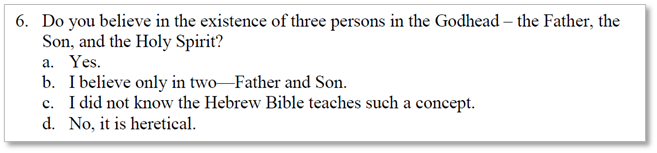
Kalisher’s pre- and post-project questions are unimpressive. His goals for the project are to enable his congregation to:

  1. understand and appreciate expository preaching
  2. appreciate roles in the economic Trinity
  3. learn to study God’s word, God’s way
  4. grow in Messianic self-identity

Here are his questions to measure two of these goals (pp. 38, 39):

Kalisher fails to define the doctrine of the Trinity in the dissertation, and his survey questions are not robust enough to measure comprehension. He fails to define what “biblical” means related to the term “Trinity”—a misstep, because the term itself does not appear in Scripture. Kalisher does not present other preaching methods, leaving the congregation little choice but to conclude EP is correct because he says it is.

Thesis in Search of a Degree

Kalisher’s project is ill-suited to an EP framework because it consists of him talking at the congregation, rather than with it. An interactive study format would better allow him to achieve and measure his four goals. As it is, Kalisher’s project seems less like objective research and more like a preconceived thesis in search of a doctoral degree.


[1] “… preaching that explains a passage in such a way as to lead the congregation to a true and practical application of that passage,” (Walter L. Liefeld, New Testament Exposition (Grand Rapids: Zondervan, 1984), p. 6).

Thinking about Israel and the Church

Thinking about Israel and the Church

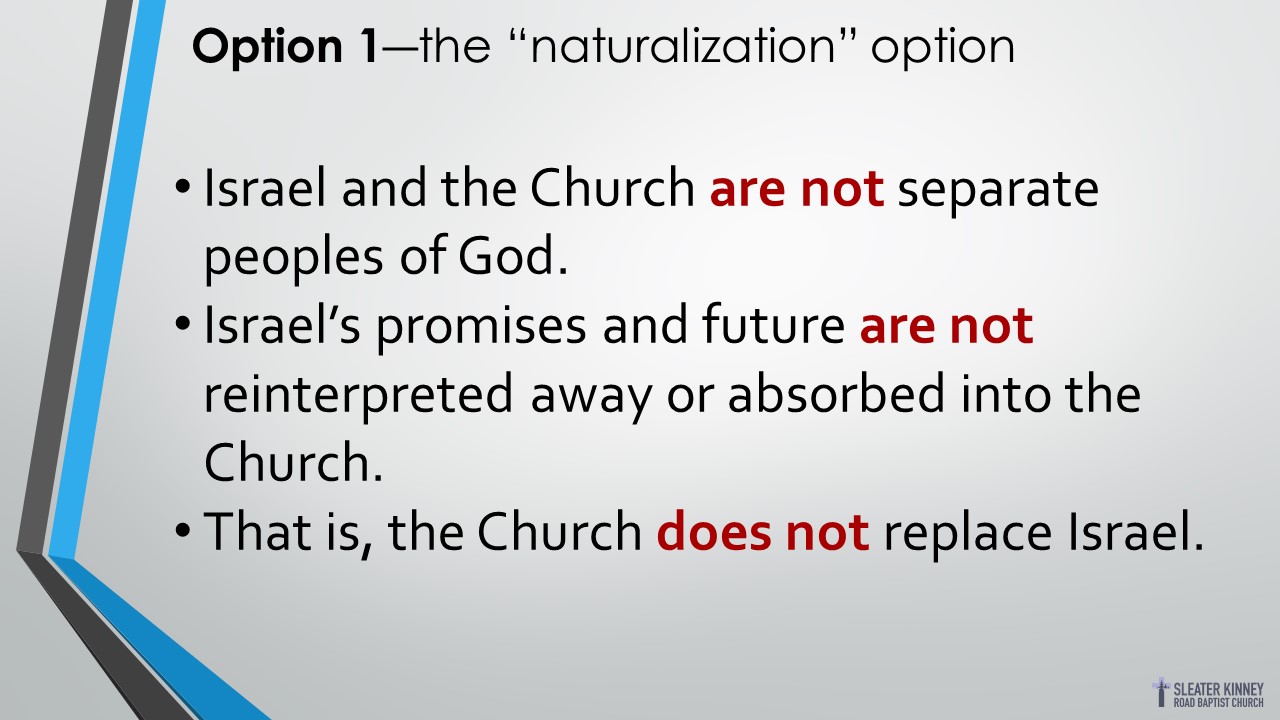
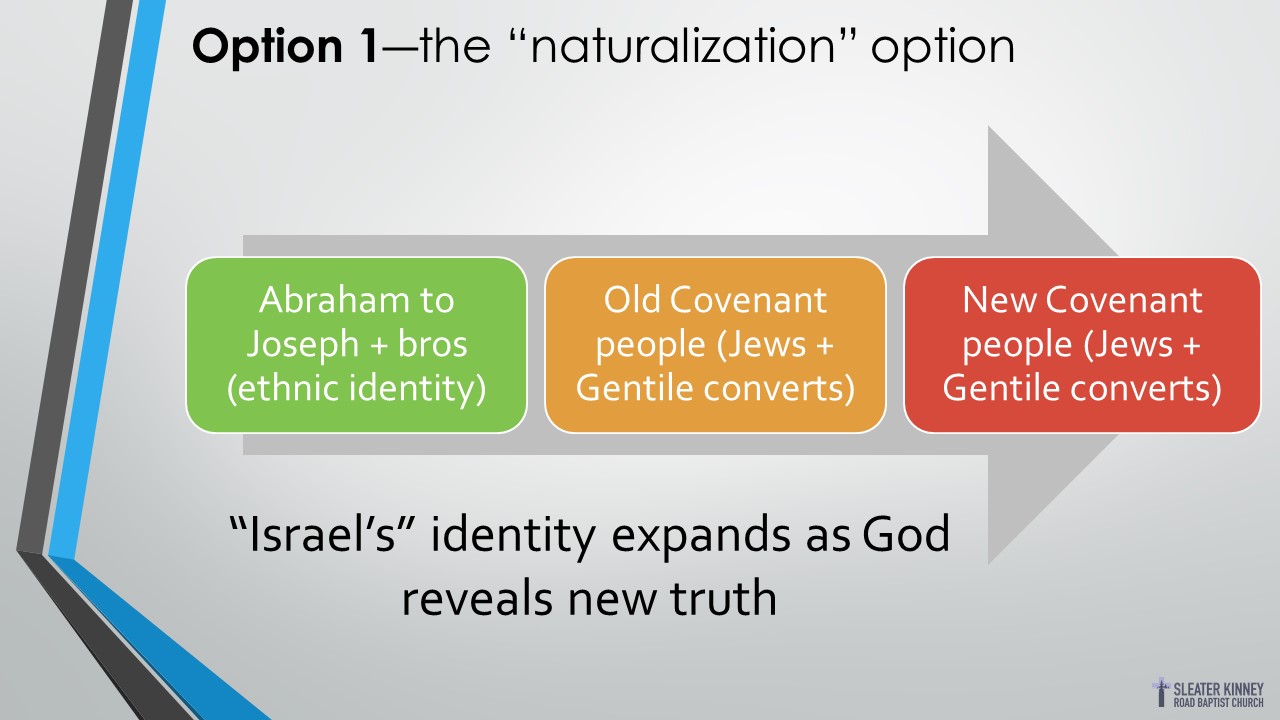
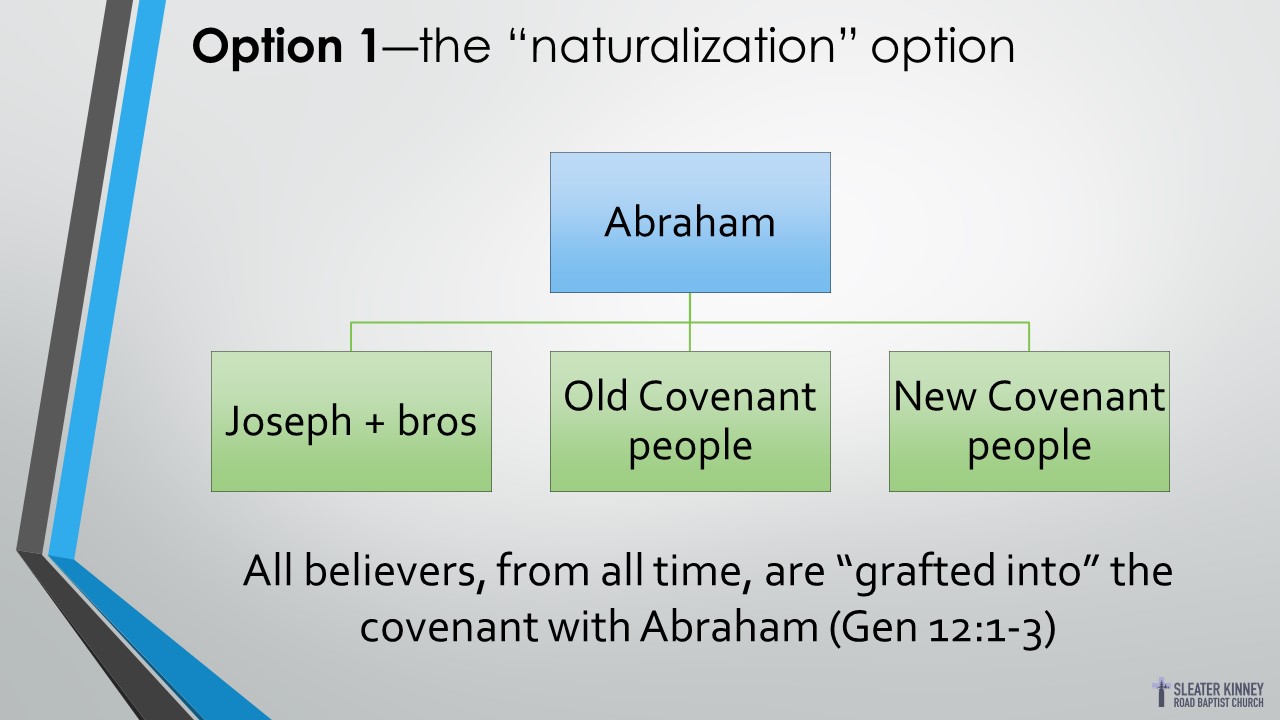
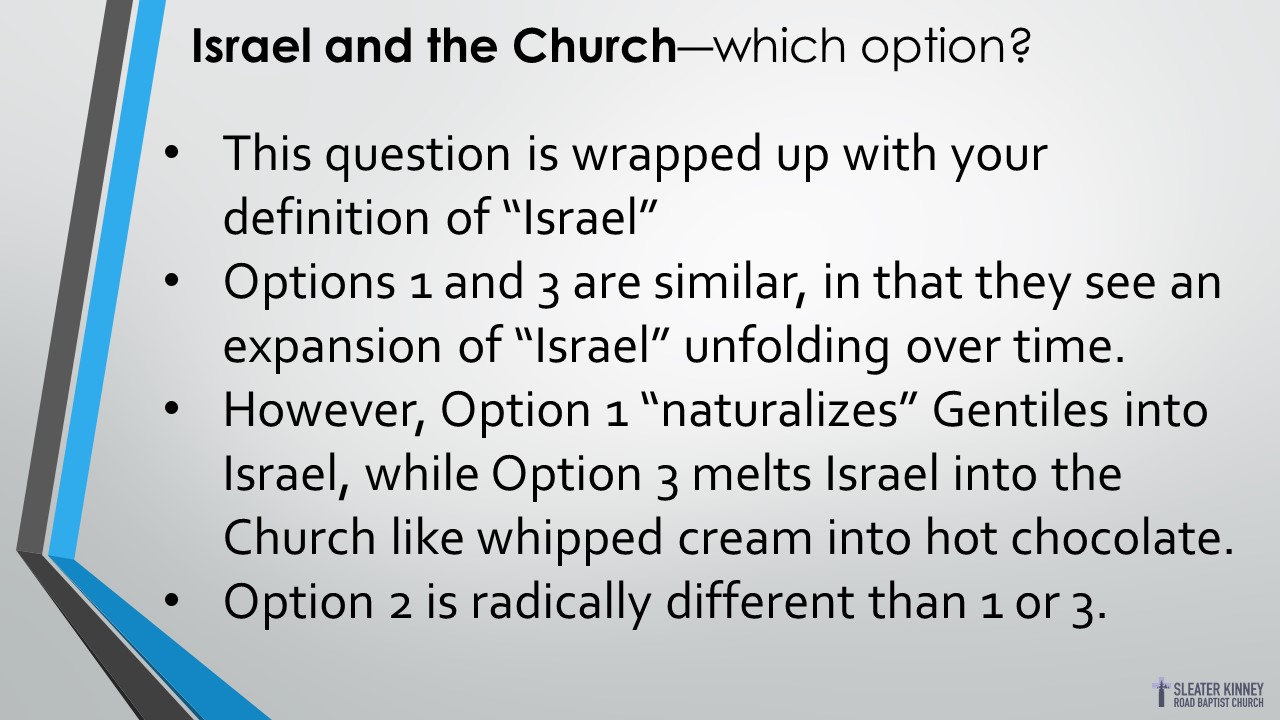
Here are some slides about a difficult topic. You shouldn’t mistake this presentation as a definitive assessment, or even fully representative of major positions. There are too many nuances, even within the same circles, to capture here. But still, these slides do a credible job of laying out some broad guardrails to think about this issue. I present three different options, and devote several slides to each one (check the headings).

Here you are …

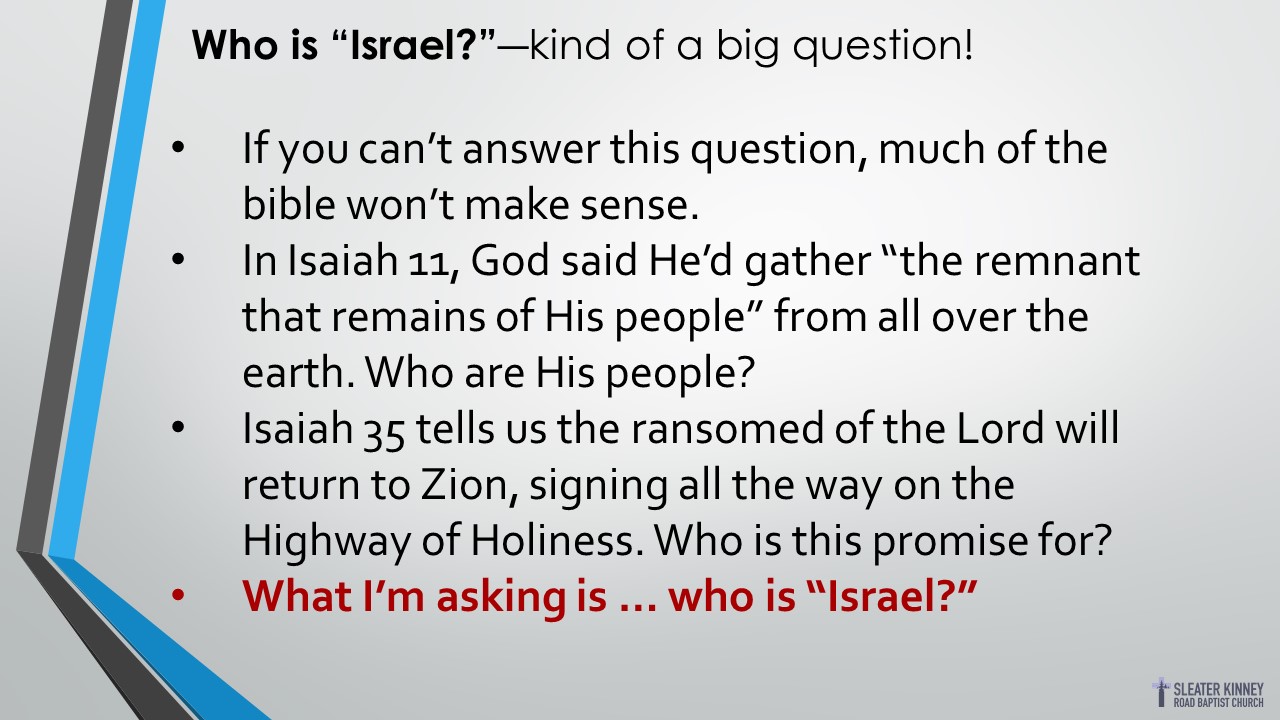
Who is Israel?

Who is Israel?

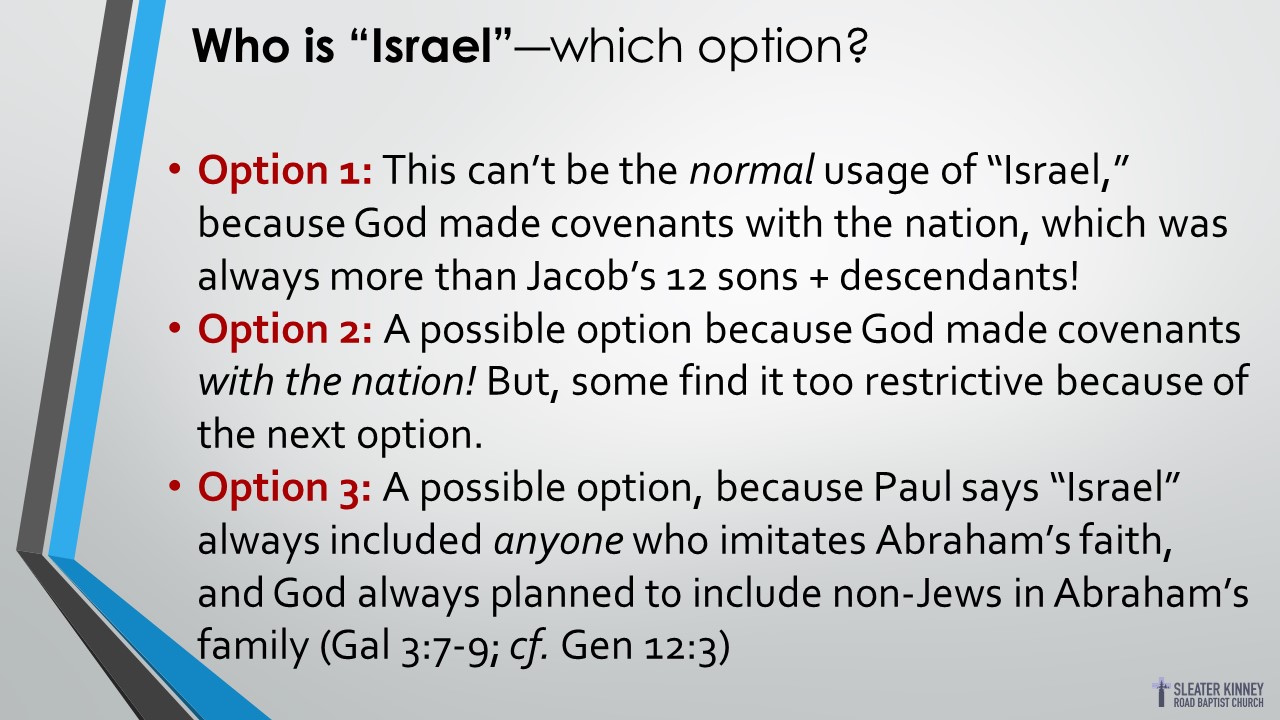
I offer these all-too brief thoughts on a difficult question. I don’t answer the question here, but I do present three options for ordinary Christians who may appreciate some guardrails to help them consider this important issue.

Jonah . . . the Missionary?

This is the beginning of a short little series on the Book of Jonah. Enjoy!

—————————————————–

All people know about Jonah is that he was swallowed by a giant fish! That’s all most Christians remember about this wonderful little book. The truth is the Book of Jonah isn’t a Sunday School lesson, but a real account of a real event that has real meaning for your life

 JONAH RUNS (1:1-3):


1 Now the word of the LORD came unto Jonah the son of Amittai, saying,
2 Arise, go to Nineveh, that great city, and cry against it; for their wickedness is come up before me.


Jonah is commanded to go and preach to the people in Nineveh because of their wickedness. God hasn’t just found out about their wickedness. It’s just gotten so bad that He’s decided to take some drastic action. Nineveh is in Assyria, and if you know the Old Testament, you know that the northern kingdom of Israel isn’t exactly friends with Assyria!

God gives an immediate command, “Arise, go to Nineveh!” In other words, “Go, right now!” It’s also a pretty big undertaking – over 500 miles overland! This is more than a car-trip!

Jonah 1 (1-3)
See the distance Jonah had to travel, from Israel all the way overland to Nineveh?


Before we move on, I want you to think about how strange of a command this is in the Old Testament. We see calls for repentance all the time in the prophets – for Israel, though. Where else do we see a prophet sent directly to a pagan nation to preach to them about their wickedness in particular? Nowhere else! So, this raises the question – what kind of missions work was done in the Old Testament?

 Missions Work in the Old Testament:

Here are some good questions to ponder, and if these questions have never occurred to you, then do some thinking on it now:

  • Why don’t we see a “great commission” in the OT?
  • Why weren’t the Israelites told to go make disciples of all nations, and bring them to Jerusalem to worship the One true God?
  • Why don’t we have maps telling about Old Testament missionary journeys in the back of our Bibles?
  • Did God have no message of salvation for the rest of the world?

I want to start by reminding you that God has worked with mankind in different ways, at different times. Before God chose Israel, He worked with all of mankind individually. After God chose Israel, He worked with all of mankind through Israel

Now the LORD had said unto Abram, Get thee out of thy country, and from thy kindred, and from thy father’s house, unto a land that I will shew thee: And I will make of thee a great nation, and I will bless thee, and make thy name great; and thou shalt be a blessing: And I will bless them that bless thee, and curse him that curseth thee: and in thee shall all families of the earth be blessed (Genesis 12:1-3).

God makes a whole lot of promises, but one of them is that the vehicle of blessing for all the other nations will be Israel:

“In the third month, when the children of Israel were gone forth out of the land of Egypt, the same day came they into the wilderness of Sinai. For they were departed from Rephidim, and were come to the desert of Sinai, and had pitched in the wilderness; and there Israel camped before the mount. And Moses went up unto God, and the LORD called unto him out of the mountain, saying, Thus shalt thou say to the house of Jacob, and tell the children of Israel; Ye have seen what I did unto the Egyptians, and how I bare you on eagles’ wings, and brought you unto myself. Now therefore, if ye will obey my voice indeed, and keep my covenant, then ye shall be a peculiar treasure unto me above all people: for all the earth is mine: And ye shall be unto me a kingdom of priests, and an holy nation. These are the words which thou shalt speak unto the children of Israel” (Exodus 19:1-6).

What in the world was God talking about here? What does it mean to be a kingdom of priests? What does a priest do? A priest represents God to the rest of the people – He’s a go-between. So, to go back to the missions question – what were the Israelites supposed to do to fulfill this responsibility of being a kingdom of priests, or a corporate go-between for God and the pagan nations?[1]

  • Option #1: Go out, preach the Gospel, and make disciples!
  • Option #2: Live holy lives, follow God’s law with a true heart and let unbelievers gradually flow to them, slowly but surely?

Don’t worry about what scholars say, or what your study Bible notes say – what do you think? I take option #2. If Israel had lived as a holy people, God would have continued what began under Solomon. After all, some great things happened under Solomon. Israel came closer than ever before to realizing the covenant blessings that God had promised for obedience. The temple was built and God did dwell inside it. Solomon was a godly king who only asked for the wisdom to rule right (see 1 Kings 10:1-9).

And there came of all people to hear the wisdom of Solomon, from all kings of the earth, which had heard of his wisdom (1 Kings 4:34).

And king Solomon passed all the kings of the earth in riches and wisdom. And all the kings of the earth sought the presence of Solomon, to hear his wisdom, that God had put in his heart (2 Chronicles 9:22-23).

This sounds like a good start, doesn’t it? So, what happened to this seemingly unstoppable roller-coaster ride to greatness and God’s blessing? The Bible tells us:

But king Solomon loved many strange women, together with the daughter of Pharaoh, women of the Moabites, Ammonites, Edomites, Zidonians, and Hittites; Of the nations concerning which the LORD said unto the children of Israel, Ye shall not go in to them, neither shall they come in unto you: for surely they will turn away your heart after their gods: Solomon clave unto these in love. And he had seven hundred wives, princesses, and three hundred concubines: and his wives turned away his heart (1 Kings 11:1-3).

Sin is what happened. That’s why we need Christ –  the perfect King who will succeed where even good men like Solomon failed.


3 But Jonah rose up to flee unto Tarshish from the presence of the LORD, and went down to Joppa; and he found a ship going to Tarshish: so he paid the fare thereof, and went down into it, to go with them unto Tarshish from the presence of the LORD.


So far, so good – Jonah is commanded to go preach to the heathen Assyrians in Nineveh. But, he doesn’t like that idea, so he heads off to Joppa and books passage[2] on a ship bound for Tarshish. Nobody is quite sure where Tarshish was – but the smart money says the southwest coast of Spain[3].

 Why is Jonah Running?

So, why is Jonah fleeing? What in the world does he hope to accomplish?

  • Option #1 – Jonah thinks he can hide from God, and God won’t be able to find him[4]
  • Option #2 – Jonah just wants to get away, wash his hands of the whole business and have God find someone else for the job[5]

I go with option #2. Jonah hates the Assyrians and doesn’t want anything to do with them. He’s so sick at heart and outraged that God’s mercy and forgiveness is being offered to them, that he’s willing to run from God!

Think about how drastic of a move this is! He’s dropping everything, leaving his home, family, friends, possessions – everything! He books last-minute passage on a ship bound for the ends of the earth (not literally, but you know what I mean!) – this must have cost a whole lot of money! He has no baggage, probably not much money and no plans.

He used a ship; today we’d use a plane. If I were in Jonah’s position today, and wanted to run far, far away, long-distance destinations available from O’Hare airport today are Beijing, Berlin, Tokyo and Zurich. I’d personally choose Zurich. There’s a flight leaving on tomorrow, for only $1,000! I could pay for the flight, and survive for a few weeks on just the credit card, but I’d have to figure something out very quickly:

  • Where would I live?
  • How would I earn money?
  • Where will I buy clothes?
  • How will I afford food

Jonah is doing something very drastic – and his situation would be more dire than mine! He’s so opposed to the very idea of the Gospel[6] going to the Assyrians that He’d willing to do all this!

Why Didn’t Jonah Want To Go?

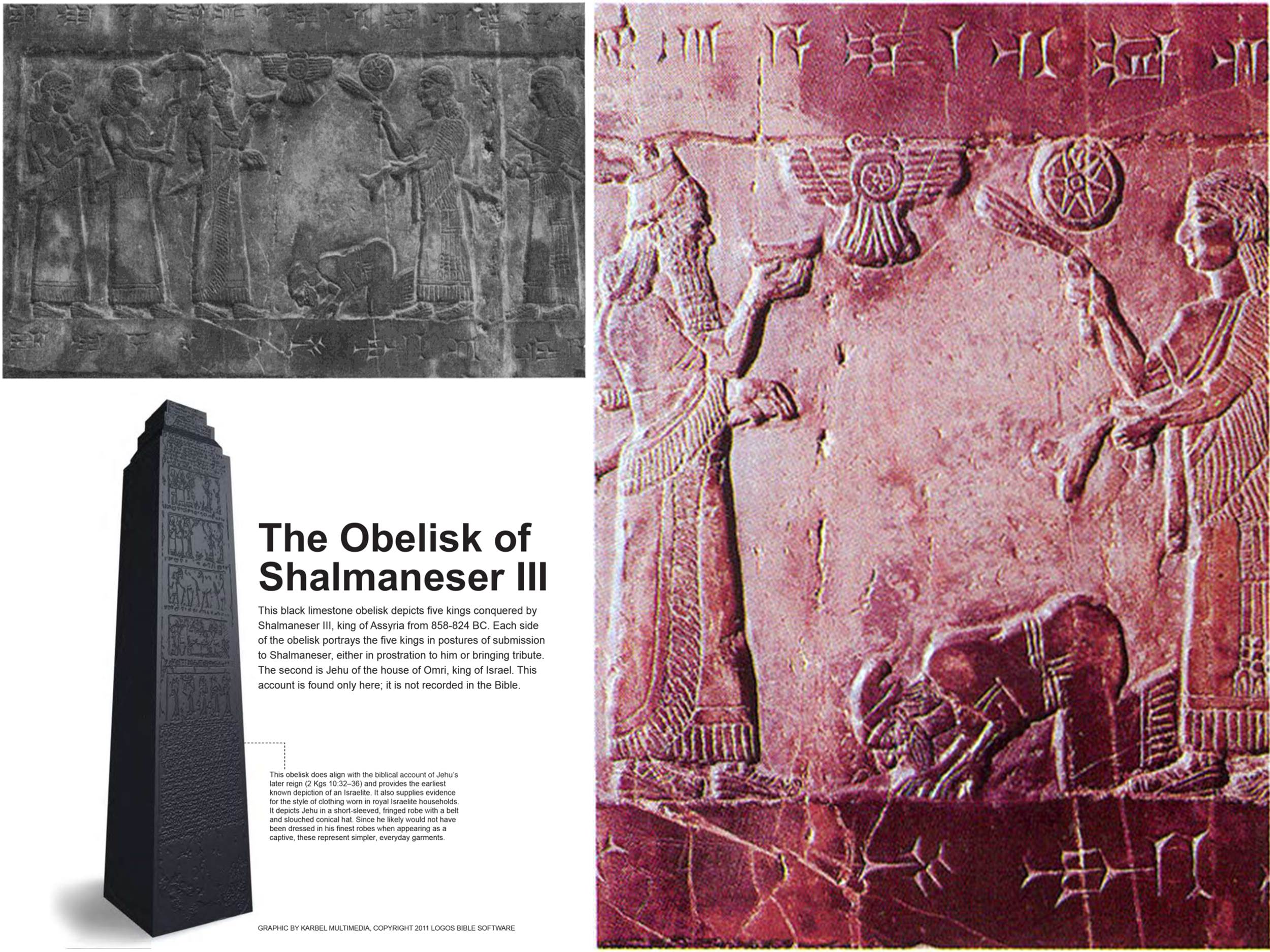
He didn’t want to go because the Assyrians were not nice people! They were the dominant empire in the entire Middle East – Babylon would come next. Archeologists and historians have discovered evidence of several massive military battles in Israel from 853 – 845 B.C. During that period, Israel, Judah and a bunch of other countries apparently joined together to defend themselves against the Assyrians[7]. The Judean King, Jehu, is shown cowering down and kissing the Assyrian King’s feet in this picture, below:

jonah

In Jonah’s day, Assyria is in the middle of a roughly 75 year (823-744 B.C.)[8] slump. They’re not doing so well anymore and are fighting amongst themselves. Meanwhile in Israel, Jeroboam II has come to power. Israel is expanding northwards and gaining territory. The economy is booming. Jonah and Hosea are from the same approximate generation.

But, Assyria is still out there, still dangerous and still a threat to Israel. They’re a serious danger to Israel – that means they’re a serious danger to Jonah. I want you to picture the absolute last kind of foreigner you’d want to share the Gospel with as an American – who would it be?

  • The five Taliban members who were just released in trade for SSG Bowe Bergdahl?
  • The 9/11 hijackers?
  • Osama bin Laden?
  • ISIS?

How would you like to leave behind your family, friends and your home to preach the Gospel to these folks? Not many Christians would be too eager to sign up for that trip? Yet, that’s what Jonah was told to do; and he didn’t like it!

There is a new book out about a Lutheran chaplain during World War II named Harry Gerecke. He served two years in England and then in Europe with the Army. He was preparing to ship back home in the summer of 1945, but was asked to stay and be a Chaplain to the German war-criminals during the Nuremberg Trials. He had watched soldiers blown up, shot and killed by Germans for two years. Now, he was being asked to delay his return home and preach the Gospel to the captured Nazi leaders, many of whom had committed horrible atrocities!

What would he do? What would you do? He stayed 1.5 years extra and reported that four men were saved![9] Put yourself in Jonah’s position, and don’t condemn him too easily. What he did was wrong, of course – but what would you do if God told you to travel to Syria and preach the Gospel to ISIS militants?

WHY DID GOD SEND JONAH TO NINEVEH?

I won’t answer that question until we reach the end of the book! But, what can we learn about God from the very beginning of this little book? God saves people from every tribe, tongue and nation.

The Gospel isn’t an American thing and it wasn’t an Israelite thing – God’s vision has always encompassed more than that. Israel wasn’t supposed to sit still and look pretty because she was chosen (“elect”) by God to be His holy people – she was supposed to:

  1. live the right way
  2. follow His law out of a pure heart, and
  3. draw other nations to Him by her own example!

The Gospel gets shared with everybody, even if we don’t like them.

—————————————————-

[1] This is indeed the crux of the issue! Perhaps the most accessible advocate for the idea that Israelites were supposed to be active missionaries to the pagan world is Walter J. Kaiser. He asks, “[i]t is at this point that the thesis of this book participates in issues that are hotly debated today: Did this ‘kingdom of priests’ serve Israel alone or the entire world? Were they to be active or merely passive witnesses,” (Mission in the Old Testament: Israel as a Light to the Nations, 2nd ed. [Grand Rapids, MI: Baker, 2012], xiii). Kaiser goes on to insist, “[t]he fact remains that the goal of the Old Testament was to see both Jews and Gentiles come to a saving knowledge of the Messiah who was to come. Anything less than this goal was a misunderstanding and an attenuation of the plan of God. God’s eternal plan was to provide salvation for all peoples; it was never intended to be reserved for one special group, such as the Jews, even as an initial offer!” (Ibid, xiv). Kaiser states the issue well, but his opponents do not suggest that Israel was supposed to be an elitist, snobbish society. Nor do they suggest that Israel did not fail in her adherence to the Mosaic Covenant. They merely disagree over the nature of her missions mandate – was it passive or active?

Over against Kaiser’s model is the idea that Israel’s “missions mandate,” such as it was, was basically passive. This position believes that the great ingathering of Gentiles is an eschatological one, for the latter days. This position is well represented by Andreas J. Kostenberger and Peter T. O’Brien, Salvation to the Ends of the Earth: A Biblical Theology of Mission (Downer’s Grove, IL : IVP, 2001), 25-53. At this point, one’s theological stripes will be revealed – will this ingathering take place when Jesus rules and reigns from a literal Jerusalem over a literally restored Israel (dispensationalist), or is this ingathering taking place right now as the spiritual kingdom of Christ reigns in the hearts of the elect (covenantalist)?

I hold to the second option, advocated by Kostenberger and O’Brien, that Israel’s missions mandate was very real, but basically very passive (Jonah being an obvious exception). I am a dispensationalist, so I believe the great eschatological ingathering of Gentiles will take place when Israel is restored, and Christ rules and reigns as her King in Jerusalem in the Millennium (see, for example, Isa 61).

[2] There is some debate about whether Jonah chartered the entire vessel, or whether he merely booked passage as a passenger to Tarshish, where the ship had already been headed. The Scripture itself provides the answer; v.5 tells us that the frightened sailors tossed the wares they were carrying overboard. Evidently the ship was engaged in trade and already bound for Tarshish; Jonah merely slipped on-board after negotiating the fare. If Jonah had chartered the entire vessel outright, they wouldn’t have gone through the trouble of loading wares for later sale in Tarshish. If they had tried to, there would no doubt have been a considerable delay and Jonah would have sought passage on another vessel.

[3] “Although alternatives have been suggested, south-west Spain remains the most likely location for Tarshish,” (T. Desmond Alexander, “Jonah,” in Obadiah, Jonah and Micah, vol. 26, Tyndale Old Testament Commentaries [Downers Grove, IL: InterVarsity Press, 1988], 110). John Walton suggests Tarshish need not be taken as a literal destination, but as a reference to great distance, e.g “I’m headed for Timbuktu!” doesn’t necessarily mean one is going to Mali, Africa. It could mean one just wants to get far, far away (Jonah, The Expositor’s Bible Commentary, vol. 8, revised ed. [Grand Rapids, MI: Zondervan, 2008], 469).

[4] No Bible believer would really believe one can literally hide from God. This is not a legitimate option!

[5] “Jonah wished to escape, not beyond the power of God, but away from the stage on which God was working out His purposes and judgments. The Christian worker anxious to avoid the full impact of modern problems should have no difficulty in understanding Jonah’s action,” (H. L. Ellison, Jonah, The Expositor’s Bible Commentary, vol. 7 [Grand Rapids, MI: Zondervan, 1985], 369). See also Ellison’s remarks on the silliness of the first interpretive option (369). Walton remarks, “Jonah does not necessarily think that distance will put him out of range of the Lord’s reach; he may have thought his flight will simply result in the Lord’s finding someone else for the job,” (Jonah, 469).

[6] Many commentators discount the idea that Jonah was a “missionary” in the NT sense, and certainly don’t agree that Jonah preached the Gospel (according to the revelation Jonah had at the time, the Gospel entailed saving faith in God alone for justification [e.g. Gen 15:6] and loving adherence to the Mosaic Covenant as proselytes). John Walton (Jonah, 457-458, 477-485) and H.L. Ellison (Jonah, 363, 383-384) are particularly insistent on this point. The particulars will wait until we reach Jonah 3, but as for a hint of my own position, Jesus’ own words in Mt 12:41 are rather decisive on this point! But for the sake of brevity I’ll simply refer to Jonah as a “missionary” and his message as “the Gospel” and save the details for later!

[7] See A. K. Grayson, “Assyria, Assyrians” in Dictionary of the Old Testament: Historical Books, ed. Bill T. Arnold and H.T.M. Williamson (Downer’s Grove, IL: IVP, 2005), 100-102

[8] Ibid.

[9] This information is from Lyle Dorsett, “Would You Share the Gospel with Hitler’s Worst Henchmen?” ChristianityToday.com. 23MAY14. Retrieved from http://goo.gl/Ll6mmr.

Sufficiency of the Scriptures (Part #2b)

sola_scriptura

Part 2b on my series on the sufficiency of the Scripture as the sole, infallible authority for Christian faith and life. Part #1 was an introduction to set the stage. Part #2a was the first part of what different books of the New Testament have to say on the matter.

Romans

Paul grounded the Gospel of Jesus Christ in the authority of the OT Scriptures. He tied the Gospel to that which God “promised beforehand through his prophets in the holy Scriptures,” (Rom 1:2). The Book of Romans is literally saturated with references to OT Scriptures to make theological points,[1] far more so than a brief biblical theology here can hope to demonstrate. Once again, Paul does not base his arguments on philosophy or tradition – he bases them on Scripture.

It is not the hearers of the law who are justified, but the doers (Rom 2:12-29). None are righteous (Rom 3:9-18); “there is no fear of God before their eyes,” (Rom 3:18). Knowledge of the OT law brings about conviction and knowledge of sin (Rom 3:19-20; 4:15; 7:7-25). The Law and Prophets bore witness to Christ (Rom 3:21-22). Abraham was justified by faith (Rom 4). We are dead in Adam but alive in Christ (Rom 5:12-21). God’s sovereignty in election is grounded in His corporate election of Israel and the individual, single election of individuals (Rom 9).

Israel refuses to respond to the present provision of salvation through Jesus Christ (Rom 10), and Paul bolstered his argument by citing examples of Israel’s previous rebellion (Rom 10:18-21). Gentiles have been grafted into the promises given to Abraham (Rom 11), “so as to make Israel jealous,” (Rom 11:11). Her rejection is not final and her restoration is assured. Paul’s appeal for Christians to present themselves as living sacrifices (Rom 12:1) is rooted in the OT concept of a sacrifice to God. Christ came to the Jews in the form of a servant “in order to confirm the promises given to the patriarchs,” (Rom 15:8-9).

Paul presents the new doctrine he received from Christ (Gal 1:12) as explicitly progressive revelation. This gospel and preaching of Jesus Christ, in complete accord with all which has come before it, is a “revelation of the mystery that was kept secret for long ages, but has now been disclosed and through the prophetic writings has been made known to all nations, according to the command of the eternal God,” (Rom 16:25-26).

1 Peter

Peter writes his epistle to Jewish Christians (1 Pet 1:1 – “elect exiles of the Dispersion”), demonstrating a clear connection in his mind between the OT and the Gospel of Jesus Christ. He stated that Christ fulfilled the OT prophesies.[2]

The prophets prophesized about the grace of God in salvation in Jesus Christ (1 Pet 1:10). These OT prophets sought to discern when the prophesy of Christ’s sufferings and subsequent glories would come to pass (1 Pet 1:11). It was revealed to these great men, presumably through the Spirit, that these prophesies were intended for a future time. Peter identified that time period as “now,” or the dispensation of grace in the church age.[3] The OT prophesies take on clearer, concrete and unmistakable meaning in light of the progressive revelation of the Gospel of Jesus Christ (1 Pet 1:12).

It was revealed to them that they were serving not themselves but you, in the things that have now been announced to you through those who preached the good news to you by the Holy Spirit sent from heaven, things into which angels long to look (1 Pet 1:12).

The context of 1 Pet 1 is that his readers could rejoice in their sufferings even though they could not see exactly how or when their present trials would end. Just as the OT prophets had limited understanding of their own prophesies, they trusted God to sovereignty work out all things according to good (Rom 8:28). God’s answer to Habakkuk’s plea for understanding of God’s ways was to live by faith (Hab 2:4). In the midst of suffering (1 Pet 1:6), it is very significant that Peter points his readers to Scriptures as the source of assurance. Several conclusions can be drawn:

  1. God has spoken propositionally to His people in a concrete fashion.
  2. Peter points to the Scriptures as the sole source of God’s revelation to men. He bases his subsequent call to be holy in a decidedly unholy world (1 Pet 1:13 – “therefore”) on the assurance of salvation and glorification in Christ, which was prophesied of in the OT and disclosed more completely by Peter and the other apostles.

Peter quotes the OT to make theological points, underscoring the authority of the OT.[4] He quoted from Isaiah 40:6, 8 (1 Pet 1:24-25) and stated “the word of the Lord remains forever.” He concluded by noting “and this word is the good news that was preached to you,” (1 Pet 1:25b). Peter describes the role of the Christian in terms of Israel’s covenant responsibility similar to Ex 19:5-6 (1 Pet 2:9).

James

James also writes his epistle to Jewish Christians (Jas 1:1). His theology is steeped in the OT Scriptures. Without his unwavering reliance upon them as an infallible revelation from God, James could not have written his epistle. His theology of God’s character is one of holiness (Jas 1:13), and perfectly in tune with the OT description of His character (Lev 11:45, 19:2; Ps 99:9).

Pure religion, or piety,[5] consists of proper conduct and character. James’ example of proper religious conduct is to “visit orphans and widows in their afflictions,” (Jas 1:27), an admonition which is soaked in the context of the OT law regarding social justice (Ex 22:22; Deut 14:29). His exhortation to proper character is to “keep oneself unstained from the world,” (Jas 1:27), which likewise has its roots in the OT command for Israelites to remain separate and uncontaminated by the pagans round about them (Lev 18:24-19:2).

James’ overarching point is to contrast mere ritualistic observances with actual reverence for God; to illustrate what “religion that is pure and undefiled before God” (Jas 1:27) really is. It is merely a stepping stone from here to a contrast between mere outward circumcision and a true circumcision of the heart (Deut 10:12-16).

James quoted repeatedly from Scripture to condemn the sin of partiality (Jas 2:8, 11). James used the example of both Abraham and Rahab to make the point that faith without works is dead (Jas 2:14-26). He quoted Proverbs 3:34 to emphasize the need for humility and separation from worldliness (Jas 4:1-6). He pointed to the example of Job and exhorts his readers to have patience in the midst of suffering and trials (Jas 5:10-11). James cited the fervent prayers of Elijah as he exhorted his readers to pray diligently for one another (Jas 5:16-18).

Jude

Like his brother James, Jude’s theology simply would not exist without the OT Scriptures. Jude wrote of “the faith that was once for all delivered to the saints,” (v. 3). This faith Jude spoke of was the body of truth taught by the apostles.[6] This underscores the progressive nature of God’s revelation, and is perfectly harmonious with Peter’s (1 Pet 1:10-12), Paul’s (Eph 3:1-13) and the writer to the Hebrew’s (Heb 1:1) comments in their own epistles on this point.

Jude noted the presence of false teachers who “long ago were designated for this condemnation” (v. 4). This refers to previously written prophesies regarding the doom of apostates (e.g. Isa 8:19-22; Jer 5:13-14).[7]

Jude notes God’s righteous pattern of punishing those who apostatize from the true faith, such unbelieving Israelites, angels and the inhabitants of Sodom and Gomorrah and the surrounding cities (v. 5-7). These “serve as an example by undergoing a punishment of eternal fire,” (v. 7). Jude then moves to his present day and condemns contemporary false teachers of these very sins! (v. 8). He mentions the archangel Michael, compares the false teacher’s way to that of Cain and Balaam, and compares their eventual end to that of Korah (v. 11). Jude also accurately puts Enoch as the “seventh from Adam,” (v. 14).[8]

The next post will be a discussion of several critical passages that focus on the sufficiency and authority of the Scriptures for the Christian life.


[1] Rom (3:4, 10-18); (4:7-8, 17); (8:36); (9:25-29, 33); (10:5, 18-21); (11:8-10); (12:19); (13:8-9); (14:11); (15:3, 9-12); (16:21).

[2] 1 Peter (1:10-12); (2:6-8).

[3] See also 1 Pet 1:20 – “He was foreknown before the foundation of the world but was made manifest in the last times for the sake of you.”

[4] 1 Peter (1:16, 24-25); (2:9); (3:5-6, 10-12); (4:18).

[5] William D. Mounce, Complete Expository Dictionary of Old and New Testament Words (Grand Rapids, MI: Zondervan 2006), 1170.  Θρησκεια, or “religion,” may better be termed “piety.”

[6] Edward C. Pentecost, “Jude,” in The Bible Knowledge Commentary, ed. John Walvoord and Roy Zuck (Wheaton, IL: Victor, 1983), 919.

[7] Edwin Blum, Jude, vol. 12, The Expositor’s Bible Commentary, ed. Frank Gaebelein (Grand Rapids, MI: Zondervan, 1981), 389.

[8] See 1 Chr 1:1-3

Laying Aside the Commandments of God (Mark 7:1-13)

Sermon notes – Mark 7:1-13

Here, we see the tragic and disgraceful results of legalism imposed upon a people. Some Pharisees and scribes come down from Jerusalem once more to hear and investigate Christ. They soon accuse Him of violating the commandments of the elders by eating bread with unwashed hands (Mk 7:5). Note, they took issue with Christ’s violation of the traditions of men, not of God! There is no OT command for everyday men to ritualistically wash before a meal!

I want to take a moment to emphasize a point – it is far too simplistic to simply call the Pharisees legalistic, evil men and move on to the next Scripture passage. Why were they so legalistic? The answer is that they were seeking to preserve their Jewishness in a distinctly un-Jewish world. The destruction of the temple and the sack of Jerusalem by the Babylonians in 586 B.C. completely decimated the social, cultural, political and religious structure of the Jewish state. Their national identity as a people of God had been abolished in one fell stroke. Even later, after the return from exile, the Jews existed as a mere vassal state of the Persian, Greek, and now Roman Empires. Even today, the modern state of Israel has not been reconstituted as it was before the fall of Jerusalem. The times of the Gentiles are still ongoing.

Consider these very important points:

“Rituals concerning cleanness and uncleanness reflect rabbinic developments more than actual Torah prescriptions . . . As Judaism’s encounter with Gentile culture increased in the post-exilic period, however, the question of ritual cleanliness took on new significance as a way of maintaining Jewish purity over against Gentile culture.”[1]

“[T]he defeat and exile faced the surviving Hebrews with the loss of their central national and religious institutions. They were without a unifying center of influence. They were forced to rethink the nature of God, his relation to them, and the viability of Old Testament religion. They were thrown into close contact with other cultures, and their traditional way of life became difficult or impossible. They, in a new way, confronted the relation between religion and culture. In every area the Hebrew race and its political and religious systems encountered a constant threat to survival.”[2]

Much like the erroneous and dangerous teaching of Roman Catholics who believe in two well-springs of divine authority, Scripture and tradition, the Pharisees in Jesus’ day fell into the very same error.

“The predominance of Pharisaism is that which most distinctly characterized this period. The legalistic tendency inaugurated by Ezra had now assumed dimensions far beyond anything contemplated by its originator. No longer did it suffice to insist on obedience to the commandments of the Scripture Thora. These divine precepts were broken down into an innumerable series of minute and vexatious particulars, the observance of which was enforced as a sacred duty, and even made a condition of salvation. And this exaggeration even made a condition of salvation. And this exaggerated legalism had obtained such an absolute ascendency over the minds of the people, that all other tendencies were put entirely in the background.”[3]

To bring this to a modern context, how do we fall into the same legalistic traps today? We are commanded to be in the world, but not of the world (Jn 17:15). Do we impose legalistic restrictions in our own circles? Consider what Christ has to say on this very important matter.


[1] James R. Edwards, The Gospel According to Mark (Grand Rapids, MI: Kregel, 2002), 205

[2] J. Julius Scott, Jr., Jewish Backgrounds of the New Testament (Grand Rapids, MI: Baker, 2001), 108-112.

[3] Emil Shurer, A History of the Jewish People in the Time of Christ, First Division, vol. 1 (Peabody, MS: Hendrickson, 2012), 2.