As we march onward in our study of Daniel 9:24-27, we’ve arrived at Daniel 9:26. What happens after the 69th “seven”? That is, after Daniel 9:25? There is still one “seven” left, and a lot of stuff still to be fulfilled from the six-item list Gabriel revealed in Daniel 9:24. As the prophecy goes on, in Daniel 9:26, two key events happen:
The Messiah will be “cut off,” and
“the people of the prince who is to come” will destroy Jerusalem and its temple.
Let’s look at these one at a time.
Messiah and the “gap” between “weeks” 69 and 70
Then after the sixty-two weeks, the Messiah will be cut off and have nothing, and the people of the prince who is to come will destroy the city and the sanctuary. And its end will come with a flood; even to the end there will be war; desolations are determined (Daniel 9:26).
When will the Messiah be “cut off and have nothing”? What does it mean? Considering the bible’s whole story, it seems to suggest Messiah’s death:
He was despised and abandoned by men, A man of great pain and familiar with sickness; And like one from whom people hide their faces, He was despised, and we had no regard for Him … By oppression and judgment He was taken away; And as for His generation, who considered that He was cut off from the land of the living, for the wrongdoing of my people, to whom the blow was due? (Isaiah 53:3, 8).
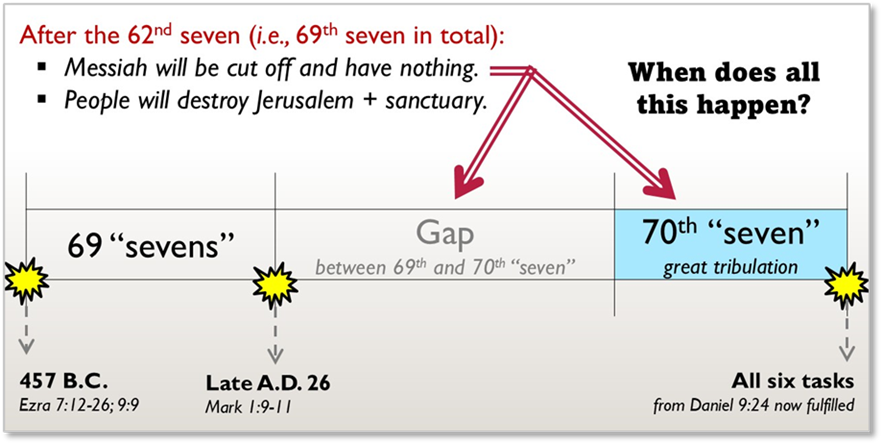
Jesus was despised, rejected, and abandoned—he had nothing. Then he was “cut off”—the Romans executed him. According to Daniel 9:26, this will occur “after the sixty-two weeks …” Remember, there are two sets of “sevens” in Daniel 9:25—(a) seven “sevens,” and then (b) 62 “sevens. The Messiah’s death happens after this second set—the 62 “sevens,” like this:
So, while the phrasing is awkward, it seems that the Messiah’s death will happen after the 62 “sevens,” which means after the 69 “sevens.”[1] However, because the 70th “seven” will not begin until Daniel 9:27 (“And he will confirm a covenant with the many for one week …”) it seems there is a “gap” of time here between the 69th and 70th “seven.” If there is no gap, then the 70th “seven” happens immediately—the Messiah dies during the 70th “seven,” because it happened after the 69th “seven.
Figure 2. In which “week” does Daniel 9:26 and Messiah’s death occur?
Evidence suggests there is a gap between “weeks” 69 and 70 because of this chain of logic:
Because the evidence for the first 69 “sevens” suggests each “seven” is a set of seven years, we are obligated to see the 70th “seven” as also being a set of seven years.
Because Messiah was “cut off” after the 69th “seven,” we might assume this happened during the 70th “seven.”
If true, then Jesus was “cut off” at his crucifixion in ≈ A.D. 30.
But …
This would mean all six tasks in Daniel 9:24 (“Seventy weeks have been decreed for your people and your holy city …”) must take place within seven years of Messiah being “cut off” (A.D. 37-ish)—which must be the case if the 70th “seven” truly followed right on the heels of the 69th.
In other words, if there is no gap between the 69th and 70th seven, then …
Because each “seven” is seven years,
and the 70th “seven” begins with Jesus’ death in ≈ A.D. 30 (when he is “cut off”),
then the 70th “seven” would have ended in ≈ A.D. 37,
and so all six promises from Daniel 9:24 would have to be fulfilled by A.D. 37.
That did not happen! So, there must be a gap between the 69th and 70th “seven.” Bible-believing interpreters who do not account for this gap are left with an impossible dating problem. So, they are generally forced to take one of two options:
Option 1: Push the entire thing backwards and make the sinister figure at Daniel 9:27 the wicked Syrian king Antiochus Epiphanes IV, who ruled in the early 2nd century B.C. (read about him in 1 Maccabees 1).[2]
Option 2: Make the mysterious ruler at Daniel 9:27 be Jesus and wrap the entire prophecy up with Jesus’ ascension to heaven.
Neither of these make the best sense of a straightforward reading of the bible. The “gap” between the 69th and 70th “seven” seems to be the best solution. If true, then the 70th “seven” doesn’t begin until the events of Daniel 9:27, which is yet future. I can’t yet make a full case for the “gap theory” of the 70th “seven” until we wrestle with Daniel 9:27, and that must wait for the next article.
The mystery prince
We now turn to the second event from Daniel 9:26:
Then after the sixty-two weeks, the Messiah will be cut off and have nothing, and the people of the prince who is to come will destroy the city and the sanctuary. And its end will come with a flood; even to the end there will be war; desolations are determined (Daniel 9:26).
The word translated as “prince” means leader, ruler, or a male sovereign other thanthe ruling king (i.e., “the prince”). This means that some ruler will come along one day, whose people will destroy Jerusalem and the temple the Jewish people just re-constructed in Daniel 9:25—the tale told to us in the books of Haggai, Ezra, and Nehemiah.
Well, this makes identification pretty simple—who destroyed Jerusalem (“the city and its sanctuary”) and when did they destroy it?
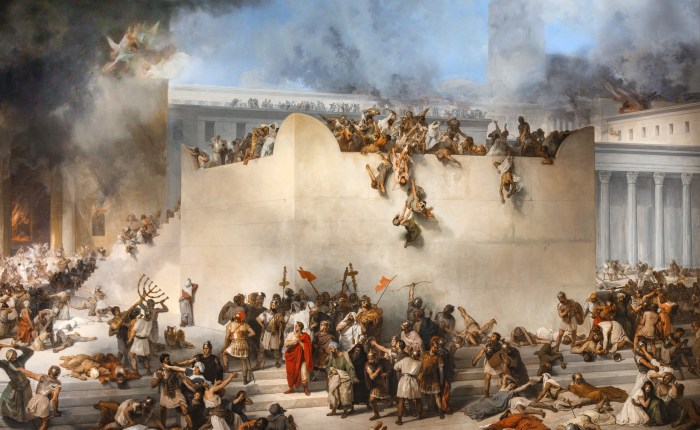
Daniel says it was “the people of the prince who is to come” (Dan 9:26) who will destroy Jerusalem and its sanctuary. Because the Roman army later destroyed this very city and that very temple in A.D. 70 (some ≈ 600 years after Daniel wrote this prophecy), this means our “prince” in Daniel 9:26 is somehow connected to the Roman empire—which Daniel 7 suggested will exist in three phases.[3]
Phase 1: The old Roman Empire under whose jurisdiction Jesus and Pontius Pilate lived (Dan 7:23).
Phase 2: Sometime after Jesus’ day, a splintered remnant that has divided into various pieces (the “10 horns” of the scary fourth beast, Dan 7:23-24).
Phase 3: A very powerful king who will arise from among the splintered bits of Phase 2 (Dan 7:24-26).
History tells that a Roman general (and later emperor) named Titus Vespasianus destroyed Jerusalem during the First Jewish War,[4] when the Roman empire was still intact in its original form (Phase 1, above). This will be a nasty finish to a brutal war. Gabriel tells Daniel: “… its end will come with a flood; even to the end there will be war; desolations are determined” (Dan 9:26). Now, on the other side of this event, we know that God brought this judgment on his people in A.D. 70 because they rejected the Messiah and Savior whom he sent to rescue them.
The Roman (and Jewish) writer Josephus tells us what happened to Jerusalem when the Romans destroyed it. He knows, because he was there that day.
There was no one left for the soldiers to kill or plunder, not a soul on which to vent their fury; for mercy would never have made them keep their hands off anyone if action was possible. So Caesar now ordered them to raze the whole City and Sanctuary to the ground … [a]ll the rest of the fortifications encircling the City were so completely leveled with the ground that no one visiting the spot would believe it had once been inhabited. This then was the end to which the mad folly of revolutionaries brought Jerusalem, a magnificent city renowned to the ends of the earth.[5]
Josephus tells of one Jewish woman named Mary, driven mad by hunger, who killed her infant son, roasted him, ate one half of him and saved the rest for later[6] (cp. Deut 28:53-57). The temple itself was destroyed by fire in a frenzy of rage by Roman legionnaires who ignored their commander’s orders.
All the prisoners taken from beginning to end of the war totalled 97,000; those who perished in the long siege 1,100,000 … No destruction ever wrought by God or man approached the wholesale carnage of this war.[7]
This must be very hard to hear and understand. We wonder what Daniel thought when he heard this news!
Daniel asks for assurance from God that he will set everything right (Dan 9:3-19)
God sends the angel Gabriel to say that he will make it right (Dan 9:20-23).
In fact, things will be set so right that the six-item list at Daniel 9:24 shows us paradise restored.
This shakes out with (a) Jerusalem being rebuilt, and then (b) Messiah the prince arriving on the scene (Dan 9:25). This will take 69 “sevens” to happen, but it’ll happen.
Everything sounds great. But then, after the 62nd “seven” (i.e., 69 “sevens” in total):
The Messiah will be cut off and have nothing (Dan 9:26).
Jerusalem and its (as yet) un-rebuilt temple will be totally destroyed (Dan 9:26)!
This is a shock. What can it mean? Why will it happen? Why this bizarre reversal? Who is this mysterious prince who is to come? At this rate, Daniel may be thinking, the glorious six-item promise list from Daniel 9:24 seems far, far away. Clearly this is a one step forward, two steps back kind of thing. What is the endgame, here?
Evidence suggests there will be a long series of events after Messiah’s arrival at his baptism at Daniel 9:25 (the end of the first 69 “sevens”), and before the 70th “seven” begins in Daniel 9:27.
At least one of those events will be Messiah’s seeming abandonment (“have nothing”), and his execution by Roman soldiers (“be cut off”).
Another event will be the destruction of the rebuilt temple and the city of Jerusalem by the people of the Roman ruler who will come on the scene (Dan 9:26)—the general Titus, who indeed razed the city in A.D. 70.
This “intermission” seems to best explain the “gap” between the 69th and 70th unit of seven years in the prophecy.
Nevertheless, in our next article on Daniel 9:27, the angel Gabriel tells us how God plans to make good on his six-item list of promises.
[1] John Gill: “To be reckoned from the end of the seven weeks, or 49 years, which, added to them, make 483 years” (Exposition of the Old Testament, 6:346). Stephen Miller writes: “After the reconstruction of Jerusalem in the first seven sevens (forty-nine years), another ‘sixty-two sevens’ (434 years) would pass” (Stephen R. Miller, Daniel, vol. 18, in New American Commentary (Nashville: B&H, 1994), 267).
[2] This is why Moses Stuart, an outstanding American bible scholar from the early 19th century, remarks: “The third period (one week) of course begins with the same excision of an anointed one, and continues seven years, during which a foreign prince shall come, and lay waste the city and sanctuary of Jerusalem, and cause the offerings to cease for three and a half years, after which utter destruction shall come upon him, vs. 26, 27” (Daniel, 274; emphasis added). Stuart does not consider the possibility of a gap between the 69th and 70th “seven.”
[5] Josephus, The Jewish War, trans. G.A. Williamson, rev. ed. (New York: Penguin, 1969), 7:1 (361). Chrysostom suggests, “And let not any man suppose this to have been spoken hyperbolically; but let him study the writings of Josephus, and learn the truth of the sayings. For neither can any one say, that the man being a believer, in order to establish Christ’s words, hath exaggerated the tragical history,” (“Homily 76,” in NPNF 1.10, 457).
[6] Josephus, The Jewish War, 6:199-219 (341-342).
[7] Josephus, The Jewish War, 6:420f. See ch(s). 13-21 (i.e., 3:422 – 6:429).
Daniel’s visions are endlessly fascinating to Christians.[1] So are those from Ezekiel, Zechariah, and Revelation. They stick in your mind so vividly because they’re exciting, dramatic, bizarre, otherworldly, almost fantasy-like. This is a very particular style of writing God uses to communicate hope to desperate people.[2]
Daniel and many others are prisoners in Babylon. Their homes are destroyed, family members are dead, their nation is no more, and they’re far from home. They’re tired, lonely, anxious, scared, and perhaps doubting God’s promises. God wants to give hope to His people, and for that an essay won’t do. This is why bible books containing these fantastic visions always come during times of terrible persecution and despair. So, Daniel’s visions are not fodder for timeline speculation. They’re about hope for desperate prisoners.
In Daniel 2, God’s point is that one day His kingdom will smash everything bad, everything evil, everything unholy in this world to pieces—and then there will be peace on earth. These visions and the hope they bring aren’t just for the Jews in exile in Babylon. They’re also for believers in exile in this world today who are longing for a better country—a heavenly one (Heb 11:16).
Space does not permit a detailed run-up to the vision itself. Suffice it to say that King Nebuchadnezzar was lying in bed one night when his “mind turned to things to come, and the revealer of mysteries showed you what is going to happen,” (Dan 2:29). He was not a kind or good man. He was brutal and cruel—vowing to kill his magi and their families if they failed to accurately describe the dream and what it meant (Dan 2:4-12). Daniel and three friends are caught up in this death sentence, but God reveals the dream and its explanation to them during the night (Dan 2:14-19). The next morning, they’re rushed into the king’s presence, and we hear about the vision for the first time.
The Vision
Here it is:
31Your Majesty looked, and there before you stood a large statue—an enormous, dazzling statue, awesome in appearance. 32The head of the statue was made of pure gold, its chest and arms of silver, its belly and thighs of bronze, 33its legs of iron, its feet partly of iron and partly of baked clay. 34While you were watching, a rock was cut out, but not by human hands. It struck the statue on its feet of iron and clay and smashed them. 35Then the iron, the clay, the bronze, the silver and the gold were all broken to pieces and became like chaff on a threshing floor in the summer. The wind swept them away without leaving a trace. But the rock that struck the statue became a huge mountain and filled the whole earth (Daniel 2:31-35).
This is a composite statue. The startling bit is the sudden appearance of a rock not fashioned by human hands which pulverizes the figure and turns it to dust (Dan 2:34). The rock strikes its brittle legs, which are forged from a bizarre mixture of iron and clay. Clearly, a rock will crush clay! Because this is a fantastic otherworldly vision, we need not look for absurd literalism (e.g., how can a rock crush iron?). The point is that the rock strikes with such force that the whole thing comes tumbling down and turns to powder. This rock alone now holds the field, and it gradually grows to fill the whole earth.
What the Vision Means
Daniel explains that Nebuchadnezzar represents the head of gold (Dan 2:36-38). The king and his kingdom are synonymous—each represents the other. Daniel does not name any other king or kingdom in this vision. He accurately describes the power and majesty of the king’s reign: “the God of heaven has given you dominion and power and might and glory” (Dan 2:37; cp. Dan 4). Babylon is the preeminent power player in the Ancient Near East. Yet, God is above all. This vision presses that message home forcefully, as we’ll see.
Working on down the statue, Daniel hurriedly mentions two kingdoms which will arise after Babylon passes from the scene (Dan 2:39). The second, Daniel tells Nebuchadnezzar, is “inferior to yours” (Dan 2:39) and is presumably represented by the “chest and arms of silver” (Dan 2:32). The third is “of bronze” and “will rule over the whole earth” (Dan 2:39, cp. 2:32— “belly and thighs of bronze”).
Daniel is most interested in the fourth kingdom because it is the one the mysterious rock attacks (Dan 2:34). This kingdom is incredibly strong. The “iron” composition of its legs means it will smash and destroy “all the other” kingdoms which came before (Dan 2:40). Yet, because its feet is a mixture of iron and clay (Dan 2:33), it is curiously brittle. This frailty means “the people will be a mixture and will not remain united, any more than iron mixes with clay,” (Dan 2:43).[3] Most commentators and English bible translations understand this to mean intermarriage, but the larger point seems to be a kingdom without a shared national identity. Some writers suggest the progressive inferiority of metals represents a progressive inferiority of national unity and identity from Babylon on down the line.[4]
Daniel explains that “in the time of those kings, the God of heaven will set up a kingdom that will never be destroyed, nor will it be left to another people,” (Dan 2:44). This eternal divine kingdom “will crush all those kingdoms and bring them to an end, but it will itself endure forever,” (Dan 2:44). This is surely the rock which smashes the statue.
Because the kingdoms are successive (“after you” … “next” … “finally” (Dan 2:39-40)), and because the rock smashes only the fourth kingdom which has since destroyed “all the other kingdoms” (Dan 2:40), then God’s kingdom will not come until the time of the fourth kingdom. This suggests that when Daniel says, “in the time of those kings” (Dan 2:44), he refers to the fourth kingdom—a secular “kingdom” dynasty which the divine rock suddenly pulverizes.[5] It crushes “all those kingdoms” in that the fourth realm is built upon the ruins of the first three, and when it falls so too do the remnants of the others.[6]
But, in this vision Daniel is not interested in divine timetables or in naming the kingdoms. God’s point is simple—His kingdom will win. That’s it. That’s the point of the vision. “This is the meaning of the vision of the rock cut out of a mountain, but not by human hands—a rock that broke the iron, the bronze, the clay, the silver and the gold to pieces,” (Dan 2:45).
Nebuchadnezzar had been lying on his bed at night, wondering what the future held. Well, God says, this is the future—you lose. Everyone loses. I win. My kingdom wins.[7] I’ll smash everything unholy, dark, and wicked to pieces, and there’s nothing anyone can do to stop it.
What the Vision Means Considering God’s Whole Story
Otherworldly visions like Daniel’s are hope for people who are suffering, tired, and doubtful. Every earthly kingdom is really Babylon under different cover—Revelation 17 and 18 show us the penultimate “city of darkness” falling after God’s avenging angels “pour out the seven bowls of God’s wrath on the earth,” (Rev 16:1). But, in the meantime, “Babylon” shape-shifts.
No matter which nation holds sway over the world, Daniel 2 assures us that God’s kingdom is coming, and it’ll smash everything else to pieces and fill the whole earth (Dan 2:35). All the great nations, the great empires, the great corporations in this world will become like chaff—only God’s work, God’s good news, and God’s values have eternal significance (cp. 1 Cor 3:11-15; Rev 18). Think of Rome, Spain, and Great Britain. Think of corporations like U.S. Steel, Sears, Kmart, or even Red Lobster! They all fade away, and a new kid enters the stage for its five minutes of fame.
What do you give yourself to? Is it worth your heart and soul? Is it of eternal significance? Do you give yourself to something that will be crushed one day?
God, through Daniel, says “Your King is coming!” Just as Nebuchadnezzar is the head of his mighty but temporary kingdom, so Jesus is the head of the eternal kingdom that’s now come—the one that’s smashing everything else to pieces even now as it expands throughout the world. Jesus said He was the stone which crushes His enemies (Lk 20:18), likely alluding to the divine rock from Daniel’s vision. Jesus said His miracles proved that “the kingdom of God has come upon you,” (Lk 11:20). He told the Pharisees that the kingdom of God was not an observable phenomenon, but instead “the kingdom of God is in your midst,” (Lk 17:21). One enters the kingdom of God by being born again of water and Spirit (Jn 3:3, 5).
It’s significant that the stone smashes the fourth and most fearsome kingdom, and then grows into a mountain over time (Dan 2:35).[8] Peter may have adapted this figure when he said each believer was a “living stone” and part of a spiritual house—a “rock” which was gradually growing to fill the whole earth (Acts 1:8) as Jesus people “make disciples of all nations” (Mt 28:19). One commentator explains: “The kingdom adds rock mass as God adds to it royal subjects.”[9] The kingdom is synonymous with Jesus.
Daniel 7 has more details for us about these four mysterious kingdoms, and their fate. But in our passage at Daniel 2, it’s enough to know that God promises hope if you’re suffering, if you’re tired, if you’re doubting God’s promises in the mess of everyday life. At Daniel’s place in God’s story, this vision assured God’s people: “The king will come one day!” Today, from the vantage point of the new and better covenant, Daniel’s vision tells us: “The king is already here—He said His kingdom is in our midst! And He’s coming back again soon!”
Here is a recent sermon I preached on this passage:
[1] Here are four helpful commentaries on Daniel which I recommend. First is Leon Wood, Daniel (Grand Rapids: Zondervan 1973). This is an excellent dispensational commentary—one of the best available. Second is a commentary by Lutheran scholar Andrew Steinmann, Daniel (St. Louis: Concordia, 2008). This is a wonderful commentary that will make you think outside the box. Third is the classic by Presbyterian scholar Edward J. Young, Daniel (Grand Rapids: Eerdmans, 1949). This is a formidable work that deserves to be consulted. Fourth is by 19th century, American Old Testament scholar Moses Stuart, Commentary on the Book of Daniel (Boston: Crocker & Brewster, 1850). Stuart’s work is conservative and almost unknown today. It’s available free online.
[2] See the wonderful discussion on apocalyptic literature in D. Brent Sandy and Martin G. Abegg, Jr., “Apocalyptic,” in Cracking Old Testament Codes: A Guide to Interpreting Literary Genres of the Old Testament, ed. D. Brent Sandy and Ronald L. Geise (Nashville: B&H, 1995), ch. 9.
[3] Leon Wood goes too far when he says: “Because the mixture of baked clay and iron is found only in the feet and toes, and not in the legs, it follows that this element of brittleness would be true of the Roman Empire only in its later period, rather than in its former,” (Daniel, 69). Wood is a dispensationalist and is setting the stage for a “revived Roman empire” in the latter days. This may or may not be correct, but it is not in the text of Daniel 2.
[4] Young, Daniel, 74, and C.F. Keil and Franz Delitzsch, Commentary on the Old Testament (reprint; Peabody: Hendriksen, 1996), 9:558.
[5] “Those kings must of course mean the kings that belong to the fourth dynasty, although they have not thus far been expressly named, but only by implication,” (Stuart, Daniel, 67).
Wood is correct that “the time of those kings” cannot refer to all four kingdoms (contra. Young, Daniel, 78, whose explanation seems desperate). However, he once again goes beyond the evidence when he claims “those kings” refers to the ten kings represented by the little horns of the evil fourth beast from Daniel. For support, he (like many dispensationalists) appeals to the ten toes of the image (Daniel, 71-2). However, Daniel himself does not find the toes significant.
It is a mistake to interpret apocalyptic visions by calling in bits of the image that the writer doesn’t highlight. One might as well appeal to the “two legs of iron” to support a fulfillment in the Eastern and Western Roman Empires, or the “10 fingers” on the silver hands to suggest a successor kingdom to Babylon with ten rulers. However, see Stuart’s able defense of the significance of the ten toes (Daniel, 65).
[7] “Daniel apparently wanted the king to recognize through this the final supremacy of God and his program over mankind, and accordingly be brought to a place of humility before this mighty One who had so graciously revealed these things to him,” (Wood, Daniel, 74). See also Steinmann, Daniel, 138.
Well, I read 54 books this year. They tilt heavily towards biography and the doctrine of scripture. We shall see what 2024 brings. The books are listed in no particular order. Just because I read a book or have something nice to day about it does not mean I agree with everything in it!
This was a very good little book. It tells the story of how, at mid-century, the shared ethos of a generic, liberal Protestantism began to fail as an assumed ethos for ethics and public values. Marsden chronicles some efforts to grapple with the problem, and the reactions to these various solutions. In his final chapter, he advocates a “principled pluralism” largely following the outline of Abraham Kuyper’s “sphere sovereignty.” He calls for work to update Kuyper’s framework for the modern era.
This is the second time I’ve read this biography. It’s very good, long but not too long, and engaging. I highly recommend it. Oates’ volume was dogged with what appear to be baseless charges of plagiarism, which is unfortunate.
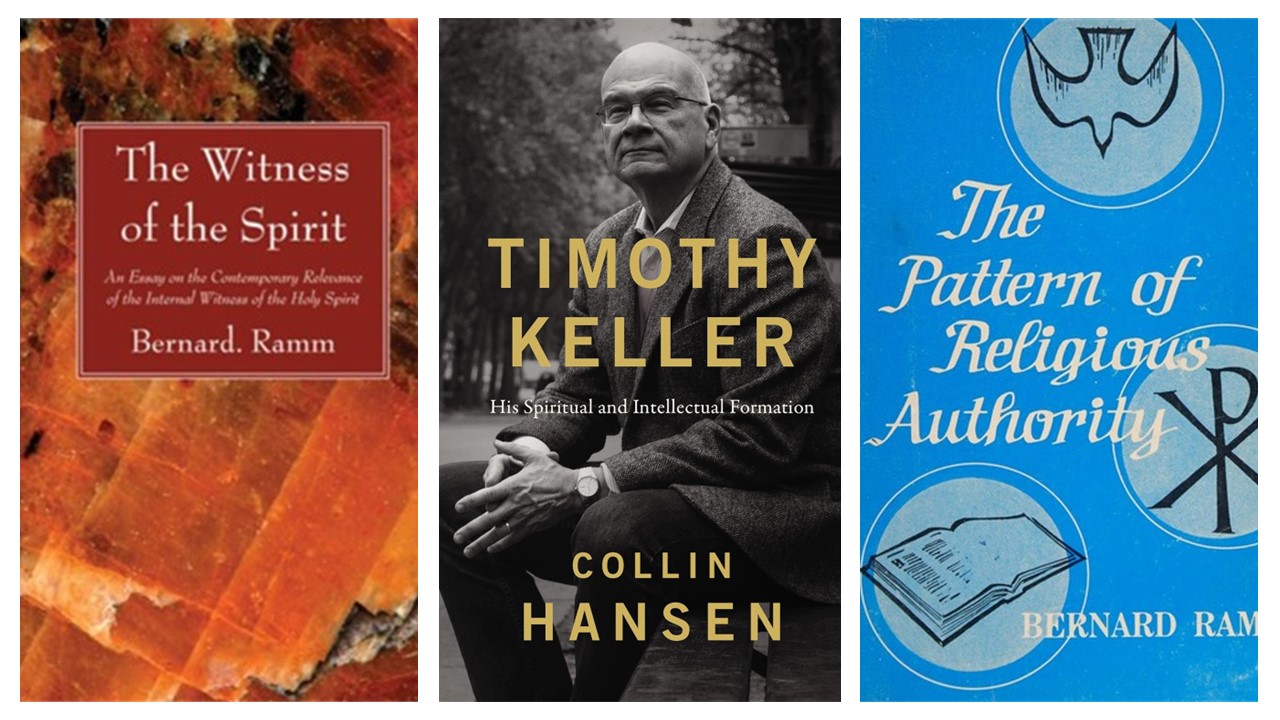
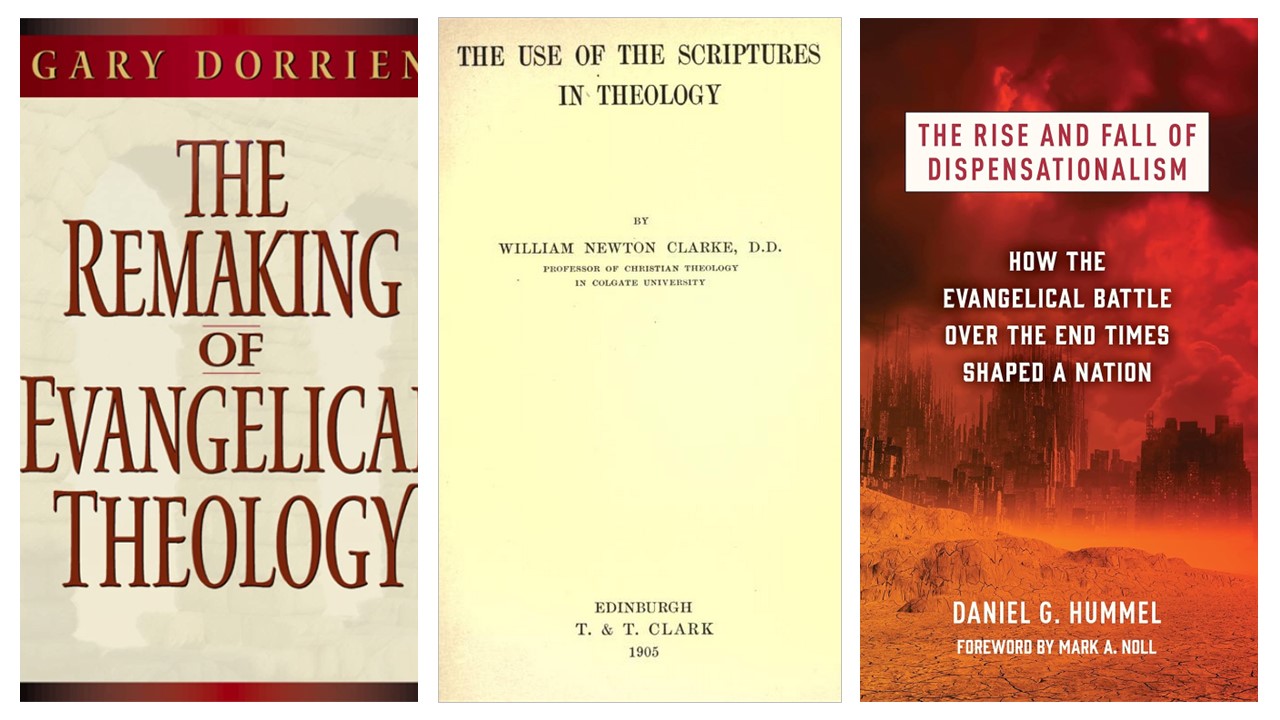
A classic. Henry has an interesting method for theology which relies heavily on logic and order. Even though he makes very good logical sense, his quest to make theology rationally credible does not do justice to the nature of biblical revelation. Bernard Ramm’s little trilogy (Special Revelation and the Word of God, The Witness of the Spirit, and The Pattern of Religious Authority) is a good antidote to Henry’s rationalism. See especially Gary Dorrien (The Remaking of Evangelical Theology) for an outsider’s assessment of Henry’s approach. I suspect that Henry’s God, Revelation, and Authority is more appreciated in a pro forma manner than actually read.
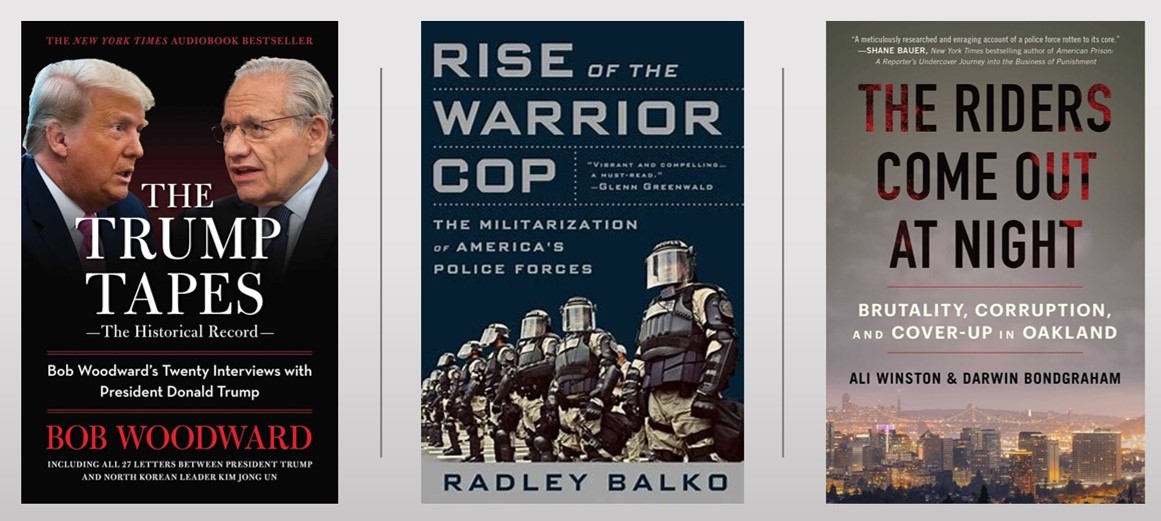
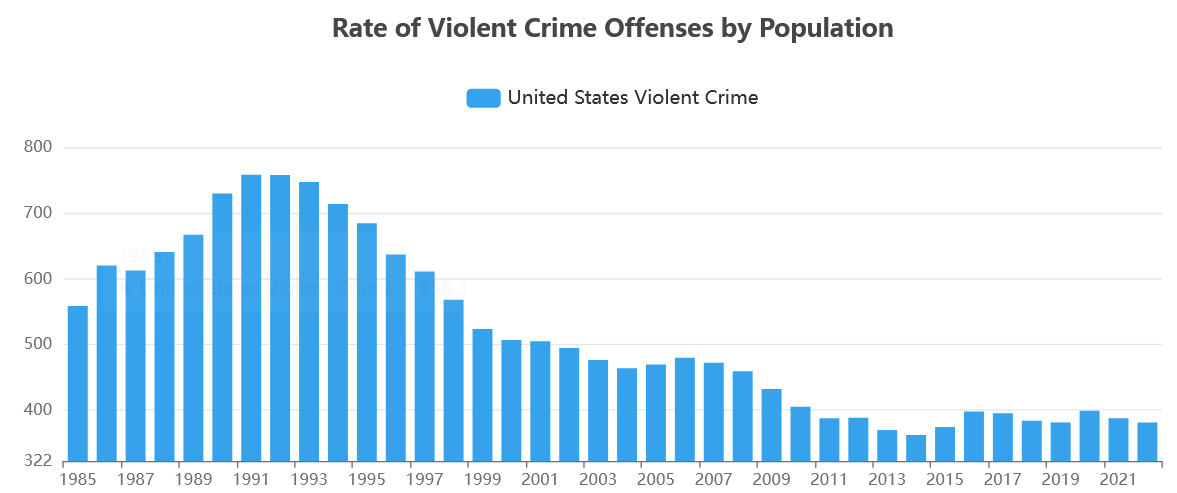
A very, very sobering book. Violent crime has in America has been halved since its apogee in 1991 to 1992. Yet, the public perception is that the streets are more dangerous than ever, that law enforcement is under siege. Officers ride around in dark vehicles with tinted windows. They dress like militarized infantry. Why? This book will provide some perspective.
Retrieved from the FBI Crime Data Explorer at http://tinyurl.com/et3b5m4k. Rate per 100,000 people, per year. Search parameters are for “all violent crimes” from 1985 to 2022.
In the same genre as Rise of the Warrior Cop, but focusing on police corruption in Oakland. Sobering and astonishing.
6. The Trump Tapes by Bob Woodward (11hrs 29 min; Simon & Schuster, 2022).
You won’t appreciate this unless you listen to the audiobook version, which is just recordings of Woodward’s 20 interviews with then-President Trump. This is perhaps the most damning series of interviews to which I’ve ever listened. From a strategic perspective, it seems the president made a mistake by giving Woodward such unfettered access. However, many of President Trump’s constituents likely do not read Woodward, so perhaps it wasn’t a mistake after all?
7. Peril by Bob Woodward and Robert Costa (512 pp.; Simon & Schuster, 2023).
The third book of Woodward’s Trump trilogy, chronicling the transition to the Biden administration with particular focus on the COVID-19 pandemic response. It’s as horrifying and important as the other two in the series.
8. Rage by Bob Woodward (580 pp.; Simon & Schuster, 2021).
The first of Woodward’s Trump trilogy. It details the Trump transition. It is frightening and paints the picture of Trump as monumentally unfit for any public office–let alone the White House.
This is a very curious book. It chronicles bits of the Mark Driscoll and Mars Hill Church saga with particular attention to the church’s propagation of a deviant strain of Christian sexuality (i.e. “biblical porn”); particularly how it leveraged its expectations in this area to produce volunteerism, commitment, and loyalty to its peculiar evangelical empire. The ground Johnson covers here overlaps in some areas with the ChristianityToday’s wildly popular “Rise and Fall of Mars Hill” podcast (Johnson published first!).
The peculiar aspect of this book is that it seems to see-saw between an engaging history and sudden esoteric discussions of sociological theory. It reads like two very different pieces melded somewhat awkwardly into one. The discussions of sociological affect seem pasted in with (in some instances) little to no transition. The jarring bit is that Johnson doesn’t really try to translate affect theory for non-specialists. Her academic peers in the same field surely appreciate her remarks along that line, but interested laypeople like me are a bit lost when she veers hard right into academic speak.
In summary, this is a very interesting and informative book that can’t decide whether it wants to be an academic treatise or a popular book for non-specialists. In contrast, it seems to me that Kristin Kobes DuMez faced a similar dilemma with Jesus and John Wayne and chose the popular route, and succeeded quite well. This doesn’t mean Johnson’s book is bad–far from it. I enjoyed it and was horrified at some of what I read. I just wish she’d had interested laypeople like me in mind when she wrote it.
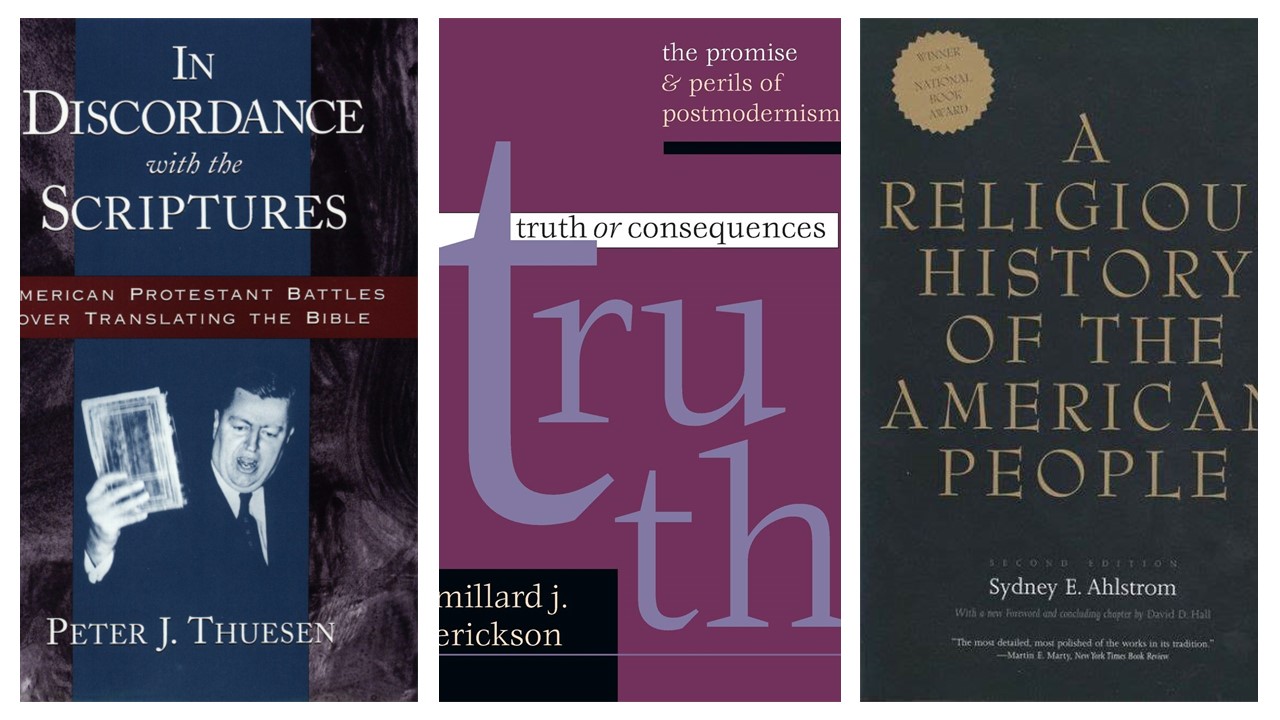
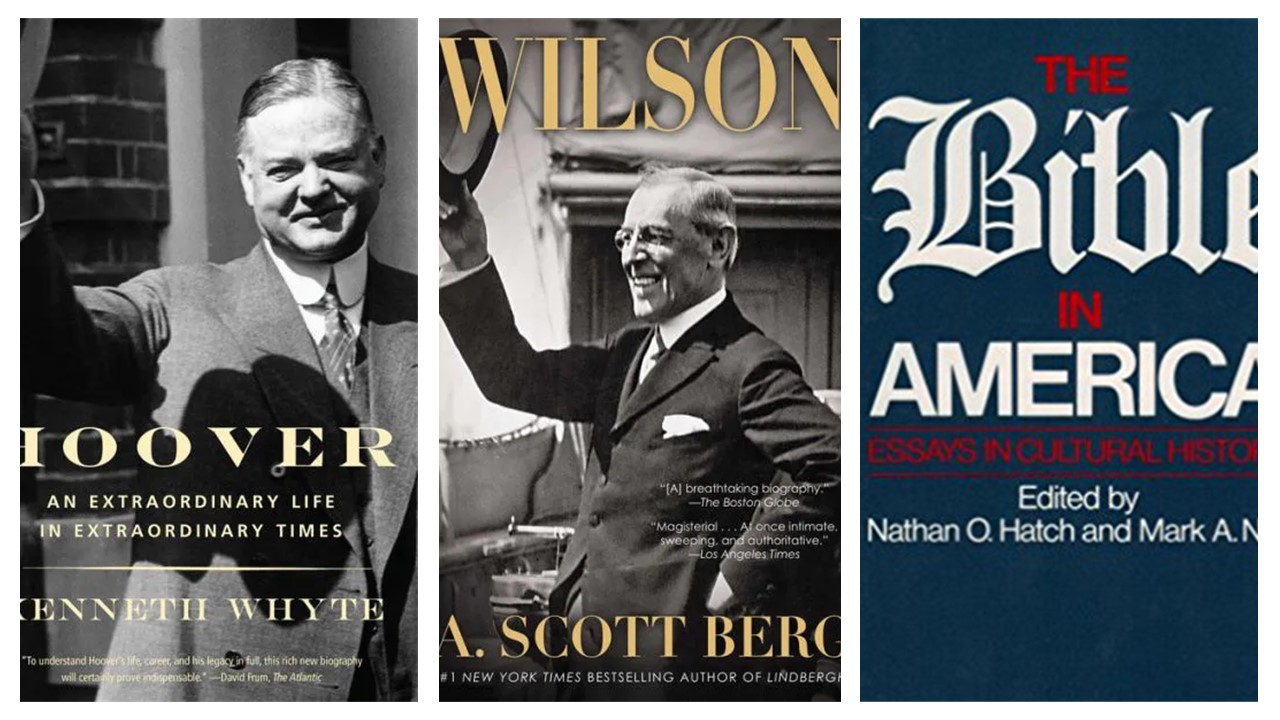
I read about 20% of this book (pp. 385-510, 731-872) while conducting research for a book I wrote on inerrancy and the doctrine of scripture. It is amazing readable, moves fast, and is rightly a classic. I doubt anything like it will come along anytime soon. Mark Noll’s History of Christianity in the United States and Canada is a fraction of this length. Historian Thomas Kidd (Midwestern Baptist Theological Seminary) has a book due out in the next year or so which covers some of the same ground, and I am looking forward to it.
A refreshing and very interesting book about bible translations in America, using the RSV translation’s public reception as a foil. It’s a bit out of date now, especially considering the TNIV gender-inclusive “controversy” from about 15 years ago, and the rise of the ESV.
This book is what it sounds like–a primer on postmodernism with some of Erickson’s trademark irenic analysis. This is a very helpful book that was part of the “postmodernism is new and weird and we’ll explain it for you” wave of books that conservative Christians put out around the year 2000. Sometimes theologians try to speak outside their lane, and it shows (e.g. Wayne Grudem’s Politics According to the Bible). This doesn’t happen here. Erickson is well-credentialed to respond to postmodernism; he holds an MA in Philosophy from the University of Chicago.
This was another book of which I read a portion (pp. 309-582) for research. It’s a very interesting and informative book about just what its title suggests.
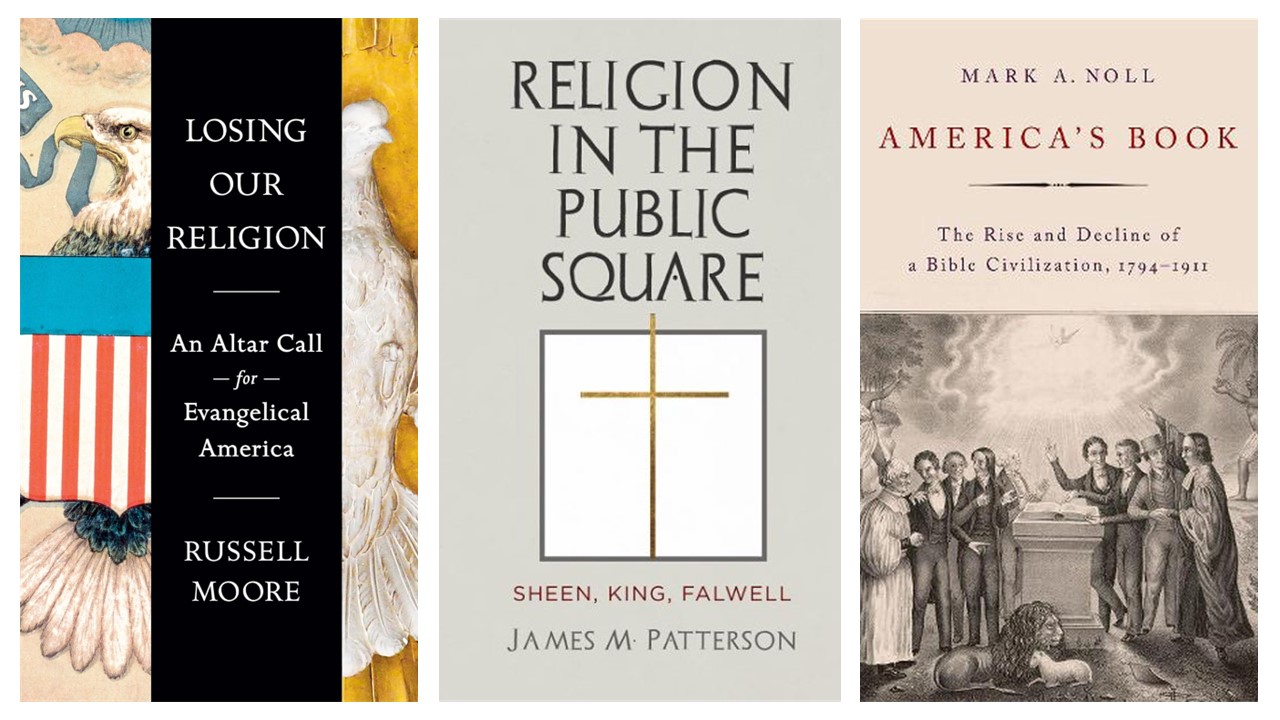
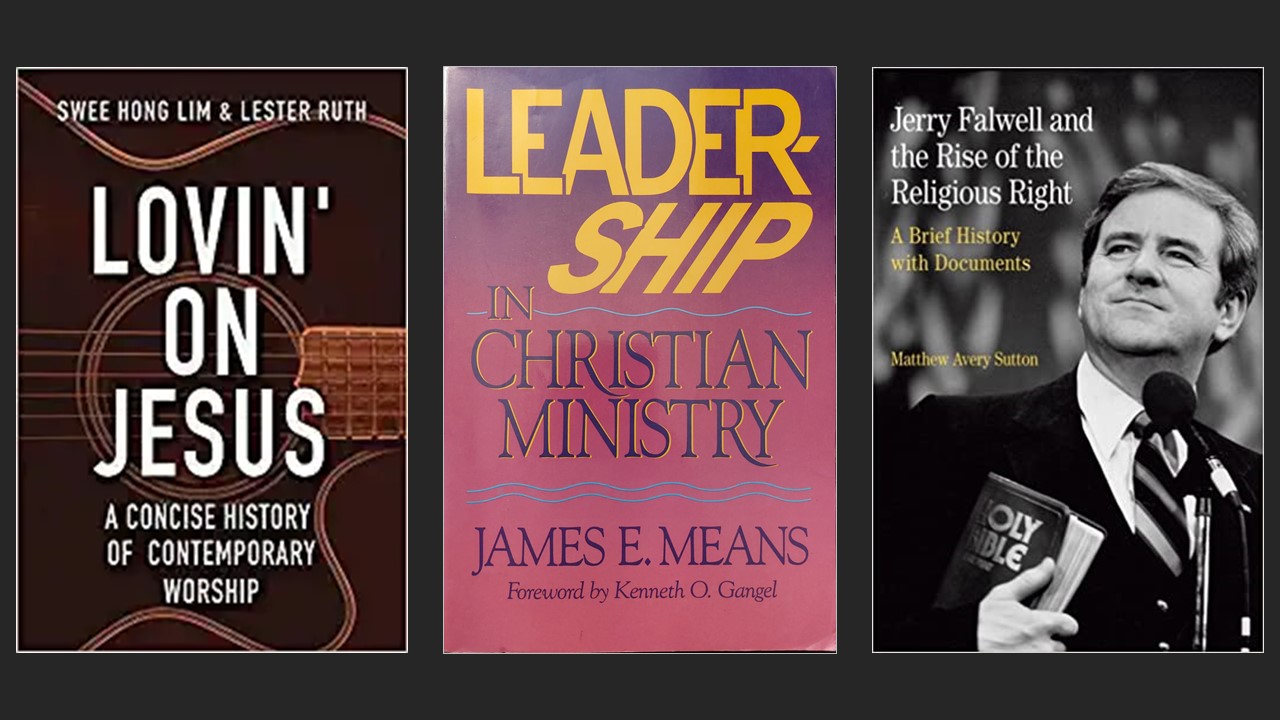
This was a unique book, because it examined three different paradigms for understanding religion in the public square. Patterson did this by spotlighting three very different individuals; (a) the fiery Roman Catholic radio priest Fulton J. Sheen, (b) the black Baptist preacher Martin Luther King, Jr., and (c) that quintessential representative of white, Southern-style Baptist fundamentalism–Jerry Falwell, Sr.
This is sort of a spiritual sequel to Moore’s 2015 volume Onward! He wrote this book in the aftermath of his resignation from the Southern Baptist Ethics and Religious Liberty Commission and transition to editor-in-chief of Christianity Today. You could say that Moore landed on his feet!
This book is a word of testimony—testimony of what one fellow wayfarer has learned about how to survive when the evangel and the evangelicalism seem to be saying two different things. That requires naming what we have lost—our credibility, our authority, our identity, our integrity, our stability, and, in many cases, our sanity. This book will consider all the ways evangelical America has sought these things in the wrong way—and suggests that perhaps it’s by losing our “life” that we will find it again.
Moore, Losing Our Religion, pp. 21-22
The volume reads a bit like a cathartic exercise from a good man who was deeply hurt by some very unpleasant people who are part of a very unpleasant machine.
I couldn’t help but wonder if the plot twist to the story of American conservative Christianity was that what we thought was the Shire was Mordor all along. I pretend that all of that is past me, but it lingers, in the ringing in my ears of the stress-induced tinnitus that persists to this day, and in the fact that I am still waiting for one sleep without nightmares about the Southern Baptist Convention. But here I am, an accidental exile but an evangelical after all.
Moore, Losing Our Religion, p. 9
This volume fits into a new (post-Trump + 2016) genre that I like to call “white evangelicism sucks and this is why.” It’s not that Moore’s book is bad. It’s not–it’s actually quite good. It’s just that so many people have written (and are still writing) the very same book. They say the same things, in the same way. Of course, perhaps they all say the same things because they all see the same problems. Yes, got it. Understood. I am glad Moore escaped from Southern Baptist public life and I hope he recovers in a spiritually wholesome environment. Still, I’m tired of this genre.
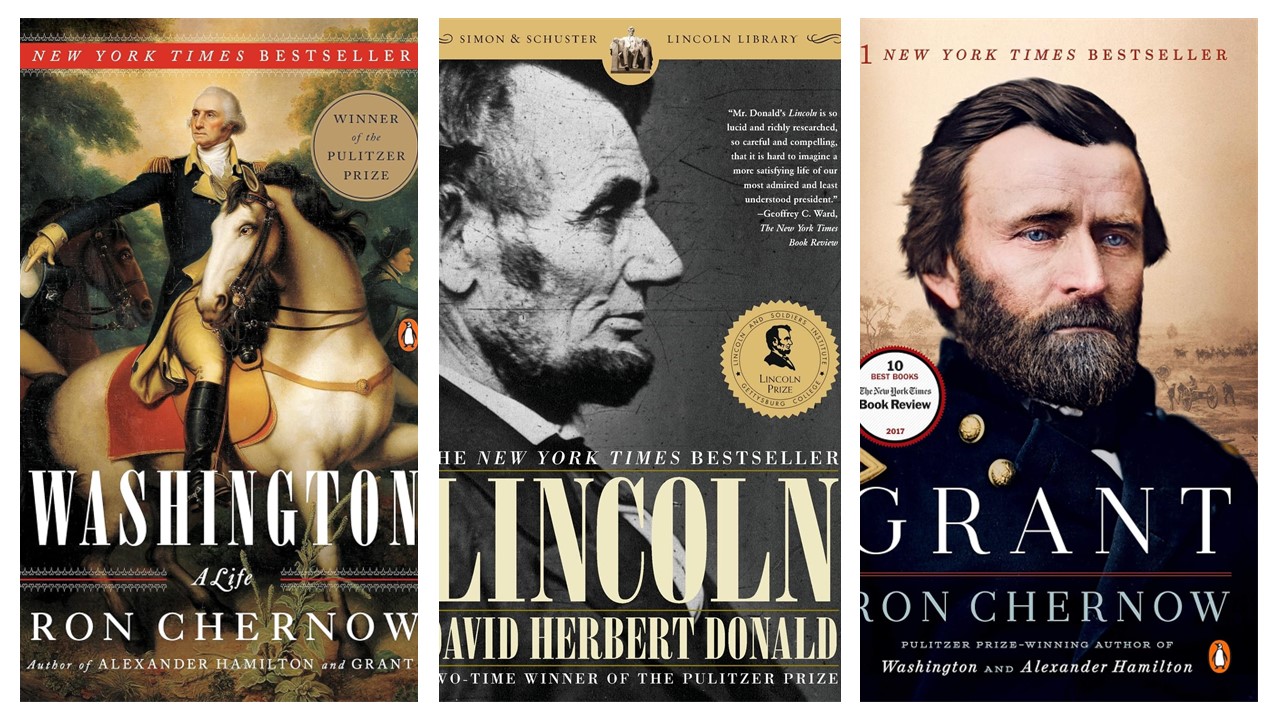
16. Grantby Ron Chernow (1104 pp.; Penguin, 2018).
It’s a biography. It’s very good. Chernow fairly addresses the persistent myth that Grant was a drunken fool. This is probably the best Grant biography in print.
This is an interesting little book. I’m not sure it’s worth the hype its received. That isn’t to say its bad. It’s an interesting sketch of the influences that made Tim Keller the unique and gifted man that he was.
The first volume in Ramm’s trilogy of authority in the Christian life. Ramm places great emphasis on the Spirit being the channel by which God speaks to His people. A very good and very helpful book.
The second volume in Ramm’s trilogy. He and Carl Henry have very different approaches. He eschews Henry’s cold rationalism and emphasizes the Spirit’s dynamic and dialogical role in the Christian life. Ramm was heavily influenced by Calvin’s own treatment on the Spirit, and it shows. I really appreciate Ramm. He is the kind of theologian I want to be when I grow up!
The final volume in Ramm’s trilogy. In an era before the Chicago Statement (1978) set the guardrails for the debate for a new generation, Ramm took a mediating position that was still in the conservative orbit. In the modern era, the Chicago Statement is a non-negotiable article of faith for conservative institutions and many churches. Ramm would not have fit easily into that mold.
Pinnock’s plea for a conservative alternative to the Chicago Statement. Well-reasoned and irenic, but firm. Modern evangelicals who assume “orthodoxy = the Chicago way or the highway” ought to read Pinnock. They might be pleasantly surprised. I cannot speak to the two revised editions of the book which Pinnock put out with a co-author. I recommend only the original, 1984 edition.
Whenever you mention this book to conservative theologians, they will likely respond within 10 seconds with “but, did you read Woodbridge’s reply?” That tells you that Rogers/McKim stuck a nerve. This is an extraordinary work that surveys the historical data about how Christians have understood the nature of scripture. The issue of Chicago-style inerrancy lurks in the background as Rogers/McKim’s rhetorical foe–they conclude that the Chicago Statement is not the historical position of the church. I cannot agree with everything in the book, and Woodbridge gleefully documented reams of purported errors–I leave the reader to evaluate whether his criticisms are valid. Still, a must-read.
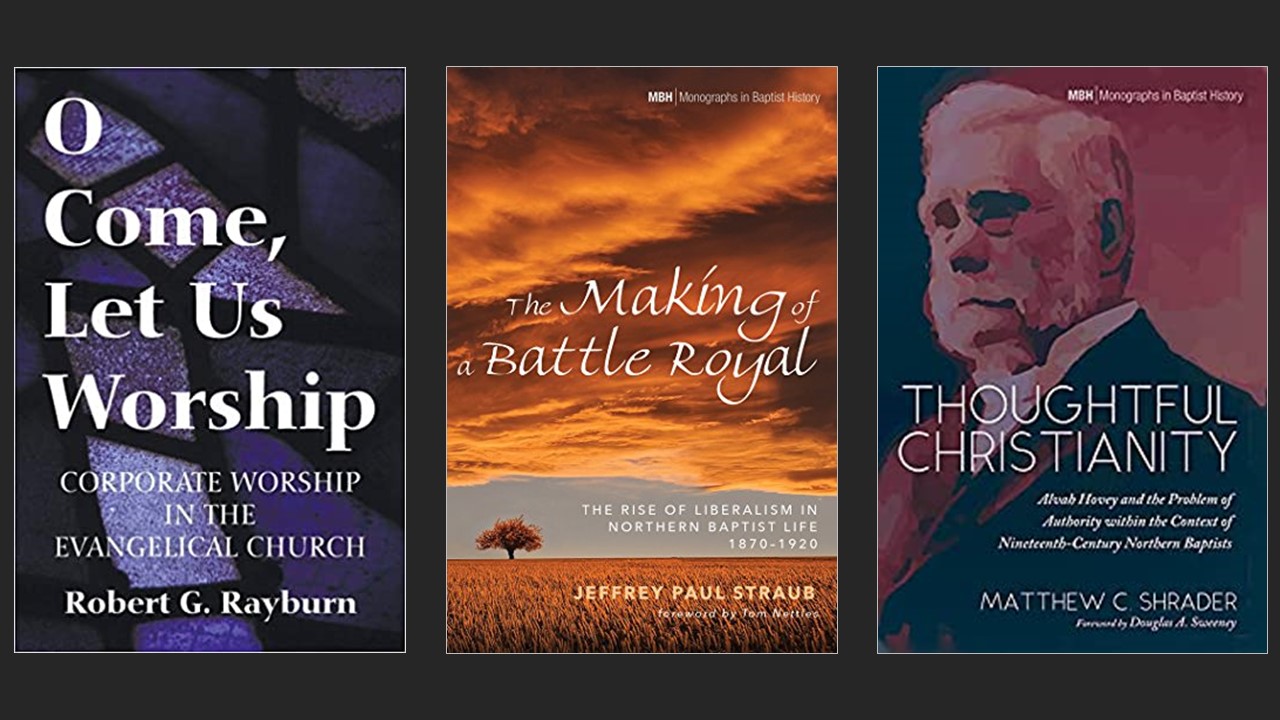
Clarke is the poster-child for gentle, kind, 19th century Baptist liberalism. His doctrine of scripture disgraces God, but he is so kind and grandfatherly that you almost like the guy.
An important volume on an important topic. Dispensationalism has fallen on hard times. It has little to no scholarly influence, has no reliable academic press, has very few scholars publishing anything to advance the system, has produced precious few technical commentaries, and few substantive mid-level (e.g. NAC, Tyndale, or EBC level) commentaries. In that sense, it has indeed “fallen” from great heights. This book provides one explanation about why and how.
A tour-de-force survey of evangelical theology from a liberal outsider. This is one of the best books I read in 2023. His survey of theological perspectives is fair and irenic, and his footnotes will take you to valuable works from conservatives.
Beegle’s book is another entry from the 1970s to 1980s genre which I’ll call “the Chicago Statement is wrong!” Some of his critiques of Chicago-style inerrancy are interesting, but on the whole Beegle goes off the reservation here. If you want a conservative alternative to the Chicago Statement, see Pinnock and not Beegle. F.F. Bruce wrote an endorsement!
This is an edited volume containing lengthy excerpts from four “old Princeton” theologians on scripture, science, and theological method. Noll provides brief introductions but largely lets the authors speak for themselves. An invaluable book. Warfield and A.A. Hodge are excellent on scripture–much better than R.C. Sproul, who drafted the original 1978 Chicago Statement and somehow misunderstood the “original autograph” issue along the way–compare the Chicago Statement to Warfield’s “The Inerrancy of the Original Autographs” (1883) and you’ll see what I mean.
This is mostly inside baseball stuff for academia, but it has some interesting insights. It explores how to reconcile faith and critical inquiry. It’s a logical sequel to the Princeton volume or Noll’s The Bible in America book.
34. The Fifth Riskby Michael Lewis (256 pp.; Norton, 2019).
A forgettable little book about how President Trump’s administration was allegedly so inept and how everything may crumble to bits at any moment. Not worth buying. Glad I checked it out from the library. It repeats the same theme in every chapter; (a) Lewis introduces the noble civil servant, then (b) in come the stupid Trump officials in 2017, then (c) the dumb Trumpian appointees threaten to ruin everything, then (d) Lewis lets the noble bureaucrat explain how dangerous the Trump appointees are, then (e) the next chapter repeats in a different government sector. Very tiresome and a bit condescending.
Reid’s emphasis on common sense, on what every rational person can know by his innate faculties, is very good. Philosophers today seem to be scornful of commonsense realism, so this makes me wary. But, Reid just makes sense. I suppose one main hurdle is that Reid makes sense in a world in which one is willing to acknowledge that God has created us and given us logical faculties for reason. We don’t live in that world any longer, so I suspect that disconnect is driving some of the disagreement.
An extraordinary series of essays from world-class historians. Not sure why it’s out of print!
38. Wilsonby A. Scott Berg (880 pp.; Penguin, 2014).
A magisterial biography of a very interesting man. It made me very sad to read of Wilson’s incapacitation shortly after his second term began. I wonder what he could have accomplished if he’d retained his physical powers.
The best book I read in 2023. Hoover was a true genius. His story is inspiring beyond words. He came from nothing, made a career as a brilliant mining engineer, then a financier of sorts in the mining world, then saved untold millions from starvation as head of a humanitarian agency (what would now be an NGO) during and after the first world war. Secretary of Commerce. Elected President. If there was any single individual in American history who could have been up to the task of combating the series of crises that we now refer to as the Great Depression, it would have been Hoover. And yet, he couldn’t get it done.
Whyte works hard to bring perspective to Hoover’s reactions to the financial crises. He argues that Hoover responded as well as could be expected, that Franklin Roosevelt cribbed several of his policies and ideas (even the infamous “nothing to fear but fear itself” line), and that the depression was on the road to recovery when Roosevelt assumed office–but that the latter refused to coordinate policy with Hoover and went his own way. Whyte notes that the depression continued until the second world war, that Roosevelt did not “solve” the depression, and that Hoover was understandably bitter about the treatment he received. Roosevelt was undeniably a superior politician, and Hoover was dealt a bad hand … not unlike Jimmy Carter nearly 50 years later.
I plan to read another Hoover biography in 2024. This man deserved better. He truly was an extraordinary man in extraordinary times.
Anything you want to know about Watergate? You’ll find it here. This is the most up-to-date, exhaustive account of the scandal in print. An outstanding book.
Nobody would confuse Perlstein with an objective historian. This is an entertaining, exhaustively researched work of cultural history with a sarcastic tone. That isn’t to say it isn’t valuable. His quartet of books chronicling the rise of the political right from Goldwater to Reagan is essential reading, and extraordinarily entertaining.
Hoover published this little book while he was Secretary of Commerce. He outlines what he sees as a peculiarly American kind of individualism–a characteristic which sets America apart:
Therefore, it is not the individualism of other countries for which I would speak, but the individualism of America. Our individualism differs from all others because it embraces these great ideals: that while we build our society upon the attainment of the individual, we shall safeguard to every individual an equality of opportunity to take that position in the community to which his intelligence, character, ability, and ambition entitle him; that we keep the social solution free from frozen strata of classes; that we shall stimulate effort of each individual to achievement; that through an enlarging sense of responsibility and understanding we shall assist him to this attainment; while he in turn must stand up to the emery wheel of competition.
Hoover, American Individualism, pp. 9-10. Emphasis added.
Hoover believed we must make our own way; that we must be guaranteed equality of opportunity but not equality of outcome. The grand object of government is to (a) foster equality of opportunity without (b) throttling individual initiative:
To curb the forces in business which would destroy equality of opportunity and yet to maintain the initiative and creative faculties of our people are the twin objects we must attain. To preserve the former we must regulate that type of activity that would dominate. To preserve the latter, the Government must keep out of production and distribution of commodities and services. This is the deadline between our system and socialism. Regulation to prevent domination and unfair practices, yet preserving rightful initiative, are in keeping with our social foundations. Nationalization of industry or business is their negation.
Hoover, American Individualism, pp. 54-55
One can see glimmerings of the modern GOP here. This is a very interesting book. Well worth reading and pondering. Needless to say, Hoover despised Roosevelt’s New Deal.
A good biography. It seems to lose steam once it hits Eisenhower’s presidency. And, yes–Eisenhower surely had an affair with Kay Summersby. Smith suggests that Eisenhower planned to divorce Mamie and marry Kay, but his plan was thwarted. Like a good general facing hard realities, Eisenhower then sent Kay a “Dear John” letter that is astonishingly cruel and heartless. He cut her loose like a used Kleenex. Eisenhower comes across as an amazing politician and a great leader, but a poor general. That is fair, I believe.
45. Trumanby David McCullough (1120 pp.; Simon & Schuster, 1992).
This book made me love Truman. It has earned its reputation. I even bought a “The Buck Stops Here!” desk sign replica from the National Archives. I will display it on my desk at work.
A great biography of an interesting guy. Reagan was a good man, a kind man, a decent man. He also seemed to be shallow and a bit of an empty suit.
47. Our Faith by Emil Brunner, trans. John Rilling (153 pp.; Scribners n.d.).
I love these little “this is what the Christian faith is about” books that theologians sometimes write. This is a great book.
48. The Soul of Prayerby P.T. Forsyth (109 pp.; Regent College (reprint), 2002).
A classic on prayer. Probably the most quotable book I’ve ever read.
49. Faith and Justificationby G.C. Berkouwer, trans. Lewis Smedes (201 pp.; Eerdmans, 1954).
A great book on justification. It’s refreshing to read something plain and scriptural on this essential topic from the era before the new perspective on Paul clouded everything.
I don’t believe the “great” Carter biography has yet been written. This book more describes than explains. I don’t know why Carter is such an inflexible moralist. I don’t know why he’s a theological liberal. I don’t know why he wanted to go into politics. I don’t know much about his relationship with his kids. I don’t know how this inflexible man managed to build a coterie of professionals around him who took him to the Georgia governor’s mansion and eventually to the Presidency. I don’t know why he was such a bad and seemingly clueless politician (he famously didn’t try to remain friends with the Democratic Party). I know all these things happened, but I don’t know why. Still, Alter’s biography is informative. It’s probably the best one available to date.
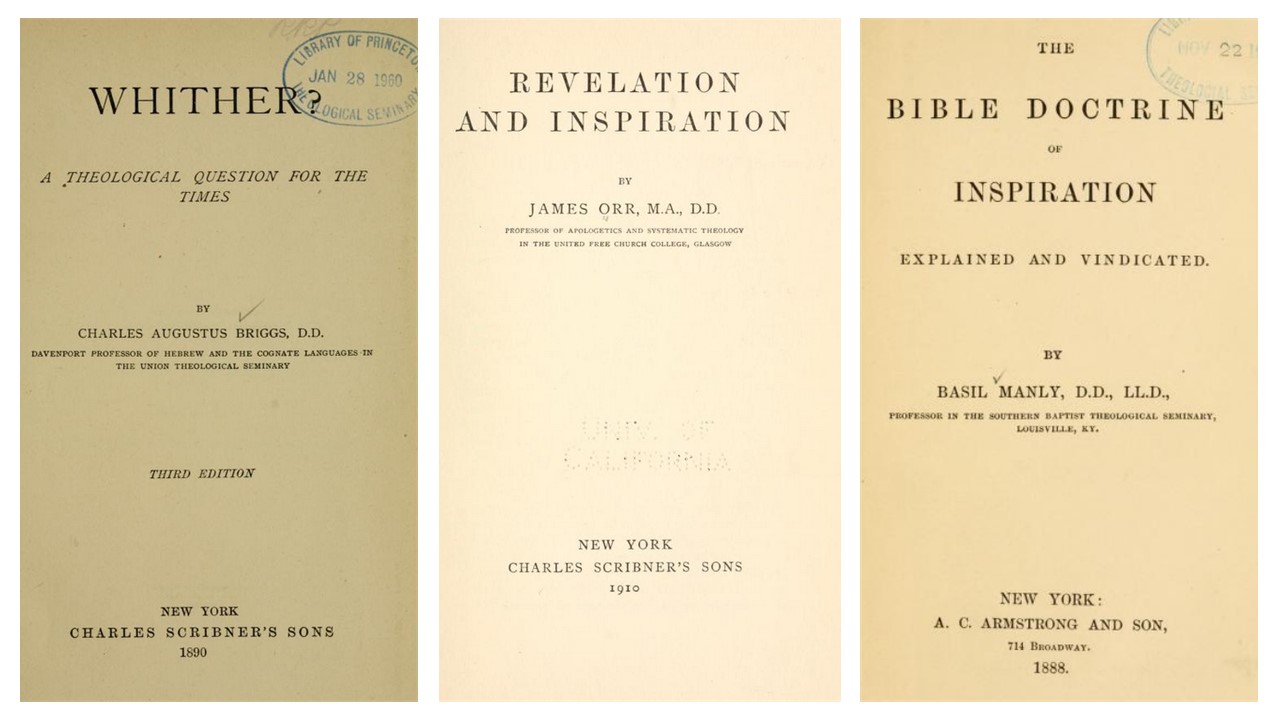
Briggs wrote this book in great frustration. He had been hounded for years by conservatives within his Presbyterian denomination over his doctrine of scripture and inerrancy. He believed the Princeton school was erecting bulwarks that were impossible to hold. He disagreed vehemently with that perspective’s reading of the historical record and believed inerrancy was a recent invention by pious men who were reacting against realities they did not want to acknowledge. It deserves to be read, regardless of whether one agrees with Briggs.
Another wise and sensible book on the doctrine of scripture from a Scottish evangelical. Conservatives who follow the Chicago-style of inerrancy generally do not like Orr’s volume. I think it has some very good material.
I read 68 non-fiction books in 2021. Most were social history and the rest were theology. This year was marked by (1) a broadening of my own horizons about the church’s mission and its responsibility to society, (2) a realization that the Council on Biblical Manhood and Womanhood is not a trustworthy organization, (3) a deeper exploration of the more unpleasant side of American evangelicalism, and (4) a study of American social history and its nexus to American evangelicalism over the past 100 years.
My top six
I don’t chose these because they’re “the best.” I chose them because they influenced me the most, or made me think deeply. Too many people (pastors and theologians) only read the same people, saying the same things, in the same way. The conclusions are foregone. Why bother? Don’t read your 800th book on justification by faith written by a guy from the same Reformed sub-culture that produced the other 799 books you read. Break out of the bubble, man!
At heart this book seeks to challenge Americans’ assumptions about the basic relationship between religion and politics in their nation’s history. For decades now, liberals and conservatives have been locked in an intractable struggle over an ostensibly simple question: Is the United States a Christian nation? This debate, largely focused on endless parsing of the intent of the founding fathers, has ultimately generated more heat than light. Like most scholars, I believe the historical record is fairly clear about the founding generation’s preference for what Thomas Jefferson memorably described as a wall of separation between church and state, a belief the founders spelled out repeatedly in public statements and private correspondence.
This scholarly consensus, though, has done little to shift popular opinion. If anything, the country has more tightly embraced religion in the public sphere and in political culture in recent decades. And so this book begins with a different premise. It sets aside the question of whether the founders intended America to be a Christian nation and instead asks why so many contemporary Americans came to believe that this country has been and always should be a Christian nation.
It is hard, now, to grasp just how profoundly the tectonic plates of American politics have shifted between 1964 and today. Think of a senator winning the Democratic nomination in the year 2000 whose positions included halving the military budget, socializing the medical system, re-regulating the communications and electrical industries, establishing a guaranteed minimum income for all Americans, and equalizing funding for all schools regardless of property valuations—and who promised to fire Alan Greenspan, counseled withdrawal from the World Trade Organization, and, for good measure, spoke warmly of adolescent sexual experimentation. He would lose in a landslide. He would be relegated to the ash heap of history. But if the precedent of 1964 were repeated, two years later the country would begin electing dozens of men and women just like him. And not many decades later, Republicans would have to proclaim softer versions of these positions just to get taken seriously for their party’s nomination. The analogy wouldn’t be exaggerating what has happened since 1964 too much. It might even be underplaying it …
Before the Storm, KL 83.
And one more:
Scratch a conservative today—a think-tank bookworm at Washington’s Heritage Foundation or Milwaukee’s Bradley Foundation (the people whose studies and position papers blazed the trails for ending welfare as we know it, for the school voucher movement, for the discussion over privatizing Social Security) ; a door-knocking church lady pressing pamphlets into her neighbors’ palms about partial-birth abortion; the owner of a small or large business sitting across the table from a lobbyist plotting strategy on how to decimate corporate tax rates; an organizer of a training center for aspiring conservative activists or journalists; Republican precinct workers, fund-raisers, county chairs, state chairs, presidential candidates, congressmen, senators, even a Supreme Court justice—and the story comes out. How it all began for them: in the Goldwater campaign.
It was something more than just finding ideological soul mates. It was learning how to act: how letters got written, how doors got knocked on, how co-workers could be won over on the coffee break, how to print a bumper sticker and how to pry one off with a razor blade; how to put together a network whose force exceeded the sum of its parts by orders of magnitude; how to talk to a reporter, how to picket, and how, if need be, to infiltrate—how to make the anger boiling inside you ennobling, productive, powerful, instead of embittering. How to feel bigger than yourself. It was something beyond the week, the year, the campaign, even the decade; it was a cause. You lost in 1964. But something remained after 1964: a movement. An army. An army that could lose a battle, suck it up, regroup, then live to fight a thousand battles more. Did You Ever See a Dream Walking?—that was how William F. Buckley entitled an anthology of conservative writings in 1970. Later that year, his brother won a Senate seat from New York with the backing of the state’s Conservative Party. The dream was walking. Maybe it wasn’t even just an army. Maybe it was a moral majority.
For me, Barr’s book is more than the sum of its parts. I believe her attempts to tie the inerrancy movement to “patriarchy,” and her failure to define “patriarchy” anywhere in the book were mistakes. Yet, it’s value to me is that it was an introduction to critiques of complementarianism. For that, I’ll always be grateful.
For all my adult life, I had served in ministry with my husband, remaining in complementarian churches even as I grew more and more skeptical that “biblical womanhood” as we had been taught matched what the Bible taught. I kept telling myself that maybe things would change—that I, as a woman who taught and had a career, was setting a positive example. I kept telling myself that complementarianism (the theological view that women are divinely created as helpers and men are divinely created as leaders) wasn’t at its root misogynistic. I kept telling myself that no church was perfect and that the best way to change a system was by working from within it. So I stayed in the system, and I stayed silent.
I stayed silent when a woman who worked at a Southern Baptist church and attended seminary alongside my husband was paid less by that church because she wasn’t ordained. Ironically, the reason she wasn’t ordained was because the church was Southern Baptist.
I stayed silent when a newly married woman whose job carried the family insurance quit that job after attending a retreat with women from our church—a retreat that featured a hardline complementarian speaker who convinced this woman that her proper place was in the home. Her decision, from what I heard, caused tension within the family, including financial. She stopped coming to church. I have no idea what happened to her.
I stayed silent when, after our pastor preached a sermon on gender roles, a married couple gave their testimony. The wife encouraged women to verbally agree to what their husbands suggested, even if they really disagreed. God would honor their submission.
I stayed silent when I wasn’t allowed to teach youth Sunday school because the class included teenage boys. I led discussions with special permission when no one else was available.
I stayed silent.
It wasn’t until that Sunday, three months after the worst had happened, that I realized the hard truth. By staying silent, I had become part of the problem. Instead of making a difference, I had become complicit in a system that used the name of Jesus to oppress and harm women.
And the hardest truth of all was that I bore greater responsibility than most in our church because I had known that complementarian theology was wrong.
Making of Biblical Womanhood, pp. 3-5
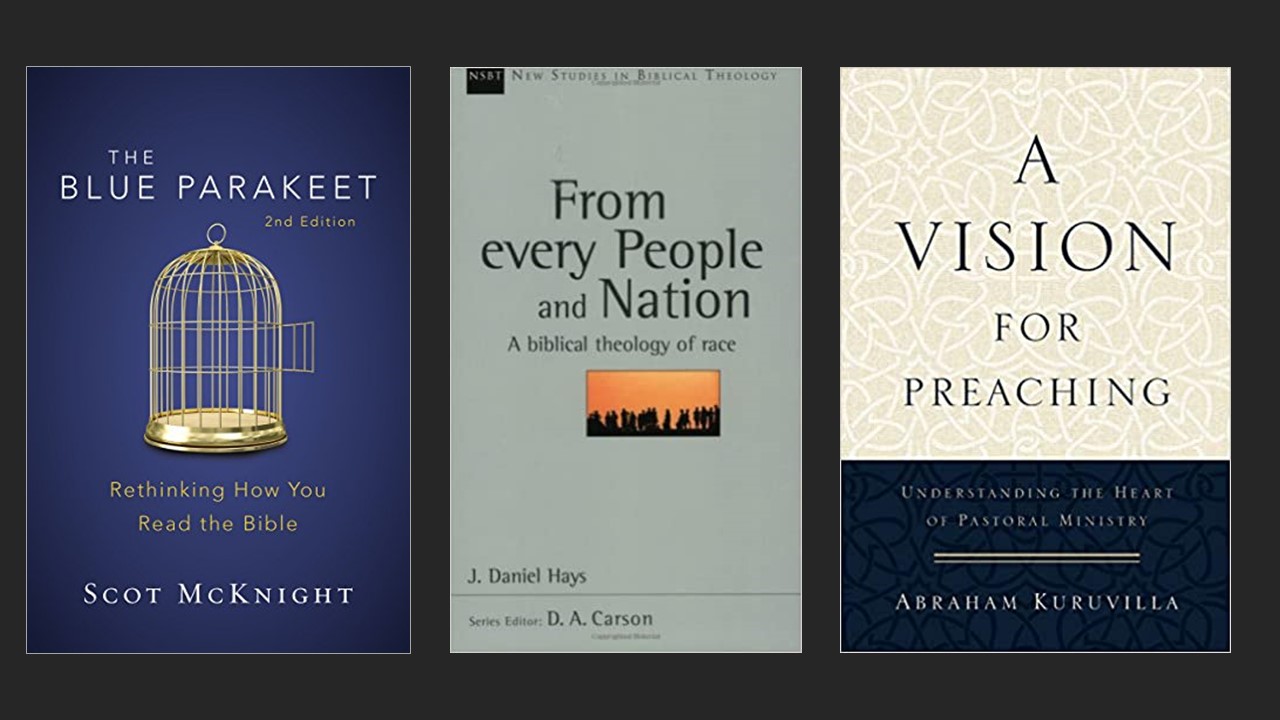
A Manual for Preachingby Abraham Kuruvilla. He is the best preaching teacher working in the United States, today. You need his books.
Christianity and the Social Crisis Walterby Walter Rauschenbusch. This might be one of the most paradigm-shifting books I’ve ever read. Very convicting and very good criticism of the “just preach the Gospel” flavor of Christianity. There are clear affinities here with the liberation theologies from Latin American that came to the fore about 50 years later. Though Rauschenbusch is hetero-orthodox in some places, he is a must-read. Your teachers and theological gate-keepers may tell you to stay away from him and his “social gospel.” Ignore that advice. Chew the meat and spit out the bones. There are some big bones, here. But, there’s also a lot of meat. Read it.
As long as a man sees in our present society only a few inevitable abuses and recognizes no sin and evil deep-seated in the very constitution of the present order, he is still in a state of moral blindness and without conviction of sin. Those who believe in a better social order are often told that they do not know the sinfulness of the human heart. They could justly retort the charge on the men of the evangelical school. When the latter deal with public wrongs, they often exhibit a curious unfamiliarity with the forms which sin assumes there, and sometimes reverently bow before one of the devil’s spider-webs, praising it as one of the mighty works of God.
Regeneration includes that a man must pass under the domination of the spirit of Christ, so that he will judge of life as Christ would judge of it. That means a revaluation of social values. Things that are now “exalted among men” must become “an abomination” to him because they are built on wrong and misery. Unless a man finds his judgment at least on some fundamental questions in opposition to the current ideas of the age, he is still a child of this world and has not “tasted the powers of the coming age.” He will have to repent and believe if he wants to be a Christian in the full sense of the world.
Christianity and the Social Crisis, p. 88
The Hospital: Life, Death, and Dollars in a Small American Townby Brian Alexander. One of the best books I read in 2021. Sobering. Eye-opening. Engaging. It provides a snapshot of America’s “health care system” through the prism of a small, private, rural hospital in Bryan, Ohio.
A lot had changed in Bryan, though you couldn’t tell at first glance. From his office high up on the hospital’s fourth floor, Ennen could see across High Street to the white water tower with the big blue BRYAN on it, the letters leaning forward as if to announce that the “Fountain City” had momentum. He could see the Spangler Candy Company plant—the Dum Dums lollipop people—sprawled below the water tower. The company had been there for over a hundred years. He could see the railroad tracks beyond and the freight cars headed east and west, day and night, and the trees in their winter nakedness and the flat farm fields to the north, raked by the wind that never seemed to stop. If, as a boy, he had walked up to the top of the county courthouse and looked out of the tower, the picture would have been the same.
Bryan didn’t look different, but it was. Up High Street toward Main, and on the other side of Main, there was the trouble. There were about 36,800 preternaturally homogenous people spread over Williams County’s 421 square miles of tiny villages, fields, and lakes, but there could be as much as eight years’ difference in average life expectancy from one part of the county to the next, and even from one part of tiny Bryan to the next.
Such disparities played out in Ennen’s hospital every day. It was playing out three floors below him right then. He’d attended Bryan High with Marc Tingle. Their paths were already diverging as teenagers, and would diverge even more over the coming decades, until the village contractor with the dentures and the bad heart found himself dying in the CEO’s hospital.
As it happened, what was true in Williams County was true all over America, including places with huge healthcare systems and giant universities with medical schools. America had spent a century arguing about medical care but had not settled a thing. After all that time, all that arguing, and all that money, America was sick, and getting sicker and dying earlier with every passing year. Ennen and his shop were supposed to do something about that, but what—especially when the hospital was struggling to stay afloat? And what had created those differences in the first place? Could a hospital, even a financially secure one, intervene in any meaningful way? In many cases, CHWC was a Band-Aid station, though not the kind its local detractors implied. It was a battlefield clinic in an amorphous and mutating social and economic war that was killing people.
The weapons used against the people CHWC cared for were as deadly as any disease: Both the Ohio and the federal minimum wages were less than they were forty years before, after adjusting for inflation. Pensions had disappeared. Unions had been driven out of workplaces. As they were, wages fell and more of the nation’s wealth flowed to its richest people. Consolidated industries and financial engineers ruled the lives of employees. And as inequality spiked, health insurance evolved into an unaffordable, often useless racket. The hospital took in the casualties, patched them up, and released them back into what had become a one-sided conflict.
The Hospital, pp. 8-10
The rest of ’em
This doesn’t mean these books aren’t good. I enjoyed most of them, liked many, and loved some. Here they are:
Jesus and John Wayne: How White Evangelicals Corrupted a Faith and Fractured a Nationby Kristin Du Mez. A giant sledgehammer to the knees of the conservative evangelical sub-culture. A great book. Don’t listen to the gatekeepers who tell you it’s dangerous or wrong, or who say “yeah, but …” There are not “buts.” Buy it. Read it. Don’t be like these Christians.
The Civil War as a Theological Crisisby Mark Noll. An informative monograph on the interpretive morass that resulted when competing cultural narratives used the scriptures to justify their positions. I need to read it again.
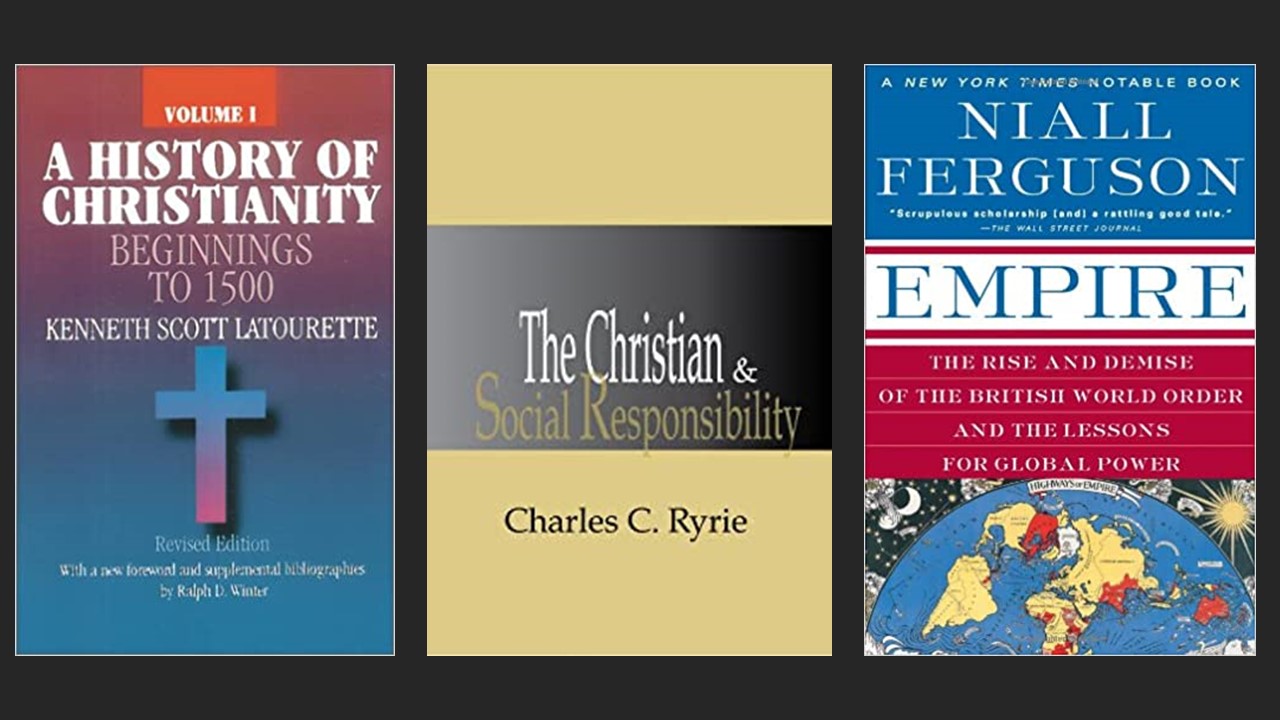
The Christian and Social Responsibilityby Charles Ryrie. I remember think this book was interesting, but I remember next to nothing about it. Make of that what you will! Ryrie advocates that the church eschew social issues and focus on the Gospel. It’s short. If you come from a white, conservative evangelical background, Ryrie is likely where you’re coming from.
The History of Christianity: Beginnings to 1500by Kenneth Latourette. Masterful. Fascinating. A real tour de force, if you’re into history. Latourette was a true Renaissance man in the Christian history field. I read this book slowly, in the evenings, over perhaps four months. It gave me great appreciation for Christian traditions not my own, and broadened my horizons along that line in many intangible ways.
A fundamentalist I am familiar with dismissed Latourette as “a liberal,” which means Latourette wasn’t precisely the same flavor of Christian as he. Well, I say that’s a good thing! Latourette’s text used to be the standard Christian history survey at many seminaries, but has largely been displaced by Justo Gonzalez (and others). Well worth reading.
A Holy Baptism of Fire and Blood: The Bible & the American Civil Warby James P. Byrd. An eye-opening study of the ways both sides used (and twisted) Scripture to make it say what suited their purposes, during the Civil War. This is a grave cautionary tale for leaders today who wish to use God’s word to magically justify their own position, seemingly oblivious to the need for any introspection. Wayne Grudem’s Politics According to the Bible is a case in point.
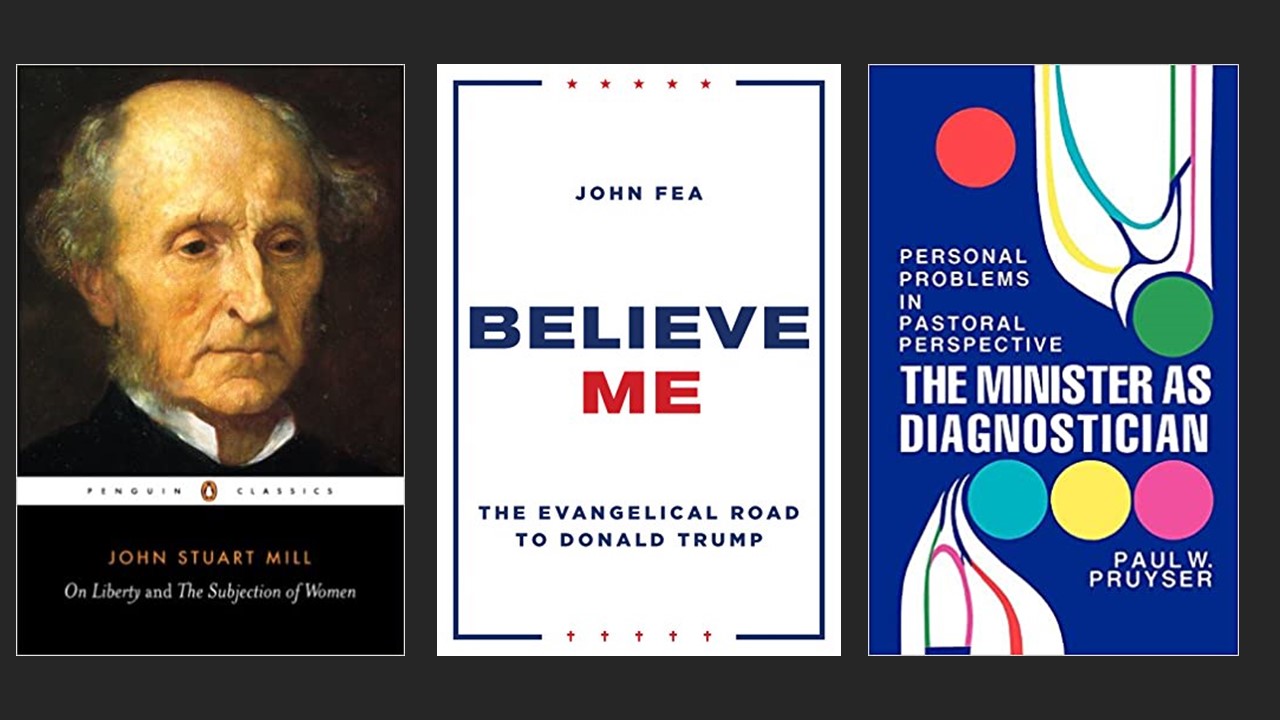
The Minister as Diagnosticianby Paul Pruyser. An interesting little book. I purchased it to give me some insight for counseling. I thought it was helpful.
On Libertyby John Stuart Mills. Very, very interesting. Mills essentially says everyone ought to be allowed to do anything he wishes, unless it infringes on someone else’s liberty. An enlightening discussion on political theory … and a cautionary tale about how folks consider morality and the public square without a revelation from God.
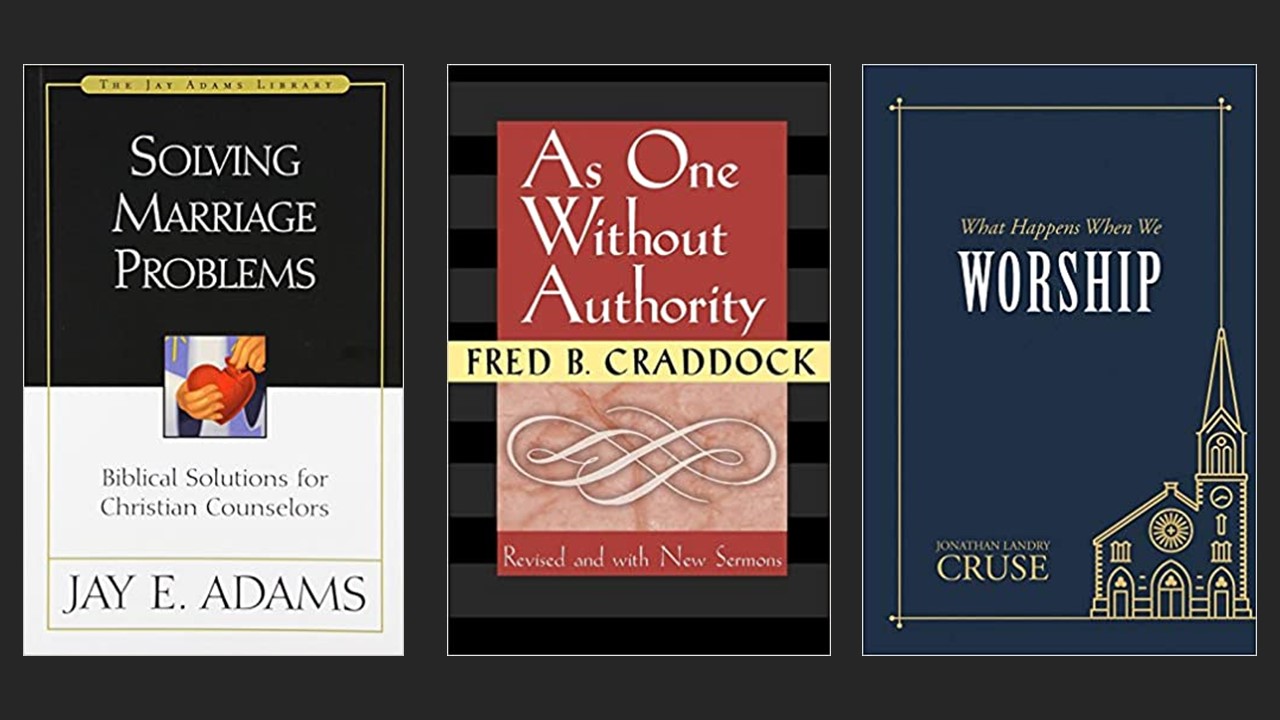
Solving Marriage Problemsby Jay Adams. Helpful. Adams is always to the point and full of good counseling advice for pastors.
What Happens When We Worshipby Jonathan Cruse. An unhelpful book by a neo-Puritan. It drips with venom, contempt, and scorn for anyone who isn’t like him. Read my review.
The Problem of the Old Testamentby Duane Garrett. An outstanding book. Garrett’s discussion of a via media between covenant theology and dispensationalism as regards the relationship of Israel and the Church was groundbreaking, for me.
With Reverence and Aweby D.G. Hart and John Meuther. A truly awful book written by neo-Puritan, worship fundamentalists who disdain anyone who isn’t like them. The most wretched book on worship I’ve ever read. I considered burning it after reading, because I got the impression the authors would gladly do the same to me. I wrote an article on a related topic.
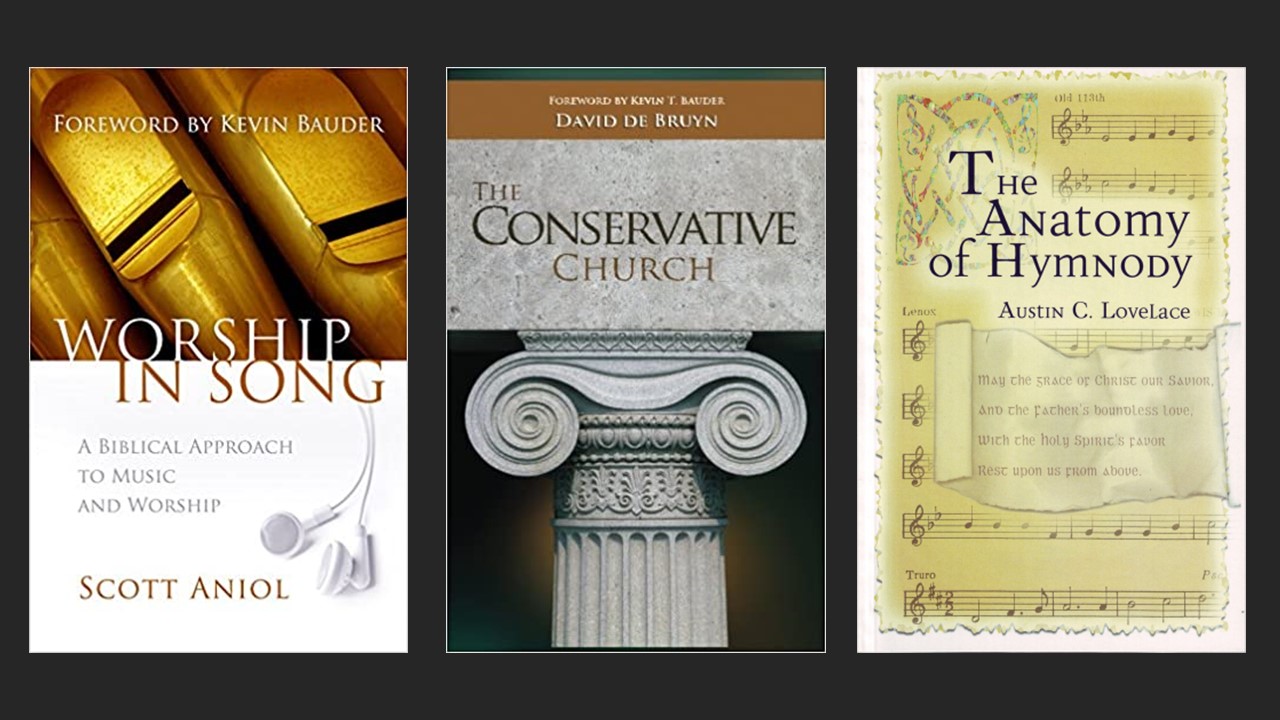
Worship in Songby Scott Aniol. A helpful perspective on worship.
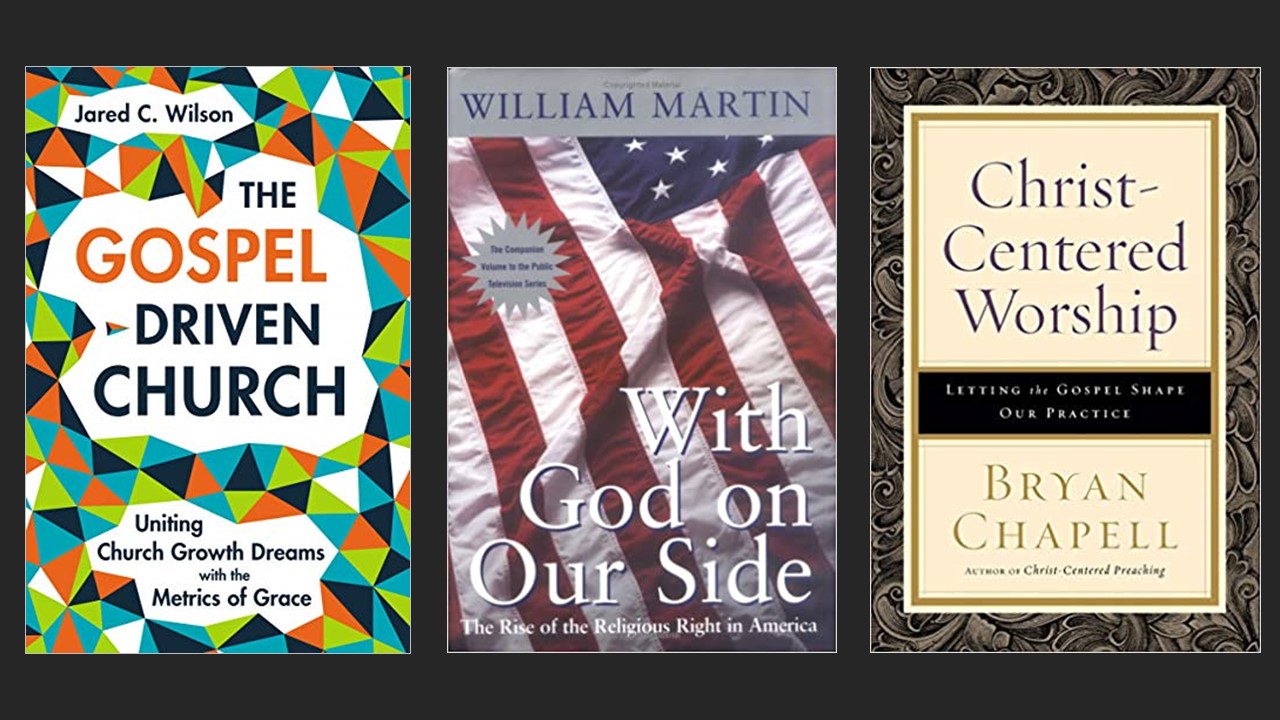
The Gospel-Driven Churchby Jared Wilson. A good book. Wilson’s target appears to be younger pastors who are disillusioned with the shallow, hipster version of attractional Christianity. That isn’t me, but I still appreciated his book.
Christ-Centered Worshipby Bryan Chapell. Probably the most helpful book on worship a pastor can own.
The Blue Parakeet: Rethinking How You Read the Bibleby Scot McKnight. This is a very provocative little book that will challenge any Christian. McKnight’s burden is to make us realize that we all read the Scriptures through our own interpretive lenses, and we ought to know that, admit it, and account for it so we can read the Bible the right way. He has a long discussion on women in ministry, as an example of how we often do this. McKnight is an egalitarian, and that may offend some readers.
What I learned was an uncomfortable but incredibly intriguing truth: Every one of us adopts the Bible and (at the same time) adapts the Bible to our culture. In less appreciated terms, I’ll put it this way: Everyone picks and chooses. I know this sounds out of the box and off the wall for many, but no matter how hard we try to convince ourselves otherwise, it’s true. We pick and choose. (It’s easier for us to hear “we adopt and adapt,” but the two expressions amount to the same thing.) I believe many of us want to know why we pick and choose. Even more importantly, many of us want to know how to do this in a way that honors God and embraces the Bible as God’s Word for all times.
“Theology of the Pentateuch” by Eugene Merrill, in Biblical Theology of the Old Testament, edited by Roy Zuck. An extremely good, insightful discussion.
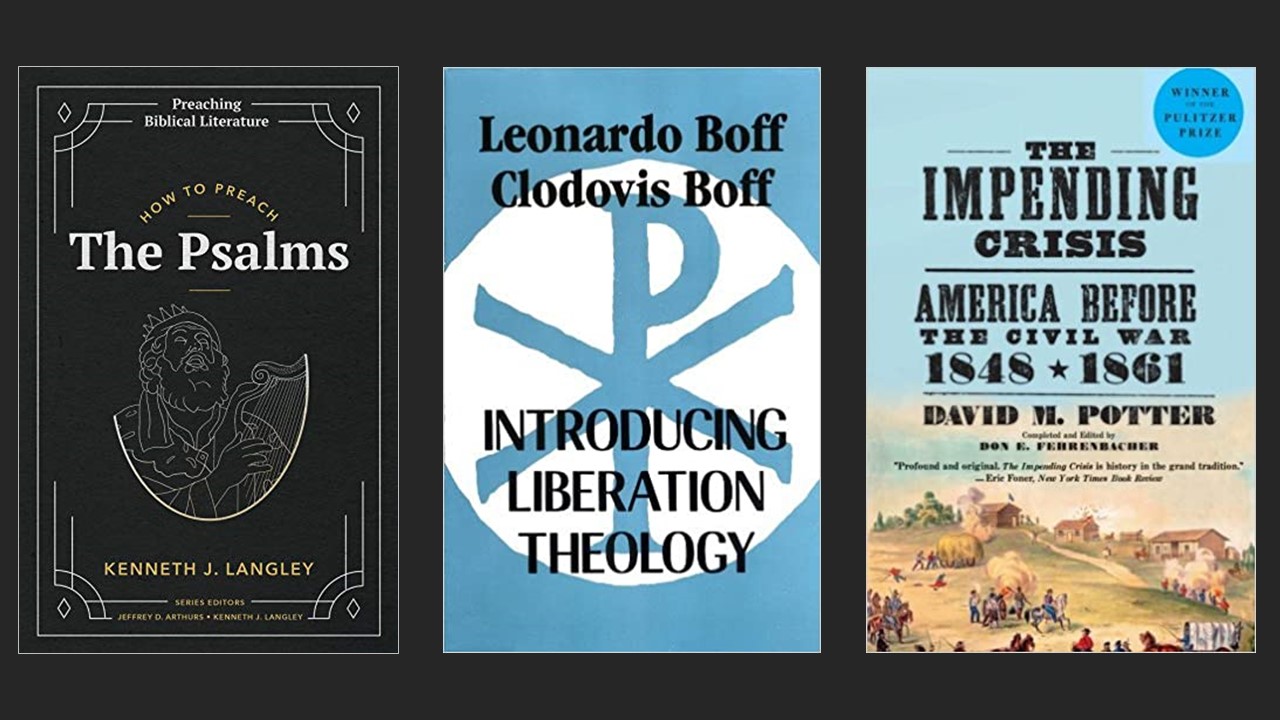
Introducing Liberation Theologyby Leonardo Boff and Clodovis Boff. Short, accessible, thought-provoking introduction to a very important topic. There is much to learn, here.
The Ordeal of Thomas Hutchinsonby Bernard Bailyn. I’ve felt sorry for poor Hutchinson ever since I tread about how a mob destroyed his home, way back in my community college days. This is a good biography of a staid, intelligent civil servant who found himself outdone by events he couldn’t understand.
Last Best Hope: America in Crisis and Renewalby George Packer. A thoughtful book. It’s four-fold taxonomy of the spectrum of “different America’s” is very good. I will use it as a framework for some time to come. If you want to read a short book about “how we got to where we are” in America, you can’t do better than this. This is not a partisan screed.
The Meaning of Marriageby Tim and Kathy Keller. The most helpful, balanced boo on marriage I’ve seen. I use this for marriage studies in a variety of contexts.
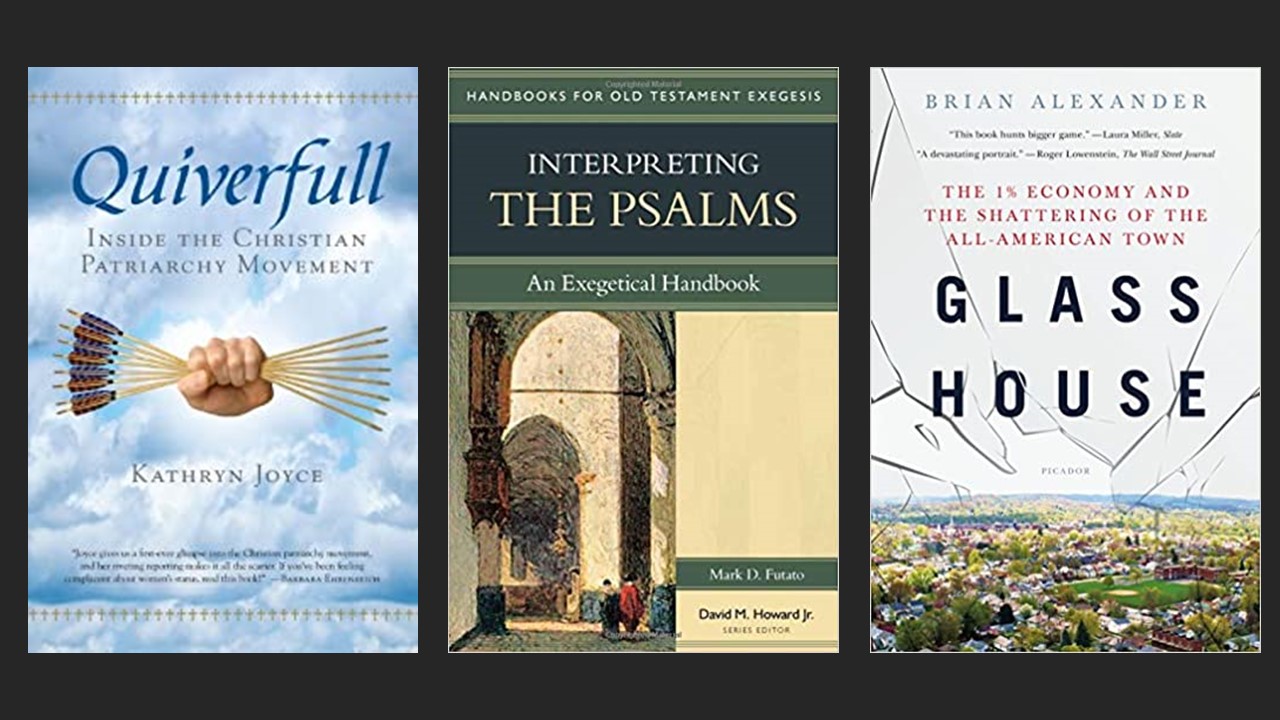
Interpreting the Psalms: An Exegetical Handbookby Mark Futato. Read this today, for an upcoming DMin class. Very basic. Read something very similar at seminary, years ago. Probably why I found it so unhelpful. Not bad, just really “ho, hum.” Like a flat, warm Diet Coke. Not author’s fault. It’s just basic.
Quiverfull: Inside the Christian Patriarchy Movementby Kathryn Joyce. A sobering look at the hard-core edge of the American complementarian spectrum. I believe the CMBW-flavor of compartmentarianism is hetero-orthodox at points, and that Christian patriarchy is even more troubling.
In 1947, Forbes magazine declared Lancaster, Ohio the epitome of the all-American town. Today it is damaged, discouraged, and fighting for its future. In Glass House, journalist Brian Alexander uses the story of one town to show how seeds sown 35 years ago have sprouted to give us Trumpism, inequality, and an eroding national cohesion.
The Anchor Hocking Glass Company, once the world’s largest maker of glass tableware, was the base on which Lancaster’s society was built. As Glass House unfolds, bankruptcy looms. With access to the company and its leaders, and Lancaster’s citizens, Alexander shows how financial engineering took hold in the 1980s, accelerated in the 21st Century, and wrecked the company. We follow CEO Sam Solomon, an African-American leading the nearly all-white town’s biggest private employer, as he tries to rescue the company from the New York private equity firm that hired him. Meanwhile, Alexander goes behind the scenes, entwined with the lives of residents as they wrestle with heroin, politics, high-interest lenders, low wage jobs, technology, and the new demands of American life: people like Brian Gossett, the fourth generation to work at Anchor Hocking; Joe Piccolo, first-time director of the annual music festival who discovers the town relies on him, and it, for salvation; Jason Roach, who police believed may have been Lancaster’s biggest drug dealer; and Eric Brown, a local football hero-turned-cop who comes to realize that he can never arrest Lancaster’s real problems.
It is all too common for preachers, especially some of my brethren in fundamental Baptist circles, to ridicule learning and diligent study of theology. The concept of Seminary is sneered at by some of these men. “You don’t need all that higher learning,” they scoff. “You just need the word of God!”
Charles Spurgeon had a few words for those who, in his day, echoed similar sentiments:
Be well instructed in theology, and do not regard the sneers of those who rail at it because they are ignorant of it. Many preachers are not theologians, and hence the mistakes which they make. It cannot do any hurt to the most lively evangelist to be also a sound theologian, and it may often be the means of saving him from gross blunders. Nowadays, we hear men tear a single sentence of Scripture from its connection, and cry “Eureka! Eureka!” as if they had found a new truth; and yet they have not discovered a diamond, but a piece of broken glass.… Let us be thoroughly well acquainted with the great doctrines of the Word of God.
Charles Haddon Spurgeon, Lectures to My Students (Grand Rapids: Zondervan, 1945), 196.























 The Eccentric Fundamentalist