Forgive and Forget? No!

angry smileyIf a Christian has been personally wronged by another Christian, should he just forgive and forget? It’s a popular idea, fostered by a well-meaning but mushy social climate. This is a simple question, and it’s too bad many people are unable to offer a simple answer.

Ask the question, and you’re likely to see a whole lot of tap-dancing. There’s no need for that. I’ll tell you the answer:

  1. If the offender has been made aware of their offense
  2. and if the offender refuses to repent and ask for forgiveness
  3. the victim should not forgive him

There! I said it . . . uh . . . wrote it! How low can I go? How heartless can I be? Have I no soul left? Don’t I know that God forgives people unconditionally? Actually, He only forgives people if they repent, but anyway . . . behold this short passage (Luke 17:3-4):

Take heed to yourselves; if your brother sins, rebuke him, and if he repents, forgive him; and if he sins against you seven times in the day, and turns to you seven times, and says, `I repent,’ you must forgive him.

What is the situation?

One Christian sins against another. Matthew 18:15-19 deals with how a church should handle disputes among brethren. This passage addresses the individual aspect. This is about how you and the other Christian should handle the matter.

This is important, so get this straight in your head up front – when we talk about forgiveness, there is a difference between a believer and an unbeliever. These are completely different categories. How so?

  • An unbeliever will act like an unbeliever. Expect it. Don’t expect repentance for sin, or even an acknowledgment of sin. Won’t happen. You’re not dealing with a child of God, but a child of Satan. Guess what? Unsaved people act like unsaved people. Big surprise, right?
  • Believers are members of the same family, saved by the same Gospel, indwelt by the same Spirit, and baptized by the same Spirit (cf. Ephesians 4). There is a shared understanding of the Gospel, sanctification, and the concepts of sin, repentance, atonement and forgiveness. On that basis, you hold a believer to a much higher standard. You don’t “forgive and forget” a believer’s deliberate sin. You expect and demand repentance, confession and (above all else) restoration between the two injured parties. Nothing less is biblical or right.

If you don’t understand this category distinction, this entire article will seem mean-spirited to you. I was once told that I was being “unloving” for demanding a unrepentant Christian, in deliberate and terrible sin, repent and confess his sins. How did I reply? I said, “When I’m commanding you to repent, confess and make this right, I’m actually doing the most loving thing possible for you.”

The man didn’t agree, but anyway . . . you get the idea (I hope).

What should you do?

If your Christian brother or sister sins against you, you must confront him. If you decide to be childish, sulk in your pew, ignore the other person, and let your bitterness fester – then you’re in deliberate rebellion yourself. The other person may not know he did anything wrong. If you were sinned against, you have a duty to lovingly confront that person in a spirit of meekness.

It’s likely you’ll decide to sulk, instead. Or gossip to other people about it, telling them just how evil that person was to you. Too bad. You’re sinning yourself, at that point. Stop it, and confront the person. You have a duty to.

When should you forgive?

You forgive if your brother repents. There. I wrote it again. Black and white. Simple. Read the words again, if you don’t believe me. Check the Greek, if you’re really interested. I’ll tell you what it means. Get ready . . . Are you ready? Here is what it really means: “and if he repents, you must forgive him.”

Revolutionary. Now you know the truth. So simple. If the guy repents, you have a duty to forgive him. No tap-dancing necessary.

What is repentance?

God doesn’t want external, superficial change. He hates hypocrisy (read Zeph 1:2-6). There has to be an internal change, which produces outward action. That internal change is repentance – what is repentance?

Repentance is when you confess your sin, and forsake it:

He who conceals his transgressions will not prosper, but he who confesses and forsakes them will obtain mercy (Prov 28:13)

In practical terms:

  1. you realize you’ve sinned against God, your Heavenly Father
  2. you’re sorry,
  3. you truly mean it,
  4. and you prove it by stopping your sinful behavior

Repentance is the seed that produces action, that produces progressive holiness, in your life

Are you saying I shouldn’t forgive somebody!?

Yes, I am. Actually, Jesus said it. God never forgives anybody unless they repent. Never did, never will. Don’t you realize that? Look past the Jell-O rhetoric and Christian-ese you’re so used to hearing, and think about it. Does God forgive people if they refuse to repent? No. Neither should you.

But, what about believers? Doesn’t God forgive any Christian for sins they do?

Ah, now you’re getting closer to the heart of the issue. I still won’t start tap-dancing, but now is the time for some nuancing. This is an inter-family issue, now. We’re not talking about outsiders, we’re talking about brothers and sisters inside the family of God. We’re talking about maintenance of inter-family relationships. What does this text tell you:

If we confess our sins, he is faithful and just, and will forgive our sins and cleanse us from all unrighteousness. If we say we have not sinned, we make him a liar, and his word is not in us. (1 Jn 1:9-10)

I’ll tell you what it tells me:

  1. You have to confess your sins. That means you have to acknowledge them, realize they’re sinful, offensive to God, and contrary to His holy law. In other words (gasp), you have to repent.
  2. If you do that, God is faithful and just to forgive you for your sin, and be cleansing you from all unrighteousness.
  3. If you pretend you haven’t sinned, then you’re making God a liar. John wrote this passage against some heretics who believed God freed us so that sin didn’t apply to us anymore – so we could do whatever we wanted. Nonsense, John said. Foolishness. Liar.

Your brother is making God out to be a lair, if you confront him with his sin, and he refuses to acknowledge it and repent.

What does it mean to “not forgive” a fellow Christian?

Now we’re really getting down to brass tacks. I’m so glad you asked. It means you treat them with kindness, respect and grace – but you realize there is a breach of relationship there that must be healed. You don’t pretend it doesn’t exist.

You don’t “forgive and forget.” The Bible knows no such thing. If you disagree, show me where. Point to a passage (not an isolated verse), and explain from the context how it teaches this, and how it fits with the general theme of forgiveness from the entire Bible.

God only forgives people and adopts them into His family because He sent His unique and only Son in the likeness of sinful men to live a sinless and perfect life, and to die in their place, as their substitute. He didn’t forgive and forget.

If your brother can’t be persuaded that he committed sin, take it to your Pastor(s). Eventually, if it cannot be fixed, church discipline may be necessary.

Church discipline! Isn’t that mean?

A lady told me once, “church discipline is a Roman Catholic thing! It’s not a Baptist idea.” How silly. Of course, it’s not entirely her fault. She’s never seen it in action. It sounds mean. Rude. Not Christian. Unloving. In our current culture, we don’t want to be unkind. That would be, like, the eighth deadly sin . . .

Christians are part of God’s family. We’re saved from bondage to Satan, and adopted into God’s household. We’re organized into local congregations; our local families. Sometimes, family members act silly. They do stupid and sinful things. These things need to be dealt with, so things can be healed.

In your biological family, people also do silly things. Eventually, things might get so bad it’s time for a “family meeting,” where everything is laid out on the table, and mom and dad call for a resolution. Enough is enough, they’ll say. Time to settle this, say you’re sorry, and move on.

Exactly. That’s what church discipline is about, in the church family. Settle this. Say you’re sorry. Admit you did wrong. Bury that hatchet (no, not into the other person’s head). The dispute is now over. Depart with the relationship healed and fixed. As long as the issue festers, there will be problems in the family.

What attitude should I have?

You should be living a life worthy of the adoption you’ve been called by God to. Your attitude, demeanor and conduct in your congregation, with the people in your congregation, should be characterized by meekness and lowliness. You must be patient with people, putting up with them because you love them. They’re not perfect, and neither are you. By the way, I just paraphrased Ephesians 4:1-2 . . .

Are you looking for something to be angry about? Yes? Sin.

Are you eager to maintain the spirit of unity in the bond of peace? No? Sin.

Are you willing to be patient with other Christians in your church, just as others are patient with you? No? Sin.

Does this mean you should just sweep everything under the carpet and pretend nothing is ever wrong? Sounds like a great idea, right? Isn’t that the “loving” thing to do? Sure it is. Because, ignoring problems always makes things better, right?

Wrong. Re-read Luke 17:3-4 again.

Family strife is often the hardest. But, as the saying goes, they’re family – so you have to find a way to make it work. Why go to all that effort? ‘Cuz it’s family. It’s the same with your church family.

Doesn’t the passage from Matthew 18:21-22 contradict this?

No; repentance is assumed by both parties in that passage. Jesus had just finished explaining how a congregation should handle sin between two Christians (Mt 18:15-19). If the offender doesn’t repent, after all lesser means are exhausted, then he is removed from the congregation and treated as a functioning unbeliever. This is done to shame him and drive him to repentance (see also 1 Cor 5).

After that, Peter asks how often he should forgive somebody. Repentance is assumed. Either Jesus changed his mind about repentance, or it is assumed. It is an integral part of the Mosaic Law, and the efficacy of the trespass offerings and the burnt offerings depended on it.

How often should I forgive?

An unlimited amount of times. Jesus made that clear. He didn’t mean, literally, “77 times.” He meant, “over, and over, and over, and over again.” He forgives you every day for your sin, doesn’t He? And, He’ll do the same tomorrow.

What about bitterness?

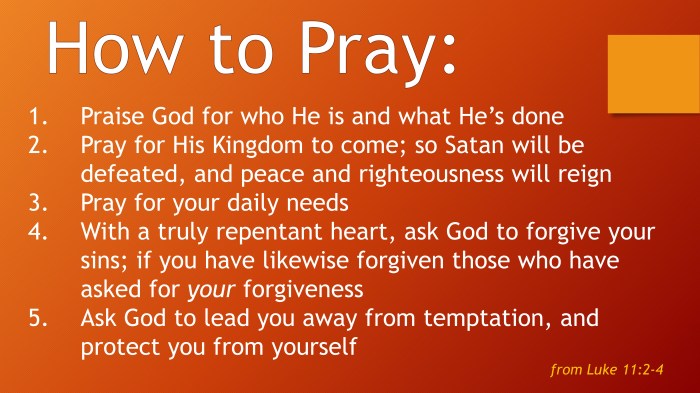
Pray for the person. Pray for the ability to love him, yet not pretend all is well. Pray for the Holy Spirit to heal the relationship. Pray for the Spirit to give a spirit of repentance and godly sorrow to the person.

Sounds easy. It isn’t.

No kidding. This isn’t easy. It’s very hard. The apostles responded to this by asking Jesus to increase their faith (Luke 17:5)! This is very, very hard.

Each situation is different, and each context is different. People are fickle, and we’re all very good at lying to ourselves, at making ourselves think the other guy is the real bad guy. Of course he is. We’re good, they’re bad. If people would just agree with us, things would be so much easier! I understand.

Nobody’s disputing this is hard. It’s easy to write about. Harder to implement.

But, still . . .

The text says what it says, and it means what it means. What are you gonna do about it?

Eager for Corruption

The prophet Zephaniah wrote his little book during King Josiah’s reign in the southern kingdom of Judah (ca. 640 – 609 B.C.). Josiah was a godly man (2 Chr 34:1-5) who implemented a whole host of religious reforms. The rot had spread far in his day. It was so bad, in fact, that a priest stumbled upon the law of Moses in the temple, and brought it forth in wonder – he’d never heard of it before (2 Chr 34:13-21)!

Not good! It makes you wonder what on earth the Israelite priests thought they were doing every day . . .

But, the reform appears to have been superficial and external, in many cases. Zephaniah tells us so. He doesn’t mince words (Zeph 3:1-8):

 Woe to her that is rebellious and defiled,
    the oppressing city!
She listens to no voice,
    she accepts no correction.
She does not trust in the Lord,
    she does not draw near to her God.

Her officials within her
    are roaring lions;
her judges are evening wolves
    that leave nothing till the morning.
Her prophets are wanton,
    faithless men;
her priests profane what is sacred,
    they do violence to the law.
The Lord within her is righteous,
    he does no wrong;
every morning he shows forth his justice,
    each dawn he does not fail;
    but the unjust knows no shame.

“I have cut off nations;
    their battlements are in ruins;
I have laid waste their streets
    so that none walks in them;
their cities have been made desolate,
    without a man, without an inhabitant.
I said, ‘Surely she will fear me,
    she will accept correction;
she will not lose sight
    of all that I have enjoined upon her.’
But all the more they were eager
    to make all their deeds corrupt.

The Jewish leaders are corrupt predators. Her judges, who ought to be upholding justice and righteousness (founded on God’s word), and instead “evening wolves.” Her priests are apostates who don’t know the Lord.

Nevertheless, God is still there, showing forth His justice. Yet, “the unjust knows no shame.” He has shown His favor to Israel. He has destroyed pagan nations, and utterly annihilated enemies. Surely, Israel will reverence, respect and obey Him! Right?

Wrong. Instead, the prophet concludes with this:

But all the more they were eager
    to make all their deeds corrupt.
How sad. And yet, in the rest of this chapter, Zephaniah explains how God intends to rescue and redeem His people from themselves. He will purge the hypocrites and idolaters from their midst, and create a pure people for His name from among the Israelites (Zeph 3:11):
On that day you shall not be put to shame
    because of the deeds by which you have rebelled against me;
for then I will remove from your midst
    your proudly exultant ones,
and you shall no longer be haughty
    in my holy mountain.
This is real mercy and grace. People deserve destruction and annihilation for their sins. God withholds it, just because He can. People don’t deserve favor and kindness from God, and cannot ever earn it. God extends it anyway, just because He wants to. This is the same mercy, grace, love and kindness every Christian has in union with Jesus Christ.
Therefore, since we are justified by faith, we have peace with God through our Lord Jesus Christ. Through him we have obtained access to this grace in which we stand, and we rejoice in our hope of sharing the glory of God (Rom 5:1-2).
You can have this peace, too. Read about the Good News of Jesus Christ here.

Prepare Your Minds for Action!

If you’re a Christian, are you serious about your faith and your great God and Savior, Jesus Christ?

  • Do you try to begin each day (after a few cups of coffee!) by dedicating yourself to serve the Lord?
  • Have you prepared your mind for action?
  • Are you sober-minded about the realities of real Christian life, in the real world? We all know how to “pretend” when we gather to worship on Sundays – what about the other six and a half days?
  • What is your hope completely set on? Is it money? Career? Education? Your own self-righteousness? Your reputation? Your spouse? Sex? The Apostle Peter said your hope ought to be fully set on the grace that will be brought to you when Christ returns.

Of course, nobody is perfect. We all lose focus. We each have good days, and bad days. I understand. So does the Apostle Peter. So does the Lord. This is why the Apostle Paul characterized the Christian life as a race, an endurance event (cf. 1 Cor 9:24-27). It isn’t a sprint. It’s a marathon – a long marathon. If you’re a Christian, you’ve already been given every single need you need for life and godliness (see especially 2 Pet 1:3-15). You have it. All of it. You’re not lacking anything. We just need to be reminded sometimes where our focus should be.

That’s what the Apostle Peter does, beginning in 1 Peter 1:13. This is where he takes all the wonderful things God has done for His children, and tells us all what that should mean for our lives:

“Therefore,” he writes, “in light of all this, you must prepare your minds for action! Ne serious! Be sober-minded! Put your hope completely in the grace and deliverance Christ will bring you when He returns. Keep your eye on the prize!”

Well, what does it look like to be “sober-minded?” How do we “prepare our minds for action?” What does this actually look like? Peter tells us all about that in the following verses . . . next week!

For this week, listen and follow along as Peter tells us how to become sober-minded, how to prepare our minds for action. I pray that the Apostle’s words comfort and encourage you:

PDF notes

1 pet 1(13)

Whistling in the Dark

green
Former nominee for Secretary of the Army, Mark Green

President Trump’s latest candidate for Secretary of the Army, Mark Green, has withdrawn his nomination. The Washington Post reported an excerpt from a statement Green made on his withdrawal:

“Tragically, my life of public service and my Christian beliefs have been mischaracterized and attacked by a few on the other side of the aisle for political gain,” Green said. “While these false attacks have no bearing on the needs of the Army or my qualifications to serve, I believe it is critical to give the President the ability to move forward with his vision to restore our military to its rightful place in the world.”

As you read this article (and others) about Green’s nomination and later withdrawal from consideration, it has become increasingly clear there is a now an implicit litmus test to serve in a high-profile public office. This litmus test is not based on anything concrete and objective, but on the shifting and subjective mores of an increasingly unhinged and hysterical culture that is drifting – no, running – from Biblical values at breakneck speed. If you wish to serve in a public capacity, any public capacity, you must be willing to bow your knee to the totalitarians.

This should be deeply disturbing to anyone with integrity and the capacity to reason – no matter what your theological or political perspective is. Unfortunately, virtues like “integrity” and “capacity to reason” are becoming increasingly scarce in the public square.

These events shouldn’t surprise any Christian. The Scriptures paint a clear picture of sin being, at root, a desire for autonomy from God, His laws, His authority and His jurisdiction (cf. Psalm 2:1-4). Every single person is born corrupted by sin, wanting to break away from God and His rule. We want to rule ourselves. We don’t want God.

When we grow up, this rebellion takes a more sinister turn into darker sin and wickedness. When we have an entire society seeking to collectively “unshackle” itself from the ties which bind us all to His jurisdiction, then you have a society which actively and consciously hates God. This is where we are. And, just like the Psalmist said, God sits in the heavens and laughs in derision (Psalm 2:4). Those who hate God are whistling in the dark like scared kids, deluding themselves, thinking they’re gonna get away. They’re not gonna get away (Psalm 2:4-6; cf. Psalm 110):

He who sits in the heavens laughs;
    the Lord has them in derision.
Then he will speak to them in his wrath,
    and terrify them in his fury, saying,
“I have set my king
    on Zion, my holy hill.”

This debacle with Mark Green is but the latest example of this phenomenon. Watch as our society continues it’s mad rush to shed even the most superficial of Christian glosses. It will not get better.

Christians certainly shouldn’t look to “The Donald” to solve their problems. Christians look for that perfect King and perfect Ruler, who will return and establish peace, justice and righteousness on earth for all who are His (cf. Isaiah 11:1-16). If you haven’t yet repented and believed in Christ, you should. No, you must.

Dead Right, But Dead Wrong

rightSometimes, you can be right about something, and yet still be completely wrong.
When I was a criminal investigator with the Military Police, I had a case involving a Sailor who might have faked his promotion and been receiving extra pay for the past three years. That’s a lot of money. Add to it that your cost of living allowances change depending on your rank, and you’re looking at even more money. This was a good case.

Everything pointed to the conclusion that he had forged paperwork, and somehow gotten it past Personnel. We interviewed the Personnel Officer for several hours, wondering how it could have been done. We had the admin guys calculate a dollar figure. We briefed the Staff Judge Advocate, who began salivating with glee and plotting a general courts-martial. We were just missing the one thing. We needed confirmation from a training school back in Texas that they did not promote the guy.

The school told us, “No, definitely not. But, let us dig around in some file cabinets.”

We waited. We waited some more. The Staff Judge Advocate kept drooling. We interviewed the suspect. He denied everything. Liar, we thought. I told him his lies wouldn’t look good when Texas called back.

This is your only chance for leniency, I warned him. Confess now, and show at least an ounce of integrity. He refused. We cackled to each other, waiting for the death blow, for the phone call from Texas.

It finally came. They had promoted him. Some clerk made an admin error, way back when. They said they were sorry. No case. No courts-martial. Over.

I was right about a lot of things, but I was still wrong. That’s what happened to Job’s friends.

Do We Suffer Because of Our Sin?

Job’s friends assumed he was being punished because he had sinned. They thought:

  1. God is good. He punishes the wicked, and rewards the righteous.
  2. God is punishing Job. Just look at the poor guy!
  3. Therefore, Job must be a bad guy. A real sleazebag. A loser.
  4. Therefore, Job is a really wicked guy; he’s just been good at hiding it all this time.
  5. Therefore, if Job would just repent, God would square everything away and stop his misery.

Is their logic really that far off? Isn’t it true, sometimes? Listen to what one of his friends said (Job 22:2-5):

“Can a man be profitable to God?
    Surely he who is wise is profitable to himself.
Is it any pleasure to the Almighty if you are righteous,
    or is it gain to him if you make your ways blameless?
Is it for your fear of him that he reproves you,
    and enters into judgment with you?
Is not your wickedness great?
    There is no end to your iniquities.

This seems like rock-solid logic. Does God reprove you because you fear Him? Of course not! Therefore, Job, you must be a very, very wicked man.

His friend continued (Job 22:21-30):

21 “Agree with God, and be at peace;
    thereby good will come to you.
22 Receive instruction from his mouth,
    and lay up his words in your heart.
23 If you return to the Almighty and humble yourself,
    if you remove unrighteousness far from your tents,
24 if you lay gold in the dust,
    and gold of Ophir among the stones of the torrent bed,
25 and if the Almighty is your gold,
    and your precious silver;
26 then you will delight yourself in the Almighty,
    and lift up your face to God.
27 You will make your prayer to him, and he will hear you;
    and you will pay your vows.
28 You will decide on a matter, and it will be established for you,
    and light will shine on your ways.
29 For God abases the proud,
    but he saves the lowly.
30 He delivers the innocent man;
    you will be delivered through the cleanness of your hands.”

There is some good stuff here. Important stuff. Some wise principles. That bit about “return to the Almighty and humble yourself” is pure gold. That’s the idea of repentance. But, here’s the thing – Job’s friend was right, but yet he was also wrong.

Why They Were Right

He was right – God does punish and chastise His disobedient children. Solomon knew this (Prov 3:11-12):

11 My son, do not despise the Lord’s discipline
    or be weary of his reproof,
12 for the Lord reproves him whom he loves,
    as a father the son in whom he delights.

The writer of Hebrews jotted this down (Heb 12:5b-6), and added some commentary of his own. God disciplines His covenant children for their own good (Heb 12:7-11). After all:

God is treating you as sons; for what son is there whom his father does not discipline? If you are left without discipline, in which all have participated, then you are illegitimate children and not sons (Heb 12:7b-8).

If God didn’t discipline His children, it would prove He didn’t love them. But, He does love His children, so He does discipline them. Simple. Got it.

But, what if God has other reasons for making things happen to His children? This is where Job’s friends were wrong.

Why They Were Wrong

You see, Job hadn’t done anything wrong. He kept telling his friends that. They called him a liar. They called him prideful. They invented wicked deeds, and accused him of harboring some dark, sinister sin. They told him God wouldn’t do this without a reason. They told him (Job 4:7-8):

“Think now, who that was innocent ever perished?
    Or where were the upright cut off?
As I have seen, those who plow iniquity
    and sow trouble reap the same.

 Just confess, they told Job. Stop lying!

They were wrong. Job was “blameless and upright, one who feared God, and turned away from evil,” (Job 1:1). He hadn’t committed some great sin. There were no skeletons in his closet, no secret bank accounts in the Cayman Islands, no illicit text messages on his smartphone and no incriminating internet browser history. He was just a normal, Godly man.

What’s the Point?

The point is that, sometimes, God makes things happen to people for His own reasons. They’re good and holy reasons, because He’s a good and holy God. He works all things for good for those who love Him, who have been called according to His purposes (Rom 8:28). We are clay, and He is the Potter. He can do with us whatever He wants.

You’re right, it was Satan who afflicted Job so much.

You’re right, God allowed Satan to do this. But, is that really all there is to it? Look at what the book says (Job 42:11):

Then came to him all his brothers and sisters and all who had known him before, and ate bread with him in his house; and they showed him sympathy and comforted him for all the evil that the Lord had brought upon him; and each of them gave him a piece of money and a ring of gold.

When all the layers are stripped away, God brought that upon Job. He had a reason. I can’t solve the “problem of evil” in this short article, but I can at least nudge you towards a deeper understanding of God’s providence. People make free, intelligent and willing decisions – but behind it all, God is working all things according to the council of His good and holy will.

Consider this:

  • The U.S. Navy recently launched 59 Tomahawk cruise missiles at a Syrian air base.
  • On a superficial level, a firecontrolman sitting in the destroyer’s Combat Information Center is the one who launched the strike. He pushed the button. The missiles launched. Boom.
  • Yet, he really isn’t ultimately the one who made it happen. President Trump did.

There are all sorts of caveats I could add, but the point is that God is in control, and sometimes He brings hard times upon His children through no fault of their own, and it’s always for a good and holy reason.

Here are some wise words from the Belgic Confession (1618) about God’s providence (Article 13):

We believe that this good God, after he created all things, did not abandon them to chance or fortune but leads and governs them according to his holy will, in such a way that nothing happens in this world without his orderly arrangement.

Yet God is not the author of, nor can he be charged with, the sin that occurs. For his power and goodness are so great and incomprehensible that he arranges and does his work very well and justly even when the devils and wicked men act unjustly.

We do not wish to inquire with undue curiosity into what he does that surpasses human understanding and is beyond our ability to comprehend. But in all humility and reverence we adore the just judgments of God, which are hidden from us, being content to be Christ’s disciples, so as to learn only what he shows us in his Word, without going beyond those limits.

This doctrine gives us unspeakable comfort since it teaches us that nothing can happen to us by chance but only by the arrangement of our gracious heavenly Father. He watches over us with fatherly care, keeping all creatures under his control, so that not one of the hairs on our heads (for they are all numbered) nor even a little bird can fall to the ground without the will of our Father.

In this thought we rest, knowing that he holds in check the devils and all our enemies, who cannot hurt us without his permission and will.

God is in charge. If you’ve repented and believed the Good News of Jesus Christ, then rest assured – nothing happens to you without God’s permission and will. He’s a good Father. He’s the best Father. He has a reason. Don’t think He’s abandoned you. He never will. Thank God!

Questions for 1 Peter 1:1-2

I’m preparing to work through 1 Peter 1:1-2 this coming Sunday, for Bible study. The best way to teach through a book is to outline the entire thing to understand the flow of the argument, and then teach those units of thought individually. In my own outline, I kept 1 Peter 1:1-2 separate from vv. 3-9. Here are some good questions to ponder from this passage:

1 pet 1 (1-2)

  1. What is the overall point of 1 Peter 1:1-9? Why do you think Peter spends so much time emphasizing God’s grace in salvation? Is he trying to teach systematic doctrine, or does he have another point?
  2. What does Peter mean by “chosen?” How does this tie into his main point in the next section (1 Peter 1:3-9)? What difference does this make for your life?
  3. What does Peter mean by “resident foreigners . . . the diaspora” How does this tie into his main point in the next section (1 Peter 1:3-9)? What difference does this make for your life?
  4. Why does Peter emphasize Christians are “chosen according to God the Father’s plan?” Is he specifically trying to teach doctrine, or does he have another reason?
  5. How does God actually carry out His plan of choosing? Who is the agent who gets this done?
  6. What does Peter mean when he wrote that you are chosen “by the Spirit’s sanctification?” What is sanctification? How does this tie into his main point in the next section (1 Peter 1:3-9)? What difference does this make for your life?
  7. What are the two purposes, or results, of God’s choosing His people? That is, once the Spirit sanctifies a person, what happens next?
  8. What obedience is Peter talking about? How does this tie into his main point in the next section (1 Peter 1:3-9)? What difference does this make for your life?
  9. What “sprinkling” is Peter talking about? What does he mean? How does this tie into his main point in the next section (1 Peter 1:3-9)? What difference does this make for your life?

The translation above is mine; here are the detailed notes. No matter which Bible translation you use, you’ll still be able to answer these questions!

Almighty and eternal God, so draw our hearts to thee, so guide our minds, so fill our imaginations, so control our wills, that we may be wholly thine, utterly dedicated unto thee, and then use us, we pray thee, as thou wilt, and always to thy glory and the welfare of thy people; through our Lord and Savior Jesus Christ. Amen.

From The Book of Common Prayer (New York, NY: Oxford University Press, 2007), 832-833.

Praying for God’s Vengeance?

Is it all right for a Christian to pray God would destroy his enemies? Read what the prophet Jeremiah wrote (Jer 17:14-18):

14 Heal me, O Lord, and I shall be healed;
    save me, and I shall be saved;
    for thou art my praise.
15 Behold, they say to me,
    “Where is the word of the Lord?
    Let it come!”
16 I have not pressed thee to send evil,
    nor have I desired the day of disaster,
    thou knowest;
that which came out of my lips
    was before thy face.
17 Be not a terror to me;
    thou art my refuge in the day of evil.
18 Let those be put to shame who persecute me,
    but let me not be put to shame;
let them be dismayed,
    but let me not be dismayed;
bring upon them the day of evil;
    destroy them with double destruction!

Jeremiah asked God to destroy his enemies “with double destruction.” This is a lot of destruction! Is it ever ok for a Christian to do this? There are dozens of imprecatory prayers throughout the Bible. This one is hardly unique. Here are some brief thoughts to help us understand the context before we start praying for people to die:

Jeremiah was specifically, directly and unmistakably appointed by God to command the Israelites to repent and return to covenant faithfulness. You have not been.

The Israelites who opposed Jeremiah and sought to discredit and kill him were enemies of God. Those who oppose you may not be:

And when you tell this people all these words, and they say to you, ‘Why has the Lord pronounced all this great evil against us? What is our iniquity? What is the sin that we have committed against the Lord our God?’ then you shall say to them: ‘Because your fathers have forsaken me, says the Lord, and have gone after other gods and have served and worshiped them, and have forsaken me and have not kept my law (Jeremiah 16:10-11) 

Jeremiah was not upset because these people opposed him per se. He was upset because, by opposing him, they were rebelling against God in the face of clear commands to repent and be faithful to their covenant (cf. Ex 19:8ff). In short, he was filled with truly righteous indignation for holy reasons:

O Lord, thou knowest; remember me and visit me, and take vengeance for me on my persecutors. In thy forbearance take me not away; know that for thy sake I bear reproach. Thy words were found, and I ate them, and thy words became to me a joy and the delight of my heart; for I am called by thy name, O Lord, God of hosts (Jeremiah 15:15-16).

You, on the other hand, may simply be upset because you are being persecuted. Jeremiah is upset because, by rejecting him, they are rejecting God who commissioned and sent him (cf. Jer 1:1-12). By rejecting Jeremiah, they reject God. The Lord is dishonored and disgraced by His own people.

Last, I will simply say there is a time and place to be brutally honest with our Heavenly Father and express what we’re feeling. This honesty must always be expressed with a humble and pleading spirit; never in a spiteful and angry manner. We get confused. We get upset. We get sad. We often don’t understand. Are we supposed to put on a mask of stoicism and fraudulent piety and come boldly to the throne of grace, pretending we understand what the Lord is doing in our lives? Do we actually believe God doesn’t know how torn up we are inside?

There is a place for honesty with God, even if we know what we pray or ask isn’t always the “right” thing to say. Like confused, simple and often spoiled children, sometimes we must come before God and ask “why?” You cannot read any of the imprecatory prayers or psalms without confronting this reality. To be more blunt, you cannot be a human being and not understand that.

And now, I’ll let Jeremiah wrap this up. Note what he asks God to do, and why he asks it (Jer 18:18-23):

18 Then they said, “Come, let us make plots against Jeremiah, for the law shall not perish from the priest, nor counsel from the wise, nor the word from the prophet. Come, let us smite him with the tongue, and let us not heed any of his words.”

19 Give heed to me, O Lord,
    and hearken to my plea.
20 Is evil a recompense for good?
    Yet they have dug a pit for my life.
Remember how I stood before thee
    to speak good for them,
    to turn away thy wrath from them.
21 Therefore deliver up their children to famine;
    give them over to the power of the sword,
let their wives become childless and widowed.
    May their men meet death by pestilence,
    their youths be slain by the sword in battle.
22 May a cry be heard from their houses,
    when thou bringest the marauder suddenly upon them!
For they have dug a pit to take me,
    and laid snares for my feet.
23 Yet, thou, O Lord, knowest
    all their plotting to slay me.
Forgive not their iniquity,
    nor blot out their sin from thy sight.
Let them be overthrown before thee;
    deal with them in the time of thine anger.

The Law and the Christian

sinai
Exodus 19:18: “Now Mount Sinai was completely covered with smoke because the Lord had descended on it in fire, and its smoke went up like the smoke of a great furnace, and the whole mountain shook violently.”


How does the Old Covenant law (Exodus 19 – Deuteronomy 34) function in the life of a Christian today? Let me get real practical, real fast – why should a Christian even care about the Book of Leviticus? Why should you care about the laws regarding Hebrew slavery? The year of Jubilee? The Day of Atonement?  Jesus quoted from it. the apostles were raised with it. James seemed to think it still had some kind of a role in a believer’s life. In short, what role does the Old Testament law play in your life as a Christian?

I haven’t quite answered this question yet. Just like the Grinch, I’ve puzzled and puzzled ’till my puzzler was sore. But, I have jotted down some overarching principles. I am not presenting this as a definitive answer to the question. It is simply where I am at right now, in October 2016, when it comes to the question of the Law and the Christian. It will probably change!

My Nifty Chart

This very short chart is here so you (the reader) can understand my presuppositions coming into this discussion:

chart

As an entire, indivisible code, the Old Covenant has become obsolete and has passed away. Certain laws within the Old Covenant code transcend covenantal arrangements because they reflect a timeless truth or principle rooted in who God is and how He expects His adopted children to behave. For example, it is always sinful to kill somebody you don’t like or to have sexual relations with your sister.

There is a clear parallel to this in our society today between, for example, the Uniform Code of Military Justice (UCMJ) and the laws of the State of Washington:

Laws Which Transcend Codes:

It is against the UCMJ to commit sexual assault, involuntary manslaughter, burglary, and many other crimes. It is also against the laws of the State of Washington to commit these acts. These actions are morally wrong, intrinsically sinful, and their prohibition transcends the “code” of the UCMJ or the “code” of the State of Washington. They’re always wrong. And they always will be wrong.

Laws Which Have Applicable Principles:

Under military law, it is a criminal offense to arrive for duty while intoxicated (Article 112). You may be apprehended by Security Forces, advised of your rights in accordance with Article 31(b), questioned as a criminal suspect, charged as a criminal suspect by legal and receive non-judicial punishment or, if circumstances warrant it, a summary courts-martial.

However, under the laws of the State of Washington it is not a criminal offense to show up for work drunk. To be sure, it is a very bad idea, but there are no criminal penalties or consequences for this action. There will probably be penalties, but they will not be criminal and the government has no interest in your drunkenness at all.

Can laws which have absolutely no parallel to civilian life be used as general principles for life today? Again, we turn to the UCMJ for an example. True, it is not a criminal offense to show up to your job at Safeway drunk. But, it certainly isn’t a good idea! Just because the statute isn’t binding doesn’t mean it isn’t a holy and wise principle to follow. Context will determine whether an appropriate principle can be drawn.

For instance, the law for the purification of sins for the common Israelite reads:

If an ordinary individual sins by straying unintentionally when he violates one of the Lord’s commandments which must not be violated, and he pleads guilty, or his sin that he committed is made known to him, he must bring a flawless female goat as his offering for the sin that he committed (Lev 4:27-28).

This regulation is for sinful actions which were not premediated. It tells an Old Covenant believer how to restore fellowship with God after this sinful act is committed, and how atonement is made to satisfy God’s righteous anger and “set things right” between the sinner and his holy God. What is the prerequisite for the sinner? He acknowledges it. He “pleads guilty.” He does not try to minimize or hide his sin. In other words, the man is repentant.

This is a universal principle. This is why God did not accept sacrificial offerings which were not accompanied by sincere repentance (cf. Isa 1)!

Why should New Covenant believers care about this passage? After all, I hope nobody loads up a female goat in their minivan on Sunday morning on their way to church! Well, you should care because of the basic principle which can be extracted from this ceremonial law – repentance is the prerequisite to the forgiveness, reconciliation and atonement of a believer. This is about sanctification.

To extract this principle, this is why you cannot cheat on your wife and then utter a quick and insincere “prayer for forgiveness” to “square things away” while your mistress freshens up in the motel bathroom. God hears your “prayer,” but He is not happy about it. It isn’t efficacious. Discipline is coming.

However, some UCMJ offenses are so clearly irrelevant that there is little use trying to find a parallel; for example, “improper hazarding of a vessel” (Article 110). No parallel. Irrelevant. This leads to another category.

Laws Which Are Completely Irrelevant:

There are other punitive offenses under the UCMJ which have absolutely no parallel to civilian life. They are irrelevant. For example, you may be charged with “misbehavior of a sentinel” (Article 113). This is clearly not applicable to civilian life in the State of Washington. It is completely useless and meaningless. The context of life as a civilian makes this clear to everybody.

The Old Covenant laws governing Hebrew slavery are a good example of this.

What to Do!?

In other words, as you read your Bible and come across a particular passage in the Old Covenant Scriptures, you may wonder, “What does this have to do with me, today!?” The answer is, well . . . it depends!

  • Where is the law?
  • What is the context?
  • How would the original audience have understood it?
  • What kind of law was this under the Old Covenant; e.g. moral, ceremonial, civil?
  • Why did this law exist? That is, why do you believe God instituted this law for the Old Covenant believer?
  • Did this law, or a form of it, exist before the Covenant at Sinai (Ex 19)? What about in the New Covenant?
  • Understanding the New Covenant, how does this particular law function for the believer today?

These are difficult questions, and let me be blunt – if you rarely ever read your Bible and only attend church twice per month, you will never be able to answer these questions. Never. Give up now. Better yet, repent of your sloth and submit yourself to the accountability and authority of the Pastor(s) of a Bible-believing local church.

You need to know God to answer these questions.

You need to know the Bible in a deep, systematic and comprehensive way to answer these questions.

You need to know the Pentateuch thoroughly. This means you have to read, study and understand Exodus 20 – Deuteronomy 24. Many Christians do not know this portion of Scripture, and therefore the Law is a closed book to them, a vast morass of confusion and tedium. It shouldn’t be.

If you’re a dispensationalist, you need to decide what you believe about the New Covenant. You also need to decide how the law functioned in the life of an Old Covenant believer. You need to decide what the impetus for sanctification and obedience to God’s Word was for the Old Covenant believer. Let me be frank – dispensationalists struggle with this question. A lot. A. Lot.

Basically, you must analyze each passage on a case-by-case basis. This isn’t an easy answer. But, I believe it is the best answer.

Notes (from chart):

[1] The Old Covenant, as a complete code encompassing moral, ceremonial and civil laws, functioned as a governing rule of life for Old Covenant members from Exodus 19 – Acts 1. This code is preserved in Exodus 19 – Deuteronomy.

[2] The New Covenant, as a complete code governing moral, ceremonial and civil laws, became operative as a rule of life for New Covenant members from the date of Pentecost (50 days after Jesus’ execution) until the present. This code is preserved in the relevant passages in the Gospels – Acts 1, and explicitly in the New Testament from Acts 2 – Revelation 22.

[3] It is very possible certain Old Covenant saints explicitly understood everything about Messiah’s future work in the incarnation, to include His perfect life, sacrificial death, burial and resurrection. See the Apostle Peter’s commentary on King David’s prophesy about the Messiah in Psalm 16 (cf. Acts 2:22-33).