Approaching the Throne of Grace

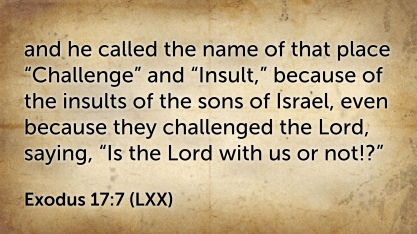
numUnder the Old Covenant, the covenant community had to stay away from God. He lived in their midst, first in the tabernacle and later in the temple. He dwelt in the inner compartment, the Holy of Holies. Yet, only certain chosen men had very limited and prescribed access to Him:

  • Only the High Priest could enter the Holy of Holies, and then only once per year (Leviticus 16).
  • Only the Levites could enter into the outer compartment to trim the lamps, arrange the bread of the presence, and perform other duties

The rest of the community could not enter at all. In fact, they were commanded to stay away from the tabernacle altogether:

Numbers 18:22 No longer may the Israelites approach the tent of meeting, or else they will bear their sin and die.

Think about this. Under the Old Covenant, God was kept at arms-length. He lived among His chosen people, but could not be approached directly. He made Himself known through intermediaries. Yahweh was personally unapproachable. A believer could not dare to even approach Him in His dwelling-place.

We could draw a whole lot of implications here, but one thing is particularly clear – God is holy, and in our sinful and criminal state, we are not fit to approach Him. Under the temporary arrangements of the Old Covenant, God’s people had to come to Him through intermediaries, expressing their thankfulness, love, repentance and worship through a series of sacrificial offerings, via an ordained priesthood.

Is this the way it was meant to be forever? Being promised certain death if you dared to draw near to God in reverent worship? Being kept at arms-length by God Almighty? Only offering praise, thanksgiving, repentance and worship through an intermediary? Not at all! Today, all who are “partakers of the heavenly calling” (Heb 3:1), who have repented and believed the Gospel, enjoy the blessings of Jesus’ superior ministry, based on a better covenant complete with better promises.

What a change from this dire warning

Numbers 18:22 No longer may the Israelites approach the tent of meeting, or else they will bear their sin and die.

to this glorious exhortation?

Hebrews 4:14-16 Therefore since we have a great high priest who has passed through the heavens, Jesus the Son of God, let us hold fast to our confession. For we do not have a high priest incapable of sympathizing with our weaknesses, but one who has been tempted in every way just as we are, yet without sin. Therefore let us confidently approach the throne of grace to receive mercy and find grace whenever we need help.

Instead of being warned to stay far away from Yahweh, Christians are now commanded to confidently approach the very throne of grace! Figuratively speaking, Christians are invited to march right up to the heavenly tabernacle, walk right through the first compartment, fling the veil to the Holy of Holies aside, and kneel before the very mercy seat on the ark of the covenant itself. There is no need for a censer of incense to mask yourself from the divine presence. There is no command to “stay back!” Instead, there is a warm invitation to “confidently approach the throne of grace to receive mercy and find grace whenever we need help.”

The New Covenant is better. The New Covenant is what the object lessons of the Old were always pointing to. The New Covenant is ours now, and will be Israel’s later. Perhaps now, this bit from the Book of Hebrews begins to make a little more sense:

Hebrews 10:19-22: Therefore, brothers and sisters, since we have confidence to enter the sanctuary by the blood of Jesus, by the fresh and living way that he inaugurated for us through the curtain, that is, through his flesh, and since we have a great priest over the house of God,  let us draw near with a sincere heart in the assurance that faith brings, because we have had our hearts sprinkled clean from an evil conscience and our bodies washed in pure water.

If you have repented of your sins and believed the Gospel message, then you will join the angels in heaven as they sing praises to Jesus the Christ. If you continue in criminal rebellion against Him, Jesus will break you with His iron scepter and smash you like a potter’s jar (cf. Ps 2:9). I pray you’ll join God’s family, so you, too, can have access to the throne of grace to find mercy and help in time of need.

No Respect!

tentMoses is an important prophet. Aaron and Miriam forgot that once. They probably didn’t forget again. God struck Miriam with leprosy for her sedition and rebellion against Moses, His appointed prophet and leader of His covenant people. Behold! Here is the passage (Numbers 12:1-10):

Then Miriam and Aaron spoke against Moses because of the Cushite woman he had married (for he had married an Ethiopian woman). They said, “Has the LORD only spoken through Moses? Has he not also spoken through us?” And the LORD heard it. (Now the man Moses was very humble, more so than any man on the face of the earth.)

The LORD spoke immediately to Moses, Aaron, and Miriam: “The three of you come to the tent of meeting.” So the three of them went. And the LORD came down in a pillar of cloud and stood at the entrance of the tent; he then called Aaron and Miriam, and they both came forward.

The LORD said, “Hear now my words: If there is a prophet among you, I the LORD will make myself known to him in a vision; I will speak with him in a dream. My servant Moses is not like this; he is faithful in all my house. With him I will speak face to face, openly, and not in riddles; and he will see the form of the LORD. Why then were you not afraid to speak against my servant Moses?”

The anger of the LORD burned against them, and he departed. When the cloud departed from above the tent, Miriam became leprous as snow. Then Aaron looked at Miriam, and she was leprous!”

Aaron and Miriam didn’t like Moses’ wife. It’s even possible the phrase they used to refer to her (“Cushite woman”) was a racist, derogatory term. But, their problem wasn’t really her – it was Moses and the unique position he had.

“Are you really that special?” they asked. “Does God really only speak through you? What about us!?”

God heard what they said. God hears everything you say. He knows everything you think. He understands what you’re plotting. He knows what you’ve done, what you are doing, and what you will do. I wonder how far sin would go if each Christian paused before doing something wicked and stupid, and thought about this:

  • “And the Lord heard it.”
  • “And the Lord saw it.”
  • “And the Lord knew it.”

Yikes.

God calls for a meeting. He isn’t happy. I want to spend the rest of our time considering what God says about Moses.

God speaks to prophets in visions; in dreams. We get this. Daniel had visions. The Apostle John had visions. Ezekiel had visions. The Holy Spirit moved these men (and others) to write down their prophetic messages in books. We have those books today. They’re hard books, full of hard sayings. This is why the pop-prophesy industry will always be busy churning out slop for the gullable masses who throng the Christian bookstores. Yesterday it was silliness about blood moons. Perhaps vanilla locusts are next!

With Moses, however, things are different. God speaks to him plainly, simply, forthrightly. This is why John Hagee will never write a pop prophesy volume about the Book of Numbers. Never happen. It’s too plain, too clear, too . . . open. God said:

Numbers 12:8 With him I will speak face to face, openly, and not in riddles; and he will see the form of the LORD. Why then were you not afraid to speak against my servant Moses?”

God speaks to Moses face to face. He doesn’t use riddles or difficult sayings. He’s plain, clear, concise, direct. Moses even saw the form of the Lord. He didn’t see Yahweh in His unveiled glory, of course, but he came much closer than any man has ever come to that glory (Ex 33:22-23) – until perhaps Peter, James and John (cf. Mk 9:2-3).

Why, then, are Aaron and Miriam not afraid to rebel against Moses, their appointed leader? This is a rhetorical question; the kind of thing your mother asked you before she “corrected” you. This is a serious matter. They just rebelled against the jurisdiction and authority of the only man in human history since Adam whom God has ever spoken to openly, plainly, face to face with. What happened next couldn’t have been very comforting:

Numbers 12:9 The anger of the LORD burned against them, and he departed.

Not a good sign.

In many ways, Moses is a shadow of the promised Messiah, Jesus. Remember what Moses prophesied, and consider how clear it is when compared to, say, Revelation 12!

Deuteronomy 18:15 The LORD your God will raise up for you a prophet like me from among you – from your fellow Israelites; you must listen to him.

Deuteronomy 18:18-19 I will raise up a prophet like you for them from among their fellow Israelites. I will put my words in his mouth and he will speak to them whatever I command. I will personally hold responsible anyone who then pays no attention to the words that prophet speaks in my name.

Here is what Moses told the Israelites a very, very long time ago:

  • God will raise up another prophet
  • This prophet will be like Moses – having the same kind of personal, close and direct relationship with God Almighty
  • This prophet will be an Israelite (“from among you”)
  • The Israelites will have to listen to him
  • This prophet will communicate God’s message perfectly
  • Everybody will be held responsible to listen to and obey this coming prophet, who will speak in God’s name

Who is this prophet? Read the Book of Acts and see the inspired, inerrant answer (Acts 3:21-23, 7:37). It is Jesus, the Messiah. The Christ.

Think about this. If you do not listen to Jesus and obey His command to repent and believe the Gospel, God will essentially ask you the same question; “Why then were you not afraid to speak against my servant?” What will you say? Were you busy? Tied up? Didn’t care? Don’t fool yourself. Remember what the Scripture says: “And the LORD heard it.”

If Aaron and Miriam were punished for rebelling against Moses, how much more will rebellious, criminal sinners be punished for their continued hatred of God and His annointed One, Jesus?

Read the Gospel. Repent and believe the Gospel. Listen to the angel from the Book of Revelation:

Revelation 14:7 Fear God and give him glory, because the hour of his judgment has arrived, and worship the one who made heaven and earth, the sea and the springs of water!

Don’t be a fool.

  • You’re worthless to God (Rom 3:12).
  • You’ll never be good enough for Him. If it were possible to be good enough, then Christ died for nothing (Gal 2:21).
  • Jesus willingly and voluntarily emptied Himself, left heaven and came here for His children’s sake.
  • He lived the perfect, sinless, holy, righteous and lawful life you can never live.
  • He was tortured and murdered, suffering the penalty for the crimes you deserve to pay for.
  • He died, was put in a tomb, and rose from the dead three days later to defeat the curses of sin and death for you, in your place. When He rose from the dead, He defeated Satan for you, too.
  • He was seen by hundreds of eyewitnesses, and ascended back to heaven where He is seated beside the Father, interceding and working on behalf of all His children, all those who are “partakers of the heavenly calling,” (Heb 3:1).

Why are you not afraid to speak against God’s servant, Jesus? To echo the words of the learned philosopher Rodney Dangerfield, why does Jesus “get no respect” from you?

If you repent and believe the Good News He came, lived, died, and rose again to bring to you, then you will be reconciled to God, perfectly and completely forgiven. God’s anger against you will be gone. You’ll be adopted into His family.

Of course, you don’t have to obey Jesus’ command (Mk 1:15) to repent and believe the Gospel. There’s always this alternative:

Numbers 12:9 The anger of the LORD burned against them, and he departed.

The Blessed Man and the Gospel

Because I’ve been too busy to write much lately, I thought I’d make a short video, instead! I recently spoke to a group of young boys at our local Trail Life USA troop. I spoke briefly, but was able to share the Gospel from Psalm 32. In this video, I offer some important thoughts about King David’s words, and why they matter for you today:

Watching out for One Another

lev 5(1)Christians are supposed to act like Christians. Christians are commanded to gather together in local churches, wherever they happen to live, and worship the Lord as part of a congregation. If Christians within that congregation don’t act like, well . . . Christians, then the Lord expects God’s people to police themselves like adults.

Now, of course, the New Testament gives us specific guidelines about how to do this the right and proper way. The Lord Jesus Himself talked about how to handle disputes between brethren (Mt 18:15-17). The Apostle Paul gave very specific instructions for how a congregation should handle a case of known, obvious and public sin  (1 Cor 5).

This isn’t a popular topic in churches today. Our culture encourages softness and timidity. The one unpardonable sin is to be certain about anything, and many Christians today would rather tolerate blatant sin under the mushy and ethereal banner of “love” than actually try and do anything about it.

Pastors don’t do church discipline. Christians don’t expect church discipline. People gasp in horror at the very idea of actually holding other Christians accountable for their behavior within a local congregation.

Once, in the midst of a very unfortunate church discipline process, a woman scolded me, saying, “Kicking somebody out of a church is a Catholic doctrine!!” Sure, and the sky is neon green and Elvis still lives . . . But, the point is that the concept of Christians lovingly holding each other accountable to, well . . . act like Christians is a scandalous idea in churches today.

This is where a well-rounded, whole-Bible approach to individual and corporate conduct can help us out. Behold this tidbit from the long section in the Book of Leviticus on sin and trespass offerings to the Lord:

Leviticus 5:1 (NET) When a person sins in that he hears a public curse against one who fails to testify and he is a witness (he either saw or knew what had happened ) and he does not make it known, then he will bear his punishment for iniquity.

Consider what this means:

  1. If an Israelite is aware that a particular sin occurred in the congregation,
  2. and this Israelite is a witness to that sin and has knowledge of it,
  3. and the Israelite knows he has a legal duty to cough up what he knows
  4. and he doesn’t say anything about it (i.e. “I know NOTHING!!!“)
  5. then this Israelite will be punished by God

In other words, if you don’t speak up when you know sin is in the congregation, then you’re guilty, too. Ouch. Yikes. This is pretty harsh and direct.

The Old Covenant has been replaced by the New and better covenant. But, several key principles carry right over – because they transcend temporary covenant arrangements and reflect how God has always dealt with His people. This is one of these key principles:

  • God elects and saves each of His people
  • God expects His people to walk worthy of their new heavenly citizenship
  • God expects His people to want to do this because they love Him, and are eternally grateful
  • This means God’s people will have an honest, heartfelt desire for personal holiness and corporate holiness – today, that means local congregations should want to be holy as a collective group
  • Part of this honest desire for personal holiness means God’s people police one another for their own individual and corporate good

God’s people don’t police each other out of a spirit of malice or pettiness (e.g. “I’m gonna git somethin’ on ole’ Mrs. Smith this time!!”). If you do this, you’re a fool. But, the fact remains that God’s people have always been expected to police each other for both (1) the offender’s own good, and (2) the corporate good of the entire congregation. Let me offer an application for today:

  1. If a Christian is a member of a local congregation (and the New Testament presupposes this),
  2. and that Christian is aware of an unrepentant, deliberate sin another member is committing, in that he either witnessed it or has knowledge of it,
  3. and the Christian knows he has a legal duty (both from Scripture and, very likely, his local church covenant) to lovingly confront that brother or sister,
  4. and that Christian doesn’t say anything about it and pretends everything is great,
  5. then that Christian is being deliberately disobedient to God’s word and will likely be cursed (i.e. God will discipline him through a variety of different means)

Read Leviticus 5:1 for yourself, and consider how easy this is to swallow in the modern American church. It probably wouldn’t go over too well. When I was a Pastor, I had planned to tackle Leviticus in about six sermons or so; to do a short survey so I could at least expose the congregation to this important book and all the insight it gives us into Jesus Christ and how God expects His people to live their daily lives. I regret that I wasn’t able to get to it.

I wish more Pastors would tackle this wonderful book, and help Christians understand why it matters to read it and understand it.

Reading a “Boring” Section of Scripture

big deal

Exodus is boring after all the Egyptians die. Leviticus is just weird. Numbers is all about, well . . . numbers and is best skipped. Deuteronomy is about as enjoyable as reading orthodontist trade journals. Joshua is kinda cool, because a lot of people start dying. This is what many Christians think about the Torah.

Of course, Christians don’t actually say this aloud. That would be “bad.” But, they think it. They’re wrong.

If Scripture came about because men “carried along by the Holy Spirit spoke from God,” (2 Pet 1:21), then we should at least be able to agree that the Torah is important. It’s in your Bible for a reason. It’s “kind of a big deal.” It’s not boring. You just don’t understand it.

You can fix this.

I was reading from the Book of Exodus this morning. Most Christians are familiar with the early portion of this book. They make for good Sunday School lessons. But, many Christians skip the last half of the book. It’s considered “strange.” They don’t know what on earth it has to do with them. It’s all about laws and regulations which don’t seem to have any connection to the contemporary Christian life. It’s boring. It’s weird. It’s all about “law,” and now we have “grace.” Wrong. You couldn’t be more wrong.

The Book of Hebrews, for example, will always be a mystery to you if you don’t read the Torah. Always. You’ll never understand it, and that means you’ll never truly understand what Christ did for you. Oh, sure – you can understand what Christ did, but only on a superficial level. Sort of the way a 10-yr old boy looks at a handcrafted wooden jewelry box and thinks, “Dude, that’s cool!” He knows it’s neat. He knows it took skill. But, he won’t truly appreciate the jewelry box until understands the incredible skill it took to make it. If you’re a Christian, don’t stay a spiritual child (cf. Heb 5:12-6:3). Read the Torah. It’s, like, kind of important.

Consider this bit, from the instructions about building the tabernacle:

Exodus 26:31-33 (NET): You are to make a special curtain of blue, purple, and scarlet yarn and fine twisted linen; it is to be made with cherubim, the work of an artistic designer. You are to hang it with gold hooks on four posts of acacia wood overlaid with gold, set in four silver bases. You are to hang this curtain under the clasps and bring the ark of the testimony in there behind the curtain. The curtain will make a division for you between the Holy Place and the Most Holy Place.

All this talk of curtains, fabric, linen, artisans and golden hooks and clasps seems irrelevant. Is God telling Moses to head to Michaels? Why were there two compartments which segregated the Israelites into three different groups of people, each with different levels of access to God?

  1. The High Priest alone had access to the Holy of Holies, in the innermost compartment of the tabernacle, behind the veil.
  2. The Levite priests alone could minister inside the first compartment, arranging the Bread of the Presence, trimming the lamps, etc.
  3. The rest of the congregation had to remain outside the tent of meeting. They could not boldly approach near to God.

Why these elaborate cultic instructions and minutely prescribed rituals? Why did God preserve this and providentially lead the Jewish people and the Christian church to regard them as part of inspired and inerrant Scripture?

These questions evaporate and take on new significance when you read the Book of Hebrews. Behold . . .

Now the first covenant, in fact, had regulations for worship and its earthly sanctuary. For a tent was prepared, the outer one, which contained the lampstand, the table, and the presentation of the loaves; this is called the holy place. And after the second curtain there was a tent called the holy of holies. It contained the golden altar of incense and the ark of the covenant covered entirely with gold. In this ark were the golden urn containing the manna, Aaron’s rod that budded, and the stone tablets of the covenant. And above the ark were the cherubim of glory overshadowing the mercy seat. Now is not the time to speak of these things in detail.

So with these things prepared like this, the priests enter continually into the outer tent as they perform their duties. But only the high priest enters once a year into the inner tent, and not without blood that he offers for himself and for the sins of the people committed in ignorance. The Holy Spirit is making clear that the way into the holy place had not yet appeared as long as the old tabernacle was standing. This was a symbol for the time then present, when gifts and sacrifices were offered that could not perfect the conscience of the worshiper. They served only for matters of food and drink and various washings; they are external regulations imposed until the new order came.

But now Christ has come as the high priest of the good things to come. He passed through the greater and more perfect tent not made with hands, that is, not of this creation, and he entered once for all into the most holy place not by the blood of goats and calves but by his own blood, and so he himself secured eternal redemption. For if the blood of goats and bulls and the ashes of a young cow sprinkled on those who are defiled consecrated them and provided ritual purity, how much more will the blood of Christ, who through the eternal Spirit offered himself without blemish to God, purify our consciences from dead works to worship the living God.

And so he is the mediator of a new covenant, so that those who are called may receive the eternal inheritance he has promised, since he died to set them free from the violations committed under the first covenant. For where there is a will, the death of the one who made it must be proven. For a will takes effect only at death, since it carries no force while the one who made it is alive. So even the first covenant was inaugurated with blood. For when Moses had spoken every command to all the people according to the law, he took the blood of calves and goats with water and scarlet wool and hyssop and sprinkled both the book itself and all the people, and said, “[This is the blood of the covenant that God has commanded you to keep].” And both the tabernacle and all the utensils of worship he likewise sprinkled with blood.

Indeed according to the law almost everything was purified with blood, and without the shedding of blood there is no forgiveness. So it was necessary for the sketches of the things in heaven to be purified with these sacrifices, but the heavenly things themselves required better sacrifices than these. For Christ did not enter a sanctuary made with hands – the representation of the true sanctuary – but into heaven itself, and he appears now in God’s presence for us. And he did not enter to offer himself again and again, the way the high priest enters the sanctuary year after year with blood that is not his own, for then he would have had to suffer again and again since the foundation of the world.

But now he has appeared once for all at the consummation of the ages to put away sin by his sacrifice. And just as people are appointed to die once, and then to face judgment, so also, after Christ was offered once to [bear the sins of many], to those who eagerly await him he will appear a second time, not to bear sin but to bring salvation (Hebrews, chapter 9).

Read the Book of Hebrews in conjunction with the Torah, particularly Exodus 19-Deuteronomy. It will open your eyes. It will enrich your theology. It will deepen your eternal gratitude to God. It will lead you to a closer daily walk with the Lord. You’ll know Him better, and appreciate all the blessings and future promises of this new and better covenant, which has been established on better promises.

What Have You Done for Me Lately!? (Exodus 17:7)

josh17(7).pngOn their journey towards Mt. Sinai from Egypt, the Israelites became angry. Actually, they became angry a lot, but this time they said something particularly foolish:
Exodus 17:7 (KJV): And he called the name of the place Massah, and Meribah, because of the chiding of the children of Israel, and because they tempted the LORD, saying, Is the LORD among us, or not?

I spent some time pondering why on earth they would ask this question. It’s a pretty stupid question, really. Is the Lord with them? Well, let’s quickly re-cap everything He had done for them in a few short months since Moses returned to Egypt:

  1. They saw Moses’ staff miraculously transformed into a serpent (Ex 4:29-31), which was meant as a token miracle to convince the Israelites that Moses really was a man sent from God to rescue them from captivity, just as He had promised their fathers (cf. Gen 15:6, Ex 6:6-8).
  2. They saw Moses turn the Nile River into blood (Ex 7:14-25).
  3. They saw the plague of frogs strike Egypt (Ex 8:7).
  4. They saw God miraculously kill all the frogs dead at once (Ex 8:8-15).
  5. They witnessed the plague of lice, and the pagan magicians themselves even acknowledged that “this is the finger of God!” (Ex 8:16-19).
  6. They beheld the plague of flies, and the way the Lord miraculously kept all flies out of the delta of Goshen where the Israelites were! (Exodus 8:20-24).
  7. They saw the Lord do yet another miracle, removing the plague of flies once Pharaoh promised to release the Israelites (Ex 8:25-32).
  8. The Israelites saw the plague which struck all the cattle in Egypt on a set date, a plague which did not touch the area of Goshen where they themselves lived (Ex 9:1-7).
  9. They witnessed the plague of boils (Ex 9:8-12).
  10. They saw the plague of fire and hail, “such as there was none like it in all the land of Egypt since it became a nation.” Once again, this plague did not touch the Israelites (Ex 9:13-26).
  11. They saw the Lord miraculously stop this plague upon command (Ex 9:27-35).
  12. They witnessed the awful and devastating plague of locusts (Ex 10:1-20).
  13. They beheld the plague of darkness, “even darkness which may be felt,” over the entire land of Egypt (Ex 10:21-29). Bizarrely, this darkness did not effect their own homes. Can you even begin to imagine how awe-inspiring this must have been to the Israelites, and how terrifying it must have been to the pagan Egyptians!?
  14. They witnesses the last plague, which killed all the firstborn sons in Egypt (Ex 12) – a plague which even stuck the cattle (what little were left!). More than that, they each personally experienced the Lord’s blessing and protection when they applied the blood of the passover lamb to their doorposts, so that “the Lord will pass over the door, and will not suffer the destroyer to come in unto your houses to smite you,” (Ex 12:23).
  15. The Lord allowed the Israelites to leave Egypt well-provisioned and enriched with goods from the Egyptians (Ex 12:36).
  16. They saw the Lord, every single day, lead them in a pillar of cloud by day, and a pillar of fire by night (Ex 13:21-22).
  17. God miraculously split the waters of the Red Sea in the dead of night. The Lord showed Himself as a cloud which came between the pursuing Egyptians, laying a thick blanket of darkness before the enemy, but lighting the way for the Israelites to make the crossing onto the Sinai Peninsula by the roaring fire of His glorious presence (Ex 14:19-22).
  18. They saw God drown the entire Egyptian army in the river (Ex 14:27-28).
  19. The Lord miraculously provided heavenly food for them in the barren wilderness (Ex 16).

In light of all this, why in the world would God’s people even ask such a foolish question? They asked it because they were ungrateful, selfish, self-centered, and inherently wicked. I’m just the same, and so are you. We’re ungrateful for God’s blessings and provisions. You’re selfish and materialistic, ignoring God’s grace and petulantly demanding still more. Like the noted philosopher Janet Jackson asked, “what have you done for me lately?”

These people had lots of reasons to trust God to provide for them and take care of them. He’d rescued and cared for them every step of the way. More than that, He was visibly revealing Himself every single moment of every single day, by cloud or by fire. If you’re a Christian by repentance and faith in Jesus Christ and His perfect, finished work, then think about the Israelites the next time you’re tempted to complain and ask anything stupid. If you’re a Christian, the Lord is always fully with you, in the Person of the indwelling Holy Spirit (cf. John 14:23).

For those who are interested, here is my own translation of this verse from the Greek Septuagint.

God Destroys His Enemies (Joshua 11:20)

josh 11(20).pngThe Bible says that God deliberately hardens evil men’s hearts so that they’ll be destroyed. He wants them to be destroyed. He decided to destroy them. He destroys them. Simple.

Here is one passage from the Book of Joshua, which chronicles the Israelite’s campaign to conquer the Promised Land which had been sworn to them so many years ago. This excerpt concerns Joshua and the Israel’s campaign in the south:

Joshua conquered the whole land, including the hill country, all the Negev, all the land of Goshen, the lowlands, the Arabah, the hill country of Israel and its lowlands, from Mount Halak on up to Seir, as far as Baal Gad in the Lebanon Valley below Mount Hermon. He captured all their kings and executed them. Joshua campaigned against these kings for quite some time. No city made peace with the Israelites (except the Hivites living in Gibeon); they had to conquer all of them, for the LORD determined to make them obstinate so they would attack Israel. He wanted Israel to annihilate them without mercy, as he had instructed Moses (Joshua 11:16-20, NET).

That last bit is very self-explanatory. Why did none of those cities make peace with the Israelites? Why did they not sense their own inevitable destruction, and opt for discretion and survival? As they saw the Israelite juggernaut coming their way, why didn’t they make an alliance and be done with it? Why did they fight and seal their own fate? The Bible tells us; “for the LORD determined to make them obstinate so they would attack Israel. He wanted Israel to annihilate them without mercy, as he had instructed Moses,” (Joshua 11:20).

God deliberately hardened their wicked hearts, ensuring they would stand and fight, so that they’d be defeated and utterly destroyed. He wanted them gone. He deliberately hardened their hearts. They fought and lost. They were destroyed. They were gone. The. End.

Of course, this issue often results in all sorts of hand-wringing in the pews and in the academic Bible commentaries. People worry this means men and women have no free will. They worry this makes us all into mindless puppets who dance to God’s capricious tune. They worry it makes God mean, wicked and evil. None of this is true, of course.

Men and women do indeed have free will. However, in a manner beyond our comprehension, God’s sovereign will operates through and above our own will and consciousness to achieve His perfect end. Joseph’s brothers were not forced to sell their brother into slavery; they wanted to. And yet, Joseph later told them, “As for you, you meant to harm me, but God intended it for a good purpose, so he could preserve the lives of many people, as you can see this day,” (Genesis 50:20). The Roman soldiers, Jewish leaders and Roman politicians were not forced to have Jesus arrested, tortured and executed like a common criminal; they each acted according to their own sinful and selfish motives. And yet, the Apostle Paul wrote, “Him, being delivered by the determinate counsel and foreknowledge of God, ye have taken, and by wicked hands have crucified and slain,” (Acts 2:23).

Men and women have free will, and often God channels and directs the innate wicked, evil and selfish motives, lusts and ambitions of sinful men to His own holy ends, for his own righteous and appropriate purposes. To return to our text in Joshua, God did not put evil in these people’s hearts. He did not make them hate the Israelites. He did not make them hate Him. They were already evil. They already despised the Israelites. They already hated Him and all the holiness, righteousness and justice He stands for.

God took sovereign hold of their inherent wickedness and channeled it for His own purpose. They wanted to kill the Israelites. They hated God. They met their earthly judgment on the field of battle, and were ushered into their just and appropriate eternal damnation immediately afterward.

It is disappointing to see commentaries tap-dance around the plain truth of the Scripture here. There is no need to tap-dance. There is no need to be apologetic. There is only a need to preach what the text says. It says they did not make peace, because the Lord hardened their hearts so they would be annihilated without mercy. That’s it.

These texts are horrifying to many Christians because we so often unconsciously downplay God’s holiness and our own sinfulness. We often have an un-Biblical, soft, cuddly and fuzzy version of God in our minds which simply doesn’t reflect reality. More dedicated  reading of the Torah, the revelation of God’s heavenly throne room from Revelation 4-6, and the beautiful description of the new earth and the New Jerusalem in Revelation 21-22 would go a long way toward curing this problem. Then, these texts won’t seem frightening at all.

What Color is the Horse!? (Revelation 6:8)

horseAlmost every Christian of a certain age is used to the KJV’s wording in Rev 6:8:

And I looked, and behold a pale horse: and his name that sat on him was Death, and Hell followed with him. And power was given unto them over the fourth part of the earth, to kill with sword, and with hunger, and with death, and with the beasts of the earth (Revelation 6:8).

But, is the horse actually pale? William Tyndale, the genius Greek and Hebrew scholar from the 16th century, the man who gave us the first English translation of the New Testament from the original Koine Greek, rendered it as, “And I looked and behold a green horse.”

Green isn’t pale! What on earth is happening? Alas, the plot thickens even more:

  • NKJV: pale horse
  • NASB: ashen horse
  • ESV: pale horse
  • NET: pale green horse
  • ISV: pale green horse
  • RSV: pale horse
  • LEB: pale green horse
  • NRSV: pale green horse

What saith the Greek? Here it is: καὶ εἶδον, καὶ ἰδοὺ ἵππος χλωρός. This is not a textual issue; the Textus Receptus, Robinson & Pierpont’s Byzantine Text, and the UBS-5 all have the same text here. This is a translation issue. It’s also not a simple matter of right and wrong; translation is not that simple here. My translation is, “and I looked, and along came a pale green horse!” The key word here is χλωρός. Most of the standard Greek lexicons agree this word means something like “pale green.” The issue is whether the word should be taken literally or figuratively:

  • BDAG defines it as pale, greenish gray (s.v. “7938 χλωρός,” 2).
  • Friberg goes for green, pale green, yellowish green. He classifies the use here as figurative, so he opts for a sickly sense and gives the gloss “pale,” (s.v. “28653 χλωρός”).
  • Gingrich also opts for the figurative sense, and prefers “pale,” to convey the picture of a sickly person (s.v. “6893 χλωρός,” 2).
  • Louw-Nida keep the sense of pale, greenish grey, “evidently regarded as typical of a corpse,” (79.35 χλωρός).

As you already saw, the English translations are evenly split. How is the word used elsewhere in the New Testament? Here, it’s pretty clear that the color of light, pale green is the idea. For example, Jesus had the crowd sit in groups upon the green grass (Mk 6:39). The Book of Revelation speaks of the grass being burnt up (Rev 8:7).

What does the context say? Here is the story of the fourth seal:

Then when the Lamb opened the fourth seal I heard the voice of the fourth living creature saying, “Come!” So I looked and here came a pale green horse! The name of the one who rode it was Death, and Hades followed right behind. They were given authority over a fourth of the earth, to kill its population with the sword, famine, and disease, and by the wild animals of the earth (Revelation 6:7-8).

The fourth horseman was named Death, and the Grave followed after him. Together, God will give them power to kill 25% of the world’s population during the coming Great Tribulation (Jeremiah 30:7; Mt 24:21-22) by way of war, famine, disease and wild animals. This is bad news. The overriding sense is that this fourth horseman represents death and the cold grave which awaits the wicked.

By this point, it seems clear that the pale green sense is conveying the idea of a decaying, bloated and rotting corpse. The colors of these horsemen of the seven seals mean something. The horseman is not merely pale and sickly. He’s pale green to represent the rotting corpses of the wicked who will experience God’s terrifying judgment, wrought at the hands of unwitting and fiendish men.

The horse is pale green.

Redeemed!

redeemedPaul and the Christians in Colossae have something in common; they have each been redeemed from Satan’s kingdom of darkness and transferred to the kingdom of God’s dear Son. The “we” includes everybody who has, is and will ever be a Christian. For the saints under the Old Covenant, Christ’s perfect and finished work has been retroactively applied (cf. Hebrews 9:15).
Giving thanks to the Father, who made you acceptable to share in the saints’ inheritance in the light, who rescued us from the kingdom of the darkness and transferred us to the kingdom of His beloved Son, in whom we now have the redemption; that is, the forgiveness of sins (Colossians 1:12-14).

Think about what the word “redemption” actually means. It gives the sense of being freed from an oppressive and harmful situation. It has overtones of being purchased and ransomed from the clutches of an evil taskmaster. It means to be released and absolved from bonds or a particularly terrible debt. It means to make good on an obligation, to set things right between yourself and an offended party. It’s really only a nuance or two away from the proper meaning of the all-important concept of “propitiation,” (1 John 2:2). This is who you are, who I am, who every single person in this world is – worthless sinners, criminal terrorists in God’s universe, rogue insurgents who live to rail against the Lord and against His anointed. Jesus Christ said, “He that hateth me hateth my Father also,” (John 15:23). Well, the truth is that we’re each born hating Him and His father, we’re each born “by nature the children of wrath,” (Ephesians 2:2), and we’re each born as people who need to be redeemed.

Paul does not say that everybody has been redeemed, or even will be redeemed. Only those who repent of their sins and believe in the Good News which our only Master and Lord Jesus Christ died to bring will be redeemed. You are not born belonging to the family of God. You are a stranger and alien to righteousness; all of us are. We come into this world as members of Satan’s kingdom; we’re born under his jurisdiction, his power, his authority, his dominion and his control. We’re slaves of sin, “reserved in everlasting chains under darkness unto the judgment of the great day,” (Jude 1:6). But, for those who have obeyed Jesus’ cry, “[t]he time is fulfilled, and the kingdom of God is at hand: repent ye, and believe the gospel,” then this is nothing but a terrible memory, a nightmare on a dark and stormy night, a horrifying time before God shined in your heart, to give the light of the knowledge of the glory of God in the face of Jesus Christ (2 Corinthians 4:6). Indeed, as the Apostle Paul wrote,

“For when ye were the servants of sin, ye were free from righteousness. What fruit had ye then in those things whereof ye are now ashamed? for the end of those things is death. But now being made free from sin, and become servants to God, ye have your fruit unto holiness, and the end everlasting life. For the wages of sin is death; but the gift of God is eternal life through Jesus Christ our Lord,” (Romans 6:20-23).

What does it mean to be “redeemed?” What is this redemption that Christians now have? Paul tells us that it is “the forgiveness of sins.” Your sins prove you’re a criminal. You live in this world God created, you breathe the air Christ provides, you live your life according to natural laws which Christ upholds and sustains, and you enjoy the blessings which the Lord showers on the just and the unjust alike.

If you are an unbeliever, you do belong to Satan’s kingdom, but make no mistake – everything in heaven and earth is ultimately under God Almighty’s power and control. Satan’s jurisdiction is like that of a metropolitan city within a state; its sovereignty is subject to the laws and regulations of the state it’s located in. You are under God’s jurisdiction, you are a proven criminal who has violated God’s holy laws, and you must be punished. It’s really as simple as that.

Because God is so holy, so perfect, so mighty, so awesome and so powerful, you deserve the greatest possible punishment. The Bible tells us that punishment is eternity “[i]n flaming fire taking vengeance on them that know not God, and that obey not the gospel of our Lord Jesus Christ: Who shall be punished with everlasting destruction from the presence of the Lord, and from the glory of his power,” (2 Thessalonians 1:8-9).

You need to be forgiven. In order to be forgiven, certain criteria must be met. When a person commits a heinous crime in civilized society, people instinctively know that two things simply must happen when the perpetrator is caught: (1) the crime must be paid for, and (2) once that crime is paid for, things will be “set right.” This is what the word “propitiation” means. Your sins need to be paid for, wiped clean, atoned for. God’s righteous anger must be appeased, and things must be set right. You can either pay for your own sins yourself, as you surely deserve to, or you can confess and forsake your sins, and believe the life-giving and life-saving Good News which Jesus Christ preached and taught. You only have redemption, the forgiveness of sins, in the person and work of Jesus Christ.

Repent ye therefore, and be converted, that your sins may be blotted out, when the times of refreshing shall come from the presence of the Lord; And he shall send Jesus Christ, which before was preached unto you: Whom the heaven must receive until the times of restitution of all things, which God hath spoken by the mouth of all his holy prophets since the world began.

For Moses truly said unto the fathers, ‘A prophet shall the Lord your God raise up unto you of your brethren, like unto me; him shall ye hear in all things whatsoever he shall say unto you. And it shall come to pass, that every soul, which will not hear that prophet, shall be destroyed from among the people.’ Yea, and all the prophets from Samuel and those that follow after, as many as have spoken, have likewise foretold of these days.

Ye are the children of the prophets, and of the covenant which God made with our fathers, saying unto Abraham, ‘And in thy seed shall all the kindreds of the earth be blessed.’ Unto you first God, having raised up his Son Jesus, sent him to bless you, in turning away every one of you from his iniquities (Acts 3:19-26).

The Kingdom of Darkness (Colossians 1:13)

jn812

There is a host of misinformation and lies in the world about the human condition. The Bible makes things very clear. You need to be rescued. You need to be rescued from Satan’s clutches and from his fiery orphanage of the damned. That last bit isn’t hyperbole on my part; after all, a rescue implies some kind of mortal danger, doesn’t it? What on earth do you need to be rescued from?

12Giving thanks to the Father, who made you acceptable to share in the saints’ inheritance in the light, 13who rescued us from the kingdom of the darkness and transferred us to the kingdom of His beloved Son, 14in whom we now have the redemption, that is, the forgiveness of sins.[1]

The Bible tells us you need to be rescued and delivered “from the kingdom of darkness” (ἐκ τῆς ἐξουσίας τοῦ σκότους). Some translations render this as “delivered,” but I don’t think this is brutal, stark or arresting enough. It’s too dainty, too proper, too high-brow. You don’t need to be delivered, you need to be rescued from Satan’s kingdom. 

This phrase is usually translated two different ways; as “power of darkness” (Tyndale, KJV, NKJV, NET, ISV) or “domain of darkness” (LEB, ESV, NASB). The idea of darkness is very clear in Greek, but the word ἐξουσίας is expressing the idea of sphere of control or rule. Another interesting possibility is jurisdiction. Altogether, you have several good translation options, each of which paints a dark and forbidding picture of who we really are. We are, all of us, people who desperately need to be rescued from the jurisdiction, power, domain and kingdom of darkness.

Darkness is the domain of Satan. It isn’t any wonder that our popular culture depicts evil in sinister shades of black (for example, think Darth Vader and “the dark side”), and good in glowing robes of white. This is Biblical imagery.

  • People are trapped in the dark clutches of sin, their hearts and minds veiled by Satan’s cloak, and it is the “light of the glorious Gospel of Christ” which shines in unto His elect people (2 Corinthians 4:4-5), casting aside this vile net of iniquity and delusion “so as to secure our voluntary obedience to the gospel.”[2]
  • An unbeliever’s understanding is “darkened, being alienated from the life of God through the ignorance that is in them, because of the blindness of their heart,” (Ephesians 4:18). Thus, this darkness isn’t literal; it’s spiritual. An unbeliever cannot know God, please God, or understand God because of this spiritual darkness.
  • The Apostle Paul admonished the Christians in Ephesus, “for ye were sometimes darkness, but now are ye light in the Lord: walk as children of light,” (Ephesians 5:8).
  • A Christian is somebody whom God has called “out of darkness into his marvellous light,” (2 Peter 2:9).
  • The Apostle John, echoing His Lord’s “new commandment” (Jn 13:34-35), wrote that external behavior revealed the true state of one’s heart. “He that saith he is in the light, and hateth his brother, is in darkness even until now,” (1 John 2:9).
  • Jesus Christ Himself is depicted as the bright and shining light, sent from God with the precious message of salvation, redemption and reconciliation; “in him was life; and the life was the light of men. And the light shineth in darkness; and the darkness comprehended it not,” (John 1:4-5).

This is not good news. The Apostle Paul did not beat around the bush. Elsewhere, he made it clear that an unbeliever is spiritually dead, wallowing in his own trespasses and sins (Ephesians 2:1). Every single person in the world naturally lives according to the normal course of this sin-cursed and condemned word, according to the “prince of the power of the air,” who is Satan. People are born with Satan as their spiritual father (cf. John 8:44ff), their wills, minds, hearts and souls enslaved to him and all the wickedness he stands for. It is Satan who is working right now, every moment of every day, in his children’s lives, whom Paul calls the “children of disobedience,” (Ephesians 2:2). Even worse, the Bible tells us that everybody is born, by our very nature, makeup and constitution as sinners, as “children of wrath,” (Ephesians 2:3).

This is what you need to be rescued from, and this is what Christ has, is and will infallibly accomplish (cf. John 6:37) for all those who are His. You are born under the jurisdiction of Satan, subject to his laws, his standards, his will, his character, his nature and his wickedness. You reflect those qualities, you live according to these characteristics and you echo your spiritual father’s criminal spirit. As the Bible says, you are inherently unprofitable and worthless to God the way you are (Romans 3:12). You are under his domain and power, subject to his control, his influence, his whims and his regulations. He is the rudder of the ship of wickedness, sin and rebellion that is you. You were born a citizen of his vile, unrighteous and evil kingdom – a kingdom of darkness – and you will remain a resident in that kingdom unless or until you repent of your sins and believe the Good News which Jesus Christ willingly and voluntarily suffered, bled and died to bring to you.

There is Good News (εὐαγγέλιον – “Gospel”) to combat this Bad News. Jesus Christ came to save sinners. You are a sinner. He came to save, reconcile, redeem and forgive people from every tribe, tongue people and nation on earth; to rescue them from the kingdom of darkness and transfer them to His own kingdom. You can be adopted into Jesus’ kingdom. This is why Paul told the Christians in Colossae to be “giving thanks to the Father,” because Jesus, “made [them] acceptable to share in the saints’ inheritance in the light.” Hopefully you, too, can join the saints from Colossae in thanking God for the wonderful gift of salvation in Christ Jesus!


[1] This is from my own translation; the exegetical work can be found here.

[2]  Article VII, in The 1833 New Hampshire Confession of Faith, in The Creeds of Christendom, ed. Philip Schaff (New York, NY: Harper & Bros, 1882), 3:774.