 On Friday, June 26, 2015, the Supreme Court of the United States issued a landmark ruling about same-sex marriage. Here is what it determined:
The Fourteenth Amendment requires a State to license a marriage between two people of the same sex and to recognize a marriage between two people of the same sex when their marriage was lawfully licensed and performed out-of-State.[1]
What does the 14th Amendment to the U.S. Constitution state? Here is Section 1, which is the portion relevant to this discussion:
All persons born or naturalized in the United States, and subject to the jurisdiction thereof, are citizens of the United States and of the State wherein they reside. No State shall make or enforce any law which shall abridge the privileges or immunities of citizens of the United States; nor shall any State deprive any person of life, liberty, or property, without due process of law; nor deny to any person within its jurisdiction the equal protection of the laws.[2]
What exactly did this Supreme Court decision determine? What were the legal arguments both for and against the point at issue? This article will introduce these issues and present the legal arguments, from both sides, strictly from the court decision itself.
What was this case about?
This case was an amalgamation of several individual cases from Michigan, Kentucky, Ohio, and Tennessee – all States which define marriage as a union between one man and one woman. The petitioners were 14 same-sex couples and two men whose same-sex partners are deceased. The respondents were officials from the States in question. The petitioners claim the respondents (i.e. the respective States) violated the 14th Amendment by denying them the right to marry or by not recognizing their same-sex marriages which had been lawfully performed in another State.[3]
The petitioners argued they were being denied the right to “life, liberty, or property, without due process of law,” and that they were being denied the “equal protection of the laws,” specifically with regard to the legal benefits traditional married couples enjoyed.
What questions did the court rule on?
Each District Court in each State denied the petitioner’s claims, and dismissed the cases. Each petitioner then appealed to the United States Court of Appeals for the Sixth Circuit, which promptly reversed the District Courts and consolidated all the cases together. The individual States appealed this decision, and the Supreme Court agreed to hear arguments related to two critical questions. These questions are what the Supreme Court decided, and they are:[4]
- Does the 14th Amendment require a State to license a marriage between two people of the same sex?
- Does the 14th Amendment require a State to recognize a same-sex marriage licensed and performed in a State which does grant that right?
The Supreme Court answered “Yes!” to both questions – a moral evolution so profound that President Obama remarked that it was “justice that arrive[d] like a thunderbolt!”[5] Each State in this country is now (1) required to license same-sex marriages, and (2) required to recognize same-sex marriages from other States.
The court on traditional marriage
There is a worldview issue here which cannot be ignored. Is there an objective definition of marriage to turn to, or are we left with social mores? The Christian turns to God’s revealed word. The secularist turns to the shifting winds of culture. In the majority opinion, Justice Kennedy revealed he has no concrete definition of marriage.[6] He acknowledges that supporters of traditional marriage will be horrified at the Court’s decision, but assures us that the respondents do not seek to demean the institution at all – indeed, they seek to honor it:
To the contrary, it is the enduring importance of marriage that underlies the petitioners’ contentions. This, they say, is their whole point. Far from seeking to devalue marriage, the petitioners seek it for themselves because of their respect—and need—for its privileges and responsibilities. And their immutable nature dictates that same-sex marriage is their only real path to this profound commitment.[7]
Kennedy went on to state that “new dimensions of freedom become apparent to new generations.”[8] It is obvious Kennedy views the widespread secular acceptance of same-sex marriage with satisfaction, a righteous reversal from a bygone era when homosexuals were not allowed to have “dignity in their own distinct identity” and “a truthful declaration by same-sex couples of what was in their hearts had to remain unspoken.”[9]
In his dissent, Chief Justice Roberts cut right to the heart of the matter; “The real question in these cases is what constitutes ‘marriage,’ or—more precisely—who decides what constitutes ‘marriage’”?[10] Roberts believed that it is certainly “no historical coincidence”[11] that human society, across millennia and across cultures, has always recognized marriage as being a union between one man and one woman. He appears genuinely befuddled by this moral revolution, observing “the premises supporting [the traditional] concept of marriage are so fundamental that they rarely require articulation.”[12] He tied marriage to procreation, and observed that it is a basic fact that:
- humans must procreate to survive,
- this procreation occurs when a male and female have sexual intercourse,
- children’s prospects are immeasurably strengthened when the parents form a lasting bond, and
- society has recognized that bond as “marriage.”[13]
Individual states, Roberts reminded us, always defined marriage in the traditional, biological way until about a dozen years ago.[14] He fired back at Kennedy’s statement that marriage is an institution of both “continuity and change” by observing that not one Court decision related to marriage in this country’s history has ever redefined the “core meaning” of the institution itself – until now.[15]
The court on its role in society
Is it the Supreme Court’s role to interpret the law as it currently is, or to determine what it ought to be? This was the basic question Chief Justice Roberts asked,[16] and it is really the crux of the matter between the two parties on the Court. What is the role of the Court? The democratic process has been thwarted, he warns: “Five lawyers have closed the debate and enacted their own vision of marriage as a matter of constitutional law.”[17] He believes the Court is confused about its role, and sees no legal grounds for the majority decision. The Court is not a legislative body which enacts policy.[18]
Roberts believes the Court dangerously overreached on this decision, and most of his ire is directed at this point. Indeed, his entire dissent is not about the validity of same-sex marriage per se; it is about what he believes is a very dangerous overreach of authority by the Court:
Understand well what this dissent is about: It is not about whether, in my judgment, the institution of marriage should be changed to include same-sex couples. It is instead about whether, in our democratic republic, that decision should rest with the people acting through their elected representatives, or with five lawyers who happen to hold commissions authorizing them to resolve legal disputes according to law. The Constitution leaves no doubt about the answer.[19]
The Court’s rationale for this “overreach” is chilling. Justice Kennedy acknowledged that “democracy is the appropriate process for change.”[20] However, “when the rights of persons are violated, ‘the Constitution requires redress by the courts,’ notwithstanding the more general value of democratic decision-making.”[21] It is the Court’s job, Kennedy believes, to take the fundamental issue of human dignity and rights out of the capricious hands of legislatures, elected officials and majorities, away from the “vicissitudes of political controversy” and establish them as legal precedent.[22] In effect, Kennedy believes in an activist Court. Apparently, so does the majority of the U.S. Supreme Court.
This decision makes it clear the Court is deeply divided not only over issues of morality, but over its basic role in American society.
Roberts’ arguments are both laudable and depressing. They’re laudable in the sense that he points out the absurdity of this wholesale re-definition of a sacred institution:
[T]he Court invalidates the marriage laws of more than half the States and orders the transformation of a social institution that has formed the basis of human society for millennia, for the Kalahari Bushmen and the Han Chinese, the Carthaginians and the Aztecs. Just who do we think we are?[23]
Yet, Roberts’ dissent is also depressing because it betrays the bankruptcy of secular morality, even “traditional” morality. His entire argument is from history, from the “way things have always been.” He has no positive argument to make beyond the issue of procreation. Like Kennedy, Roberts has no objective standard to turn to. Socially-constructed mores function by inertia; they may endure for a long time, but when the brakes are removed nothing can stop it from moving. It may teeter and wobble a bit in its original position for a time, but it will topple sooner or later.
In this country, the God-given definition of marriage has toppled, and conservatives like Roberts who have no objective foundation for morality are left befuddled, frustrated and speechless. Ultimately, Roberts has no answers. All he has is a secular, allegedly “outdated” cultural construct of morality that America in 2015 has left behind.
The court’s legal justification for this ruling
The Court justified its ruling requiring States to both license and recognize same-sex unions on four pillars. They are:[24]
- individual autonomy
- a two-person union is important to individuals
- it safeguards children and families
- it safeguards social order
These arguments, and the dissenting opinion, are analyzed below.
Pillar #1 – individual autonomy and liberty
Justice Kennedy’s argument on this point is remarkable because it is not a legal argument at all; he simply made blanket statements as though they were brute facts. “The right to personal choice regarding marriage is inherent in the concept of individual autonomy.”[25] His entire argument here, which quite literally consists of three short paragraphs, is that people must be allowed to do what makes them happy. He makes it a point to use the word “freedom,” possibly to establish a subtle link to the concept of “liberty” from the text of the 14th Amendment:
The nature of marriage is that, through its enduring bond, two persons together can find other freedoms, such as expression, intimacy, and spirituality. This is true for all persons, whatever their sexual orientation.[26]
The question is – who gets to determine whether a given construct of “happiness” is socially acceptable? Kennedy anticipates this objection and has no answer. He merely states, “There is dignity in the bond between two men or two women who seek to marry and in their autonomy to make such profound choices.”[27] The Court has decreed that homosexual relationships are dignified, therefore they are. Kennedy does not explain why this is a dignified pursuit and provides no legal rationale for supposing it is one. As Chief Justice Roberts observed, the Court’s decision is a more of a policy statement than a legal document.
Roberts tore into this “freewheeling notion of individual autonomy.”[28] The Court’s position on this is smoke and mirrors, a rhetorical gloss with no legal substance. The Court’s decision is nothing more than a statement of moral philosophy, a naked quest for policy preferences. He marveled that “nobody could rightly accuse the majority of taking a careful approach.”[29]
The truth is that today’s decision rests on nothing more than the majority’s own conviction that same-sex couples should be allowed to marry because they want to.[30]
Roberts’ issue is that no legal argument was actually presented for the redefinition of marriage. No “right to marry” case ever heard before the Court, whether it concerned inter-racial couples, individuals with child-support debts, or incarcerated prisoners,[31] has ever re-defined the institution itself. Every “right to marry” case presupposed the traditional definition of marriage. To Roberts, this is the death blow to the Court’s majority opinion. “None of the laws at issue in those cases purported to change the core definition of marriage as the union of a man and a woman.”[32]
Thus, there is simply no legal precedent for the sweeping claim to personal autonomy championed by the Court. The personal accounts of the homosexual petitioners were “compelling,” Roberts admitted. “As a matter of constitutional law, however, the sincerity of petitioners’ wishes is not relevant.”[33] There is simply no legal basis for a constitutional right to redefine the entire institution of marriage in the name of individual autonomy. “None exists, and that is enough to foreclose their claim.”[34]
Pillar #2 – a two-person union is “important” to people
Kennedy continues his quest for individual autonomy; “this Court’s jurisprudence is that the right to marry is fundamental because it supports a two-person union unlike any other in its importance to the committed individuals.”[35] In essence, Kennedy’s argument here is as follows:
- Homosexual marriage is important to the petitioners,
- to deny what is important to the petitioners infringes upon liberty and autonomy,
- to infringe upon personal liberty and autonomy violates the “due-process” clause of the 14th Amendment,
- therefore homosexual marriage must be sanctioned
Couples wish to define themselves by their commitment to each other, and homosexual couples are entitled to the “right to marry” because this is how they define reality.
Marriage responds to the universal fear that a lonely person might call out only to find no one there. It offers the hope of companionship and understanding and assurance that while both still live there will be someone to care for the other.[36]
It is not enough to merely de-criminalize homosexual acts, as the Court did in the case of Lawrence v. Texas; Kennedy believes homosexual couples are entitled to the “full promise of liberty.”[37] That full promise means legally sanctioned marriage, because it’s what makes them happy.
Pillar #3 – it safeguards children and families
This is the pillar which will probably surprise Christians. What basis does the Court have to rule that legalizing same-sex marriages actually safeguards children and families? Kennedy offers a handful of reasons:
- By granting official recognition and legal standing to homosexual parents, their children can now “understand the integrity and closeness” of their family.[38]
- This recognition offers “permanency and stability important to children’s best interests.”[39]
- If their homosexual “parents” are not allowed to marry, “their children suffer the stigma of knowing their families are somehow lesser.”[40]
- Likewise, such children will suffer “significant material costs” because of a “difficult and uncertain family life.”[41]
Kennedy hangs his hat on a quote from Zablocki v. Redhail , which stated, “[T]he right to ‘marry, establish a home and bring up children’ is a central part of the liberty protected by the Due Process Clause.”[42] Kennedy chose a particularly flimsy hook to hang his judicial hat on. Here is the argument:[43]
- Homosexual couples exist
- They already establish homes
- They already adopt and raise children
- Because the right to marry, establish a home, and bring up children have each been considered as a “unified whole,”[44] the Court therefore has precedent to extend the “right to marry” to homosexual couples.
This weak and vacuous argument goes far beyond special pleading. Kennedy betrays a pitiful willingness to grasp at any straw, any legal precedent – not matter how tenuous the link is. The Court actually advanced the argument that (1) because homosexual couples already establish homes, and (2) already adopt and raise children, that (3) they should be granted the “right to marry” because these three privileges have been interpreted as being part of a “unified whole” in previous “right to marry” court decisions! The Court missed Roberts’ entire point – no “right to marry” case has ever sought to re-define the institution itself!
Again, the reader is left with the impression that this is not a legal document; it is a poor man’s attempt at moral philosophy. In that light, Roberts’ warnings about judicial overreach are particularly relevant:
Stripped of its shiny rhetorical gloss, the majority’s argument is that the Due Process Clause gives same-sex couples a fundamental right to marry because it will be good for them and for society. If I were a legislator, I would certainly consider that view as a matter of social policy. But as a judge, I find the majority’s position indefensible as a matter of constitutional law.[45]
Pillar #4 – marriage maintains social order
If a society does not pledge to both protect and support married couples, then a critical “building block of our national community”[46] is threatened. If American society withholds formal legal status from same-sex couples, they are “denied the constellation of benefits that the States have linked to marriage.”[47] Basically, society harms homosexual couples by withholding that right from them. By harming them, society thereby damages itself.
Same-sex couples are consigned to an instability many opposite-sex couples would deem intolerable in their own lives. As the State itself makes marriage all the more precious by the significance it attaches to it, exclusion from that status has the effect of teaching that gays and lesbians are unequal in important respects. It demeans gays and lesbians for the State to lock them out of a central institution of the Nation’s society. Same-sex couples, too, may aspire to the transcendent purposes of marriage and seek fulfillment in its highest meaning.[48]
The Court is well aware of Roberts’ objection – no previous “right to marry” case ever sought to re-define the meaning of the institution itself. That, Kennedy argued, is missing the point. The question is not, “Do they have the right to marry?” The question is, “Why don’t they have the right to marry?”[49] This brings us full circle to the historical argument for traditional marriage, which Kennedy brushes aside with breath-taking arrogance. Definitions change, society changes, and “rights come not from ancient sources alone. They rise, too, from a better informed understanding of how constitutional imperatives define a liberty that remains urgent in our own era.”[50]
In the end, Kennedy is a good secularist who believes that morality is a shifting target. He personally feels homosexual couples are being denied a fundamental right and “it would disparage their choices and diminish their personhood to deny them this right.”[51] On that note, Chief Justice Roberts warns us, “allowing unelected federal judges to select which un enumerated rights rank as ‘fundamental’—and to strike down state laws on the basis of that determination—raises obvious concerns about the judicial role.”[52]
These four pillars are the sum of the Court’s legal opinion. Kennedy summarized as follows:
It is now clear that the challenged laws burden the liberty of same-sex couples, and it must be further acknowledged that they abridge central precepts of equality . . . The imposition of this disability on gays and lesbians serves to disrespect and subordinate them. And the Equal Protection Clause, like the Due Process Clause, prohibits this unjustified infringement of the fundamental right to marry.[53]
Conclusion – moral revolution?
The Court’s decision on 26JUN15 has only raised more questions.
An activist court
There is no doubt that the Court has bought into a purely secular view of morality, which fueled its activist stance in this case. The Court acted out of what it perceived to be a moral duty, one that could not afford to wait for the democratic process. Chief Justice Roberts was horrified at the Court’s activist stance in this case, especially the cavalier way it simply brushed aside the definition of marriage a millennia in the making. While Kennedy points to referenda, legislative debates, grassroots campaigns, studies, papers, books, and “more than 100 amici”[54] as proof that this issue has been debated long enough, Roberts couldn’t disagree more about the Court’s “extravagant conception of judicial supremacy.”[55]
The fact is that five lawyers on the Court personally believed that homosexual marriage is a fundamental right, and ruled accordingly. It was their duty to rule the way they did – justice demanded it. “Of course, the Constitution contemplates that democracy is the appropriate process for change, so long as that process does not abridge fundamental rights.”[56]
What other activist decision can the American people expect, on the basis of some perceived “moral imperative” from a few lawyers in Washington D.C.? As Roberts observed, “there is indeed a process due the people on issues of this sort—the democratic process.”[57]
The legal “slippery slope”
Many observers have warned about the “slippery-slope” the Court’s decision has opened up. What about plural marriages? What about polyamory? The Court has slipped badly here, jettisoning all vestiges of tradition and history, “preferring to live only in the heady days of the here and now.”[58] Chief Justice Roberts recognized this, and warned:
If the majority is willing to take the big leap, it is hard to see how it can say no to the shorter one . . . It is striking how much of the majority’s reasoning would apply with equal force to the claim of a fundamental right to plural marriage.[59]
The petitioner’s counsel betrayed his own moral bankruptcy when he was asked, during oral arguments, whether his position opened the door to plural marriages. Counsel dismissed the idea out of hand by stating that no State had such an institution. Roberts then observed that this was precisely his point – no State at issue in this case had an institution of same sex marriage either, and yet the Petitioner was arguing to force them to adopt one![60]
Tax-exempt status for churches and para-church organizations
Chief Justice Roberts wrote, “Unfortunately, people of faith can take no comfort in the treatment they receive from the majority today.”[61] This is quite true, and it is rather horrifying to see how little thought or care the Solicitor General had given to this potential landmine at the time of oral arguments. I will let the following exchange from the oral arguments speak for itself:[62]
JUSTICE ALITO: “Well, in the Bob Jones case, the Court held that a college was not entitled tax-exempt status if it opposed interracial marriage or interracial dating. So would the same apply to a university or a college if it opposed samesex marriage?”
GENERAL VERRILLI: “You know, I I don’t think I can answer that question without knowing more specifics, but it’s certainly going to be an issue. I … I don’t deny that. I don’t deny that, Justice Alito. It is … it is going to be an issue.”
Going forward, the Court’s ruling has created an atmosphere of immense uncertainty among Bible-believing Christians in the United States. It will take the next several years, and likely decades, to appreciate the full impact of this decision. It also brings to mind the old arguments over what the local church’s role is in political life. Is it legitimate to attempt to “impose” Christian values on a secular state? Should Christians continue to try to have a voice in the political arena, or should local churches simply preach the Bible, keep their heads down and “mind their own business”?
None of these questions are new, but the Court’s decision has given them a new impetus. All these questions will be debated now, and for years to come because of this decision.
Notes
[1] “Syllabus,” in Obergefell et al v. Hodges. Supreme Court of the United States. Retrieved from http://goo.gl/urIhon. 26JUN15. Pg. 1.
[2] “Constitution of the United States – Amendments 11-27,” from archives.gov. Retrieved from http://goo.gl/BST2fT. 27JUN15.
[3] “Opinion of the Court,” in Obergefell et al v. Hodges, 2.
[4] “Opinion of the Court,” 2-3.
[5] The White House, “Remarks by the President on the Supreme Court Decision on Marriage Equality.” Retrieved from https://goo.gl/K6CDO0. 27JUN15.
[6] “The history of marriage is one of both continuity and change. That institution—even as confined to opposite-sex relations—has evolved over time,” (“Opinion of the Court,” 6).
[7] “Opinion of the Court,” 4.
[8] “Opinion of the Court,” 7.
[9] “Opinion of the Court,” 7.
[10] “Dissenting Opinion,” in Obergefell et al v. Hodges, 4.
[11] “Dissenting Opinion,” 4.
[12] “Dissenting Opinion,” 5.
[13] “Dissenting Opinion,” 5.
[14] “Dissenting Opinion,” 6.
[15] “Dissenting Opinion,” 8.
[16] “But this Court is not a legislature. Whether same-sex marriage is a good idea should be of no concern to us. Under the Constitution, judges have power to say what the law is, not what it should be,” (“Dissenting Opinion,” 2).
[17] “Dissenting Opinion,” 2.
[18] “Although the policy arguments for extending marriage to same-sex couples may be compelling, the legal arguments for requiring such an extension are not,” (“Dissenting Opinion,” 2).
[19] “Dissenting Opinion,” 3.
[20] “Opinion of the Court,” 24.
[21] “Opinion of the Court,” 24.
[22] “The Nation’s courts are open to injured individuals who come to them to vindicate their own direct, personal stake in our basic charter. An individual can invoke a right to constitutional protection when he or she is harmed, even if the broader public disagrees and even if the legislature refuses to act,” (“Opinion of the Court,” 24).
[23] “Dissenting Opinion,” 3.
[24] “Opinion of the Court,” 12-17.
[25] “Opinion of the Court,” 12.
[26] “Opinion of the Court,” 13.
[27] “Opinion of the Court,” 13.
[28] “Dissenting Opinion,” 19.
[29] “Dissenting Opinion,” 19.
[30] “Dissenting Opinion,” 19.
[31] These cases are, respectively, Loving v. Virginia, Zablocki v. Redhail and Turner v. Safley.
[32] “Dissenting Opinion,” 16.
[33] “Dissenting Opinion,” 15.
[34] “Dissenting Opinion,” 17.
[35] “Opinion of the Court,” 13.
[36] “Opinion of the Court,” 14.
[37] “Opinion of the Court,” 14.
[38] “Opinion of the Court,” 15.
[39] “Opinion of the Court,” 15.
[40] “Opinion of the Court,” 15.
[41] “Opinion of the Court,” 15.
[42] “Opinion of the Court,” 14.
[43] It’s worth noting that Kennedy’s legal argument is so vague and badly written that he never actually defends it. He simply states it in an off-hand way in one single sentence before waxing eloquent about the harm being done to children of same-sex couples. His entire legal argument for this pillar is here: “A third basis for protecting the right to marry is that it safeguards children and families and thus draws meaning from related rights of childrearing, procreation, and education. See Pierce v. Society of Sisters, 268 U. S. 510 (1925); Meyer, 262 U. S., at 399. The Court has recognized these connections by describing the varied rights as a unified whole: “[T]he right to ‘marry, establish a home and bring up children’ is a central part of the liberty protected by the Due Process Clause,” (“Opinion of the Court, 14).
[44] “Opinion of the Court,” 14.
[45] “Dissenting Opinion,” 10.
[46] “Opinion of the Court,” 16. “For that reason, just as a couple vows to support each other, so does society pledge to support the couple, offering symbolic recognition and material benefits to protect and nourish the union.”
[47] “Opinion of the Court,” 17.
[48] “Opinion of the Court,” 17.
[49] “Rather, each case inquired about the right to marry in its comprehensive sense, asking if there was a sufficient justification for excluding the relevant class from the right,” (“Opinion of the Court,” 18).
[50] “Opinion of the Court,” 18-19.
[51] “Opinion of the Court,” 19.
[52] “Dissenting Opinion,” 11.
[53] “Opinion of the Court,” 27.
[54] “Opinion of the Court,” 23.
[55] “Dissenting Opinion,” 25.
[56] “Opinion of the Court,” 24.
[57] “Dissenting Opinion, 22.
[58] “Dissenting Opinion,” 22.
[59] “Dissenting Opinion,” 20.
[60] “Dissenting Opinion,” 21.
[61] “Dissenting Opinion,” 28.
[62] Oral Transcript of 14-556, Question #1, pg. 38. Supreme Court of the United States. Retrieved from http://goo.gl/PPtV1U. 27JUN15.
 It’s common in conservative Christian congregations to hear a lot of talk about how we ought to help the poor, the downtrodden, the homeless and the disadvantaged. These are all worthy goals, as long as we always keep one thing in mind: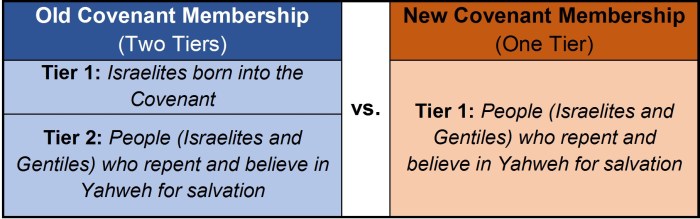

 Well, the title says it all! This list only includes non-fiction books, and (for the most part), they’re unashamedly nerdy. But, I don’t think that will be a surprise to too many people.
 Dear Frederick:

 The Western world is in a curious position. In centuries past, countries in the West generally relied on a set of shared Judeo-Christian moral values to underpin criminal laws, and enforce public decency and freedom of conscience. You see, everybody has a moral foundation, whether we admit it or not.
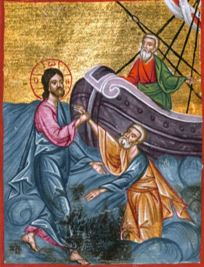 The interesting thing about the Gospel of Mark is that Jesus doesn’t tell us (over and over again) He’s the Messiah; He proves it by His actions.


 Real life is hard. Peter knows that; it’s why he wrote his letter. Today, in Sunday School, we continued looking at 1 Peter 2:18-25, and considering what it means:
 A few days ago, I shared some … unique allegorical insights from an early 2nd century Christian work, entitled The Epistle of Barnabas. Today, I wanted to share something positive and uplifting from that old letter. In the decades immediately following the death of the apostles, it was apparently common to frame the issue of salvation and allegiance to Christ as “the two ways to live.”
 In his wonderful book,

