Author: Tyler Robbins
I am the Eccentric Fundamentalist!

Is Jesus Christ God? (Pt. 1)
To answer this question, we’ll have to start by discussing what the Trinity is. Here is a brief definition:
Within the one Being that is God, there exists three eternally co-equal and co-eternal persons, the Father, the Son and the Holy Spirit.

We do not worship three Gods; we worship one God. Each Person of the Godhead is fully God, not ⅓ God. It is so important that we understand who the God we worship is. The Trinity is one of the more misunderstood doctrines of the Christian faith; all Christians would affirm it but not too many people would really understand what it means.
Notice how carefully worded the definition above is; every single word matters. There is a reason why I stress that (1) there is one Being, (2) existing in three Persons and that these Persons are each (3) co-equal and (4) co-eternal. This will become clear in the next blog article, where I briefly explain some of the heresies through the ages, particularly the various forms of monarchism and Arianism in the 2nd-3rd centuries. These are not just dusty, old “issues” fought over by a bunch of dead men – they go to the very heart of what it means to be a Christian.
Here is a short, orthodox definition of the Trinity:
One Being or Essence (Deut 6:4; Jas 2:19)
He is not three Gods – He is One God. We must be very careful to emphasize that we do not worship three separate Gods. The distinction between the one “being” or “essence” and the three “Persons” of this one Being are only our pitiful attempts to express the inexpressible. The term “essence” is not an explicitly Biblical term, but a secular phrase which attempts to capture the concept. It is not a sacred term, but as John Frame noted, it is doubtful a better term will be found.[1]
This is not merely a partnership, whereby each member of the Godhead can sign official paperwork in the name of the firm; there is one Being consisting of three distinct Persons – each one is fully divine.
The fundamental sticking point with men who hold heretical views is this; they rightly conclude the Old Testament teaches monotheism (Deut 6:4), but then therefore assume that the New Testament cannot teach that Christ is also God. Christological heresies begin with this basic presupposition. The distinction between (1) the one Being comprised of (2) three co-equal and co-eternal, separate Persons will be made clear in our look at the Gospel of John, below. The Trinity isn’t a doctrine that can be merely explained; it must be illustrated directly from Scripture to capture the full effect.
Three Persons
Each person has a very specific role in the unity of the Godhead, and is conscious of His specific role. For example, the Father sent Christ (Jn 5:22-24). Christ, as an independent Person of the Godhead, seeks only to do the will of His Father (Jn 6:35-40). The Holy Spirit comes from the Father and the Son (Jn 14:15-17; 15:26-27). Each Person of the Godhead is addressed as separate, specific Persons with distinct roles, which will be seen shortly.
Just as with the term “Being,” the word “Persons” is an attempt to express Scriptural truth. It defeats the notion of modalism, where Father, Son and Spirit are merely different manifestations or modes of the one God. The word “Person” immediately brings to mind a separate, individual identity. I am different than you; we are different people. Likewise, Father, Son and Spirit are completely different Persons who comprise the one Being that is God. They must not be conflated or mistaken for one another; they are different People.
There is no inferiority of status; the Father is not #1, the Son #2 and the Spirit #3. Each Person is co-equal and co-eternal; they are each equal in dignity and have each existed eternally – there was never a time when the three Persons of the Godhead did not exist.
Why Should You Care?
So, why should we care about this doctrine? Can’t we get along just fine without really grasping what the Trinity is all about? Consider this very brief statement by a Unitarian theologian; Unitarians deny the deity of Christ in a manner similiar to Arians. Theirs is a heretical, dangerous position:
Here are several reasons why an understanding of our God is so vital for our faith:
Because He is the God We Serve!
The God the Father always works through God the Son, and the Son does His work in human hearts only through the God the Holy Spirit.[2] Revelation cannot happen without the triune Godhead. For the prophecy came not in old time by the will of man: but holy men of God spake as they were moved by the Holy Ghost (2 Peter 1:21). We can see that men are saved only by Christ and recorded divine revelation from God through the working of the Holy Spirit.
It is How We’re Saved!
God the Father planned redemption in eternity past (Eph 1:3-5), God the Son is the means of that salvation (Eph 1:9-10) and the God the Holy Spirit effectually calls sinners to repentance. The Christian Savior simply must be Father, Son and Holy Spirit.
It Makes Us Christians!
The triune Godhead is the distinguishing characteristic of Christianity.[3] No false religion can compare to it; it is novel and absolutely unique. It is what makes a Christian a Christian! “To whom then will ye liken God? or what likeness will ye compare unto him?” (Isa 40:18).
It’s How We Worship!
Christian worship is inherently Trinitarian, whether one even realizes or acknowledges it. Paul opens his epistle to the Ephesians by acknowledging the triune Godhead; “Blessed be the God and Father of our Lord Jesus Christ, who hath blessed us with all spiritual blessings in heavenly places in Christ,” (Eph 1:3). Even in prayer, man “comes to God the Father, pleading the name of Christ, and is taught how to pray aright by the Holy Spirit.”[4]
Growth in Christ
God chose all who believe in Him from before the foundation of the world (Eph 1:4) to be saved by the work of Christ (Eph 1:7-10) and be sanctified by the Spirit (2 Cor 3:18). “But we all, with open face beholding as in a glass the glory of the Lord, are changed into the same image from glory to glory, even as by the Spirit of the Lord,” (2 Corinthians 3:18).
Unity
There is an unfathomable unity of purpose among the persons of the Godhead. Father, Son and Holy Spirit are never in conflict and each works with the other towards one unified, common purpose.
Walking Through the Gospel of John
For sake of time, we’ll take a brief walk (or perhaps sprint!) through key passages in the Gospel of John. I could spend much more time here, and John’s Gospel deserves more time. Do that extra study on your own and think deeply about the testimony of Scripture on this matter. Hopefully, the brief discussion here will make matters plain to you!
Prologue of John (1:1-18):
- Christ and God are co-equal and co-eternal (v.1)
- Christ and God are co-eternal (v.2)
- Christ was the active Person of the Godhead in Creation (v.3)
- Christ is our means of salvation, and this makes sense because He is God! Consider both the unity of purpose and the separate, distinct roles of each Person of the Godhead in effectually bringing about salvation of sinful men:
- God the Father planned salvation in eternity past and predestinated those who believe for adoption as sons through Jesus Christ, according to the purpose of His will (Eph 1:4-5)
- God the Son died in our place for our sins, as a substitutionary sacrifice. The Father laid on Him the iniquity of us all (Isa 53:6).
- God the Spirit effectually applies the benefits of Christ’s death to us when we believe (Eze 36:25-27).
- Christ, who is co-equal and co-eternal, was “made flesh and dwelt among us.” He wasn’t a created creature or a different “mode” of God.
- Christ makes the Father known to us; he is the perfect revelation of the Father, the radiance of His glory and teh exact imprint of His nature (Heb 1:3). This is why Christ can tell the Jews, “If ye had known me, ye should have known my Father also: and from henceforth ye know him, and have seen him,” (Jn 14:7).
Christ’s Claims to Be God (Jn 5:1-18):
- The Pharisees demanded to know why Christ was doing works on the Sabbath; as if a man carrying his bed was really a violation of the Sabbath according to the Old Testament!
- “And therefore did the Jews persecute Jesus, and sought to slay him, because he had done these things on the sabbath day. But Jesus answered them, My Father worketh hitherto, and I work,” (John 5:16-17).
- Christ’s message is very simple. God works on the Sabbath. Christ says God is His Father, therefore He too can work on the Sabbath!
- The Jews, by their reaction to this saying, understood Christ was claiming to be co-equal with the Father:
- Therefore the Jews sought the more to kill him, because he not only had broken the sabbath, but said also that God was his Father, making himself equal with God (John 5:18).
Christ is Separate from God:
- John 5:19 Then answered Jesus and said unto them, Verily, verily, I say unto you, The Son can do nothing of himself, but what he seeth the Father do: for what things soever he doeth, these also doeth the Son likewise.
- John 5:30 I can of mine own self do nothing: as I hear, I judge: and my judgment is just; because I seek not mine own will, but the will of the Father which hath sent me.
Christ is God’s Revelation to Men (Jn 6:22-29):
- The Jews seek Christ after He feeds the 5,000 (v.22-25).
- They sought Him for the wrong reasons (v.26)
- They must not work for perishable bread, but for the Bread of Life – Christ (v.27)
- Only He can give this bread to them
- God has set His seal on the Son
- The only “work” they must do to receive the Bread of Life is believe on Christ (v.28-29). He is the very revelation of God to men.
All Three Persons of Godhead Active in Salvation (Jn 6:35-51):
- “No man can come to me, except the Father which hath sent me draw him: and I will raise him up at the last day,” (John 6:44). Consider this very important verse (I beg everybody to read the entire context, and consider the implications for election, effectual calling and preservation) and follow the train of thought here:
- A man must receive Christ for salvation
- No man can come to Christ on his own
- The Father sent Christ
- A man is drawn to Christ by the Holy Spirit (Eze 36:26-27; Jn 3:5; Tit 3:5)
- The Holy Spirit does the will of the Father when He draws a sinner to Himself!
The Jews Accuse Christ of Blasphemy – Proving He Presented Himself as God:
- Christ is separate from the Father, yet co-eternal with the Father
- Jn 8:31-59
- John 8:57-59 Then said the Jews unto him, Thou art not yet fifty years old, and hast thou seen Abraham? Jesus said unto them, Verily, verily, I say unto you, Before Abraham was, I am. Then took they up stones to cast at him: but Jesus hid himself, and went out of the temple, going through the midst of them, and so passed by.
- Why did the Jews seek to kill Jesus? It was clearly because they understood Him to be claiming to be God. Whatever odd interpretation men might come up with today; Christ’s original audience understood Him perfectly well.
- Jn 10:22-42
- John 10:25-31 Jesus answered them, I told you, and ye believed not: the works that I do in my Father’s name, they bear witness of me. But ye believe not, because ye are not of my sheep, as I said unto you. My sheep hear my voice, and I know them, and they follow me: And I give unto them eternal life; and they shall never perish, neither shall any man pluck them out of my hand. My Father, which gave them me, is greater than all; and no man is able to pluck them out of my Father’s hand. I and my Father are one. Then the Jews took up stones again to stone him.
- Once again, consider why the Jews sought to slay Jesus – He claimed to be God!
- Jn 8:31-59
- Christ executed because of alleged blasphemy
- Jn 19:1-16
- Jn 19:4-7 Pilate therefore went forth again, and saith unto them, Behold, I bring him forth to you, that ye may know that I find no fault in him. Then came Jesus forth, wearing the crown of thorns, and the purple robe. And Pilate saith unto them, Behold the man! When the chief priests therefore and officers saw him, they cried out, saying, Crucify him, crucify him. Pilate saith unto them, Take ye him, and crucify him: for I find no fault in him. The Jews answered him, We have a law, and by our law he ought to die, because he made himself the Son of God.
- The very reason why Christ was executed was because He claimed to be God; this was the basis of the Jews’ complaint to Pilate.
- Jn 19:1-16
Christ Accepts Worship – Which a Creature Cannot Do!
- John 20:26-28 And after eight days again his disciples were within, and Thomas with them: then came Jesus, the doors being shut, and stood in the midst, and said, Peace be unto you. Then saith he to Thomas, Reach hither thy finger, and behold my hands; and reach hither thy hand, and thrust it into my side: and be not faithless, but believing. And Thomas answered and said unto him, My Lord and my God.
We’ll examine some 2nd and 3rd century heresies in the next post.
[1] John Frame, The Doctrine of God (Phillipsburg, NJ: P&R, 2002), 697.
[2] Augustus H. Strong, Systematic Theology (Old Tappan, NJ: Revell, 1979), 350.
[3] Ware, Father, Son and Holy Spirit, 15-16.
[4] Strong, Systematic, 349.
Share this:

Works Salvation?

It is often claimed that James and Paul present different Gospels; that Paul advocates justification by faith and James presents a works based salvation. Well, what of this charge?
James says (2:15-26):
What doth it profit, my brethren, though a man say he hath faith, and have not works? can faith save him? If a brother or sister be naked, and destitute of daily food, And one of you say unto them, Depart in peace, be ye warmed and filled; notwithstanding ye give them not those things which are needful to the body; what doth it profit? Even so faith, if it hath not works, is dead, being alone.
Yea, a man may say, Thou hast faith, and I have works: shew me thy faith without thy works, and I will shew thee my faith by my works. Thou believest that there is one God; thou doest well: the devils also believe, and tremble. But wilt thou know, O vain man, that faith without works is dead? Was not Abraham our father justified by works, when he had offered Isaac his son upon the altar? Seest thou how faith wrought with his works, and by works was faith made perfect? And the scripture was fulfilled which saith, Abraham believed God, and it was imputed unto him for righteousness: and he was called the Friend of God. Ye see then how that by works a man is justified, and not by faith only. Likewise also was not Rahab the harlot justified by works, when she had received the messengers, and had sent them out another way? For as the body without the spirit is dead, so faith without works is dead also.
Paul says:
For if Abraham were justified by works, he hath whereof to glory; but not before God. For what saith the scripture? Abraham believed God, and it was counted unto him for righteousness (Rom 4:2-3).
Knowing that a man is not justified by the works of the law, but by the faith of Jesus Christ, even we have believed in Jesus Christ, that we might be justified by the faith of Christ, and not by the works of the law: for by the works of the law shall no flesh be justified (Gal 2:16).
Here, critics claim, we find irrefutable proof that these disciples were at odds with one another. How sad it is that these skeptics persist in their unbelief, and refuse to fully examine the Scriptures. James certainly does not declare Abraham and Rahab justified by their works, but merely shows us the fruit of their authentic salvation.
God’s purpose in ordering Abraham to offer up Isaac, his only son, was to tempt or test him (Gen 22:1), not declare him righteous! When God saw that Abraham demonstrated the fruits of real faith and trust in Him, he sent an angel to stop him (Gen 22:11-12). This test was not for God, it was for Abraham.
The Old Testament told us Rahab was spared because she hid the Israelite spies sent to scout out the land (Josh 2:1; 6:17, 23, 25). The writer of Hebrews tells us it was her faith that saved her (Heb 11:31), and this revelation comes to us in that great and wonderful passage which extolls the faith of mighty men from ages gone by (Heb 11). There is no hint of justification by works.
Remember also that Paul and James were agreed on the content of the Gospel (Gal 2:1-10). It is folly to suggest this was not so; if it were, we would have evidence of some sort of major disagreement between Paul, Peter, John and James, all of whom agreed on the terms of salvation at that fateful meeting in Jerusalem (Gal 2:1-10). James’ main concern in his epistle was to exhort Christians to be useful and to explain the nature of real faith; he was not penning a systematic exposition of doctrine like Paul was in Romans. Scripture must be analyzed in its own context. James wanted Christians to be useful, therefore ” . . . faith, if it hath not works, is dead, being alone,” (Jas 2:17). The entire context of his epistle is that real faith produces results!
Consider John the Baptist’s words to Jews who came forth to be baptized in the Jordan River;
Then said he to the multitude that came forth to be baptized of him, O generation of vipers, who hath warned you to flee from the wrath to come?Bring forth therefore fruits worthy of repentance, and begin not to say within yourselves, We have Abraham to our father: for I say unto you, That God is able of these stones to raise up children unto Abraham (Lk 3:7-8).
John didn’t want them unless their faith was proven by deed. They were trusting in physical lineage with Abraham for salvation, and this would not do. There should be some fruit of real salvation. Paul said much the same thing in his letter to Titus when he urged the young preacher to exhort his people to be ready to perform good works.
This is a faithful saying, and these things I will that thou affirm constantly, that they which have believed in God might be careful to maintain good works. These things are good and profitable unto men (Titus 3:8).
How much clearer can it be? Works save nobody, but they are the fruit of saving faith. Paul, like James, was concerned that Christians not be “unfruitful” in their walk with the Lord;
And let ours also learn to maintain good works for necessary uses, that they be not unfruitful (Titus 3:14).
It is clear that these men do not present different Gospels at all. They agreed on the content of the Gospel. They both emphasized that works are the proper fruit of salvation. John the Baptist agreed with them. And, by the way, Christ agreed with them all:
For a good tree bringeth not forth corrupt fruit; neither doth a corrupt tree bring forth good fruit (Lk 6:43).
A man is known by his fruits, for good or bad. I pray that those confused men and women who believe in works salvation come to a saving knowledge of Jesus Christ.
Share this:

The Riches of His Grace!
Ephesians 2:1-9 is a very frank look at what God saved Christians from and about who we really are as people. Are we good people who need help from God? Or, are we rebellious sinners in desperate need of a Savior? For non-Christians, this is a sobering and honest look at sin and their need for Christ. For Christians, this is a reminder of what we’re saved from, and a rebuke to live for God like we ought to. I hope you find you find this little study helpful!
WHO WE REALLY ARE (Eph 2:1-3):
- Eph 2:1 – And you hath he quickened, who were dead in trespasses and sins;
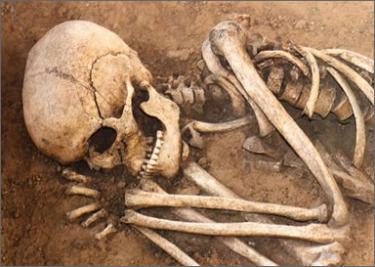
Right up front, without any preamble, Paul reminds the Christians in Ephesus that they used to be “dead in trespasses and sins,” (Eph 2:1). This is who we are without Christ; not physically dead but spiritually dead. This runs counter to what we want to believe about ourselves. We want to believe we’re “good” people.
However, what standard, or benchmark, are people using when they describe themselves as “good people?” Who says murder is wrong? Who says stealing purses from old ladies is a bad thing? Who says marriage is a sacred covenant, or agreement, between a man and a woman? Who says it is morally wrong to be unfaithful to your spouse? Without an anchor of som
e sort, some objective benchmark to ground morality and human “goodness,” then we’re left with a purely subjective mess.
Scripture teaches that all of creation was made by God, and more specifically that men and women are made in God’s image (Gen 1:27-28). Being His creatures, God’s standard is the benchmark for morality and behavior. Scripture teaches us that we’re not good people. Our entire concept of human morality is built on God’s word (Rom 2:14-15). God’s word tells us we’re dead in trespasses and sins without Christ.
Again, this isn’t something people like to hear. Many Christians like to deny the idea of “total depravity,” typically out of a sinful desire for autonomy from God or as a visceral reaction against what they perceive as Calvinism. As theologian Michael Horton wrote, “. . . pelagianism is the natural religion of humanity!” [1] Even compromising Christian counselors deny this doctrine. For example, one prominent Christian counselor boldly declares that his end-goal when assisting people through crisis is to restore self-esteem and instill more self-reliance in the individual! [2] He even goes so far as to declare:
“Jesus’ ministry was one of helping people achieve fullness of life and assisting them in developing their ability to deal with the problems, conflicts and burdens in life.” [3]
It is difficult to imagine a more un-Biblical and ridiculous concept of Christ’s ministry. So much for repenting and believing in the Gospel (Mk 1:15)! Self-reliance is what doomed Adam and Eve in the Garden; they chose to follow their desires over God’s command. This has been man’s natural state ever since (Rom 5:12-21); we don’t want to rely on God, we want to rely on ourselves.
Consider what Paul wrote in the Book of Romans:
“For the wrath of God is revealed from heaven against all ungodliness and unrighteousness of men, who by their unrighteousness suppress the truth. For what can be known about God is plain to them, because God has shown it to them. For his invisible attributes, namely, his eternal power and divine nature, have been clearly perceived, ever since the creation of the world in the things that have been made. So they are without excuse,” (Rom 1:18-21).
We can see from Paul’s words that knowledge of God is everywhere, but men hold back, crush down and suppress this truth in unrighteousness. We don’t want to acknowledge that God is there, because then we’re accountable for what he says. Paul went on to paint a clear picture of all people, Jew and Gentile, knowing the truth about God but glorifying themselves instead:
“Because that, when they knew God, they glorified him not as God, neither were thankful; but became vain in their imaginations, and their foolish heart was darkened,” (Rom 1:21).
Also, remember the testimony of Romans 3:9-18, where Paul once again explains the spiritual plight of any unregenerate person, Jew or Gentile. Pay particular attention to these two verses:
“As it is written, There is none righteous, no, not one,” (Rom 3:10).
“There is no fear of God before their eyes,” (Rom 3:18).
People are not wandering around, desperately seeking God. Spiritual things are foolish to them. I can recall my own father chiding me with a knowing smile when I was on my way to church one Sunday morning,
“Go ahead and go to church,” he said wistfully. “You’ll soon see there’s nothing to all that nonsense. I figured it out. You will too.”
Paul’s words stand true here; “But the natural man receiveth not the things of the Spirit of God: for they are foolishness unto him: neither can he know them, because they are spiritually discerned,” (1 Cor 2:14). The fact that any man does seek God is evidence of the Holy Spirit working in your heart
This is what “dead” in trespasses and sins means. It means that unsaved, unregenerate rebel sinners are spiritual corpses. A dead body cannot rise up again! I was a Military Police officer for 10 years and saw many dead bodies in the course of duty; I can assure you none of those bodies was capable of rising up and walking away. They were dead. This is our spiritual condition without Christ; dead and gone without any hope in the world. It means knowing God is there and pushing that knowledge away, crushing it under false hopes, cynicism, etc. Knowing this makes us accountable for our own sin. Our inherent sin places an unbridgeable gap between us and God. Christ came to fill this gap and save sinners who don’t even want to be saved.
- Eph 2:2 – Wherein in time past ye walked according to the course of this world, according to the prince of the power of the air, the spirit that now worketh in the children of disobedience:
Paul continues describing the spiritual state of the Ephesian Christians before their salvation. This also describes modern Christians before they were saved by Christ. It describes you right now if you have not been saved by Christ.
People without Christ walk “according to the prince of this world, according to the prince of the power of the air.” Christians used to act this way, and were formerly energized and influenced by Satan. Numerous places in Scripture testify that this “prince of the power of the air” is most certainly Satan himself. In Jn 12:31, Christ discloses that by His death on the cross, Satan will be eventually cast out. His hold on people will be broken. [4] Likewise, in Jn 16:11, Christ comforts His disciples and promises to send the Holy Spirit as a Counselor or Helper for them after He ascended to the Father. Christ explained the role of the Holy Spirit in a Christian’s life, and said the Holy Spirit convicts men of judgment, because “the prince of this world is judged.”
What Paul says about Satan’s activity is so very important. Satan is “the spirit that now worketh in the children of disobedience.” Notice that Paul describes unsaved, rebellious men and women as “children of disobedience.” The natural man is inherently rebellious against God. Satan is active and working in the lives of people who are unsaved and “the whole world lieth in wickedness,” (1 Jn 5:19). He does the same in a Christian’s life. The critical difference is that a Christian doesn’t belong to him anymore.
Romans 6 brings this out quite clearly. A person belongs in either one of two spiritual spheres; to Satan or God. People are by nature “children of disobedience” and belong to Satan without saving faith in Christ. After salvation, a person’s headship or spiritual ownership transfers to God. This is a legal, forensic decision by Christ to declare believers righteous when He is under no obligation to do so! Do you belong to Satan or God today?
- Eph 2:3 – Among whom also we all had our conversation in times past in the lusts of our flesh, fulfilling the desires of the flesh and of the mind; and were by nature the children of wrath, even as others.
Paul goes on, describing our actions before salvation. Our “conversation” (or daily conduct) was about the lusts of the flesh. There was little to no thought about God’s standards, our own sin, and repentance for that sin. We lived our own lives for ourselves, not for God who created us. Our goal was to fulfill our own desires of the flesh and the mind. We know when bad and sinful things pop into our minds. We’ve all acted on some of these thoughts and made mistakes we’ve regretted and done things we’re not proud of. All of us know our hearts, and realize we’re sinful people. We all know about this gap between us and God.
Again, Paul makes no apologies for portraying men and men as the rebellious sinners they are. He writes that we are “by nature the children of wrath.” We are born as rebellious sinners, suppressing the truth and knowledge of God. It is our natural state. You and I weren’t born with a disposition to obey God and worship Him as Lord! We were born with a disposition to sinful thoughts and actions, which are opposed to God in every possible way!
“For there is not a just man upon earth, that doeth good, and sinneth not,” (Ecc 7:20).
This doesn’t mean that unsaved people aren’t nice people who do nice things. It does mean that, because of our rebellious, sinful nature, nothing we do gains us any points with God in any way.[5] It is a matter of perspective. It’s a matter of standards.
“Depravity as a doctrine does not stand or fall on the ground of man’s estimation of himself; it rather reflects God’s estimation of man.” [6]
By our own standards, I like to think I’m a pretty good guy. By God’s standard, I’m a rebellious sinner. We’re not sinners by our actions; we’re sinners by our very nature. This encompasses both thoughts and actions.
WHAT CHRIST DID FOR US (Eph 2:4-6):
- Eph 2:4 – But God, who is rich in mercy, for his great love wherewith he loved us,
- Eph 2:5 – Even when we were dead in sins, hath quickened us together with Christ, (by grace ye are saved;)
- Eph 2:6 – And hath raised us up together, and made us sit together in heavenly places in Christ Jesus:

Think about the significance of this small word, “but.” [7] God is “rich in mercy.” He didn’t have to provide a way of salvation for us, but He did anyway. He was not obligated to do this. Our just punishment for rebellion is instant destruction. So many Christians have a small conception of our just and Holy God. They emphasize God’s love, but denigrate His holiness and terribly underestimate the depths of human sinfulness. This salvation He provided showed the “great love” He has for us. This is undeserved love. Because we’re spiritually dead to God, His love is shown by the fact that He even bothered with us in the first place.[8] Again, salvation in Christ transfers us from one category to another – from Satan’s control to God’s control. Sin no longer has absolute dominion over a Christian; this is a promise unbelievers cannot claim as their own:
“For sin shall not have dominion over you: for ye are not under the law, but under grace,” (Rom 6:14).
What does this tell us about God? He is holy, loving and just. We are sinful, rebellious and undeserving people. We should praise His name in every aspect of our lives.
Paul writes that this salvation in Christ “hath raised us up together, and made us sit together in heavenly places in Christ Jesus,” (Eph 2:6). He is reminding the Ephesians, and us, about where our future home is. We are strangers and pilgrims on this earth (1 Pet 2:11), ambassadors for Christ (2 Cor 5:20). This world is not our eternal home; our hope is beyond this temporal world:
“For our conversation is in heaven; from whence also we look for the Saviour, the Lord Jesus Christ: Who shall change our vile body, that it may be fashioned like unto his glorious body, according to the working whereby he is able even to subdue all things unto himself,” (Phil 3:20-21).
If we call ourselves Christians, we ought to act and think like it! We don’t have to bring sacrifices to an altar as an offering for God anymore; the ceremonial law has passed away in this dispensation. Instead, Paul tell us our reasonable service is to offer ourselves to God (Rom 12:1). This is the only proper response to the glorious gift of salvation.
“I beseech you therefore, brethren, by the mercies of God, that ye present your bodies a living sacrifice, holy, acceptable unto God, which is your reasonable service,” (Rom 12:1).
God desires to be worshipped in spirit and truth (Jn 4:24). Our duty is to try our level best to fulfill this calling, looking forward to glorious eternity when we can do so, without possibility of sin.
WHY HE DID IT (Eph 2:7-9):
- Eph 2:7 – That in the ages to come he might shew the exceeding riches of his grace in his kindness toward us through Christ Jesus.

Paul reminds us what God’s entire purpose in human history is. Some people believe the main point, or synopsis, of Scripture is that God saves us from sin. This is man-centered thinking and it is terribly wrong. It isn’t about us; it’s about Him. The entire arc of Scripture is about God bringing about His kingdom for His glory.
Christ’s sacrifice for sinners demonstrated His great love. But what was the point of Christ’s sacrifice? Why did God provide a way of salvation and elect to save anybody at all? For our sake? Surely not! He did it so that it would glorify His name and lead a grateful and undeserving people to worship Him the way we ought to have done all along – the way He deserves to be worshipped. Consider the following Scripture passages which plainly show that God works in human history for His own glory, not our own:
- “Behold, I am doing a new thing; now it springs forth, do you not perceive it? I will make a way in the wilderness and rivers in the desert.The wild beasts will honor me, the jackals and the ostriches, for I give water in the wilderness, rivers in the desert, to give drink to my chosen people, the people whom I formed for myself that they might declare my praise,” (Isa 43:19-21). Isaiah is speaking once again of the future restoration of Israel, for His own sake.
- “I, I am he who blots out your transgressions for my own sake, and I will not remember your sins,” (Isa 43:25). God promises to restore Israel and blot out her former sins for His sake, not theirs.
- “And he said to me, “You are my servant, Israel, in whom I will be glorified,” (Isa 49:3). This is an excerpt from one of the so-called Servant Songs in Isaiah, describing the future work of Christ the Messiah. It is clear that Christ’s work will glorify the Father, not men.
- “Therefore say unto the house of Israel, Thus saith the Lord GOD; I do not this for your sakes, O house of Israel, but for mine holy name’s sake, which ye have profaned among the heathen, whither ye went,” (Eze 36:22). Again, this shows why God will act in the future to restore Israel.
Christ’s sacrifice on the cross and our salvation isn’t about us. It’s about God, and the honor and glory due to Him. So few Christians have any idea what the phrase “grace of God” even means. To them, Jesus is a Sunday School character sitting on a green field, surrounded by fluffy white sheep with a child on His lap and a dove floating above Him in the sky! Christians must be committed to really deepen their faith and move beyond crayon Christianity and really understand and appreciate who God is, and reorient our lives to show it.
- Eph 2:8 – For by grace are ye saved through faith; and that not of yourselves: it is the gift of God:
- Eph 2:9 – Not of works, lest any man should boast.
We are saved by grace through faith, which is unmerited or undeserved favor. Salvation is a gift from God, and Christians did not earn or deserve this gift in any way. I’ll turn from Ephesians at this point, and briefly discuss what the Gospel actually is. I’ve referenced it enough in this little paper, and it must be heard.
THE GOSPEL:
I believe there is one verse from the Gospel of Mark that is the clearest, most comprehensive passage on salvation in the Scripture:
“Now after that John was put in prison, Jesus came into Galilee, preaching the gospel of the kingdom of God, And saying, The time is fulfilled, and the kingdom of God is at hand: repent ye, and believe the gospel,” (Mk 1:14-15).
This is the simplest Gospel verse in the Bible. Salvation isn’t a fast food menu where anybody can pick what they like. You can’t pick and choose from a potpourri of man-made religions, choose whichever suits you best and receive your own version of salvation when you roll forward to the pick-up window. God does not present an inclusivist view in Scripture:
- “Jesus saith unto him, I am the way, the truth, and the life: no man cometh unto the Father, but by me,” (Jn 14:6).
- “Neither is there salvation in any other: for there is none other name under heaven given among men, whereby we must be saved,” (Acts 4:12).
Salvation entails both repentance and belief, or saving faith. Repentance means a change of mind (1 Thess 1:9). This involves a turn away from sin (Heb 6:1; Rev 9:21) and towards God (Acts 20:21). It is also so much more than mere regret.[9] Repentance is genuine sorrow for one’s sin, accompanied by a resolution to turn from it. It is sorrow for one’s sin because of the wrong done to God and the hurt inflicted upon Him. In other words, there must be a real alteration of the inner person. This is the gracious work of the Holy Spirit in men’s hearts; Ezekiel described this process as God changing a heart of stone to a heart of flesh (Eze 11:19-20).
Salvation is also about believing in the Gospel, placing saving faith in Christ. Saving faith is understanding what Christ did for you in an intellectual and emotional way, and acting on it. It is more than some cold, intellectual understanding. “Thou believest that there is one God; thou doest well: the devils also believe, and tremble,” (Jas 2:19).
It does include intellectual understanding (e.g. “Christ is the Son of God!”). However, it also includes emotional understanding (e.g. “Christ died for my sins!”). And finally, it is voluntary action (“I will trust Christ as my Lord and Savior!”).
We cannot save ourselves. Dead people can’t do much of anything. Dead men can’t cooperate with God in salvation, in some kind of ridiculous synergistic fashion. We are totally dependent on the grace of God for our salvation, and I wish more preachers would bring this marvelous truth out. Praise Him that He provided Christ for sinners. He didn’t have to.
———————————————————————————————–
1. Michael Horton, The Christian Faith: A Systematic Theology for Pilgrims Along on Way (Grand Rapids, MI: Zondervan, 2011), 561.
2. H. Norman Wright, The Complete Guide to Crisis & Trauma Counseling: What To Do And Say When It Matters Most! (Ventura, CA: Regal, 2011), 183.
3. Ibid, 24.
4. Edwin A. Blum, John, in The Bible Knowledge Commentary, ed. John Walvoord and Roy Zuck (Wheaton, IL: Victor, 1983), 318. “The Cross was also the means of Satan’s defeat. The prince of this world, Jesus said, will be driven out. His power over people by sin and death was defeated and they can now be delivered out of his domain of spiritual darkness and slavery to sin.”
5. Lewis S. Chafer, Systematic Theology, 8 vols. (Grand Rapids, MI: Kregel, 1976), 7:119. “Theologians employ the phrase total depravity, which does not mean that there is nothing good in any unregenerate person as seen by himself or other people; it means that there is nothing in fallen man which God can find pleasure in or accept.” Emphasis mine.
6. Ibid, 2:219.
7. Grateful for this insight to John Phillips, Exploring Ephesians & Philippians (Grand Rapids, MI: Kregel, 1993), 63.
8. Harold W. Hoehner, Ephesians, in The Bible Knowledge Commentary, ed. John Walvoord and Roy Zuck (Wheaton, IL: Victor, 1983), 623. “Since sinners are spiritually dead toward God, they have nothing to commend them to God. This is why Paul described this love as being ‘great.’ ”
9. Millard J. Erickson, Christian Theology, 2nd ed. (Grand Rapids, MI: Baker, 1998), 950.
Share this:

Show me a Sign!
 It is a common challenge from unbelievers to demand a sign from God. People are so stubborn and rebellious in their sins, so determined to suppress their knowledge of His existence that the more bold among their number scoff, chortle and say something like, “If God is real, then why doesn’t He show Himself, here and now!”
This was the challenge atheist Edward Tabash gave to Greg Bahnsen during a long ago debate on the existence of God:
Greg Bahnsen’s response was classic:
Scripture tells us that even when He does show Himself by a divine sign, the people still demand more. God led the Israelites out of Egypt in a pillar of cloud by day, and a pillar of fire by night (Ex 13:21-22). Later, Moses led them out of Sinai, the Lord showed Himself by means of a pillar of cloud by day, whenever they set out from camp (Num 10:34). What more obvious of a sign of od’s presence and protection did the Israelites require!? If men were ever going to be satisfied with a visible sign from God, surely this would do. Alternating supernatural appearances of a pillar of fire and cloud would convince anybody, if men were willing to be convinced!
However, Scripture doesn’t give an account of covenant bliss on the march from Sinai. Instead of taking comfort from God’s presence and protection, the Israelites complained. Yes, that’s right – complained.
Now the rabble that was among them had a strong craving. And the people of Israel also wept again and said, “Oh that we had meat to eat! We remember the fish we ate in Egypt that cost nothing, the cucumbers, the melons, the leeks, the onions, and the garlic. But now our strength is dried up, and there is nothing at all but this manna to look at (Num 11:4-6).
This was wholesale rejection of God and a lack of faith in His provision. They regretted leaving Egypt (Num 11:20). Their regret meant they had rejected God Himself (Num 11:20). Later, in the New Testament, the Pharisees echoed Edward Tabash by demanding Christ give them a sign from heaven (Mk 8:11-13). This is not a new phenomenon. Likewise, we can rest assured that even if God did condescend to provide a visible sign, people would either not believe it or contemptuously dismiss it out of hand.
What is so tragic about all of this is that God’s handiwork can be seen everywhere, all around us. His design and continual care for His creation are obvious;
For his invisible attributes, namely, his eternal power and divine nature, have been clearly perceived, ever since the creation of the world, in the things that have been made. So they are without excuse (Rom 1:20).
People won’t come to saving knowledge of Jesus Christ by beholding some wondrous sign from God. He has given us His final revelation in Scripture. Saving faith will come only after people are convicted and convinced of their own sin, and the atoning work of Jesus Christ (Jn 14:6). This conviction will only come by the drawing of the Holy Spirit, by the eternal plan of God (Jn 6:65). Like the valley of dry bones from Ezekiel, we are unable to give ourselves life and stand on our own (Eze 37).
People don’t need signs, and wouldn’t believe them anyway. Christians should busy themselves with explaining the Gospel and trusting the Holy Spirit to do His work in people’s hearts.
Share this:

Great Writing . . .
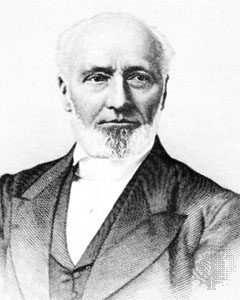 I’ve been reading Philip Schaff’s 8 volume History of the Christian Church for a while now. I am constantly struck by just how good Schaff’s writing was. The words flow almost like poetry and the entire series is just a joy to read. Consider some excerpts from his section on William Farel, a pioneer of Protestantism in French Switzerland:
He hated the pope as the veritable Antichrist, the mass as idolatry, pictures and relics as heathen idols which must be destroyed like the idols of the Canaanites. Without a regular ordination, he felt himself divinely called, like a prophet of old, to break down idolatry and to clear the way for the spiritual worship of God according to his own revealed word. He was a born fighter; he came, not to bring peace, but the sword. He had to deal with priests who carried firearms and clubs under their frocks, and he fought them with the sword of the word and the spirit. Once he was fired at, but the gun burst, and, turning round, he said, “I am not afraid of your shots.” He never used violence himself, except in language. He had an indomitable will and power of endurance. Persecution and violence only stimulated him to greater exertions. His outward appearance was not prepossessing: he was small and feeble, with a pale but sunburnt face, narrow forehead, red and ill-combed beard, fiery eyes, and an expressive mouth.
Look at how Schaff introduces this remarkable man! I wish I could write like this. There is such a cadence and majesty to his words. Farel wasn’t described as a zealot; instead Schaff wrote that Ferel, “felt himself divinely called, like a prophet of old.”He was not described as fractious, but rather, “he was a born fighter; he came, not to bring peace, but the sword.” Does Schaff really have warrant to describe a man long dead as having a “red and ill-combed beard, fiery eyes and an expressive mouth!?” I’m not sure, but I love it anyway.
Farel’s work was destructive rather than constructive. He could pull down, but not build up. He was a conqueror, but not an organizer of his conquests; a man of action, not a man of letters; an intrepid preacher, not a theologian. He felt his defects, and handed his work over to the mighty genius of his younger friend Calvin. In the spirit of genuine humility and self-denial, he was willing to decrease that Calvin might increase. This is the finest trait in his character prophet of old.”
“A man of action, not a man of letters.” Indeed! Schaff says so much in such a short paragraph.
He turned every stump and stone into a pulpit, every house, street, and market-place into a church; provoked the wrath of monks, priests, and bigoted women; was abused, called, “heretic” and, “devil,” insulted, spit upon, and more than once threatened with death. An attempt to poison him failed. Wherever he went he stirred up all the forces of the people, and made them take sides for or against the new gospel.
Ferel didn’t make people angry, Schaff wrote that he “provoked the wrath” of people! I wish history were still written this way.
He was also summoned to the Episcopal Council in the house of the Abbé de Beaumont, the vicar-general of the diocese. He was treated with insolence. “Come thou, filthy devil,” said one of the canons, “art thou baptized? Who invited you hither? Who gave you authority to preach?” Farel replied with dignity: “I have been baptized in the name of the Father, the Son, and the Holy Ghost, and am not a devil. I go about preaching Christ, who died for our sins and rose for our justification. Whoever believes in him will be saved; unbelievers will be lost. I am sent by God as a messenger of Christ, and am bound to preach him to all who will hear me. I am ready to dispute with you, and to give an account of my faith and ministry. Elijah said to King Ahab, ’It is thou, and not I, who disturbest Israel.’ So I say, it is you and yours, who trouble the world by your traditions, your human inventions, and your dissolute lives.” The priests had no intention to enter into a discussion; they knew and confessed, “If we argue, our trade is gone.” One of the canons exclaimed: “He has blasphemed; we need no further evidence; he deserves to die.” Farel replied: “Speak the words of God, and not of Caiaphas.” Hereupon the whole assembly shouted: “Away with him to the Rhone! Kill the Lutheran dog!” He was reviled, beaten, and shot at. One of the syndics interposed for his protection. He was ordered by the Episcopal Council to leave Geneva within three hours.
If you haven’t read some of Schaff’s History of the Christian Church, then you’re missing out on both some great history and great literature.

Share this:

A False Gospel?
I’ve been very busy lately, so I apologize for being scarce! I’ll be speaking about the Canon of the New Testament during the next apologetics class at my church. It is a common attack from unbelievers that many gospels were “left out” of the canon of the New Testament.
Walter Bauer’s theory was that there was no “orthodox” Christian doctrine. Rather, he argued, Christianity had no common core of beliefs, no body of faith that was passed down and eventually preserved in Scripture. Christianity was a hodgepodge of different beliefs, and what we now know as “orthodox” was merely the viewpoint which achieved dominance and crushed opposition.
In his scholarly book, The Orthodox Corruption of Scripture, Bart Ehrman applied Bauer’s theory to the discipline of textual criticism. Copies of Scripture exploded throughout the ancient world, and were copied and re-copied by these different groups, each with their own ideas of “orthodoxy.” Eventually, Ehrman argues, the very Scriptures themselves became hopelessly “corrupt” and began to reflect the various views and ideas of all the different groups.
If this is something that interests you, go to your local library and grab a copy of Ehrman’s book (or request one by Inter-Library-Loan). Read the introduction, where Ehrman lays out his thesis. It isn’t hard to understand. Anyone can read it. This is important, because Ehrman seems to be the face of liberal Christian scholarship these days. He has popularized his theories about the New Testament in a series of books, including Misquoting Jesus and Lost Christianities.
Why does this matter? Who cares? Here it is – Ehrman and other liberal scholars claim that various “heretical gospels” (he wouldn’t consider them heretical, of course – there is no Christian orthodoxy to his way of thinking, after all!) are just as valid as the canonical Gospels we see in our Bible’s today. You’ll hear references to The Gospel of Thomas, The Gospel of Peter, The Shepherd of Hermes, etc. Why were these so-called “Gospels” and other early Christian literature rejected by the corporate church as false, and Matthew, Mark, Luke and John accepted? This is what I’ll be talking about in my apologetics class.
Here is a fun little exercise. The four most important criteria for determining whether a Christian work was “canonical” or not were:
- The self-attestation of the Scripture to the believing reader. The reader, though the spiritual discernment given by the Holy Spirit, has a keen sense of what is Scripture and what isn’t
- Was the work written by an apostle, disciple or follower of Christ?
- Orthodoxy. Does the work conform to the corporate body of faith? Does it contradict known writings and the teaching handed down by the disciples?
- Catholicity. Is the work generally accepted by the Christian community at large? It can’t be accepted just in an obscure corner of the world. It must be generally recognized by Christians everywhere
Apply this test to the beginning portion of The Shepherd of Hermes. Please note – some early Christian did believe Hermes was canonical. In the end, however, it fell out of favor and was not accepted by the larger community. Leave a comment with any observations you have on why this work was not eventually accepted as canonical Scripture. Think about it. Jot a comment or two down and see what you find. Most people you’ll meet who challenge you with Hermes or other heretical documents have never actually read them. Read this excerpt from Hermes and judge for yourself . . .
Vision 1
1:1 The master, who reared me, had sold me to one Rhoda in Rome. After many years, I met her again, and began to love her as a sister.
1:2 After a certain time I saw her bathing in the river Tiber; and I gave her my hand, and led her out of the river. So, seeing her beauty, I reasoned in my heart, saying, “Happy were I, if I had such an one to wife both in beauty and in character.” I merely reflected on this and nothing more.
1:3 After a certain time, as I was journeying to Cumae, and glorifying God’s creatures for their greatness and splendor and power, as I walked I fell asleep. And a Spirit took me, and bore me away through a pathless tract, through which no man could pass: for the place was precipitous, and broken into clefts by reason of the waters. When then I had crossed the river, I came into the level country, and knelt down, and began to pray to the Lord and to confess my sins.
1:4 Now, while I prayed, the heaven was opened, and I see the lady, whom I had desired, greeting me from heaven, saying, “Good morrow, Hermas.”
1:5 And, looking at her, I said to her, “Lady, what doest thou here?” Then she answered me, “I was taken up, that I might convict thee of thy sins before the Lord.”
1:6 I said to her, “Dost thou now convict me?” “Nay, not so,” said she, “but hear the words, that I shall say to thee. God, Who dwelleth in the heavens, and created out of nothing the things which are, and increased and multiplied them for His holy Church’s sake, is wroth with thee, for that thou didst sin against me.”
1:7 I answered her and said, “Sin against thee? In what way? Did I ever speak an unseemly word unto thee? Did I not always regard thee as a goddess? Did I not always respect thee as a sister? How couldst thou falsely charge me, lady, with such villainy and uncleanness?
1:8 “Laughing she saith unto me, “The desire after evil entered into thine heart. Nay, thinkest thou not that it is an evil deed for a righteous man, if the evil desire should enter into his heart? It is indeed a sin and a great one too,” saith she; “for the righteous man entertaineth righteous purposes. While then his purposes are righteous, his repute stands steadfast in the heavens, and he finds the Lord easily propitiated in all that he does. But they that entertain evil purposes in their hearts, bring upon themselves death an captivity, especially they that claim for themselves this present work and boast in its riches, and cleave not to the good things that are to come.
1:9 Their souls shall rue it, seeing that they have no hope, but have abandoned themselves and their life. But do thou pray unto God and He shall heal thine own sins, and those of thy whole house, and of all the saints.”
What do you think?
Share this:

Why Trust the Four Gospels?
Very good, short (20:00 min) lecture on some reasons why we can trust the Gospels over and against the false, gnostic gospels. If you have a few minutes, this will be time well spent. The man lecturing is Peter J. Williams, Warden of Tyndale House, Cambridge, UK:
Share this:
How Well Do You Know the Trinity?
How well do you know the doctrine of the Trinity? Could you explain, from the Scriptures, that Jesus was God? Could you explain how the Christian understanding of Christ as God doesn’t make us tri-thiests, or people who believe in three Gods?
Watch the video below, a short five minute clip from a Unitarian who believes Jesus was a created being, and not a person of the Godhead. This video is heresy! Could you answer his argument? After the video, see a short explanation on the historical development of the orthodox doctrine of the Trinity!
What you just watched was heresy. Now, I’ll give a short account of how the orthodox Trinitarian doctrine developed:
How the Doctrine of the Trinity Developed
When you consider “how the teaching of the Trinity developed,” it is important to understand that we are not talking about how men made up this doctrine. We’re talking about the struggle to precisely put into words the body of faith received from Christ and His disciples. This oral tradition, or body of faith, had acted as a conduit for correct doctrine and had eventually been set down in writing at the prompting of the Holy Spirit (1 Pet 1:21). So, we’re not discussing how men made this doctrine up, but how they struggled to precisely synthesize and define a doctrine clearly taught in the Scriptures.
There are five basic phases in the historical development of the Triune God, each often overlapping with one another; the economic concept, dynamic monarchism, modalism, Arianism and orthodoxy.[1] The very early church in general did not concern itself with deep theological reflection; therefore these various heretical doctrines generally emerged in conflict with orthodoxy in the mid to late 2nd century and early 3rd century. The church was chiefly concerned with basic survival amidst intense periods of persecution. “The process of organizing itself and propagating the faith and even the struggle for survival in a hostile world precluded much serious doctrinal reflection.”[2]
Economic Concept
This economic development dealt with the roles of the specific persons of the Godhead rather than the ontological development and its implications. Early church fathers who developed the economic concept include Hippolytus, Tertullian and Justin Martyr. Their conclusion was that God consists of one identical substance which is extended into three distinct manifestations.[3]
Justin Martyr, writing in the mid 2nd century likened this to one fire kindled from another; “which is not lessened when it has kindled [another], but remains the same; and that which has been kindled by it likewise appears to exist by itself, not diminishing that from which it was kindled.”[4]
Tertullian, writing sometime between 197-217 A.D., characterized this as a unity of substance and remarked,
Even when the ray is shot from the sun, it is still part of the parent mass; the sun will still be in the ray, because it is a ray of the sun—there is no division of substance, but merely an extension.[5]
Tertullian went on, “the material matrix remains entire and unimpaired, though you derive from it any number of shoots possessed of its qualities.”[6]
Tertullian actually formulated the concept of later orthodoxy, “one essence in three persons” in his attack on modalism. In his polemic on Praxeas, written no earlier than 208 A.D., he wrote again of a unity of substance which was distributed into a Trinity;
placing in their order the three Persons—the Father, the Son, and the Holy Ghost: three, however, not in condition, but in degree; not in substance, but in form; not in power, but in aspect; yet of one substance, and of one condition, and of one power, inasmuch as He is one God, from whom these degrees and forms and [l3] aspects are reckoned, under the name of the Father, and of the Son, and of the Holy Ghost.[7]
This economic concept of the Trinity is orthodox but incomplete. Erickson lamented about a “certain vagueness” in the economic concept of the Trinity. “Any effort to come up with a more exact understanding of just what it means will prove disappointing.” [8]
Dynamic Monarchism
This concept was an attempt by the early church to actually define the relationship between Christ and God. The main proponent of monarchism was Theodotus, who brought the doctrine to Rome about 190 A.D. He sought to preserve the supremacy of God the Father at the expense of God the Son.[9] Jesus was not really God; God was simply working through Him.
Theodotus “did not deny Christ’s birth from a virgin . . . but he did deny his divinity, teaching that he was a mere man upon whom the Holy Spirit descended at the time of his baptism, in consequence of which he became the Christ, received power to fulfill his special mission and by his righteousness was raised above all other men. The descent of the Holy Spirit, however, although raising him to a very exalted position, did not make him divine.”[10]
The concept was that Christ was elevated to an exalted position, a sort of “moral oneness” with God.[11]
A key proof-text for this concept was 1 Cor 5:19,[12] where Paul wrote “in Christ God was reconcilingthe world to himself.” Christ was not divine; God was simply using Christ as the means to achieve His ends. This view was condemned by the Christian community. Dionysius, the Bishop of Rome from approximately 259-263 A.D., held monarchist views. Eusebius recorded that Dionysius held, “contrary to the teaching of the Church, low and degraded views of Christ, namely, that in his nature he was a common man.” The catholic church (in the original sense of the term) moved energetically to combat this heresy, summoning Dionysius to a council to explain himself. Eusebius contemptuously referred to him as “a despoiler of the flock of Christ.”[13] Monarchism was never a widespread movement and was a relatively isolated phenomenon.[14]
Modalism
Erickson wrote that modalism was “a genuinely unique, original and creative conception . . . a brilliant breakthrough.”[15] It advocated the view that God was really just one person with three different names, roles or activities. Father, Son and the Holy Spirit are identical, successive revelations of the same person.[16] Like a skilled thespian, God simply plays different roles at different times.
Tertullian, writing his treatise against Praxeas sometime after 208 A.D., observed dryly, “Praxeas did a twofold service for the devil at Rome: he drove away prophecy, and he brought in heresy.”[17] Tertullian boldly claimed that Satan himself was working through Praxeas in his modalistic interpretation of the Trinity. “Out of this doctrine of the unity he may fabricate a heresy. He says that the Father Himself came down into the Virgin, was Himself born of her, Himself suffered, indeed was Himself Jesus Christ.”[18] He went on to state,
So it is either the Father or the Son, and the day is not the same as the night; nor is the Father the same as the Son, in such a way that Both of them should be One, and One or the Other should be Both.[19]
Employing a legal tactic of positing and answering modalistic objections, Tertullian continued,
Well, but “with God nothing is impossible.” True enough; who can be ignorant of it? Who also can be unaware that “the things which are impossible with men are possible with God?” The foolish things also of the world hath God chosen to confound the things which are wise.” We have read it all. Therefore, they argue, it was not difficult for God to make Himself both a Father and a Son, contrary to the condition of things among men. For a barren woman to have a child against nature was no difficulty with God; nor was it for a virgin to conceive. Of course nothing is “too hard for the Lord.
But if we choose to apply this principle so extravagantly and harshly in our capricious imaginations, we may then make out God to have done anything we please, on the ground that it was not impossible for Him to do it. We must not, however, because He is able to do all things suppose that He has actually done what He has not done.[20]
The modalistic conception of the Trinity was indeed novel. It solved any number of problems; both the unity of the Godhead and the full deity of all three persons are perfectly preserved by it. Ultimately, however, Scripture condemned this heresy to the flames. Too many texts spoke far too explicitly of the Trinity as distinct persons for the church to accept; such as Christ’s baptism, Christ speaking of the coming of the Spirit and His prayers that were specifically addressed to the Father.[21]
Arianism
The Arians, like the modern day Jehovah’s Witnesses, went a different route. Christ, they asserted, was not equal with God or even God at all – He was a creature brought into being by God. They felt that elevating Christ to the level of God the Father was, in effect, abandoning monotheism. They went further than the monarchists by emphatically declaring Christ was no more than a mere creature. However, from the beginning the church had worshipped Christ as God! The stage was set for a divisive battle. Athanasius considered Arianism to be a “harbinger of the Antichrist” and the daughter of Satan.[22] Summarizing their teaching, he wrote,
God was not always a Father; but once God was alone, and not yet a Father, but afterwards He became a Father. The Son was not always; for, whereas all things were made out of nothing, and all existing creatures and works were made, so the Word of God Himself was made out of nothing, and once He was not, and He was not before His origination, but He as others had an origin of creation.[23]
The church was quite rightly concerned with condoning the worship of a mere man. Athanasius wrote against the Arian heresy with great enthusiasm, judging it to be a theology which had been “vomited forth” and was at odds with Scripture and “alien to the divine oracle.”[24] Arians took Proverbs 8:22-23 as one of their primary proof-texts; “The Lord possessed me at the beginning of his work, the first of his acts of old. Ages ago I was set up, at the first, before the beginning of the earth.” The Arians examined texts such as this and others[25] and concluded it may be appropriate to call Christ a god, but he was certainly not the same as God the Father.[26] Arias himself explained,
God himself is inexpressible to all beings. He alone has none equal to him or like him, none of like glory. We call him unbegotten on account of the one who by nature is begotten; we sing his praises as without beginning because of the one who has a beginning. We worship him as eternal because of him who was born in the order of time. The one without beginning established the Son as the beginning of all creatures.[27]
Therefore, according to Arians, Christ Himself could not even fathom God’s essence. He was a mere creature; an exalted creature, to be sure – but a creature nonetheless. Church historian Justo Gonzalez summarized by observing, “if asked to draw a line between God and creation, Arians would draw that line so as to include the Word in creation.”[28]
Orthodoxy
The Arian heresy prompted the Council of Nicea in 325 A.D., the first ever ecumenical council of the early church. Prior to Nicea, church disputes had been settled over time with long debate culminating with an eventual consensus. After the conversion of Constantine, for the first time the authority of the state was invoked to settle a theological issue. Advocates of particular viewpoints could, for the very first time, forsake lengthy explanations of their positions in favor of simply convincing imperial authority. “Eventually, theological debate was eclipsed by political intrigue.”[29]
Arianism began as a local conflict in Alexandria, Egypt. The Bishop of Alexandria, Alexander, was in vehement disagreement with Arias, who was one of the most famous presbyters of the city. Alexander eventually condemned Arias and removed him from all official positions in Alexandrian church. Arias, refusing to meekly fade from the scene, appealed to the common people of Alexandria and other Bishops from throughout the East for support. Arias was quite successful; people marched in the streets chanting Arian dogma and various Bishops wrote letters in support. The Eastern church was in turmoil.
Constantine, who had recently established Christianity as the state religion, resolved that he must act. He decided to call a council of Bishops from the entire empire to settle this matter, among others. Arias, not being a Bishop himself, was forbidden to attend. He counted on Eusebius of Nocomedia to present his views. Eusebius (not to be confused with the historian) resolved to simply explain the matter, certain that all opposition would fade away in light of the remorseless logic of Arianism. Eusebius’ oration did not go well.
The assertion that the Word or Son was no more than a creature, no matter how high a creature, provoked angry reactions from many of the bishops: ‘You lie!’ ‘Blasphemy!’ ‘Heresy!’ Eusebius was shouted down, and we are told his speech was snatched from his hand, torn to shreds, and trampled underfoot.[30]
The result of this controversy, the Nicene Creed, is emphatically anti-Arian and takes great pains to emphasize the deity of Christ;[31]
I believe in one God, the Father Almighty, Maker of heaven and earth, and of all things visible and invisible.
And in one Lord Jesus Christ, the only-begotten Son of God, begotten of the Father before all worlds; God of God, Light of Light, very God of very God; begotten, not made, being of one substance with the Father, by whom all things were made.
Who, for us men for our salvation, came down from heaven, and was incarnate by the Holy Spirit of the virgin Mary, and was made man; and was crucified also for us under Pontius Pilate; He suffered and was buried; and the third day He rose again, according to the Scriptures; and ascended into heaven, and sits on the right hand of the Father; and He shall come again, with glory, to judge the quick and the dead; whose kingdom shall have no end.
And I believe in the Holy Ghost, the Lord and Giver of Life; who proceeds from the Father and the Son; who with the Father and the Son together is worshipped and glorified; who spoke by the prophets.
And I believe one holy catholic and apostolic Church. I acknowledge one baptism for the remission of sins; and I look for the resurrection of the dead.
In the Nicene Creed the early church provided a clear and unambiguous affirmation of the full deity of all three persons of the Godhead, while at the same time maintaining their distinct roles in the economic Trinity.
The doctrine received further refinement at the Council of Constantinople in 381 A.D. where the common phrase “three in one” was coined;[32] the very essence of the orthodox concept of the triunity of God. He is not triple, but three in one.
[1] Millard J. Erickson, Christian Theology, 2nd ed. (Grand Rapids, MI: Baker, 1998), 358-360. Erickson omits a discussion of Arianism.
[2] Ibid, 353.
[3] Ibid, 358.
[4] Justin Myrtyr, Dialogue with Trypho 61, ANF 1:607
[5] Tertullian, Apology 21, ANF 3:34. Emphasis mine.
[6] Ibid.
[7] Tertullian, Against Praxeas 2, ANF 3:59. Emphasis mine.
[8] Erickson, Theology, 358.
[9] Millard J. Erickson, Making Sense of the Trinity: Three Crucial Questions (Grand Rapids, MI: Kregel, 2000), 48.
[10] Eusebius, Ecclesiastical History 5.28, NPNF2 1:597
[11] Erickson, Making Sense, 48.
[12] Ibid.
[13] Eusebius, Ecclesiastical History 7.28.2, NPNF2 1:807.
[14] Erickson, Theology, 359.
[15] Ibid, 360.
[16] Ibid, 360.
[17] Tertullian, Against Praxeas 2, ANF 3:598.
[18] Ibid. Emphasis mine.
[19] Tertullian, Against Praxeas 10, ANF 3:604
[20] Ibid.
[21] Baptism (Mt 3:13-17; Mk 1:9-11; Lk 3:21-22; Jn 1:29-34), Christ speaks explicitly to the Father (Jn 17) and of the Spirit (Jn 16:5-11).
[22] Athanasius, Discourse Against the Arians 1.1.1., NPNF2, 4:306.
[23] Athanasius, Discourse Against the Arians 1.2.5, NPNF2, 4:309.
[24] Athanasius, Discourse Against the Arians 1.3.10., NPNF2, 4:312.
[25] Jn 14:28; Mk 10:18 and Lk 18:19; Mk 13:32; Lk 2:52
[26] Erickson, Making Sense, 51.
[27] Graham Keith, “Our Knowledge of God: Insights from the Fourth-Century Trinitarian Controversies,” Reformation and Revival 12:1 (Winter 2003), 86.
[28] Justo Gonzalez, The Story of Christianity, 2 vols., combined ed. (Peabody, MS: Prince Press, 2007), 1:161.
[29] Ibid, 159.
[30] Ibid, 164.
[31] Rick Brannan, ed., Historic Creeds and Confessions (Grand Rapids, MI: CCEL, n.d.).
[32] Erickson, Theology, 361.
Share this:
The Personal Testimony of Charles T. Studd
This salvation testimony is so wonderful, I thought I’d share it. Originally published in a 12 volume set of articles known as The Fundamentals (1910-1915).
——————————————————————————
CHAPTER VII THE PERSONAL TESTIMONY OF CHARLES T. STUDD
I was brought up in the Church of England and was pretty religious—so most people thought. I was taken to church and baptized the right day, and after a time I was confirmed and took communion. But I did not know anything about Jesus Christ personally. I knew a little about Him, as I may know a little about President Taft, but I did not know Him. There was not a moment in my life when I ever doubted that there was a God, or that Jesus Christ was the Saviour of the world; but I did not know Him as my personal Saviour. We boys were brought up to go to church regularly, but, although we had a kind of religion, it was not a religion that amounted to much. It was just like having a toothache. We were always sorry to have Sunday come, and glad when we came to Monday morning. The Sabbath was the dullest day of the whole week, and just because we got hold of the wrong end of religion. A man may get hold of the wrong end of a poker, and I got hold of the wrong end of religion and had to pay dearly for it. We had lots of ministers and lots of churches all around us, but we never saw such a thing as a real convert. We didn’t believe much in converts in those days. We thought that the Chinese and Africans had to be converted; but the idea of an Englishman being converted was absurd, because it made him out a heathen before he was converted.
My father was just a man of the world, loving all sorts of worldly things. He had made a fortune in India and had come back to England to spend it. He was very fond of sports of all kinds. He would go into regular training that he might go fox hunting, but above all he was an enthusiast on horse racing. He was passionately fond of horses to begin with and when he saw fine horses he would buy them and train them, and then he would race them. He had a large place in the country, where he made a race course, and he won the biggest steeple-chase in London three times. At last he got hold of a horse better than anyone he had ever had, and so certain was he of winning the race that he wrote to a friend in London and said, “If you are a wise man you will come to the race tomorrow and put every penny you have on my horse.”
Unknown to my father this man had been converted. Mr. Moody had come to England and had been preaching. Nobody believed very much at that time in a man getting up to preach the Gospel unless he had two things—the title of Reverend, and a white tie round his neck. The papers could not understand such a preacher as Mr. Moody, who had neither, and of course they printed column after column against him. But they could not help seeing that he could get more people to his meetings than half a dozen archbishops, and that more were converted than by twenty ordinary ministers. Of course they did not put the right construction on things. They said that Mr. Sankey had come over to sell organs, and Mr. Moody to sell his hymn books. My father read the papers day after day and these things tickled him immensely. I remember one evening he threw the paper down and said, “Well, anyhow, when this man comes to London I am going to hear him. There must be some good about the man or he would never be abused so much by the papers.”
Well, father went up to London the next day according to promise, and met his friend. This man had been over to Ireland when Mr. Moody was there, and as he was about to leave Dublin had missed his train. God was even in that, missing a train. It was Saturday night, and the man had to remain over Sunday. As he was looking about the streets that evening he saw the big bills advertising Moody and Sankey, and he thought, “I will just go and hear those Americans.” He went and God met him; he went again and God converted him. He was a new man, and yet when my father wrote that letter he never said anything about it. When they met and drove along in a carriage father talked of nothing but horses, and told this man if he were a wise man he would put up every penny he had on that horse. After father had finished his business he came back to this friend and said, “How much money have you put on my horse?” “Nothing.” My father said, “You are the biggest fool I ever saw; didn’t I tell you what a good horse he was? But though you are a fool, come along with me to dinner.” After dinner my father said, “Now, where shall we go to amuse ourselves?” His friend said, “Anywhere.” My father said, “Well, you are the guest; you shall choose where we shall go.” “Well, we will go and hear Moody.” My father said, “Oh, no, this isn’t Sunday. We will go to the theater, or concert.” But the man said, “You promised to go wherever I chose.” So my father had to go. They found the building was full and there were no seats in the hall except special ones. This man knew he would never get my father there again, so he worked himself into the crowd until he came across one of the committee. He said to him, “Look here; I have brought a wealthy sporting gentleman here, but I will never get him here again if we do not get a seat.” The man took them in and put them right straight in front of Mr. Moody. My father never took his eyes off Mr. Moody until he finished his address. After the meeting my father said, “I will come and hear this man again. He just told me everything I had ever done.” My father kept going until he was right soundly converted.
That afternoon my father had been full of a thing that takes possession of a man’s heart and head more than anything else—that passion for horse racing; and in the evening he was a changed man. It was the same skin, but a new man altogether inside. When we boys came home from college we didn’t understand what had come over him, but father kept continually telling us that he was born again. We thought he was just born upside down, because he was always asking us about our souls, and we didn’t like it. Of course, he took us to hear Mr. Moody, and we were impressed a good deal, but were not converted.
When my father was converted of course he could not go on living the same life as before. He could not go to balls, card parties, and all that sort of thing. His conscience told him so, and he said to Mr. Moody: “I want to be straight with you. If I become a Christian will I have to give up racing, and shooting, and hunting, and theaters, and balls?” “Well,” Mr. Moody said, “Mr. Studd, you have been straight with me; I will be straight with you. Racing means betting, and betting means gambling, and I don’t see how a gambler is going to be a Christian. Do the other things as long as you like.” My father asked again about the theater and cards, and Mr. Moody said, “Mr. Studd, you have children and people you love; and now you are a saved man yourself, and you want to get them saved. God will give you some souls and as soon as ever you have won a soul you won’t care about any of the other things.” Sure enough, we found to our astonishment that father didn’t care for any of those things any longer; he only cared about one thing, and that was saving souls.
He took us to hear Mr. Moody and other men, and when Mr. Moody left England my father opened his country house, and held meetings there in the evenings. He asked ministers and business men from London to come down and speak to the people about their souls. The people would come for miles to attend the meetings, and many were converted. One of these gentlemen came down to preach one day and as 1 was going out to play cricket he caught me unawares and said, “Are you a Christian?” I said, “I am not what you call a Christian. I have believed on Jesus Christ since I was knee high. Of course I believe in the church, too.” I thought by answering him pretty close I would get rid of him, but he stuck tight as wax and said, “Look here, God so loved the world that He gave His only begotten Son, that whosoever believeth on Him should not perish, but have everlasting life. You believe Jesus Christ died?” “Yes.” “You believe He died for you?” “Yes.” “Do you believe the other half of the verse—‘shall have everlasting life?’” “No,” I said, “I don’t believe that.” He said, “Don’t you think you are a bit inconsistent, believing one half of the verse and not the other half?” “I suppose I am.” “Well,” he said, “are you always going to be inconsistent?” “No,” I said, “I suppose not always.” He said, “Will you be consistent now?” I saw that I was cornered and I began to think, “If I go out of this room inconsistent, I won’t carry very much self-respect.” I said, “Yes, I will be consistent.” “Well, don’t you see that eternal life is a gift? When somebody gives you a present at Christmas, what do you do?” “I take it and say, ‘Thank you.’” He said, “Will you say ‘Thank you’ to God for this gift?” Then I got down on my knees and I did say “Thank you” to God. And right then and there joy and peace came into my soul. I knew then what it was to be born again, and the Bible, which had been so dry to me before, became everything.
One day when I was in London, a friend asked me to come to tea with him and his wife who were Christians. After tea, when we were talking about the Bible around the open fire, this friend said, “Have you heard of the wonderful blessing Mrs. Watson has got lately?” I said, “Why, she has been a Christian a long time.” He said, “Yes, but she is quite different now.” I had heard people talking about getting other blessings besides conversion, but I would not believe it. Then my friend opened his Bible and showed plainly enough from the Scriptures that there were other blessings besides conversion. Then he said, “Have you these other blessings?” I said, “No, I have not.” I was just angry because I wanted to know what I was going to do for God. We knelt down and asked God very simply that God would give us all He had for us. When I went back to my room I got hold of “The Christian’s Secret of a Happy Life.” That night I just meant business, and it seemed to come so plain—old truths, it may be, but they seemed to grip me that time. I had known about Jesus Christ’s dying for me, but I had never understood that if he had died for me, then I didn’t belong to myself. Redemption means “buying back” so that if I belonged to Him, either I had to be a thief and keep what wasn’t mine, or else I had to give up everything to God. When I came to see that Jesus Christ had died for me, it didn’t seem hard to give up all to Him. It seemed just common, ordinary honesty. Then I read in the book: “When you have surrendered all to God, you have given him all the responsibility, as well as everything else. It is God who is responsible to look after you and all you have to do is to trust. Put your hand in His and the Lord will lead you. It seemed quite a different thing after that and in a very short time God had told me what to do and where to go. God doesn’t tell a person first by his head; He tells him first by the heart. God put it in my heart and made me long to go to China.
There were lots of difficulties in the way. Possibly some of you have difficulties in your way. Don’t you turn aside because of the difficulties. There was not one of all my relatives but thought that I had gone clean mad. My elder brother, who was a true Christian, said to me one evening, “Charlie, I think you are making a great mistake.” I said, “There is no mistake about it.” He said: “You are away every night at the meetings and you do not see mother. I see her, and this is just breaking her heart. I think you are wrong.” I said, “Let us ask God. I do not want to be pig-headed and go out there of my own accord. I just want to do God’s will.” It was hard to have this brother, who had been such a help, think it was a mistake. We got down on our knees and put the whole matter in God’s hands. That night I could not get to sleep, but it seemed as though I heard someone say this verse over and over, “Ask of me and I will give thee the heathen for thine inheritance and the uttermost parts of the earth for thy possession.” I knew it was God’s voice speaking to me. When I got to China I knew why He said that verse so often. Winning souls out there is the same thing as here, only more difficult. The devil comes to one and says, “Why don’t you go home? You can save more souls there than here.” But I had received marching orders to go to China and I had God to give them as plain to go back. Not only did God make it right with the brother, but the night I was leaving home God made my mother willing that I should go to China.
My father made me become of age at twenty-five. I was twenty-three when I went to China; and for two or three years it seemed as if God kept me walking up and down that country. Finally I was sent to a station where there had been a riot. Every missionary’s house had been knocked down, and they had been sent away; but the British consul was there, although he had been nearly killed. When a friend and myself got into that town we meant to hold the fort. When the consul saw us it was as though he had seen a couple of ghosts. He said, “However did you get here? There are guards in every gate of the city to prevent any foreign devil from coming in.” We said that God had brought us in and told him what we had come for. He said, “No; you cannot stay here; I can give you a passport up or down the river, but no foreigners are allowed here except myself.” After a little he said, “If you would like to stay in that hovel there you can; but there is not room for more than one.” Then we began to discuss which should stay. My friend was going to be married and I was not, but he wanted to stay. Finally, the consul asked us to dinner, and in the midst of dinner he turned to me and said, “Studd, will you stay with me?” That settled the matter. I didn’t know why God had sent me to that place until some time afterwards.
One day when I was reading the harmony of the Gospels I came to where Christ talked with the rich young man. Then God seemed to bring all the vows I had made back to me. A few days later the post, which came only every half-month, brought letters from the solicitor and banker to show what I had become heir to. Then God made me just ordinarily honest and told me what to do. Then I learned why I had been sent to that particular place. I needed to draw up papers giving the “power of attorney,” and for that I had to have the signature of one of Her Majesty’s officers. I went to this consul and when he saw the paper he said, “I won’t sign it. You don’t know what you are doing.” Finally, he said that he would give me two weeks to think it over and then if I wished he would sign it. I took it back at the end of two weeks and he signed it and off the stuff went.
God has promised to give a hundredfold for everything we give to him. An hundredfold is a wonderful percentage; it is ten thousand per cent. God began to give me back the hundredfold wonderfully quick. Not long after this I was sent down to Shanghai. My brother, who had been very ill, had gone right back into the world again. On account of his health the doctors sent him round the world in search of better. He thought he would just come and touch at Shanghai and see me. He said he was not going to stay very long for he was mighty afraid he would get too much religion. He took his berth for Japan about the next day after he arrived. But God soon gave him as much religion as he could hold and he cancelled that passage to Japan and stayed with me six months. When I saw that brother right soundly converted I said, “This is ten thousand per cent and more.”

 The Eccentric Fundamentalist