Redeemed!

redeemedPaul and the Christians in Colossae have something in common; they have each been redeemed from Satan’s kingdom of darkness and transferred to the kingdom of God’s dear Son. The “we” includes everybody who has, is and will ever be a Christian. For the saints under the Old Covenant, Christ’s perfect and finished work has been retroactively applied (cf. Hebrews 9:15).

Giving thanks to the Father, who made you acceptable to share in the saints’ inheritance in the light, who rescued us from the kingdom of the darkness and transferred us to the kingdom of His beloved Son, in whom we now have the redemption; that is, the forgiveness of sins (Colossians 1:12-14).

Think about what the word “redemption” actually means. It gives the sense of being freed from an oppressive and harmful situation. It has overtones of being purchased and ransomed from the clutches of an evil taskmaster. It means to be released and absolved from bonds or a particularly terrible debt. It means to make good on an obligation, to set things right between yourself and an offended party. It’s really only a nuance or two away from the proper meaning of the all-important concept of “propitiation,” (1 John 2:2). This is who you are, who I am, who every single person in this world is – worthless sinners, criminal terrorists in God’s universe, rogue insurgents who live to rail against the Lord and against His anointed. Jesus Christ said, “He that hateth me hateth my Father also,” (John 15:23). Well, the truth is that we’re each born hating Him and His father, we’re each born “by nature the children of wrath,” (Ephesians 2:2), and we’re each born as people who need to be redeemed.

Paul does not say that everybody has been redeemed, or even will be redeemed. Only those who repent of their sins and believe in the Good News which our only Master and Lord Jesus Christ died to bring will be redeemed. You are not born belonging to the family of God. You are a stranger and alien to righteousness; all of us are. We come into this world as members of Satan’s kingdom; we’re born under his jurisdiction, his power, his authority, his dominion and his control. We’re slaves of sin, “reserved in everlasting chains under darkness unto the judgment of the great day,” (Jude 1:6). But, for those who have obeyed Jesus’ cry, “[t]he time is fulfilled, and the kingdom of God is at hand: repent ye, and believe the gospel,” then this is nothing but a terrible memory, a nightmare on a dark and stormy night, a horrifying time before God shined in your heart, to give the light of the knowledge of the glory of God in the face of Jesus Christ (2 Corinthians 4:6). Indeed, as the Apostle Paul wrote,

“For when ye were the servants of sin, ye were free from righteousness. What fruit had ye then in those things whereof ye are now ashamed? for the end of those things is death. But now being made free from sin, and become servants to God, ye have your fruit unto holiness, and the end everlasting life. For the wages of sin is death; but the gift of God is eternal life through Jesus Christ our Lord,” (Romans 6:20-23).

What does it mean to be “redeemed?” What is this redemption that Christians now have? Paul tells us that it is “the forgiveness of sins.” Your sins prove you’re a criminal. You live in this world God created, you breathe the air Christ provides, you live your life according to natural laws which Christ upholds and sustains, and you enjoy the blessings which the Lord showers on the just and the unjust alike.

If you are an unbeliever, you do belong to Satan’s kingdom, but make no mistake – everything in heaven and earth is ultimately under God Almighty’s power and control. Satan’s jurisdiction is like that of a metropolitan city within a state; its sovereignty is subject to the laws and regulations of the state it’s located in. You are under God’s jurisdiction, you are a proven criminal who has violated God’s holy laws, and you must be punished. It’s really as simple as that.

Because God is so holy, so perfect, so mighty, so awesome and so powerful, you deserve the greatest possible punishment. The Bible tells us that punishment is eternity “[i]n flaming fire taking vengeance on them that know not God, and that obey not the gospel of our Lord Jesus Christ: Who shall be punished with everlasting destruction from the presence of the Lord, and from the glory of his power,” (2 Thessalonians 1:8-9).

You need to be forgiven. In order to be forgiven, certain criteria must be met. When a person commits a heinous crime in civilized society, people instinctively know that two things simply must happen when the perpetrator is caught: (1) the crime must be paid for, and (2) once that crime is paid for, things will be “set right.” This is what the word “propitiation” means. Your sins need to be paid for, wiped clean, atoned for. God’s righteous anger must be appeased, and things must be set right. You can either pay for your own sins yourself, as you surely deserve to, or you can confess and forsake your sins, and believe the life-giving and life-saving Good News which Jesus Christ preached and taught. You only have redemption, the forgiveness of sins, in the person and work of Jesus Christ.

Repent ye therefore, and be converted, that your sins may be blotted out, when the times of refreshing shall come from the presence of the Lord; And he shall send Jesus Christ, which before was preached unto you: Whom the heaven must receive until the times of restitution of all things, which God hath spoken by the mouth of all his holy prophets since the world began.

For Moses truly said unto the fathers, ‘A prophet shall the Lord your God raise up unto you of your brethren, like unto me; him shall ye hear in all things whatsoever he shall say unto you. And it shall come to pass, that every soul, which will not hear that prophet, shall be destroyed from among the people.’ Yea, and all the prophets from Samuel and those that follow after, as many as have spoken, have likewise foretold of these days.

Ye are the children of the prophets, and of the covenant which God made with our fathers, saying unto Abraham, ‘And in thy seed shall all the kindreds of the earth be blessed.’ Unto you first God, having raised up his Son Jesus, sent him to bless you, in turning away every one of you from his iniquities (Acts 3:19-26).
Perspective

timHear this, all ye people; give ear, all ye inhabitants of the world: Both low and high, rich and poor, together:

My mouth shall speak of wisdom; and the meditation of my heart shall be of understanding. I will incline mine ear to a parable: I will open my dark saying upon the harp. Wherefore should I fear in the days of evil, when the iniquity of my heels shall compass me about?

They that trust in their wealth, and boast themselves in the multitude of their riches; None of them can by any means redeem his brother, nor give to God a ransom for him: (For the redemption of their soul is precious, and it ceaseth for ever:) That he should still live for ever, and not see corruption.

For he seeth that wise men die, likewise the fool and the brutish person perish, and leave their wealth to others. Their inward thought is, that their houses shall continue for ever, and their dwelling places to all generations; they call their lands after their own names. Nevertheless man being in honour abideth not: he is like the beasts that perish. This their way is their folly: yet their posterity approve their sayings. Like sheep they are laid in the grave; death shall feed on them; and the upright shall have dominion over them in the morning; and their beauty shall consume in the grave from their dwelling. But God will redeem my soul from the power of the grave: for he shall receive me.

Be not thou afraid when one is made rich, when the glory of his house is increased; For when he dieth he shall carry nothing away: his glory shall not descend after him. Though while he lived he blessed his soul: and men will praise thee, when thou doest well to thyself. He shall go to the generation of his fathers; they shall never see light. Man that is in honour, and understandeth not, is like the beasts that perish.

  • Psalm 49 (KJV)

Book Review – Washington’s Crossing

washington

“Washington’s Crossing” by David H. Fischer is a truly wonderful book about the Revolutionary War. It focuses on the 1776 campaign across New York and into New Jersey, a truly disasterous time for the American cause. General Washington suffered one awful defeat after another, as he was constantly out-generaled and outwitted by General William Howe and the Royal Navy. As the rebel cause lay in ruins, and Washington faced the disintegration of his army near Trenton, NJ as Christmas 1776 approached, he decided that he needed to act.

This book is an in-depth look at the events surrounding the great, pivotal battles of Trenton and Princeton, and the men and armies on both sides. Truly an excellent and moving book. A perfect book to buy on this July 4th!

Book Review – William Tyndale: A Biography

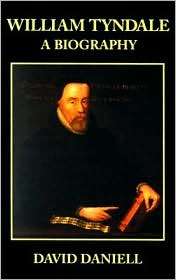
tttWilliam Tyndale was the man raised up by God to give us a real translation of the Bible in English from the original Greek and Hebrew text for the first time in history. Before Tyndale, there was no real English Bible. Others, such as John Wycliffe, produced translations from the Latin. Tyndale was different; he gave us the entire New Testament in English directly from the Greek text. He finished a good portion of the Old Testament (Genesis – 2 Chronicles, and Jonah) before he was betrayed by a vile and treacherous fiend and martyred for his faith in Jesus Christ.

Daniel Daniell wrote and explained:

Very many of the treasures which have enriched the lives and language of English speakers since the 1530s were made by Tyndale: a long list of common phrases like ‘the salt of the earth’ or ‘let there be light’ or ‘the spirit is willing’; the haunting phrasing in parables like the Prodigal Son, ‘this thy brother was dead, and is alive again: and was lost, and is found’; the gospel stories of Christmas (‘ there were shepherds abiding in the field’) through to the events of the Passion in Jerusalem and the Resurrection: in the Old Testament, the telling of Creation and of Adam and Eve, right through the history told there to the Exile in Babylon. All these things came as something new to the men and women of Tyndale’s time in the 1520s and 1530s. That was because Tyndale translated them, for the first time, from their original texts in Greek and Hebrew, into English; and then printed them in pocket volumes for everyone to own.

Apart from manuscript translations into English from the Latin, made at the time of Chaucer, and linked with the Lollards, the Bible had been only in that Latin translation made a thousand years before, and few could understand it. Tyndale, before he left England for his life’s work, said to a learned man, ‘If God spare my life, ere many years I will cause a boy that driveth the plough shall know more of the Scripture than thou dost.’ He succeeded (KL 77-79).

John Foxe, in his classic Book of Martyrs, tells us how Tyndale met his end:

Brought forth to the place of execution, he was tied to the stake, strangled by the hangman, and afterwards consumed with fire, at the town of Vilvorde, A.D. 1536; crying at the stake with a fervent zeal, and a loud voice, “Lord! open the king of England’s eyes.”

William Tyndale’s influence on the English language cannot be measured. The old King James Version of the Bible owes everything to Tyndale’s 1534 edition of the New Testament, and his 1530 Pentateuch. In fact, if you manage to procure a copy of his 1534 New Testament with modern spelling, I think you’ll find that is a far superior version. It has a biting edge, a directness, a poetic lilt and melodious cadence that the KJV cannot match. 90% of the KJV is Tyndale.

One representative example, pulled at random, will make the point. At the beginning of Peter’s famous sermon on the day of Pentecost, he rose to his feet along with the other apostles, and addressed the large crowd of curious and incedulous Jewish pilgrims gathered in the temple courtyard. The KJV has, “Ye men of Judaea, and all ye that dwell at Jerusalem, be this known unto you, and hearken to my words,” (Acts 2:14). This is an accurate translation, but it is flat. Boring. Lifeless. You can’t imagine somebody actually talking like this. You get a mental image of a philosophy professor droning on in front of a whiteboard; “Now class, hearken unto my words . . .” Tyndale, writing approximately 75 years earlier, rendered this as, “Ye men of Jewery and all that inhabit Jerusalem: be this known unto you and with your ears hear my words.” This is more direct, more forceful, more realistic. You can almost imagine Peter pausing for deliberate emphasis, pointing to his own head and saying “Use your ears and listen to what I’m about to tell you!”

William Tyndale was a genius. Anybody who speaks or writes English owes him a monumental debt. Any Christian who holds an English translation of the Bible in his hands should praise God for such a man as William Tyndale. Every New Testament Greek student should use Tyndale’s 1534 New Testament (along with modern, conservative versions) to check his own translations. You will be surprised how good he was. Some English Bible translations are technically accurate, but read like inter-office memos and have as much pizazz as a flat Coke. Not Tyndale. As one biographer put it;

By translating the Bible into English, this brilliant linguist ignited the flame that would banish the spiritual darkness in England. Tyndale’s translation of the Scriptures unveiled the divine light of biblical truth that would shine across the English-speaking world, ushering in the dawning of a new day (Steven J. Lawson, The Daring Mission of William Tyndale [Sanford, FL: Reformation Trust, 2015; Kindle ed.], KL 61).

Daniell explained:

William Tyndale was a most remarkable scholar and linguist, whose eight languages included skill in Greek and Hebrew far above the ordinary for an Englishman of the time— indeed, Hebrew was virtually unknown in England. His unsurpassed ability was to work as a translator with the sounds and rhythms as well as the senses of English, to create unforgettable words, phrases, paragraphs and chapters, and to do so in a way that, again unusually for the time, is still, even today, direct and living: newspaper headlines still quote Tyndale, though unknowingly, and he has reached more people than even Shakespeare. At the centre of it all for him was his root in the deepest heart of New Testament theology, a faith of the sort that can, and did, move mountains (KL 85-91).

This biography by David Daniell is the story of that man, and his single-minded, relentless quest to translate the Bible into English so the common man could have his very own copy of the Scriptures – and actually read and understand them! This work is long and very thorough. The author has a fondness for ridiculously complicated, run-on sentences and sometimes does not explain things clearly. However, these modest shortcomings do not detract from the value of this marvelus work. This is the definitive scholarly biography on William Tyndale, and anybody who wants to know the story of the English Bible simply must read it.

Below is an interview with another Tyndale biographer, Steven J. Lawson. Watch it, and see if your interest isn’t kindled to know more about this remarkable man and hero of the faith. For New Testament Greek students, see if your blood, sweat and toil over classifications of the infinitive have better context now!

The Kingdom of Darkness (Colossians 1:13)

jn812

There is a host of misinformation and lies in the world about the human condition. The Bible makes things very clear. You need to be rescued. You need to be rescued from Satan’s clutches and from his fiery orphanage of the damned. That last bit isn’t hyperbole on my part; after all, a rescue implies some kind of mortal danger, doesn’t it? What on earth do you need to be rescued from?

12Giving thanks to the Father, who made you acceptable to share in the saints’ inheritance in the light, 13who rescued us from the kingdom of the darkness and transferred us to the kingdom of His beloved Son, 14in whom we now have the redemption, that is, the forgiveness of sins.[1]

The Bible tells us you need to be rescued and delivered “from the kingdom of darkness” (ἐκ τῆς ἐξουσίας τοῦ σκότους). Some translations render this as “delivered,” but I don’t think this is brutal, stark or arresting enough. It’s too dainty, too proper, too high-brow. You don’t need to be delivered, you need to be rescued from Satan’s kingdom. 

This phrase is usually translated two different ways; as “power of darkness” (Tyndale, KJV, NKJV, NET, ISV) or “domain of darkness” (LEB, ESV, NASB). The idea of darkness is very clear in Greek, but the word ἐξουσίας is expressing the idea of sphere of control or rule. Another interesting possibility is jurisdiction. Altogether, you have several good translation options, each of which paints a dark and forbidding picture of who we really are. We are, all of us, people who desperately need to be rescued from the jurisdiction, power, domain and kingdom of darkness.

Darkness is the domain of Satan. It isn’t any wonder that our popular culture depicts evil in sinister shades of black (for example, think Darth Vader and “the dark side”), and good in glowing robes of white. This is Biblical imagery.

  • People are trapped in the dark clutches of sin, their hearts and minds veiled by Satan’s cloak, and it is the “light of the glorious Gospel of Christ” which shines in unto His elect people (2 Corinthians 4:4-5), casting aside this vile net of iniquity and delusion “so as to secure our voluntary obedience to the gospel.”[2]
  • An unbeliever’s understanding is “darkened, being alienated from the life of God through the ignorance that is in them, because of the blindness of their heart,” (Ephesians 4:18). Thus, this darkness isn’t literal; it’s spiritual. An unbeliever cannot know God, please God, or understand God because of this spiritual darkness.
  • The Apostle Paul admonished the Christians in Ephesus, “for ye were sometimes darkness, but now are ye light in the Lord: walk as children of light,” (Ephesians 5:8).
  • A Christian is somebody whom God has called “out of darkness into his marvellous light,” (2 Peter 2:9).
  • The Apostle John, echoing His Lord’s “new commandment” (Jn 13:34-35), wrote that external behavior revealed the true state of one’s heart. “He that saith he is in the light, and hateth his brother, is in darkness even until now,” (1 John 2:9).
  • Jesus Christ Himself is depicted as the bright and shining light, sent from God with the precious message of salvation, redemption and reconciliation; “in him was life; and the life was the light of men. And the light shineth in darkness; and the darkness comprehended it not,” (John 1:4-5).

This is not good news. The Apostle Paul did not beat around the bush. Elsewhere, he made it clear that an unbeliever is spiritually dead, wallowing in his own trespasses and sins (Ephesians 2:1). Every single person in the world naturally lives according to the normal course of this sin-cursed and condemned word, according to the “prince of the power of the air,” who is Satan. People are born with Satan as their spiritual father (cf. John 8:44ff), their wills, minds, hearts and souls enslaved to him and all the wickedness he stands for. It is Satan who is working right now, every moment of every day, in his children’s lives, whom Paul calls the “children of disobedience,” (Ephesians 2:2). Even worse, the Bible tells us that everybody is born, by our very nature, makeup and constitution as sinners, as “children of wrath,” (Ephesians 2:3).

This is what you need to be rescued from, and this is what Christ has, is and will infallibly accomplish (cf. John 6:37) for all those who are His. You are born under the jurisdiction of Satan, subject to his laws, his standards, his will, his character, his nature and his wickedness. You reflect those qualities, you live according to these characteristics and you echo your spiritual father’s criminal spirit. As the Bible says, you are inherently unprofitable and worthless to God the way you are (Romans 3:12). You are under his domain and power, subject to his control, his influence, his whims and his regulations. He is the rudder of the ship of wickedness, sin and rebellion that is you. You were born a citizen of his vile, unrighteous and evil kingdom – a kingdom of darkness – and you will remain a resident in that kingdom unless or until you repent of your sins and believe the Good News which Jesus Christ willingly and voluntarily suffered, bled and died to bring to you.

There is Good News (εὐαγγέλιον – “Gospel”) to combat this Bad News. Jesus Christ came to save sinners. You are a sinner. He came to save, reconcile, redeem and forgive people from every tribe, tongue people and nation on earth; to rescue them from the kingdom of darkness and transfer them to His own kingdom. You can be adopted into Jesus’ kingdom. This is why Paul told the Christians in Colossae to be “giving thanks to the Father,” because Jesus, “made [them] acceptable to share in the saints’ inheritance in the light.” Hopefully you, too, can join the saints from Colossae in thanking God for the wonderful gift of salvation in Christ Jesus!


[1] This is from my own translation; the exegetical work can be found here.

[2]  Article VII, in The 1833 New Hampshire Confession of Faith, in The Creeds of Christendom, ed. Philip Schaff (New York, NY: Harper & Bros, 1882), 3:774.

We Believe in . . .

constant
Homilies of Gregory Nazianzus (from a 9th century Byzantine manuscript)

Here, at long last, is my pitiful translation of the Nicene-Constantinople Creed (381 A.D.). The first four so-called “ecumenical councils” between 325 and 451 A.D. were where early Christians hammered out a vocabulary and framework for explaining what the Bible says about the triune God. These councils did not invent or create doctrine; they articulated what the Bible already says. I will use this translation, and the classic translation from Phillip Schaff’s work, for a future discussion of Father, Son and Spirit. For now, here is the text:

—————————–

“We believe in one God; Father, Almighty, Maker of heaven and earth, and of everything visible and invisible.

Also, we believe in one Lord; Jesus, Messiah, the unique Son of God, who was brought forth from the Father before all time began (that is, from the substance of the Father), light from light, genuine God from genuine God. He was brought forth, [but] not created; [the] same substance as the Father, by whom everything was made in the heavens and on the earth. He came down out of the heavens for the benefit of us men, even for our salvation, and was made flesh by [the] Holy Spirit and the Virgin Mary. Indeed, He took on human form, was crucified for our sake during the time of Pontius Pilate, and was tortured. He was buried, yet rose the third day according to the Scriptures. He ascended into the heavens, is sitting down at the right hand of the Father, and He shall come again with glory to judge the living and [the] dead; whose kingdom shall never end.

We believe in the Holy Spirit; Lord and Giver of life, who proceeds from the Father, is worshipped and glorified together with Father and Son, and who spoke through the prophets.

We believe in one holy, universal and apostolic congregation. We confess one immersion concerning forgiveness of sins. We are waiting for [the] resurrection of the dead and the coming eternal life. 

But, those who say, “there was a time when He did not exist,” and “He did not exist before He was brought forth,” or that “He was made out of nothing” or “out of another nature or substance;” those who claim, “the Son of God is alterable” or “changeable;” the universal and apostolic congregation curses them.”

——————————————-

Some Christians are taught by well-meaning but ignorant teachers and preachers to ignore creeds and confessions. You ignore the first four ecumenical creeds (Nicea, Constantinople, Ephesus and Chalcedon) at your own peril. Actually, you don’t ignore them at all – your theological vocabulary is riddled with their terminology; you just don’t know it! As Carl Trueman has observed,

The Lord has graciously provided us with a great cloud of witnesses throughout history who can help us to understand the Bible and to apply it to our present day. To ignore such might not be so much a sign of biblical humility as of overbearing hubris and confidence in our own abilities and the uniqueness of our own age (The Creedal Imperative [Wheaton, IL: Crossway, 2012; Kindle ed.], KL 1738-1740).

More on this creed another day! The detailed translation is available here. You can compare it with the normal English translation if you wish.

He Knows Your Deeds (Revelation 3:8)

Jesus is writing to the people in the local church in Philadelphia, and He says something very simple and yet very profound – Jesus always knows our deeds, and what we do. Here is the text, from my own translation:

  • 8I know your deeds. (Pay attention! I have put an opened door in front of you, and no one ever has [the] power to shut it.) I know you have a little strength, and yet you have obeyed my message and have not disowned my name.
rev38
The relevant portion of Revelation 3:8 from Codex Sinaiticus.

We can hide nothing from Him. He is omniscient and all-knowing. Jesus never takes in knowledge and learns new things. He is equal in power, glory, honor and attributes to the Father. He knows what you have done, are doing and will do.

There is nothing you can do that Jesus does not already know all about:

Proverbs 5:21 For the ways of man are before the eyes of the LORD, and he pondereth all his goings.

Proverbs 15:3 The eyes of the LORD are in every place, beholding the evil and the good.

Job 34:21-22 For his eyes are upon the ways of man, and he seeth all his goings. There is no darkness, nor shadow of death, where the workers of iniquity may hide themselves.

Jesus’ remark gives the sense of, “I always know your deeds!”[1]

He knows the good and the bad. He knows our faithfulness and our deliberate failures. He knows whether your heart and spirit is hypocritical or tender. He knows your motivations and your motives. He knows what you’re planning and what your ambitions are.

Jesus’ remark will either (a) strike fear into the unregenerate, pretending heart, (b) convict and rebuke the lazy Christian who stopped trying a long time ago, and is just treading water on autopilot; or (c) comfort the weary sinner who is honestly trying to serve the Lord day by day.

Let everybody sit up and take notice of these simple truths:

  1. God created this universe and everything in it, and He did it through His unique, one and only Son, Jesus Christ; “by whom also he made the worlds,” (Hebrews 1:3)
  2. We are – each of us – products of this creation, and we owe our lives, our blessings, our comforts, the air we breathe and the blessings we enjoy to Him
  3. We are alienated from God and estranged from Him because of the wicked things we think about and do every day, which violate His holiness and His law
  4. Because God has great mercy, love, grace and kindness (cf. Ephesians 2:4-7), He provided a way for people to be reconciled, forgiven, adopted into His family and saved from Satan and ourselves

As you go about your day to day life, whether you are a non-Christian who thinks this is all ridiculous superstition, a “slacker” Christian who lives a life of pitiful hypocrisy, or a sincere Christian who tries day by day to be cleaving tighter unto the Lord (Acts 11:23), know this – the Risen and Resurrected Christ knows your deeds. “He is Lord of all,” (Acts 10:36), and the Father demands you apologize to Him and set things right by repenting of your sins and believing in His Son’s perfect work for your sake, in your place, as your substitute. As the Scripture reads,

Mark 1:14-15 After John was taken, Jesus came into Galilee preaching the gospel of the kingdom of God and saying: ‘The time is come and the kingdom of God is at hand; repent and believe the gospel.’ (Tyndale 1534 translation)


[1] I take the word translated “I know” to be expressing a timeless truth. Here is my note on this from my own pitiful translation; Οἶδά: (1) Voice – a simple active voice. (2) Tense – context suggests a gnomic perfect, suggesting that Jesus has always known the church’s deeds. He never comes to know anything – He always knows all. (3) Mood – a declarative indicative.

Jesus’ Message to the Church at Philadelphia

philadelphia
The modern city of Alasehir, where the ancient church at Philadelphia was located

This is my own translation of Revelation 3:8-12 from the Textus Receptus, plus a few changes from the UBS-5 text:

8I know your deeds. (Pay attention! I have put an opened door in front of you, and no one ever has [the] power to shut it.) I know you have a little strength, and yet you have obeyed my message and have not disowned my name.

9Pay attention! I will make those from the congregation of Satan who say they are Jews (yet they are not; rather, they are lying) . . . Pay attention! I will compel them, so that they will come and pay homage at your feet and realize that I have always loved you.

10Because you have obeyed my message about perseverance, I, in turn, will keep you from the time of the temptation which is about to come upon the whole inhabited world to put to the test those who are dwelling on the earth.

11I am going to come soon! You must keep on holding fast [to] what you have, so that no one will take your crown. 12The one who will be victorious, I will make him a pillar in the temple of my God and he will never go out again, and I will write on him the name of my God, and the name of my God’s city (that is, the New Jerusalem, which will come down from the heaven, from my God), and my new name.

My Pastor will be covering this text in his sermon this coming Sunday, so I thought I’d translate it myself for a bit of fun. My detailed translation is available here.

Colossians 1:12 – Acceptable, Meet or Qualified?!

A Potpourri of Translations:

Here is Colossians 1:12 from a variety of English translations:

col112 table

col112sinai
Colossians 1:12 from Codex Sinaiticus (4th century)

I chose these translations deliberately, because I think they’re each excellent and they reflect different translation philosophies:

  • I did my own pitiful translation for my own edification, and because I’m a nerd. You can read it here, if you wish.
  • The NASB is famous for being very formal in it’s translation. The preface stated, “[w]hen it was felt that the word-for-word literalness was unacceptable to the modern eader, a change was made in the direction of a more current English idiom,” (iii). You can count in this translation to not be interpretive when it redners Koine Greek into English
  • Tyndale, KJV, ESV and the LEB are not quite as formal as the NASB, but they each stick very close to the original language. Tyndale was a linguistic genius who produced the first complete New Testament translation in English directly from Koine Greek in 1526 (revised for the last time in 1534). The KJV essentially followed Tyndale in many places. The ESV is a very popular, excellent new translation. The LEB, from Logos Bible Software, began it’s life as an interlinear.
  • The ISV and the NET are a bit more interpretive. The ISV’s New Testament was edited by David A. Black, a well-known teacher and author of several books on Koine Greek. The NET was produced largely by a team of scholars centered around Dallas Theological Seminary. Neither of these translations are particularly “well known,” but they’re excellent. I would put their translation philosophy in the same class as the NIV.
  • As far as Greek text goes, Tyndale and KJV used what would become known as the Textus Receptus. The ESV, NET, NASB and ISV used the current version of the United Bible Society critical text (UBS-4 for each, I believe). The LEB used the Society of Biblical Literature (SBL) Greek New Testament.

God Made You . . . What!?

The first issue I want to focus on is the words I translated as “made you acceptable,” (ἱκανώσαντι ὑμᾶς). What does it mean? The standard Koine Greek lexicon defines the word, in this context, as, “to cause to be adequate,” (BDAG, s.v. “3692 ἱκανόω”). Different English translations take this different ways:

  • “Acceptable” (Me, KJV, Tyndale)
  • “Qualified” (NASB, LEB, ESV, NET)
  • “Enabled” (ISV)

Now, the average reader has to admit that there isn’t a lot of difference between these three options. We read either one, and we get it. Paul’s point is that we are not acceptable to God. In order to give His elect eternal inheritance, salvation, redemption and forgiveness, He must first make us acceptable to Him. We cannot do this; God must do it to us. This verb is in the simple active voice, and God is performing the action. We have no part to play here. God’s chosen and called out people simply receive an action God does to them.

Each of these translations are glosses suggested by major lexicons (e.g. BDAG, Gingrich, Friberg, Danker, etc.). They each capture a different nuance or shade of meaning. They each convey subtly different meanings, but the same basic concept. When I translate from Koine Greek, I always have a Merriam-Webster dictionary and a good thesaurus at hand. I need to make sure I chose an English word which actually says what the Koine Greek meant, and I need a thesaurus to help me find synonyms to give the translation some stylistic flair, or else the whole thing will be as dry as a stale saltine cracker.  Consider the nuance each translation option brings to the table:

“Acceptable/Meet”

This was my choice, and I obviously think it’s the best one. Merriam-Webster tells us that this means “capable or worthy.” This is good stuff. We’re not worthy, but God can make us worthy “according to the good pleasure of His will,” (Eph 1:5). We’re not capable of doing this; we have no capacity to right the hostility between ourselves and God, to earn His grace, mercy and forgiveness, or to stop our willful rebellion and hatred of Him. We will always be trying to “break their bands asunder, and cast away their cords from us,” (Ps 2:3). I like “acceptable.” I think it gets the point across very well.

However, the word “acceptable” can also conveys a sense of bare adequacy, not excellence. Like being told by your boss, “Well, your performance these past six months has been adequate, nothing more, nothing less.” It’s not a word that really conveys a sense of security. It’s like getting a “C-” on a final exam.

But, context is always key. The context is God making us competent and acceptable to share in the inheritance of the Kingdom of Light. God doesn’t do things half-way or merely adequately – He always does them well. He created creation and pronounced it “good!” Therefore, the word “acceptable” is an excellent choice. It gets the point across.

“Qualified”

Merriam-Webster says this means to be “fitted for a given purpose.” It’s clear that there really isn’t much difference between “acceptable” and “qualified.” In fact, I almost translated this as “made you fit.” We are not fit for salvation and we do not deserve mercy, love, grace or kindness. Yet, for a Christian, God has changed all that. He qualified us to share in the eternal inheritance in the Kingdom of Light! He made us fit, because we cannot make ourselves fit.

However, the word “qualify” can also open the door for a more synergistic view of salvation, whereby God and man cooperate in some form or fashion to achieve redemption. Somebody could interpret “qualify” to mean something like “eligible.” For example, “You’re qualified for a 30-year home mortgage with a low 25% interest rate!” Indeed, Merriam-Webster notes that a second definition for “qualified,” depending entirely on context, is, “having complied with the specific requirements or precedent conditions.” Therefore, God qualifies people to have eternal inheritance, but it is up to the individual to take advantage of God’s grace and repent and believe the Gospel. This is, in fact, what the concept of prevenient grace teaches – that as a result of Christ’s sacrificial and substitutionary death on the Cross, the Holy Spirit works on everybody’s heart, mind and will so they can either accept or reject the Gospel message.

Now, this is not what Colossians 1:12 teaches, and it is not the sense in which the word “qualified” ought to ever be taken here. After all, is it the translator’s fault if a preacher spends his time doing English word studies instead of opening his Greek New Testament!? Not at all! However, I think the potential theological landmine with the word “qualified” makes it an “acceptable” choice (see how much context matters!), but not necessarily the best choice.

“Enabled”

This is a very good word choice. After all, if somebody enables you to do something, it means that you are made able to accomplish what you could not formerly do. Merriam-Webster defines “enabled” as, “to make (someone or something) able to do or to be something.” We cannot ever gain or earn the privilege to share in the saints’ inheritance in the jurisdiction of light. We’re not acceptable to Him. We’re terrorists and criminals in God’s universe, naturally serving our father, the Devil. This is the message of the Bible. David wrote, “God looked down from heaven upon the children of men, to see if there were any that did understand, that did seek God. Every one of them is gone back: they are altogether become filthy; there is none that doeth good, no, not one,” (Ps 52:2-3). But, God has enabled Hs children to share in that inheritance.

However, the word “enabled” could also open the door for an un-Biblical and synergistic view of salvation. “God enabled us to choose, and now we decide to choose Him.” This could imply a two-step process in salvation where God and man work together. After all, God makes us able to choose Him, and the rest is up to us! This made me hesitate to use the word “enabled.”

Let me emphasize this very strongly – anybody with an agenda can take any English word or phrase and twist it completely out of context. That is not any translator’s fault. It is the reader’s fault. Most English-speaking Christians don’t know Koine Greek. They’re not going to consult BDAG, Danker, Gingrich or Friberg. Even if (heaven forbid!) an enterprising Christian has a copy of Strong’s Greek Dictionary handy, the information is next to useless if him if he does not understand how it works in the grammar and syntax of a particular sentence. This is where good English translations come in. Let me explain . . .

The Story of Diligent Christian

Pretend an average man, Diligent Christian, loves and likes the KJV. He reads Colossians 1:12 and is puzzled; God “hath made us meet to be partakers of the inheritance of the saints in light.” What on earth is “meet!?” Diligent Christian is an enterprising fellow, so he logs onto Biblegateway.com to compare different English Bible versions. He sees that many English versions use the word “qualified.” He immediately leaps to an erroneous conclusion about what the Apostle Paul meant by this statement. Diligent Christian is a member of an Arminian, independent, fundamental Baptist church with roots in the Sword of the Lord tradition. He has been conditioned by years of preaching and Bible study to interpret salvation synergistically. He sees no problem with “qualified.” By default, however, he interprets this “qualification” as prevenient grace.

But now, Diligent Christian is a bit confused. He looks at the ISV, and sees the translation “enabled.” This is a tad bit different, because it seems to have slightly more deterministic overtones. By some remarkable coincidence, he actually stumbles upon this pitiful little blog, and sees my own translation of “acceptable.” Diligent Christian is now having to grapple with the idea that God alone makes elect sinners “acceptable” to Him. We contribute nothing to this transaction.

He returns to the KJV, because that is his favored version, and decides to figure out what “meet” actually means once and for all. He reaches for his bookshelf, and pulls down Noah Webster’s 1828 American Dictionary of the English Language, which his Pastor recommended he use when he wants to figure out archaic words from the KJV. It defined “meet,” in this context, as “fit; suitable; proper; qualified; convenient; adapted, as to a use or purpose.” With this meaning firmly in mind, Diligent Christian now completely understands the sense in which “qualified” and “enabled” should be taken in these English translations. Indeed, he even browsed Merriam-Webster and found that this is still a valid use for the word “meet” (as an adjective) even today.

Now, Diligent Christian leans back in his chair, sips his coffee, and ponders the mercy and love of an infinite God who would qualify criminal sinners, enable them to be partakers of such a marvelous inheritance and make them acceptable and fit to be His servants. He is particularly happy to have so many good English translations to help him interpret the Scriptures!

Colossians and English Bible Versions

Capture
The portion of Codex Sinaiticus containing Colossians 1:12-20

The Book of Jude is taking far too long, so I took a bit of a break and translated Colossians 1:12-20. This precious passage includes a very early hymn about Jesus Christ (vv.15-20). This doesn’t mean the passage was literally sung aloud in worship services by early Christians; it just means that they put theological truth into lyrical prose as a memory aid.

I’m going to use this passage to demonstrate why Christians should consider switching their devotional translation every once in a while to get a different . . . flavor when they read their Bibles.

I’ll delve into the details next time, but for now, I’ll just give you my own translation. First, a disclaimer – I am not a Greek scholar. My Koine Greek is probably best described as “workman-like,” and representative of a Pastor who has had a few years of Seminary-level Greek training and uses Koine Greek on a regular basis.

Here is my translation:

 12Giving thanks to the Father, who made you acceptable to share in the saints’ inheritance in the light, 13who rescued us from the jurisdiction of the darkness and transferred us to the kingdom of His beloved Son, 14in whom we now have the redemption, that is, the forgiveness of sins.

15He is the exact likeness of the invisible God, the favored heir over all creation, 16because by Him everything was created in the heavens and on the earth, visible and invisible, whether thrones, dominions, rulers or authorities. Everything has been created by Him and for Him, 17because He Himself is earlier than everything and everything always holds together because of Him.

18Also, He is the head of the body; that is, of the congregation. He is the Ruler, the first-born from the dead so that He alone will always have first place in everything, 19because the Father is always pleased for all the fullness to reside in Christ, 20and through Him to reconcile everything to Himself. Christ made peace by the blood of His cross, through Himself – whether on the earth or in the heavens. 

My detailed translation, complete with information on how and why I classified and translated voice, tense, mood, prepositions, participles, infinitives, etc. the way I did is available here.

We’ll compare English Bible versions and make some observations next time!