All About the Book of Esther! (Pt. 1)

Esther

I preached a short 12-sermon series through the Book of Esther a while back. I really enjoyed the study, and I hope at least a few of the folks in my church did, too! I’ll be re-producing that study in a series of posts on this blog.[1]

The Book of Esther was written by an unknown Jew in Persia around 400-450 B.C.[2], and it is set during the time of the Medo-Persian Empire (in modern-day Iran). It takes place from roughly 483–464 B.C. Many Christians are very fuzzy on their Old Testament History (and the entire Old Testament in general!), so let me give you some dates so you know how Esther and Mordecai found themselves in their situation:

  • 722 B.C. – the Northern Kingdom of Israel was conquered by the Assyrians
  • 586 B.C. – the Assyrians, and the Southern Kingdom of Judah, were conquered by the Babylonians
  • 538 B.C. – the Babylonians were conquered by the Medo-Persians

Incidentally, the rise and fall of both the Babylonian and Medo-Persian Empires were prophesied by Daniel (Dan 2:36-45; 7:17-28).

As a direct result of the Babylonian’s victory over Judah, there is a large Jewish population in Babylon – descendants of the untold tens of thousands deported by the Babylonians. Their tactic was to conquer an area, then deport all but the poorest people, thereby ripping them from their homes, religion and heritage. The idea was that, within a generation or two, they would simply assimilate into their culture and forget about their national heritage. This is exactly what has happened to the Jews in Esther’s day in the Persian Empire – many of them didn’t bother to return to the Promised Land when they had a chance to, because they liked their lives in Babylon.[3]

The first wave of exiles returned to the Promised Land from Babylon from 537-538 B.C. the Book of Ezra tells us all about it:

Ezra 1:1-4 Now in the first year of Cyrus king of Persia, that the word of the LORD by the mouth of Jeremiah might be fulfilled, the LORD stirred up the spirit of Cyrus king of Persia, that he made a proclamation throughout all his kingdom, and put it also in writing, saying, Thus saith Cyrus king of Persia, The LORD God of heaven hath given me all the kingdoms of the earth; and he hath charged me to build him an house at Jerusalem, which is in Judah. Who is there among you of all his people? his God be with him, and let him go up to Jerusalem, which is in Judah, and build the house of the LORD God of Israel, (he is the God,) which is in Jerusalem. And whosoever remaineth in any place where he sojourneth, let the men of his place help him with silver, and with gold, and with goods, and with beasts, beside the freewill offering for the house of God that is in Jerusalem.

Isn’t it amazing that God used a pagan king to return His chosen people to their land, to prepare them for the coming of the Messiah in about 538 years!? Almost 50,000 (Ezra 2:64-65) Jews returned, less than 60 years after the Babylonians destroyed the Southern Kingdom. This gives you an idea of how many Jews lived in this area.

The second waves of exiles returned to the Promised Land from exile Babylon in 457 B.C.

Ezra 7:11-13 Now this is the copy of the letter that the king Artaxerxes gave unto Ezra the priest, the scribe, even a scribe of the words of the commandments of the LORD, and of his statutes to Israel. Artaxerxes, king of kings, unto Ezra the priest, a scribe of the law of the God of heaven, perfect peace, and at such a time. I make a decree, that all they of the people of Israel, and of his priests and Levites, in my realm, which are minded of their own freewill to go up to Jerusalem, go with thee.

This time, only 1500 men returned (generously figuring wives and three children for each, you still only have 6000!).

The third wave of exiles returned to the Promised Land in 444 B.C.

Nehemiah 2:4-6 Then the king said unto me, For what dost thou make request? So I prayed to the God of heaven. And I said unto the king, If it please the king, and if thy servant have found favour in thy sight, that thou wouldest send me unto Judah, unto the city of my fathers’ sepulchres, that I may build it. And the king said unto me, (the queen also sitting by him,) For how long shall thy journey be? and when wilt thou return? So it pleased the king to send me; and I set him a time.

Why are these dates necessary? Why should you care? The events from the Book of Esther took place approximately 51 years after the first wave of exiles returned to Israel. It’s important you know that any Jew in Esther’s day, living in the old Babylonian (now Medo-Persian) Empire, could have returned to the Promised Land if he had wanted to![4].

The temple was being re-built. The priesthood was being re-instituted. God was being worshipped at Jerusalem, which was what the Old Testament commanded! And yet . . . Esther and Mordecai didn’t go – they voluntarily cut themselves off from the divinely-appointed way of worshipping and serving God! This is very similar to a modern Christian, who claims to love God, but never joins a local church in his life, and moreover, never attends church, either! You wouldn’t necessarily say such a person isn’t a Christian without more information. What you could say, immediately, is that such a person isn’t a very good, very dedicated or very obedient Christian.

This leads us to draw some brief sketches of the main characters, which may be a bit shocking, because Esther and Mordecai are usually given very high marks for spirituality that they don’t deserve.[5]

More on that next time . . .


[1] Substantive commentaries on Esther are surprisingly hard to find. The best are (1) John Whitcomb (Esther: The Triumph of God’s Sovereignty [Chicago, IL: Moody, 1979], (2) Joyce Baldwin (Esther, vol. 12, TOTC [Downers Grove, IL: InterVarsity Press, 1984], and (3) Karen H. Jobes (Esther, NIV Application Commentary [Grand Rapids, MI: Zondervan, 1999; reprint, Kindle, 2010).

[2] Gleason L. Archer, A Survey of Old Testament Introduction, revised and expanded (Chicago, IL: Moody, 2007), 395-396. Whitcomb observes that the author betrays a first-hand knowledge of King Ahasuerus’ temple at Susa, which was destroyed in 435 B.C. This goes even further to pin down the date of composition (Esther, 13).

[3] The following dates for the various exilic returns are taken from Leon Wood (History, 333-338).

[4] See especially Whitcomb (Esther, 22ff). “There seems to be no evidence that Mordecai or Esther harbored any desire to relate to the heart of God’s theocratic program by journeying to Jerusalem, offering the prescribed Mosaic sacrifices on the altar through Levitical priests, and praying to Jehovah in His holy Temple. Nor is there any evidence given that they were in any way prevented from going.”

[5] Charles Smith observed, “Their triumph over Haman is their single great achievement. How much honor does it shed upon them? Let us give them all the credit they possibly deserve! To Mordecai, astuteness, statesmanship, courage, leadership; to Esther, fortitude, prompt action, the power of beauty, queenliness, patriotism. But does either touch the high level of prophet or saint? Is Mordecai a David, a Daniel, a Zerubbabel? Is Esther a Deborah, or a Ruth? By no means. We can admire her as a superior woman, who, at a critical moment, acted with promptness and good judgment so as to save her own life and that of many others. But she was not a champion of God’s righteousness, or a savior of souls. Her success was in that lower realm where success or failure does not seem, in the long run, a matter of much importance,” (“The Book of Esther,” Bibliotheca Sacra 082:328 [Oct 1925], 400-401).

Cleansing Your Life

Ps 119

Psalms 119:9 Wherewithal shall a young man cleanse his way? by taking heed thereto according to thy word.

People can only be cleansed by doing what God’s word says – no matter how difficult, hard, painful or unpleasant it is. Cleansing is a perfect word to use here, because the Psalmist is asking how a believer can keep his life pure, holy, undefiled, uncorrupted and blameless before God and the other people in the congregation.

The phrase “young man” representatives the normal, average believer – it represents you, if you’re a Christian. The “cleansing” represents the activity and the work the average believer needs to be doing – identifying sin, confessing sin, forsaking sin, replacing that sin with godliness. This “cleansing” is present-tense;[1] it’s something that needs to be done continually, regularly, and often. 

You are never finished cleansing your life. Just as dirt begins to accumulate on the carpet as soon as you put your vacuum away, so sin begins to accumulate in your life the very moment you relax and let your internal guard down in your Christian life. You need to be on the lookout for sin, laziness, neglect and moral filth and corruption in your life on a regular, ongoing, present-tense and active basis.

In the first part of this verse, the psalmist asks a question (Wherewithal shall a young man cleanse his way?”), and now he gives us a very simple answer:“by taking heed thereto according to thy word.”

You keep your life morally pure by continually cleansing it according to God’s word. If you’re a Christian, then you belong to God and your life is not your own (cf. 1 Cor 6:19). This means that God cares what detergent you use, what vacuum you use, what kind of soap you use – in short, He cares about what method you use to cleanse your life. God says that you cleanse your life by doing what His word says.

If you don’t do what His word says . . .

  • then you don’t care about His word,
  • you don’t care about Him,
  • then you’d prefer to be disobedient,
  • and you’re in deliberate rebellion against Him

This is a very black and white statement. There are no shades of gray to be found (not even 50 of them . . .) There is a general trend in popular culture to avoid making absolute black and white statements, and many Christians have absorbed this Satanic tendency without even realizing it. We have become a culture of wimps, both inside the local church and outside. We like what God’s word says in the abstract, as long it doesn’t become personal – the same way we like the idea of exercise and good health, but shrink from ever actually doing anything to achieve it

However, when God’s word does become personal, when it stops being abstract and theoretical and becomes intimate and practical, this is when all the pious talk, the flowery prayers, and all the outward actions need to be translated into action.

Do you have the nerve, the courage and the commitment to actually cleanse yourself and your life by taking heed to God’s word day by day, week by week, month by month, and year by year – or is your faith nothing but hot air?

I’m deliberately calling this trend of Christian wimpiness “satanic,” because it is intentional disobedience wrapped up in a filthy cloak of pretend righteousness. It’s cowardice. It’s rebellion. It’s pathetic. It’s blasphemous. And we are all subject to this epidemic of wimpiness and fearful compromise, because we live every day in a wimpy, fearful and compromising culture!

The psalmist tells us that a Christian continually cleanses his life by doing what God’s word says. Period. This is a black and white statement, and there is nothing we can do to change this very simple precept:

  1. What’s the problem?
  2. What does God’s word say to do about this problem?
  3. Why are we still talking about this?

Anything else is nothing but excuses, self-deception, and self-delusion. If you want your personal life to be cleansed and be holy, you must take heed to do what God’s word says. The same is also true for the corporate life of a local congregation:

  1. What’s the problem?
  2. What does God’s word say to do about this problem?
  3. Why are we still talking about this?

If you love the Lord, you’ll want to honestly demonstrate that love by doing what He says. That’s not so hard to understand, is it!?

Luke 6:45-46 A good man out of the good treasure of his heart bringeth forth that which is good; and an evil man out of the evil treasure of his heart bringeth forth that which is evil: for of the abundance of the heart his mouth speaketh. And why call ye me, Lord, Lord, and do not the things which I say?


[1] At least, it’s present-tense in the LXX (κατορθώσει)!

A Better Devotional Life . . .

Let me suggest a few things to you that may bless your devotional life:

  1. Read large sections of text at one time (e.g. multiple chapters)
  2. Read through single books at a rapid pace until you finish them
  3. Read from both the Old and New Testaments
  4. Switch your Bible translation – and do it now!

Reading God’s word in a different, conservative translation opens your eyes to the text as though you’re reading it for the very first time. I recommend either NKJV, ESV, NASB, HCSB or NET.

For example, consider the difference between these two translations.

jn316

If all you’ve ever read is the KJV, then you’ve probably been conditioned by popular sentiment and well-meaning but wrong preaching to put stress on the English word “whosoever,” and think of this verse as an invitation to salvation. This is completely wrong – Jesus is simply stating a fact in this verse, not issuing an invitation to salvation[1].

The KJV rendering “whosoever” is a perfectly acceptable translation, as long as you understand what it means! William Tyndale, the great Bible translator of the 16th century, translated this as, “For God so loveth the world that he hath given his only son that none that believe in him should perish: but should have everlasting life.” The NET translation brings this out clearly, and opens your eyes to hidden treasures in God’s word that one single translation cannot possibly convey. Jesus is not issuing an invitation to salvation per se; He is stating a simple fact.

Think about switching up your Bible translation. Try out another good conservative translation and see if you are blessed by it.

[1] The phrase in question is ἵνα πᾶς ὁ πιστεύων εἰς αὐτὸν, which means “so that every person who believes in Him . . .”

Jonah . . . An Example of Real Faith?

jonah2

Today, we’re looking at the passage where Jonah runs away from God. In this passage, Jonah is going to teach us about what real faith is. This may not sound quite right; after all, Jonah’s not usually considered a good candidate, at first glance! How can a prophet who runs from God be an example of real faith?

GOD REBUKES JONAH (1:4-10):

4

But the LORD sent out a great wind into the sea, and there was a mighty tempest in the sea, so that the ship was like to be broken.

Here, you can see that God intentionally sends a storm out to hound Jonah as he tries to get away.[1] This is a very bad storm that threatens to break their ship in two! God does what He needs to in order to get our attention when we run from our calling. Somne people believe that God doesn’t have a plan and purpose for every believer’s life. I disagree. I believe God has made us each unique and special, and has given us different niches within our local churches. The Apostle Paul told us that we’re all different members of the same body – the Church. God gifted Jeremiah to be a prophet. He made Paul the way he was, with his peculiar background, upbringing, education and citizenship, in order to do a specific job (Galatians 1:13-16). He did the same for Jonah.

Your calling, your specific gifts and your specific task are probably not as exciting as Jonah’s mission. But, you have one.

For we are his workmanship, created in Christ Jesus unto good works, which God hath before ordained that we should walk in them (Ephesians 2:10).

Jonah had a calling from God, and he chose to run away. God was not pleased, and His word tells us that He will discipline His wayward children (John 15:1-2; Hebrews 12:5-11).

5

Then the mariners were afraid, and cried every man unto his god, and cast forth the wares that were in the ship into the sea, to lighten it of them. But Jonah was gone down into the sides of the ship; and he lay, and was fast asleep.

The Bible tells us “the mariners were afraid.” I wonder how bad this storm was to make the sailors afraid!? They “cried every man unto his god.” Notice that man’s instinctive reaction is to pray to something higher than yourself. In this case, each sailor prays to his own god. You could say we’re “hard-wired” to do this. Where does this instinct come from? It comes from being made in God’s image! We’re hard-wired (all of us) to seek relationships with (1) other people and (2) with God.

And God said, Let us make man in our image, after our likeness: and let them have dominion over the fish of the sea, and over the fowl of the air, and over the cattle, and over all the earth, and over every creeping thing that creepeth upon the earth. So God created man in his own image, in the image of God created he him; male and female created he them (Genesis 1:26-27).

The sailors “cast forth the wares that were in the ship into the sea, to lighten it of them.” It’s amazing how quickly our priorities change when we’re in physical danger! If only people would realize that they’re in worse, eternal and spiritual danger without Christ![2] Now, here is a good question – why was Jonah sleeping? Shouldn’t he be awake, worried sick about God’s vengeance? Shouldn’t his conscience be giving him fits?

the answer seems to be that Jonah had some bizarre, false sense of security. He knew intellectually that God could reach out and stop him in his tracks. But practically, however, he’d allowed himself to forget all about it[3] Once we start down the path of stupidity and completely abandon God’s word on a certain point, we allow Satan to fool us into a false sense of security that isn’t real.

Because sentence against an evil work is not executed speedily, therefore the heart of the sons of men is fully set in them to do evil (Ecclesiastes 8:11).

6

So the shipmaster came to him, and said unto him, What meanest thou, O sleeper? arise, call upon thy God, if so be that God will think upon us, that we perish not.

The shipmaster seems to think, “the more gods we pray to, the better! Sooner or later one of them will hear us!” Isn’t it so sad to see a pagan urging the prophet of God to pray![4]. Consider how Muslims put our prayer life to shame! They’re unbelievers, and yet they pray several times per day!

7

And they said every one to his fellow, Come, and let us cast lots, that we may know for whose cause this evil is upon us. So they cast lots, and the lot fell upon Jonah.

Jonah has come out on deck in the middle of this horrible storm. You can picture the sailors taking shelter wherever they could find it. Maybe in some cabin, maybe behind something solid. The wind and the waves are trying to break the entire boat into pieces all around them. The sailors decide to cast lots to find out who is responsible for bringing this evil storm upon them.

God providentially arranges so that the lot falls on Jonah. Imagine how defeated Jonah must feel right now!

  • Wakened out of a sound sleep to find himself in the middle of a terrible storm.
  • Told he ought to pray by a pagan ship’s captain
  • Reluctantly participating in drawing lots to see who is responsible for bringing this storm on them

I can picture Jonah right now as everybody’s eyes turn to him. His shoulders slump and the entire weight of his stupidity and sin comes crashing down on him. He thinks, “you’re not going to let me get away from this, are you . . .?”

8

Then said they unto him, Tell us, we pray thee, for whose cause this evil is upon us; What is thine occupation? and whence comest thou? what is thy country? and of what people art thou?

These questions come at him rapid-fire from different people:

  • “Why is this storm happening?”
  • “What do you do for a living?”
  • “Where do you come from”

Can you imagine the guilt and shame Jonah felt when they asked him what his job was!?

9

And he said unto them, I am an Hebrew; and I fear the LORD, the God of heaven, which hath made the sea and the dry land.

Jonah responds, “I’m a Hebrew! I worship the Lord God of heaven who made everything, including the sea and the dry land”

This kind of claim is odd in a pluralistic society,[5] but in the heat and fear of the moment the sailors aren’t going to have a philosophical discussion with Jonah. What they would have snickered at a few hours ago they’re now ready to take seriously!

10

Then were the men exceedingly afraid, and said unto him, Why hast thou done this? For the men knew that he fled from the presence of the LORD, because he had told them.

Now the men are terrified, “What have you done to bring this upon us!?” [6] They knew that Jonah was fleeing from God; that part of the story had come out sometime before[7]. They probably smiled condescendingly then, shrugged their shoulders and thought “you’re running from your God. Ok. Whatever . . .”

They don’t think it’s so funny anymore – now they’re completely horrified[8]. Who is this God who controls the sea and the storms? Who is this guy that this God is angry at?

JONAH REPENTS (1:11-16):

11

Then said they unto him, What shall we do unto thee, that the sea may be calm unto us? for the sea wrought, and was tempestuous.

Meanwhile, the sea is growing worse and worse. The sails are being almost torn to pieces in the rigging. The masts are groaning under the pressure of the wind. The ship itself is creaking from the pressure of being tossed up and down like a bathtub toy on the sea. They ask Jonah in increasingly desperation, “what are we supposed to do!?”

Their own gods are discarded and forgotten for the moment – they can’t help them. They’re perfectly willing to accept Jonah’s God as the supreme and real God of heaven and earth – at least for now. All the loyalty, sacrifices and devotion they made have for their own “gods” is completely forgotten when their own lives are at risk of being lost.

Meanwhile, the sailors are still standing there, asking Jonah, “what are we going to do!?” It’s at this very time when God is doing what He must to get ahold of us, to grab our attention, that we ask ourselves that very same question. Remember, God chastens those He loves (Heb 12:4-17).

So, if you’re in a similar situation, wher God is disciplining you to get your attention about something . . . “what are we going to do?” [9]. We ought to do what Jonah does, and stop running and repent

12

And he said unto them, Take me up, and cast me forth into the sea; so shall the sea be calm unto you: for I know that for my sake this great tempest is upon you.

He asks to be thrown into the sea, which would mean certain death[10]. Why does Jonah choose this route? So the sailors won’t die. They’re suffering for something that he did, and he isn’t willing the they would continue to suffer – it’s not their fault.

What Jonah does is an example of real repentance. He basically admitted, “it’s my fault this is happening!” He owns up to it.

Why does Jonah have to be thrown into the sea? Why can’t he just repent and tell them to let him out at the closest port, and make his way back home? I think this is a very graphic lesson learned for us. Here it is – if we are serious about repentance, and we’ve confessed our specific sin and forsaken it – we ought to be willing to deal with the consequences.

Jonah is the only prophet of God who ever actually ran away and defied God. He knew the storm was God’s doing. He knew God made the lot fall on him. The ship is about to break apart in this ferocious storm. This isn’t a walk in the park – they’re literally all about to lose their lives! Evidently God isn’t through disciplining him yet. What else can Jonah do?

The idea of the Lordship of Christ is a strange one in too much of Christianity. We read Jonah’s words and see them abstractly, like a movie scene or a cute Sunday School lesson – we don’t see it as a real-life possibility. We think, perhaps even unconsciously, “that’s noble and all, but this is the 21st century . . .”

Christ MUST be Lord of your life. You and I MUST be willing to suffer loss for His sake. This isn’t an abstract, cold idea – it must be a reality in our lives! There was a terrorist attack in Kenya in June of 2014. Here is an excerpt from a news story that illustrates what real Lordship of Christ ought to look like in a believer’s life[11]:

Somali militants who murdered 48 people in a Kenyan village as they watched the World Cup went door to door asking residents if they were Muslim or spoke Somali – and shot them dead if either answer was ‘no’, witnesses revealed today.

The attack on the coastal village of Mpeketoni, about 30-miles southwest of the tourist centre of Lamu, came at the end of a weekend of bloodshed that has exposed the world to the shocking depravity of terrorists, apparently emboldened by each other’s acts.

Witnesses told how about 30 gunmen – believed to be members of Somali terror group al-Shabaab – arrived in the town in minibuses at 8pm yesterday before bursting into residents homes, shooting dead any man they thought was not Muslim.

They came to our house at around 8pm and asked us in Swahili whether we were Muslims,’ said Anne Gathigi. ‘My husband told them we were Christians and they shot him in the head and chest.’ ”

How easy would it have been for that poor man to say they were Muslims? How painless and tempting it would have been! Why didn’t this man do it? We can’t ask him now, but we can assume he would rather die than renounce Christ. That’s what making Christ Lord of your life looks like. It isn’t abstract and it isn’t old-fashioned – it’s real. Jonah understood that

He’d done wrong and he’d repented – he’d admitted fault. Now, he was willing to die if necessary it that was what God wanted.

13

Nevertheless the men rowed hard to bring it to the land; but they could not: for the sea wrought, and was tempestuous against them.

14

Wherefore they cried unto the LORD, and said, We beseech thee, O LORD, we beseech thee, let us not perish for this man’s life, and lay not upon us innocent blood: for thou, O LORD, hast done as it pleased thee.

15

So they took up Jonah, and cast him forth into the sea: and the sea ceased from her raging.

16

Then the men feared the LORD exceedingly, and offered a sacrifice unto the LORD, and made vows.

Jonah knew that was what the Lord wanted – and he was right. The storm ceased immediately. The sailors are terrified – God’s power has been demonstrated now more than ever.

CONCLUSION:

What does real faith look like? It doesn’t mean we’re perfect. Jonah wasn’t perfect.

It means we own up to our sin when God chastens us. Jonah sure did.

It means that we claim Christ as Lord of our life. Jonah did. Remember Jesus’ words:

And when he had called the people unto him with his disciples also, he said unto them, Whosoever will come after me, let him deny himself, and take up his cross, and follow me. For whosoever will save his life shall lose it; but whosoever shall lose his life for my sake and the gospel’s, the same shall save it (Mark 8:34-35).

Are these just profound words, or a command? It’s a command. 

Real faith means we’re willing to actually live our faith out in real life. Jonah was willing – and if God wanted Him dead for disobeying Him, so be it. That man in Kenya was, too – and was willing to die rather than deny the name of His Savior. Are you?

—————————————-

[1] “When Jonah was set on ship-board, and under sail for Tarshish, he thought himself safe enough; but here we find him pursued and overtaken, discovered and convicted as a deserter from God, as one that had run his colours,” (Matthew Henry, Commentary on the Whole Bible, 6 vols. [New York, NY: Fleming H. Revell, n.d.], 4:1281).

[2] “And shall we not put a like value upon the spiritual life, the life of the soul, reckoning that the gain of all the world cannot countervail the loss of the soul? See the vanity of worldly wealth, and the uncertainty of its continuance with us . . . Oh that men would be thus wise for their souls, and would be willing to part with that wealth, pleasure, and honour which they cannot keep without making shipwreck of faith and a good conscience and ruining their souls for ever! Those that thus quit their temporal interests for the securing of their spiritual welfare will be unspeakable gainers at last; for what they lose upon those terms they shall find again to life eternal,” (Henry, Commentary, 4:1281).

[3] C.F. Keil and Franz Delitzsch are spot on when they remark, “[i]t was not an evil conscience, or despair occasioned by the threatening danger, which induced him to lie down to sleep; nor was it his fearless composure in the midst of the dangers of the storm, but the careless self-security with which he had embarked on the ship to flee from God, without considering that the hand of God could reach him even on the sea, and punish him for his disobedience. This security is apparent in his subsequent conduct,” (Commentary on the Old Testament, 10 vols. [Peabody, MA: Hendrickson, 2011), 10:265-266).

Henry, in his characteristically warm way, writes, “[i]t is the policy of Satan, when by his temptations he has drawn men from God and their duty, to rock them asleep in carnal security, that they may not be sensible of their misery and danger. It concerns us all to watch therefore,” (Commentary, 4:1281).

[4] “There is extreme irony here: a ‘heathen sea captain’ pleaded with a Hebrew prophet to pray to his God. It is sobering to see one who might be termed an ‘unbeliever’ pleading for spiritual action on the part of a ‘believer.’ The ‘unbeliever’ saw the gravity of the situation while the prophet slept. It is a sad commentary when those who are committed to the truth of God’s word have to be prodded by a lost world into spiritual activity,” (Billy K. Smith and Franklin S. Page, Amos, Obadiah, Jonah, vol. 19B, The New American Commentary [Nashville: Broadman & Holman Publishers, 1995], 231).

Charles L. Feinberg comments, “[w]hat a shame that the prophet of God had to be called to pray by a heathen. How the Muslim with his five times of prayer daily puts us to shame as believers. Are there among us those who remember not to lift their hearts to God once a day?” (The Minor Prophets, Kindle ed. [Chicago, IL: Moody, 1990], Kindle Locations 2445-2446).

[5] Commenting on Jonah’s insistence that His God “hath made the sea and the dry land,” H.L. Ellison wrote, “[i]n a pluralistic society, it was difficult to find a title that would more perfectly express the supremacy of Yahweh,” (Jonah, vol. 7, The Expositor’s Bible Commentary, ed. Frank E. Gaebelein [Grand Rapids, MI: Zondervan, 1985], 372).

[6] “To run away from a god was foolish; but to run from ‘the God of heaven, who made the sea and the land’ was suicidal. Their question, ‘What have you done?’ was not a question about the nature of Jonah’s sin but an exclamation of horror. They were frightened to the depths of their beings,” (Smith and Page, Amos, Obadiah, Jonah, 235).

[7] Did Jonah tell them everything right now, as the storm raged? Or, had he told them the bare bones of his story before the storm struck? Nobody will ever know for sure, but I lean towards the latter option.

[8] “The fact that Jonah is fleeing from an audience with his god would generally not have been cause for alarm. But now the Sailors are overwhelmed by its significance,” (John Walton, Jonah, vol. 8, The Expositor’s Bible Commentary, ed. Tremper Longman III and David Garland [Grand Rapids, MI: Zondervan, 2008], 472).

[9] “When sin has raised a storm, and laid us under the tokens of God’s displeasure, we are concerned to enquire what we shall do that the sea may be calm; and what shall we do? We must pray and believe, when we are in a storm, and study to answer the end for which it was sent, and then the storm shall become a calm. But especially we must consider what is to be done to the sin that raised the storm; that must be discovered, and penitently confessed; that must be detested, disclaimed, and utterly forsaken. What have I to do any more with it? Crucify it, crucify it, for this evil it has done,” (Henry, Commentary, 4:1284).

[10] Did Jonah ask to be tossed overboard, content with the sure knowledge that God would save him? Some, like Matthew Poole, suggest that. I don’t.

John Calvin writes, “[h]e seemed like a man in despair, when he would thus advance to death of his own accord. But Jonah no doubt knew that he was doomed to punishment by God. It is uncertain whether he then entertained a hope of deliverance, that is, whether he confidently relied at this time on the grace of God. But, however it may have been, we may yet conclude, that he gave himself up to death, because he knew and was fully persuaded that he was in a manner summoned by the evident voice of God. And thus there is no doubt but that he patiently submitted to the judgment which the Lord had allotted to him. Take me, then, and throw me into the sea,” (Commentaries on the Twelve Minor Prophets, vol. 3 [Bellingham, WA: Logos Bible Software, 2010], 55–56).

Feinberg remarks, “Jonah confesses he is worthy of death and is willing to endure the punishment. These are noble words from a true servant of God. He was willing to sacrifice himself to save those about to die,” (Minor Prophets, Kindle Locations 2462-2463).

Keil and Delitzsch agree, and write, “Jonah confesses that he has deserved to die for his rebellion against God, and that the wrath of God which has manifested itself in the storm can only be appeased by his death. He pronounces this sentence, not by virtue of any prophetic inspiration, but as a believing Israelite who is well acquainted with the severity of the justice of the holy God, both from the law and from the history of his nation,” (Commentary, 10:267).

[11] Tara Brady and Matthew Blake, “ ‘My husband told them we were Christians and they shot him in the head’: How al-Shabaab militia went from door to door killing non-Muslims as Kenyan village watched World Cup,” DailyMail Online. 16JUN14. Retrieved from http://goo.gl/Eryh5s.

Jonah . . . the Missionary?

This is the beginning of a short little series on the Book of Jonah. Enjoy!

—————————————————–

All people know about Jonah is that he was swallowed by a giant fish! That’s all most Christians remember about this wonderful little book. The truth is the Book of Jonah isn’t a Sunday School lesson, but a real account of a real event that has real meaning for your life

 JONAH RUNS (1:1-3):


1 Now the word of the LORD came unto Jonah the son of Amittai, saying,
2 Arise, go to Nineveh, that great city, and cry against it; for their wickedness is come up before me.


Jonah is commanded to go and preach to the people in Nineveh because of their wickedness. God hasn’t just found out about their wickedness. It’s just gotten so bad that He’s decided to take some drastic action. Nineveh is in Assyria, and if you know the Old Testament, you know that the northern kingdom of Israel isn’t exactly friends with Assyria!

God gives an immediate command, “Arise, go to Nineveh!” In other words, “Go, right now!” It’s also a pretty big undertaking – over 500 miles overland! This is more than a car-trip!

Jonah 1 (1-3)
See the distance Jonah had to travel, from Israel all the way overland to Nineveh?


Before we move on, I want you to think about how strange of a command this is in the Old Testament. We see calls for repentance all the time in the prophets – for Israel, though. Where else do we see a prophet sent directly to a pagan nation to preach to them about their wickedness in particular? Nowhere else! So, this raises the question – what kind of missions work was done in the Old Testament?

 Missions Work in the Old Testament:

Here are some good questions to ponder, and if these questions have never occurred to you, then do some thinking on it now:

  • Why don’t we see a “great commission” in the OT?
  • Why weren’t the Israelites told to go make disciples of all nations, and bring them to Jerusalem to worship the One true God?
  • Why don’t we have maps telling about Old Testament missionary journeys in the back of our Bibles?
  • Did God have no message of salvation for the rest of the world?

I want to start by reminding you that God has worked with mankind in different ways, at different times. Before God chose Israel, He worked with all of mankind individually. After God chose Israel, He worked with all of mankind through Israel

Now the LORD had said unto Abram, Get thee out of thy country, and from thy kindred, and from thy father’s house, unto a land that I will shew thee: And I will make of thee a great nation, and I will bless thee, and make thy name great; and thou shalt be a blessing: And I will bless them that bless thee, and curse him that curseth thee: and in thee shall all families of the earth be blessed (Genesis 12:1-3).

God makes a whole lot of promises, but one of them is that the vehicle of blessing for all the other nations will be Israel:

“In the third month, when the children of Israel were gone forth out of the land of Egypt, the same day came they into the wilderness of Sinai. For they were departed from Rephidim, and were come to the desert of Sinai, and had pitched in the wilderness; and there Israel camped before the mount. And Moses went up unto God, and the LORD called unto him out of the mountain, saying, Thus shalt thou say to the house of Jacob, and tell the children of Israel; Ye have seen what I did unto the Egyptians, and how I bare you on eagles’ wings, and brought you unto myself. Now therefore, if ye will obey my voice indeed, and keep my covenant, then ye shall be a peculiar treasure unto me above all people: for all the earth is mine: And ye shall be unto me a kingdom of priests, and an holy nation. These are the words which thou shalt speak unto the children of Israel” (Exodus 19:1-6).

What in the world was God talking about here? What does it mean to be a kingdom of priests? What does a priest do? A priest represents God to the rest of the people – He’s a go-between. So, to go back to the missions question – what were the Israelites supposed to do to fulfill this responsibility of being a kingdom of priests, or a corporate go-between for God and the pagan nations?[1]

  • Option #1: Go out, preach the Gospel, and make disciples!
  • Option #2: Live holy lives, follow God’s law with a true heart and let unbelievers gradually flow to them, slowly but surely?

Don’t worry about what scholars say, or what your study Bible notes say – what do you think? I take option #2. If Israel had lived as a holy people, God would have continued what began under Solomon. After all, some great things happened under Solomon. Israel came closer than ever before to realizing the covenant blessings that God had promised for obedience. The temple was built and God did dwell inside it. Solomon was a godly king who only asked for the wisdom to rule right (see 1 Kings 10:1-9).

And there came of all people to hear the wisdom of Solomon, from all kings of the earth, which had heard of his wisdom (1 Kings 4:34).

And king Solomon passed all the kings of the earth in riches and wisdom. And all the kings of the earth sought the presence of Solomon, to hear his wisdom, that God had put in his heart (2 Chronicles 9:22-23).

This sounds like a good start, doesn’t it? So, what happened to this seemingly unstoppable roller-coaster ride to greatness and God’s blessing? The Bible tells us:

But king Solomon loved many strange women, together with the daughter of Pharaoh, women of the Moabites, Ammonites, Edomites, Zidonians, and Hittites; Of the nations concerning which the LORD said unto the children of Israel, Ye shall not go in to them, neither shall they come in unto you: for surely they will turn away your heart after their gods: Solomon clave unto these in love. And he had seven hundred wives, princesses, and three hundred concubines: and his wives turned away his heart (1 Kings 11:1-3).

Sin is what happened. That’s why we need Christ –  the perfect King who will succeed where even good men like Solomon failed.


3 But Jonah rose up to flee unto Tarshish from the presence of the LORD, and went down to Joppa; and he found a ship going to Tarshish: so he paid the fare thereof, and went down into it, to go with them unto Tarshish from the presence of the LORD.


So far, so good – Jonah is commanded to go preach to the heathen Assyrians in Nineveh. But, he doesn’t like that idea, so he heads off to Joppa and books passage[2] on a ship bound for Tarshish. Nobody is quite sure where Tarshish was – but the smart money says the southwest coast of Spain[3].

 Why is Jonah Running?

So, why is Jonah fleeing? What in the world does he hope to accomplish?

  • Option #1 – Jonah thinks he can hide from God, and God won’t be able to find him[4]
  • Option #2 – Jonah just wants to get away, wash his hands of the whole business and have God find someone else for the job[5]

I go with option #2. Jonah hates the Assyrians and doesn’t want anything to do with them. He’s so sick at heart and outraged that God’s mercy and forgiveness is being offered to them, that he’s willing to run from God!

Think about how drastic of a move this is! He’s dropping everything, leaving his home, family, friends, possessions – everything! He books last-minute passage on a ship bound for the ends of the earth (not literally, but you know what I mean!) – this must have cost a whole lot of money! He has no baggage, probably not much money and no plans.

He used a ship; today we’d use a plane. If I were in Jonah’s position today, and wanted to run far, far away, long-distance destinations available from O’Hare airport today are Beijing, Berlin, Tokyo and Zurich. I’d personally choose Zurich. There’s a flight leaving on tomorrow, for only $1,000! I could pay for the flight, and survive for a few weeks on just the credit card, but I’d have to figure something out very quickly:

  • Where would I live?
  • How would I earn money?
  • Where will I buy clothes?
  • How will I afford food

Jonah is doing something very drastic – and his situation would be more dire than mine! He’s so opposed to the very idea of the Gospel[6] going to the Assyrians that He’d willing to do all this!

Why Didn’t Jonah Want To Go?

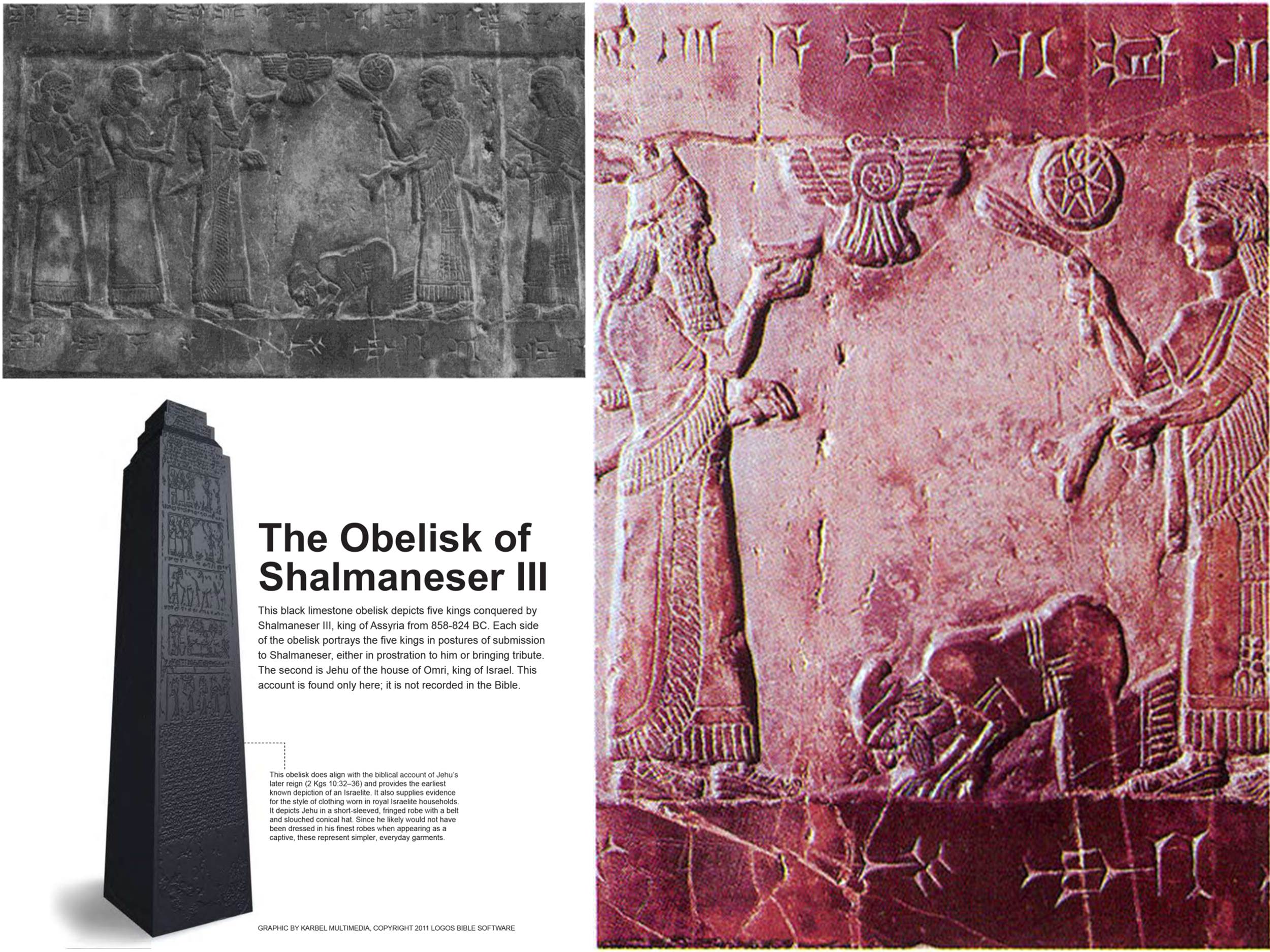
He didn’t want to go because the Assyrians were not nice people! They were the dominant empire in the entire Middle East – Babylon would come next. Archeologists and historians have discovered evidence of several massive military battles in Israel from 853 – 845 B.C. During that period, Israel, Judah and a bunch of other countries apparently joined together to defend themselves against the Assyrians[7]. The Judean King, Jehu, is shown cowering down and kissing the Assyrian King’s feet in this picture, below:

jonah

In Jonah’s day, Assyria is in the middle of a roughly 75 year (823-744 B.C.)[8] slump. They’re not doing so well anymore and are fighting amongst themselves. Meanwhile in Israel, Jeroboam II has come to power. Israel is expanding northwards and gaining territory. The economy is booming. Jonah and Hosea are from the same approximate generation.

But, Assyria is still out there, still dangerous and still a threat to Israel. They’re a serious danger to Israel – that means they’re a serious danger to Jonah. I want you to picture the absolute last kind of foreigner you’d want to share the Gospel with as an American – who would it be?

  • The five Taliban members who were just released in trade for SSG Bowe Bergdahl?
  • The 9/11 hijackers?
  • Osama bin Laden?
  • ISIS?

How would you like to leave behind your family, friends and your home to preach the Gospel to these folks? Not many Christians would be too eager to sign up for that trip? Yet, that’s what Jonah was told to do; and he didn’t like it!

There is a new book out about a Lutheran chaplain during World War II named Harry Gerecke. He served two years in England and then in Europe with the Army. He was preparing to ship back home in the summer of 1945, but was asked to stay and be a Chaplain to the German war-criminals during the Nuremberg Trials. He had watched soldiers blown up, shot and killed by Germans for two years. Now, he was being asked to delay his return home and preach the Gospel to the captured Nazi leaders, many of whom had committed horrible atrocities!

What would he do? What would you do? He stayed 1.5 years extra and reported that four men were saved![9] Put yourself in Jonah’s position, and don’t condemn him too easily. What he did was wrong, of course – but what would you do if God told you to travel to Syria and preach the Gospel to ISIS militants?

WHY DID GOD SEND JONAH TO NINEVEH?

I won’t answer that question until we reach the end of the book! But, what can we learn about God from the very beginning of this little book? God saves people from every tribe, tongue and nation.

The Gospel isn’t an American thing and it wasn’t an Israelite thing – God’s vision has always encompassed more than that. Israel wasn’t supposed to sit still and look pretty because she was chosen (“elect”) by God to be His holy people – she was supposed to:

  1. live the right way
  2. follow His law out of a pure heart, and
  3. draw other nations to Him by her own example!

The Gospel gets shared with everybody, even if we don’t like them.

—————————————————-

[1] This is indeed the crux of the issue! Perhaps the most accessible advocate for the idea that Israelites were supposed to be active missionaries to the pagan world is Walter J. Kaiser. He asks, “[i]t is at this point that the thesis of this book participates in issues that are hotly debated today: Did this ‘kingdom of priests’ serve Israel alone or the entire world? Were they to be active or merely passive witnesses,” (Mission in the Old Testament: Israel as a Light to the Nations, 2nd ed. [Grand Rapids, MI: Baker, 2012], xiii). Kaiser goes on to insist, “[t]he fact remains that the goal of the Old Testament was to see both Jews and Gentiles come to a saving knowledge of the Messiah who was to come. Anything less than this goal was a misunderstanding and an attenuation of the plan of God. God’s eternal plan was to provide salvation for all peoples; it was never intended to be reserved for one special group, such as the Jews, even as an initial offer!” (Ibid, xiv). Kaiser states the issue well, but his opponents do not suggest that Israel was supposed to be an elitist, snobbish society. Nor do they suggest that Israel did not fail in her adherence to the Mosaic Covenant. They merely disagree over the nature of her missions mandate – was it passive or active?

Over against Kaiser’s model is the idea that Israel’s “missions mandate,” such as it was, was basically passive. This position believes that the great ingathering of Gentiles is an eschatological one, for the latter days. This position is well represented by Andreas J. Kostenberger and Peter T. O’Brien, Salvation to the Ends of the Earth: A Biblical Theology of Mission (Downer’s Grove, IL : IVP, 2001), 25-53. At this point, one’s theological stripes will be revealed – will this ingathering take place when Jesus rules and reigns from a literal Jerusalem over a literally restored Israel (dispensationalist), or is this ingathering taking place right now as the spiritual kingdom of Christ reigns in the hearts of the elect (covenantalist)?

I hold to the second option, advocated by Kostenberger and O’Brien, that Israel’s missions mandate was very real, but basically very passive (Jonah being an obvious exception). I am a dispensationalist, so I believe the great eschatological ingathering of Gentiles will take place when Israel is restored, and Christ rules and reigns as her King in Jerusalem in the Millennium (see, for example, Isa 61).

[2] There is some debate about whether Jonah chartered the entire vessel, or whether he merely booked passage as a passenger to Tarshish, where the ship had already been headed. The Scripture itself provides the answer; v.5 tells us that the frightened sailors tossed the wares they were carrying overboard. Evidently the ship was engaged in trade and already bound for Tarshish; Jonah merely slipped on-board after negotiating the fare. If Jonah had chartered the entire vessel outright, they wouldn’t have gone through the trouble of loading wares for later sale in Tarshish. If they had tried to, there would no doubt have been a considerable delay and Jonah would have sought passage on another vessel.

[3] “Although alternatives have been suggested, south-west Spain remains the most likely location for Tarshish,” (T. Desmond Alexander, “Jonah,” in Obadiah, Jonah and Micah, vol. 26, Tyndale Old Testament Commentaries [Downers Grove, IL: InterVarsity Press, 1988], 110). John Walton suggests Tarshish need not be taken as a literal destination, but as a reference to great distance, e.g “I’m headed for Timbuktu!” doesn’t necessarily mean one is going to Mali, Africa. It could mean one just wants to get far, far away (Jonah, The Expositor’s Bible Commentary, vol. 8, revised ed. [Grand Rapids, MI: Zondervan, 2008], 469).

[4] No Bible believer would really believe one can literally hide from God. This is not a legitimate option!

[5] “Jonah wished to escape, not beyond the power of God, but away from the stage on which God was working out His purposes and judgments. The Christian worker anxious to avoid the full impact of modern problems should have no difficulty in understanding Jonah’s action,” (H. L. Ellison, Jonah, The Expositor’s Bible Commentary, vol. 7 [Grand Rapids, MI: Zondervan, 1985], 369). See also Ellison’s remarks on the silliness of the first interpretive option (369). Walton remarks, “Jonah does not necessarily think that distance will put him out of range of the Lord’s reach; he may have thought his flight will simply result in the Lord’s finding someone else for the job,” (Jonah, 469).

[6] Many commentators discount the idea that Jonah was a “missionary” in the NT sense, and certainly don’t agree that Jonah preached the Gospel (according to the revelation Jonah had at the time, the Gospel entailed saving faith in God alone for justification [e.g. Gen 15:6] and loving adherence to the Mosaic Covenant as proselytes). John Walton (Jonah, 457-458, 477-485) and H.L. Ellison (Jonah, 363, 383-384) are particularly insistent on this point. The particulars will wait until we reach Jonah 3, but as for a hint of my own position, Jesus’ own words in Mt 12:41 are rather decisive on this point! But for the sake of brevity I’ll simply refer to Jonah as a “missionary” and his message as “the Gospel” and save the details for later!

[7] See A. K. Grayson, “Assyria, Assyrians” in Dictionary of the Old Testament: Historical Books, ed. Bill T. Arnold and H.T.M. Williamson (Downer’s Grove, IL: IVP, 2005), 100-102

[8] Ibid.

[9] This information is from Lyle Dorsett, “Would You Share the Gospel with Hitler’s Worst Henchmen?” ChristianityToday.com. 23MAY14. Retrieved from http://goo.gl/Ll6mmr.

Why Should Christians be Separate From the World? What Does This Mean!? (1 Peter 2:11-12)

Separation
Click the picture to hear this sermon!

If you read the New Testament, you’ve read that Christians are supposed to be different from the world around us. Why does Peter tell us to be separate from the world? What’s the point? Are Christians somehow “better” than everyone else? Are unbelievers somehow inferior people, folks not worthy to be around? Is that what Peter is talking about? Not at all, that is silly and ridiculous reasoning. I hope you don’t believe that. Peter certainly didn’t!

Today, we’ll take a very honest and important look at why Christians are supposed to be separate from the world.

WE’RE SUPPOSED TO BE SEPARATE FROM THE WORLD (v.11):


11 Dearly beloved, I beseech you as strangers and pilgrims, abstain from fleshly lusts, which war against the soul;


Peter starts out on a sympathetic, friendly note. He writes, “Dearly beloved, I beseech you . . .” I want to point out how Peter is motivating his readers to live Christian lives. He doesn’t just issue commands, like some kind of dictator. He could have done that, but he didn’t. He just appeals to his readers, and us, to do what we already know is right.[1] As Christians, let’s be very honest – we already know we’re obligated to live holy lives as best we can. We just don’t do it. Peter is telling them to remember who they are, so that they’ll be stirred up to actually live like it. So, what are we as believers? 

Peter says that all believer are “as strangers and pilgrims . . .” We don’t have citizenship in this world; if we’re children of God we have heavenly citizenship. That’s why God’s people have always considered themselves different from the world around them. God’s people have always failed when they allowed the influences of this world (which Scripture says is energized and influenced by Satan [Ephesians 2:1-3]) to direct their thoughts, attitudes and actions. We see this after the Fall, when the descendants of Seth intermingled with the Cainite apostates are corrupted the entire earth (Gen 6:1-5). King David also understood this. Read his words here: 

“Hear my prayer, O LORD, and give ear unto my cry; hold not thy peace at my tears: for I am a stranger with thee, and a sojourner, as all my fathers were,” (Psalm 39:12).

David confessed that he was stranger on the earth, a wanderer who was passing through this world! The writer of Hebrews says that all the Old Testament saints had this mindset: 

“These all died in faith, not having received the promises, but having seen them afar off, and were persuaded of them, and embraced them, and confessed that they were strangers and pilgrims on the earth. For they that say such things declare plainly that they seek a country. And truly, if they had been mindful of that country from whence they came out, they might have had opportunity to have returned. But now they desire a better country, that is, an heavenly: wherefore God is not ashamed to be called their God: for he hath prepared for them a city,” (Hebrews 11:13-16).

Think about how zealous we are about being patriotic Americans in this country. However, we ought to be even more patriotic and zealous about our real citizenship in God’s kingdom. Are we? How do we show our Godly patriotism? Peter begs us that, because we are strangers and pilgrims here in this sin-cursed world, we must “abstain from fleshly lusts, which war against the soul.

I want to re-read something I just quoted about the Old Testament believers from the Book of Hebrews: 

“But now they desire a better country, that is, an heavenly: wherefore God is not ashamed to be called their God: for he hath prepared for them a city,” (Hebrews 11:16).

Do you see that because these folks lived as though they were citizens of God’s kingdom (rather than the world) . . . God wasn’t ashamed of them? Do we realize that God is ashamed of us when we don’t act like His children? We show our patriotism for our real country (the heavenly country we’re citizens of) when we don’t act like the world. Think about it – how do you know a foreigner when you’ve seen one? Because they look different! They look different. They talk different. They dress different. They think different. Everything about them is different!

What happens to a foreigner who lives in this country (or anywhere) for long enough? They assimilate. They “go native.” They lose their rough edges and start to fit in and adapt to their new culture and surroundings. Eventually, you won’t be able to tell they’re foreigners at all.

They may still have accents and be a little bit different, but they adapt to their culture. You definitely won’t be able to tell their kids are foreigners! For all intents and purposes, they’ll be Americans.

Peter says we’re foreigners in this world and we ought to act like it. Peter says that God doesn’t want us to assimilate. He doesn’t want us to “go native.” We live here, love here and die here – but we don’t belong here. We don’t bleed red, white and blue – we bleed Christ. God wants us to keep the distinctive speech, attitudes, actions and demeanor that comes with being a Christian and a citizen of God’s Kingdom. We can’t lose any of that; no, Peter says we have to retain that identity as we live in this fallen world.

We’re commanded to not partake of, stay away from and abstain from “fleshly lusts, which war against the soul.” The danger is from within ourselves. It’s our sin that wants to burst out and take control of our lives. Peter says that these desires war against our soul! There is a civil war going on inside our hearts, and Peter says we have the ability to overcome our sin. The Devil doesn’t make a believer do anything. He tempts us and we make a decision to act wrongly

Peter says we’re supposed to act like citizens of God, not citizens of this world.[2] We get upset when people disrespect military members (e.g. elitists who have never served), our national heritage or our country in general. Why do we get upset? Because it’s unpatriotic. It’s “un-American.” It’s arrogant! God gets upset when we have the same attitude about our citizenship in His heavenly country!

HERE’S WHY (v.12):

Here’s why we have to act like citizens of God’s kingdom:


12 Having your conversation honest among the Gentiles: that, whereas they speak against you as evildoers, they may by your good works, which they shall behold, glorify God in the day of visitation.


Peter says (1) we live holy and honest, Christ-like lives, so that (2) even though unbelievers might slander and speak evil of us, (3) they see our witness and testimony, and (4) that can be a major factor in that person getting saved! God can, and does, use our testimony to lead somebody to the Lord. We’re supposed to be separate from the world (live, think and act differently) so that we’re a testimony for God – more than that, so that we prove all the lies spread about Jesus Christ and Christianity wrong!

Did you know that in the early years of Christianity, there were a whole lot of misconceptions, lies and gossip spread about Christianity that weren’t true? For example;

  1. There were wild accusations that Christians engaged in sexual orgies and incest when they met for worship![3] They based this on the fact that believers called one another “brother” and “sister.” They also misinterpreted the command to love one another as Christ loved them (Jn 13:34-35). This was what unbelievers thought went on at their church meetings. Large doses of lies, gossip, innuendo and hearsay helped these ridiculous charges spread rapidly.
  2. There were rumors that Christians were cannibals! This misunderstanding was based on Jesus’ words, “Except ye eat the flesh of the Son of man, and drink his blood, ye have no life in you,” (John 6:53). There were even scandalous rumors that Christians sacrificed small children during the Lord’s Supper, and drank their blood and ate their flesh![4]
  3. Some unbelievers also believed that Christians were atheists! In a world that only worshipped physical, visible gods, Christians were seen as bizarre because they worshipped an invisible God![5] Unbelievers though to themselves, “at least the Jews worshipped at a temple – you guys don’t even do that!”[6]

Now, all of these are silly, slanderous lies that can easily be proven wrong! Peter says one of the reasons we have to act like Godly people is so that we do prove lies about our Savior wrong. People see us on the one hand, and the accusation on the other, and say to themselves, “no, that can’t be true. So and so would never do that!”

This means that God calls us to be separate from the world, not isolated from the world. We aren’t supposed to go up into the mountains, build communes, bake bread together and build tall, thick walls to keep the world out like modern-day monks. We know that’s wrong because Peter said that the unbelieving world will see how we act and how we live.

CONCLUSION:

God doesn’t want us to be separate from the world because we’re better than everyone else (e.g. “holier than thou,” etc.). He wants us to live like Christians in an unbelieving world so that, by our own example, we can be a light for Christ. It actually would have been easier if God did want us to be monks who isolated ourselves from everybody else! No – what God wants us to do is much harder. He wants us to live each and every day in the world, surrounded by sin and temptation – and to rise above it all and be holy. That’s a lot harder.

God didn’t give us this responsibility to be in the world, but not of the world, to torture us. He’s given us the wonderful responsibility to be a part of His plan of salvation!

—————————————————————–

Footnotes:

[1] “Peter did not command his readers; he appealed to their own sense of what is right. As those who have been born again, he knows that they are able to do what he asks. True holiness is not procured by the application of a compelling external authority, but by awakening and strengthening the personal desire and will of those appealed to,” (D. Edmond Hiebert, 1 Peter, revised ed. [Chicago, IL: Moody, 1992; reprint, Winona Lake, IN: BMH, 2008], 154).

[2] “Called as children of the light, Christians are free. Their freedom, however, binds them to their calling. They are free in bondage to God,” (Edmund Clowney, The Message of 1 Peter, The Bible Speaks Today [Downer’s Grove, IL: IVP, 1988; reprint, Kindle edition, 2014], Kindle Location 1394).

[3] For example, in the writings of Minucius Felix from approximately 201 A.D., he relates the charge of a non-Christian who claimed:

“Everywhere also there is mingled among them a certain religion of lust, and they call one another promiscuously brothers and sisters, that even a not unusual debauchery may by the intervention of that sacred name become incestuous: it is thus that their vain and senseless superstition glories in crimes . . .  On a solemn day they assemble at the feast, with all their children, sisters, mothers, people of every sex and of every age. There, after much feasting, when the fellowship has grown warm, and the fervour of incestuous lust has grown hot with drunkenness, a dog that has been tied to the chandelier is provoked, by throwing a small piece of offal beyond the length of a line by which he is bound, to rush and spring; and thus the conscious light being overturned and extinguished in the shameless darkness, the connections of abominable lust involve them in the uncertainty of fate. Although not all in fact, yet in consciousness all are alike incestuous, since by the desire of all of them everything is sought for which can happen in the act of each individual,” (“The Octavius of Minucius Felix,” Chapter 9, Ante-Nicene Fathers, 10 vols., ed. Alexander Roberts, James Donaldson, and A. Cleveland Coxe, trans. Robert Ernest Wallis [Buffalo, NY: Christian Literature Company, 1885], 4:177, 178).

[4] Felix once again records the same accuser:

“An infant covered over with meal, that it may deceive the unwary, is placed before him who is to be stained with their rites: this infant is slain by the young pupil, who has been urged on as if to harmless blows on the surface of the meal, with dark and secret wounds. Thirstily—O horror!—they lick up its blood; eagerly they divide its limbs. By this victim they are pledged together; with this consciousness of wickedness they are covenanted to mutual silence. Such sacred rites as these are more foul than any sacrileges,” (“Minucius Felix,” Chapter 9, ANF 4:177, 178).

[5] “For why do they endeavour with such pains to conceal and to cloak whatever they worship, since honourable things always rejoice in publicity, while crimes are kept secret? Why have they no altars, no temples, no acknowledged images?” (“Minucius Felix,” Chapter 10, ANF 4:178).

[6] “The lonely and miserable nationality of the Jews worshipped one God, and one peculiar to itself; but they worshipped him openly, with temples, with altars, with victims, and with ceremonies; and he has so little force or power, that he is enslaved, with his own special nation, to the Roman deities. But the Christians, moreover, what wonders, what monstrosities do they feign!—that he who is their God, whom they can neither show nor behold, inquires diligently into the character of all, the acts of all, and, in fine, into their words and secret thoughts; that he runs about everywhere, and is everywhere present,” (“Minucius Felix,” Chapter 10, ANF 4:178).

It’s Not About You! (1 Peter 2:4-10)

Bible and a crucifix
Click this picture to hear the sermon!

The last several weeks have been part of one long statement Peter has been making, and they’re all inter-connected:

  1. We’re supposed to be holy because God is holy (1 Pet 1:13-16)
  2. We’re supposed to reckon Christ’s sacrifice as worth the cost of denying ourselves (1 Pet 1: 17-21). He redeemed us with His blood, not with something worthless. If we take His grace for granted, we’re basically calling His sacrifice worthless.
  3. Part of being holy means to love one another (your fellow believers in this church), with a pure heart, fervently (1 Pet 1:22-25).
  4. That means we each have to take action in our lives (1 Pet 2:1-3). We confess and forsake sin that stops us from accomplishing all this. We desire to be corrected by the sincere milk of the Word, so we grow – tossing away sinful behavior, and replacing it with Godly behavior.

So, what’s the point? We usually have tunnel-vision on our individual walk as Christians. We forget that we’re part of a group of people whom God has saved, individually and specifically, for a reason. Today, Peter will tell us why God saved you, what your most basic job is, and why we need to try our best to be a holy people. Peter wants to get us to look beyond ourselves, and understand that all believers are part of a greater Christian community. It’s not about us at all.

Peter is going to use a very simple and familiar example to help us see where we each fit into God’s plan for this age – and why it matters. He’s going to use the idea of a temple. He’s going to mention Christ as the chief corner stone, the foundation block, for this temple. He’s going to say that believers are the individual stones and building blocks which make up this temple. Let’s see what Peter has to tell us:


4 To whom coming, as unto a living stone, disallowed indeed of men, but chosen of God, and precious,
5 Ye also, as lively stones, are built up a spiritual house, an holy priesthood, to offer up spiritual sacrifices, acceptable to God by Jesus Christ.


We’ll spend a little time unpacking what this verse tells us:

First:

Peter writes that all believers continually come to Christ, who is the “living stone.” Why is Christ specifically called a “living stone?” Because we don’t worship a dead Savior. We do celebrate our Savior’s death – because of what that death bought for us. However, we also celebrate His resurrection – because His victory over the grave means our victory over the grave – if we believe in who He is and what He did for us! We worship a Risen and Living Savior – One Who sits at the Father’s side in heaven right now! He’s not dead, He’s alive! He is the foundation stone our faith is built on, but our Savior isn’t a pile of bones on a hillside outside Jerusalem – He’s alive![1]

Second: 

Christ was rejected (“disallowed”) by men, but chosen by God and precious to Him. It’s so easy to skim over those words without a second thought. We ought to realize that Peter was killed for his faith shortly after he wrote this letter. Peter wrote the letter to remind folks who are really suffering about the grace of God – to encourage them about who Christ is (not was) and what He did for them.

We aren’t quite sure when Peter was killed, but it may well have been during Nero’s reign. A man wrote about the terrible persecution against Christians during Nero’s reign:

“Accordingly, an arrest was first made of all who pleaded guilty; then, upon their information, an immense multitude was convicted, not so much of the crime of firing the city, as of hatred against mankind. Mockery of every sort was added to their deaths. Covered with the skins of beasts, they were torn by dogs and perished, or were nailed to crosses, or were doomed to the flames and burnt, to serve as a nightly illumination, when daylight had expired.”[2]

That’s why Peter wrote this in the same letter:

“Beloved, think it not strange concerning the fiery trial which is to try you, as though some strange thing happened unto you: But rejoice, inasmuch as ye are partakers of Christ’s sufferings; that, when his glory shall be revealed, ye may be glad also with exceeding joy. If ye be reproached for the name of Christ, happy are ye; for the spirit of glory and of God resteth upon you: on their part he is evil spoken of, but on your part he is glorified. But let none of you suffer as a murderer, or as a thief, or as an evildoer, or as a busybody in other men’s matters. Yet if any man suffer as a Christian, let him not be ashamed; but let him glorify God on this behalf,” (1 Peter 4:12-16).

People who read this letter could be faced with death for not denying Christ. Peter didn’t want them to deny Christ, and he reminded them about these precious truths as much as possible.

Third:

God is building us up,[3] because we’re living stones, too! Why are we living stones? Because we’ve been born again, raised from death to life. We’ve been spiritually resurrected just as surely as Christ was physically resurrected! What is God building all believers today up into?

Fourth:

We’re a spiritual house – a temple! The church (in a corporate, in-prospect sense) is made up of individual building blocks – people. You and I are the building blocks that are built around the foundation stone of Jesus Christ:[4] 

“For through him we both have access by one Spirit unto the Father. Now therefore ye are no more strangers and foreigners, but fellowcitizens with the saints, and of the household of God; And are built upon the foundation of the apostles and prophets, Jesus Christ himself being the chief corner stone; In whom all the building fitly framed together groweth unto an holy temple in the Lord: In whom ye also are builded together for an habitation of God through the Spirit,” (Ephesians 2:18-22).

As we’re going to see, this means Lone Ranger-type Christianity is un-Biblical. You are each part of a local church (or ought to be), a building block that’s vital to your church. What do we do as a church? We’re being built up by God into a spiritual house (a temple) to do . . . what?

Fifth:

We’re each priests before God! We don’t just make up this temple – we serve in it! There are two basic things a priest does:

  1. A priest is somebody who has access to God in a way that ordinary people don’t
  2. A priest is also somebody who represents God to other people

Each believer is a priest before God in this age! Here is why:[5]

  1. By repenting and believing in Christ, you have direct access to God yourself – you don’t need to rely on anyone to speak to God for you:

“For we have not an high priest which cannot be touched with the feeling of our infirmities; but was in all points tempted like as we are, yet without sin. Let us therefore come boldly unto the throne of grace, that we may obtain mercy, and find grace to help in time of need,” (Hebrews 4:15-16).

  1. The Great Commission commands every believer to go tell others about the Gospel – you live holy lives and give God’s message of salvation to a lost world!

So, we’re each individual priests in this temple, the church – but what are our jobs? The priests in the OT brought sacrifices before God – it was one of their main jobs. That is our job today, also.

Sixth:

Our job is to bring spiritual sacrifices to God – not physical ones! What are spiritual sacrifices? They’re the work we do for the Lord. They’re us using our God-given talents, gifts and abilities for Him wherever He’s planted us. It’s us saying, “You’ve saved me, God, and here is me showing my love and devotion to you . . .” [6]Look at what the Scripture has to say:

“I beseech you therefore, brethren, by the mercies of God, that ye present your bodies a living sacrifice, holy, acceptable unto God, which is your reasonable service,” (Romans 12:1).

“Forasmuch then as Christ hath suffered for us in the flesh, arm yourselves likewise with the same mind: for he that hath suffered in the flesh hath ceased from sin; That he no longer should live the rest of his time in the flesh to the lusts of men, but to the will of God,” (1 Peter 4:1-2).

That’s why we’re supposed to be holy. That’s why we’re supposed to love fellow believers in your church with a pure heart, fervently. That’s why Peter says that we’re priests together in this temple that is the Church. We’re all individual stones, being added to the structure that is the temple of God. We’re all based on the living stone, Christ, the cornerstone! We belong to Him – as a group. 

Seventh:

We’re only acceptable to God because of (“through”) Jesus Christ. He gives us access to God. His death washed us clean and atoned for all our sin. He’s the reason we are priests who can approach God and worship Him by offering spiritual sacrifices!

Now that he’s said all this and made so many amazing statements, Peter goes back to the Old Testament to prove his point:


6 Wherefore also it is contained in the scripture, Behold, I lay in Sion a chief corner stone, elect, precious: and he that believeth on him shall not be confounded.


Peter basically says “that’s why Isaiah wrote this,” and quotes from Isaiah 28:16. Indeed, Christ is the chief cornerstone. He is chosen for the task of redemption and self-sacrifice. He is precious. Whoever believes in (1) who He is and (2) what He came to do will never be put to shame!


7 Unto you therefore which believe he is precious: but unto them which be disobedient, the stone which the builders disallowed, the same is made the head of the corner,


That’s why Christ is precious to us who are believers! Peter quotes from the Old Testament again from Psalm 118:22-23. He uses the picture of a building to make the point. The very stone that the builders rejected as worthless and unfit, ironically, is the one that God placed as the cornerstone in the entire foundation of the church. The Jewish leaders who were supposed to be teaching the people to worship God in spirit and truth were the very ones who looked at Christ and rejected Him as useless. Remember what Isaiah wrote over 700 years before Christ’s virgin birth:

“Who hath believed our report? and to whom is the arm of the LORD revealed? For he shall grow up before him as a tender plant, and as a root out of a dry ground: he hath no form nor comeliness; and when we shall see him, there is no beauty that we should desire him. He is despised and rejected of men; a man of sorrows, and acquainted with grief: and we hid as it were our faces from him; he was despised, and we esteemed him not,” (Isaiah 53:1-3).


8 And a stone of stumbling, and a rock of offence, even to them which stumble at the word, being disobedient: whereunto also they were appointed.


To unbelievers, Christ is literally a stumbling-stone, a rock of offense. They don’t want to be joined to Christ. They don’t want to be priests before God – nothing could be more repulsive! They don’t want to offer spiritual sacrifices to God – that means they’d have to deny themselves and make Him Lord of their life. Unbelievers don’t want to go near God and serve Him. They want God to stay in a galaxy far, far away and to leave them alone.

But, Peter reminds us, that’s not our attitude!


9 But ye are a chosen generation, a royal priesthood, an holy nation, a peculiar people; that ye should shew forth the praises of him who hath called you out of darkness into his marvellous light:


If you’re a believer today, Peter wants to remind you of a few things:[7]

  1. That you’re part of a chosen people – the Church
  2. You’re part of a royal priesthood. You’re not a Lone Ranger Christian out on your own. You’re an integral part of this temple God is building up!
  3. You’re part of a holy nation of believers. We don’t worship the American flag; we worship the cross of Christ – we’re His people
  4. You’re His special (“peculiar”) people
  5. Your job is to be a testimony for Him in everything we do, because God is the One who called us out of darkness and into the light that is Christ (Jn 8:12)


10 Which in time past were not a people, but are now the people of God: which had not obtained mercy, but now have obtained mercy.


Gentiles didn’t used to be the people of God – the Jews were.[8] Now Gentiles are fellow-heirs in the church. Non-Jews didn’t have the mercy of God before – the Jews had been entrusted with the message of salvation: 

“That at that time ye were without Christ, being aliens from the commonwealth of Israel, and strangers from the covenants of promise, having no hope, and without God in the world: But now in Christ Jesus ye who sometimes were far off are made nigh by the blood of Christ,” (Ephesians 2:12-13).

Now we do have that mercy in the Gospel of Jesus Christ!

CONCLUSION:

God called you and saved you. He joined you, as a building block, to the Church – the temple He’s building person by person. Because we’ve been given the responsibility and privilege of serving Him and approaching Him directly, we ought to take our job seriously. Peter says our job is to show God to other people – to unbelievers. We can’t do that if we’re not fighting against sin in our lives! That’s why we need to do our very best to be a holy people. It’s not about just us. We serve in the church. We’re part of a holy group of people God has elected and called to salvation. It’s not about you. It’s about Christ and His church.

———————————————————–

FOOTNOTES:

[1] Edmund Clowney observes, “Peter identifies the cornerstone with Christ. He calls him a living Stone; he would not have us think of his Lord as inert marble! Christ is the living Stone, however, not just because he is a living person, but because he is alive from the dead as the risen Lord. God set his cornerstone in place by the resurrection,” (The Message of 1 Peter, The Bible Speaks Today [Downer’s Grove, IL: IVP, 1988; reprint, Kindle edition, 2014], Kindle Locations 1163-1165).

[2] Tacitus, Annals 15.44. Retrieved from http://goo.gl/etSkSM.

[3] D. Edmond Hiebert makes a point of noting that we are not building ourselves; it is God who is calling us out as individuals and making us a part of His church (1 Peter, revised ed. [Chicago, IL: Moody, 1992; reprint, Winona Lake, IN: BMH, 2008], 132).

[4] Roger Raymer has an intriguing observation:  “Believers are identified with Christ, for He is the living Stone and they are like living stones. And as they become more like Him, further conformed to His image, they are being built into a spiritual house. Jesus told Peter, ‘On this rock I will build My church’ (Matt. 16:18). Now Peter (1 Peter 2:4–5) clearly identified Christ as the Rock on which His church is built,” (1 Peter, in The Bible Knowledge Commentary, ed. J. F. Walvoord and R. B. Zuck, vol. 2 [Wheaton, IL: Victor Books, 1985], 845).

I am not quite convinced that it’s worth drawing that comparison, but it would be worth further study.

[5] “In this building, the Church, we are to offer ‘spiritual sacrifices’ as a ‘holy priesthood.’ The Church has no formal priesthood but is a priesthood. Our sacrifices are the various ministries we perform as we exercise our spiritual gifts. Our priestly duties involve  mediating between God and the world in our mission to the world,” (William Baker, James & First and Second Peter, 21st Century Biblical Commentary Series, ed. Mal Couch and Ed Hindson [Chattanooga, TN: AMG, 2004], 120).

[6] “They are offerings befitting a spiritual priesthood that is prompted by the Spirit and that reflects His nature and essence. They are not sacrifices offered to make expiation for sins nor to procure personal merit before God. Such sacrifices have no place in the Christian church because the perfect sacrifice of Christ on the cross has fulfilled the shadows and symbols of the Old Testament sacrifices (Gen 8:1-10:18). The sacrifices Peter mentions are expressions of worship by the redeemed, offered in gratitude and self-surrender,” (Hiebert, 1 Peter, 134).

[7] I decided to not segue into a discussion on how God applied these same terms to the nation of Israel. I don’t think it’s necessary to delve into that topic for this particular sermon. It will distract from the flow of thought I’m establishing, and it is too weighty a topic to discuss appropriately here. I feel that even a brief mention of the issue will unnecessarily distract from the point of the sermon.

[8] Peter deliberately uses Hosea 1:9-10; 2:23 to make this point. Advocates for replacement theology are quick to seize on this point, and claim that God has applied to promises from Hosea directly to the NT Church. This is not correct; the context of both citations from Hosea will not allow this interpretation. It is far more logical, however, to conclude that Peter used these citations to illustrate his point.

Hiebert agrees, and remarks, “In glancing back over the last two verses, one cannot escape the impression that Peter clearly intended to establish a parallel between Israel and the church . . . It does not naturally follow from the parallel between Israel and the church that Peter believed that the church has permanently replaced Israel, and that the latter will not again enjoy a separate existence under the favor of God,” (1 Peter, 147).

Raymer observes, “Peter just used similar terms to point up similar truths. As Israel was a ‘chosen people, a royal priesthood, a holy nation, a people belonging to God,’ so too believers today are chosen, are priests, are holy, and belong to God. Similarity does not mean identity,” (1 Peter, 846).

Solve Your Problems With Fellow Believers – Now! (1 Peter 2:1-3)

bible
Click the picture to listen to this sermon!

Peter has talked in generalities so far about personal holiness and all that entails:

  • “Don’t act like you used to before you were saved! Be holy, because the God who called you to salvation is holy . . .” (1 Peter 1:13-16).
  • “Don’t cheapen the salvation God has given you . . .” (1 Peter 1:17)
  • “Christ died to redeem you from your sins today . . .” (1 Peter 1:18-19)
  • “Love fellow believers with a pure heart fervently . . .” (1 Peter 1:22-25)

All of this is good, Biblical and correct; it’s also general and a little bit vague. What does change look like? How is it done? What are the first steps toward making it happen? It’s easy to sit here and nod our heads, but how do actually go about doing something?!

Peter has some very practical advice for us on how to make everything he’s spoken about (1 Pet 1:13-26)[1] happen. He’s specifically zeroing in, like a smart bomb, on our conduct towards other believers – on loving one another with a pure heart fervently. Let’s see how we can each start to make this happen in our lives!

 FIRST – REPENT (v.1):


1 Wherefore laying aside all malice, and all guile, and hypocrisies, and envies, and all evil speakings,


What do you think it means to “lay aside” all these sins? It means to repent! If you lay something aside, you pick it up, put it down and walk away from it. You aren’t engaged with it anymore. You aren’t toying with it. You aren’t sneaking a little bit of it when you have a chance. You’ve walked away from it.

We did an entire series on growth in Christ, and one sermon very specifically about repentance earlier this year in my church.[2] The clearest and plainest teaching from Scripture I know of that captures what real repentance looks like was written by Solomon: 

“He that covereth his sins shall not prosper: but whoso confesseth and forsaketh them shall have mercy,” (Proverbs 28:13).

Think about what this means. If you try to cover up your sin from God, you will not prosper spiritually at all. Your walk with God will be horrible. You will not have peace with God. Whoever confesses their sin to God, and forsakes (e.g. walks away from) their sin will have mercy from God. This means:

  • You don’t just admit you were wrong
  • You stop the behavior
  • You lay it aside
  • You walk away
  • You abandon it
  • You leave it behind

Don’t ever separate confession and forsaking sin – they’re an inseparable part of real repentance! So, in a general sense, every believer has a duty to (1) ferret out and identify sin in their life, (2) confess that it’s wrong and contrary to God’s Word, and (3) lay it aside and walk away.

Let’s get down to brass tacks – Peter has been talking about holiness. Part of that holiness means we love fellow believers in this local church with a pure heart, fervently (1 Pet 1:22). How do we make that happen? How do we leave the ivory tower behind and see where the rubber meets the road? Here’s how:

  • First, confess and forsake the sin of malice towards other believers in your church. This includes ill-will, nasty thoughts or wishes.[3] It doesn’t have to be malevolent, like wishing for their death! It can be more subtle, but still pretty cruel. You could intentionally ignoring their prayer requests, being intentionally nasty or icy in attitude or demeanor, making it clear you don’t care for them, and much more.
  • Second, confess and forsake the sin of guile towards other believers in your church. This is being two-faced, deceitful, tricky and slimy in any way towards.[4]
  • Third, confess and forsake the sin of hypocrisy towards other believers in your church. Do you act pious and spiritual on the outside, but spend your energy trying to hurt other people?
  • Fourth, confess the sin of envy towards other believers in your church. This means to want, desire or be jealous of something someone else has. It could be envy about a bigger house, better car, higher paying job, nicer family, etc. “A sound heart is the life of the flesh: but envy the rottenness of the bones,” (Proverbs 14:30).
  • Fifth, confess and forsake the sin of evil speaking towards other believers in your church. Do you engage in gossip, slander, or in general talk behind somebody’s back? How many times do we cloak our gossip and back-biting in a “prayer request” to a friend?

All of this presupposes the fact that we’re actually convicted about our sin towards other believers. Conviction is an inner acknowledgement of guilt. It’s when we know we’ve done wrong, because the Holy Spirit has brought it to our attention very directly![5] We can be convicted all we want, but that’s not the same as actually doing anything about it.

Something that Peter has said over the past few weeks may have convicted you. Conviction is meaningless without action – without repentance. Repentance means to confess and forsake their specific sin. It means to (1) admit to God that you’re wrong and to (2) lay that sin(s) down (“lay aside . . .”) and walk away from it.

After we put off the old person and actions we used to be before we were saved, we’re supposed to replace those old ways of life with a Godly way of life (Eph 4:17-32):

“That ye put off concerning the former conversation the old man, which is corrupt according to the deceitful lusts; And be renewed in the spirit of your mind; And that ye put on the new man, which after God is created in righteousness and true holiness,” (Ephesians 4:22-24).

How do we do this?

SECOND – LET THE BIBLE CORRECT YOU (vv.2-3):


2 As newborn babes, desire the sincere milk of the word, that ye may grow thereby:


We let the Bible correct us! Just like a newborn baby desires milk, we (as believers) ought to desire the pure, sincere and uncorrupted milk of the Word of God – the Scriptures.[6] Why is that? Because that’s how we grow – by the Word of God! We grow by systematically getting rid of sin and replacing it with Godly behavior. It’s a perpetual exchange system; bad for good; sinful for holy

Growth will not happen unless we sincerely want to change. Our repentance has to be genuine. That means it has to be based on real conviction. Peter says we ought to desire the Word of God just as enthusiastically as a little baby desires milk. Other versions translate that as to “crave” or “yearn” for the sincere milk of the Word, so that we’ll grow.[7] Do we have a desire to actually change any of these sinful attitudes and actions towards fellow believers, if you have any? What have we been growing on recently? We’re supposed to desire the sincere, pure and undiluted Word of God so that we’ll grow.

Have we been making do spiritual milk that’s diluted, impure and basically a cheap-knock off? How can a baby grow with diluted milk? Likewise, how can a Christian grow by only following the convenient parts of God’s Word? How can we dilute God’s revelation and expect to be a holy people?[8]


3 If so be ye have tasted that the Lord is gracious.


This is a quote from the OT, where the Psalmist wrote, “O taste and see that the LORD is good: blessed is the man that trusteth in him,” (Psalm 34:8). This is an intentional poke by Peter, designed to convict us and gently shame us if we’re getting upset at God’s commands.[9] It’s as if Peter was saying: 

  • “Repent of all these horrible sins that ruin the fellowship in your local church! Malice, guile, hypocricy, envy and evil speaking – repent of all of it!”
  • “Get rid of it, and replace it with Godly behavior. Crave and desire the Word of God, so that you’ll grow!”
  • “That is, if you really are saved and have tasted the salvation Christ provided, and know how gracious He is . . .”


Have you experienced and tasted the salvation of the Lord?[10] Have you been resurrected from spiritual death from spiritual life by the Word of God (Jn 11:38-44; Jas 1:18)? Have you tasted how good salvation is? Have you tasted how pure and good the sincere milk of the Word is? Then why don’t we make a firm commitment to stop letting sin keep us from loving one another with a pure heart, fervently? Repent of your sin towards fellow believers in your church, and make a determination to forsake those sins and replace them with Godly behavior. It’s not a suggestion; it’s a command.

——————————————————————————-

Footnotes:

[1] This is clearly the context for Peter’s exhortation (1 Pet 2:1-3). He says “wherefore,” which is meant to connect what follows to what has come before (1 Pet 1:13-25). For some bizarre reason, Thomas Schreiner restricts the “wherefore” to the reality of the new birth in Christ; “[t]he ‘therefore’ (oun) is understood by some to reach all the way back to 1:13–25, and this is a possibility. But it seems more likely that it relates to what has just preceded, namely, the new life that believers enjoy by God’s grace,” (1, 2 Peter, Jude, vol. 37, The New American Commentary [Nashville: Broadman & Holman Publishers, 2003], 97). This is too restrictive; Peter’s exhortation to lay aside specific sins seems to clearly tied to (1) holiness in general and (2) conduct towards fellow believers specifically.

[2] See also an entire sermon series about Growth in Christ, and a sermon about repentance specifically, preached on 12JAN14. PDF notes and audio are available at the link.

[3] This is not malice in a vague, general sense – it is very specifically targeted at malice towards fellow believers, the very folks Peter has just commanded us to love with a pure heart, fervently (1 Pet 1:22). “In the context, the term seems to have a more specific meaning: it refers to the basic attitude of ill will toward others,” (D. Edmond Hiebert, 1 Peter, revised ed. [Chicago, IL: Moody, 1992; reprint, Winona Lake, IN: BMH, 2008], 121).

[4] “So it comprehends flattery, falsehood, and delusion, which is a crafty imposing upon another’s ignorance or weakness, to his damage,” (Matthew Henry, Commentary on the Whole Bible [Peabody: Hendrickson, 1994], 2425). “It is the selfish, ‘two-faced’ attitude that deceives and hurts others for personal gain,” (Hiebert, 1 Peter, 122).

[5] See Rolland McCune, A Systematic Theology of Biblical Christianity, 3 vols. (Detroit, MI: DBTS, 2009), 2:304. “The Holy Spirit does not merely accuse men of sin but brings an inescapable sense of guilt. The Holy Spirit is God’s prosecuting attorney presenting God’s case against the sinner.”

[6] The reference to newborn babies desiring milk is not negative and derogatory, as it is with Paul (1 Cor 3:1-4). See Hiebert (1 Peter, 123).

[7] “Christians must be addicted to the Bible,” (Edmund P. Clowney, The Message of 1 Peter, The Bible Speaks Today [Downer’s Grove, IL: IVP, 1988; reprint, Kindle edition, 2014], Kindle Locations 1091-1092).

[8] Jay Adams remarks, “Under the label of pure milk every sort of mixture is offered on the supermarket shelf. Peter wants his readers to be sure that what they drink will promote, rather than stunt, Christian growth . . . Peter wants, rather, to emphasize the importance of (1) developing a desire (craving) for God’s truth over against his former desires for the devil’s lies, and (2) the need to be aware that not all that goes for milk is pure (much has been adulterated),” (Trust and Obey [Greenville, SC: A Press, 1988], 58).

[9] Hiebert writes that Peter’s comment “does not imply doubt – it assumes the reality of the past experience of God’s amazing goodness and compassion in Christ. But the conditional construction is an implied invitation to the readers to self-examination on the matter,” (1 Peter, 126).

[10] Clowney observes, “[w]hat quickens our desire for the life-giving word of God? Peter answers that we know the taste. Our culture makes the image clear; advertisers spend millions to promote the taste of a cola. Reading the Bible is addictive when we begin to get the taste. What we taste in Scripture is not simply the variety and power of the language. What we taste is the Lord,” (1 Peter, Kindle Locations 1130-1133).

Love One Another (1 Peter 1:22-25)

Click the picture to listen to the sermon

I made the point last week that God didn’t just die to give us eternal life with Him. He also died to save us from the “vain conversation” (worthless way of life) we were in before we were called by the Holy Spirit.[1] He died to redeem you from your sins right now, not only in the next life. We were created in the image of God. That image was ruined and scarred by sin. Once we’re saved, we’re commanded to grow in our faith and grow into Christlikeness: 

“But now ye also put off all these; anger, wrath, malice, blasphemy, filthy communication out of your mouth. Lie not one to another, seeing that ye have put off the old man with his deeds; And have put on the new man, which is renewed in knowledge after the image of him that created him,” (Colossians 3:8-10).

When we become children of God, that perfect, harmonious and sweet relationship with both (1) God and (2) other people that we were created to enjoy can slowly be re-fashioned and reformed.[2]

Peter has already talked about us fighting our way to holiness in our thoughts, attitudes and actions: 

“Wherefore gird up the loins of your mind, be sober, and hope to the end for the grace that is to be brought unto you at the revelation of Jesus Christ; As obedient children, not fashioning yourselves according to the former lusts in your ignorance: But as he which hath called you is holy, so be ye holy in all manner of conversation; Because it is written, Be ye holy; for I am holy,” (1 Peter 1:13-16).

We’ve looked at this already – Peter was referring to our conduct in general and how that impacts our relationship with God. He’s holy; He saved us; our obligation is to be holy, too! Today, Peter has another implication for us about our relationship to fellow believers in our local church – even this one. It’s that we’re commanded to actually love one another. Not to pretend or put on a fake face – but to actually love the other believers in your church – in this church.


22 Seeing ye have purified your souls in obeying the truth through the Spirit unto unfeigned love of the brethren, see that ye love one another with a pure heart fervently:


We’re born dirty – our souls are polluted and filthy. Without the saving work of Christ in our lives, our souls are as rotten and putrid and unacceptable to God as Lazarus’ rotting, maggot-infested flesh in that tomb in Bethany. I know unbelievers don’t accept that, because the Bible says they don’t. I also know that many Christians don’t believe that about themselves. We’ve been told since we were children that we ought to think a whole lot of ourselves and have a good opinion of ourselves. “There is no fear of God before their eyes,” (Romans 3:18).

But, Peter is writing to believers. He writes that because your souls have been purified by the Spirit[3] (we’re called, our heart is changed, we repent and believe), you ought to do something very specific – you ought to love your fellow believers! Not just in a general sense where you can say, “I love all Christians!” I mean very specifically – you are commanded to love the people who fellowship with you in your own church![4] What does this love look like? 

Peter said, “see that ye love one another with a pure heart fervently.” Christ redeemed you and cleansed you so that you would love the brethren in this church fervently. This means this love isn’t fake. You don’t think to yourself, “I’ll smile at you and pray for you, but I really don’t like you at all!” No, real love for your fellow church members comes out of a pure heart.

Let’s go back to the image of God. If sin hadn’t ruined God’s perfect creation: 

  • We’d all worship God in spirit and truth
  • We’d all live in peace with one another – the first thing that happened after the Fall was a murder!

Now that you’re saved, you’re commanded to worship God in spirit and in truth, and you have the Holy Spirit to make that happen. Also, Peter commands you to love one another. We’re commanded to grow closer to Christ and be renewed in His image (Col 3:10). Our Christian life now is supposed to be a little preview of the glory to come, where (1) we actually do worship God in spirit and in truth, and (2) we actually do love fellow believers fervently, with a pure heart.


23 Being born again, not of corruptible seed, but of incorruptible, by the word of God, which liveth and abideth for ever.


You’ve been born again, redeemed and made a new creation by the word of God – the Gospel. That means that believers ought to have real brotherly love among one another. There’s enough backbiting, backstabbing, gossip and slander going on out in the world; this should never be named among Christians. Peter is reminding us of what God did for us, so that we admit what our own responsibilities are – to love one another with a pure heart, fervently!

If you say you can’t love one another, you’re saying God is a liar – period.[5] Because you’ve been born again by the word of God – it’s possible! You may object: 

  • “Yeah, but God doesn’t know Mr. Smith! God didn’t see him coming!”
  • “He’s a really unlovable, mean guy! You know it’s been three weeks since he shook my hand!”
  • “He smells sometimes and his wife didn’t even come to the last ladies meeting!”

Let me respond: 

  • God does know Mr. Smith
  • God did see Mr. Smith coming – Scripture says that God decided to save him, individually and specifically, before the foundation of the world (e.g. Eph 1:4-6)
  • Smith may not be the nicest guy in the world – have you prayed for him? Have you make an effort to be-friend him?
  • Smith might smell sometimes, just stand upwind from him!
  • Maybe his wife was worried and burdened with something, and wasn’t trying to snub you – maybe she needs prayer, too!


24 For all flesh is as grass, and all the glory of man as the flower of grass. The grass withereth, and the flower thereof falleth away:
25 But the word of the Lord endureth for ever. And this is the word which by the gospel is preached unto you.


God saved you from the worthless way of life you were imprisoned in – a way of life that might look and sound great for a time, but would rot away and die in the blink of an eye, like dying grass or a fading flower. God’s word endures forever, and it was this word that was preached to you when you repented and believed. He redeemed you to live for Him. Living for Him means holiness. Paul told the believers in Thessalonica that they should “walk worthy of God, who hath called you unto his kingdom and glory,” (2 Thessalonians 2:12). Part of that means we love fellow believers everywhere, but particularly in this local church, fervently out of a pure heart.

If there is a fellow-believer somebody in this church specifically, or in your life generally, who you despise or dislike . . .

  • Have you prayed for the love and kindness God commands you to have?
  • Have you prayed that God would soften your heart and wipe pettiness and sin away?
  • Have you prayed that He would do the same for that other person?
  • Are you even willing to do that? If not, why not? It’s a commandment from the Word of God?

It’s possible to love fellow believers – Peter says it’s our obligation. More than that, he says it should be the logical and inevitable result of our salvation. We should want to love fellow believers in our local church! Are we willing to submit to this?

——————————————————-

Footnotes:

[1]The design of Christ in shedding his most precious blood was to redeem us, not only from eternal misery hereafter, but from a vain conversation in this world. That conversation is vain which is empty, frivolous, trifling, and unserviceable to the honour of God, the credit of religion, the conviction of unbelievers, and the comfort and satisfaction of a man’s own conscience,” (Matthew Henry, Commentary on the Whole Bible [Peabody: Hendrickson, 1994], 2424). Emphasis mine.

[2] Millard Erickson writes: “God’s creation was made for definite purposes. The human was intended to know, love, and obey God, and live in harmony with other humans, as the story of Cain and Abel indicates . . . The image itself is that set of qualities that are required for these relationships and this function to take place. They are those qualities of God which, reflected in human beings, make worship, personal interaction, and work possible,” (Millard J. Erickson, Christian Theology, 2nd ed. [Grand Rapids, MI: Baker, 1998], 532-533).

This image can only be “realized” through the new birth which results in salvation through Jesus Christ. Only in Christ can we begin to realize the fulfillment of our horizontal relationships with others of faith, and our vertical relationship with God.

[3] The entire context of 1 Peter 1 supports this view. It seems that only Wayne Grudem argues that Peter refers to progressive sanctification, not positional sanctification. Grudem writes, “this ‘purification’ is something the readers have themselves done (‘having purified your souls’), but Christians are never in the New Testament said to be active agents in God’s initial cleansing of their souls at conversion. On the other hand, they are said to be active in the progressive work of sanctification,” (1 Peter, vol. 17, Tyndale New Testament Commentaries [Downers Grove, IL: InterVarsity Press, 1988], 93). The sticking point for Grudem is that the Peter suggests that we have purified ourselves. This is an unduly pessimistic viewpoint; who would deny that men and women make free and voluntary decisions to repent and believe? The fact that people only believe because of the work of the Spirit is irrelevant. Not every reference to the Gospel is meant to be a treatise on the compatibilist view of God’s sovereignty and man’s free will. The greatest, most succinct statement on this tension with regards to salvation is found in Article 6 of the 1833 New Hampshire Confession of Faith:

“We believe that in order to be saved, we must be regenerated or born again; that regeneration consists in giving a holy disposition to the mind; and is effected in a manner above our comprehension or calculation, by the power of the Holy Spirit, in connection with divine truth, so as to secure our voluntary obedience to the Gospel; and that its proper evidence is found in the holy fruit which we bring forth to the glory of God,” (from William Lumpkin, Baptist Confessions of Faith, revised ed. [Valley Forge, PA: Judson, 1969], 364-365). Emphasis mine.

Grudem’s arguments aren’t convincing; see Thomas Schreiner for a rebuttal (1, 2 Peter, Jude, vol. 37, The New American Commentary [Nashville: Broadman & Holman Publishers, 2003], 92–93).

[4] In some sense, we could see this as another example of how impractical it is to talk of the (1) church in prospect, instead of (2) the local church.

[5] Jay Adams wrote, “Peter makes a play on this common word and says in effect, ‘Now what people have talked about can really take place,’  . . . Christian counselees who deny the possibility of loving another Christian can be faced with this passage. ‘Either it is possible,’ they may be told, ‘or you deny your own salvation. Christ cleansed us for this purpose,’” (Trust and Obey [Greenville, SC: A Press, 1988], 49-50).

  1. Edmond Hiebert concurred, “Peter well knew that such a life of mutual love should be rooted in a new nature. The new birth makes possible and demands such a life,” (1 Peter, revised ed. [Chicago, IL: Moody, 1992; reprint, Winona Lake, IN: BMH, 2008], 114).