Why is Jesus Our Substitute?


Why are so many Christians, including myself, not as energetic in spreading the Gospel as we should be?
Why are we so uncaring?
Why do we not maneuver conversations with co-workers, friends and family to spiritual matters once in a while?
Why, instead, do we conspicuously try to avoid these topics?
Perhaps, as Lewis Chafer suggests, we’re simply not right with God:
. . . this Divine burden for the lost is a very uncommon experience among believers to-day ; and the solution of this problem is found in the last step that marks the movements of the ” power of God unto salvation.” The difficulty lies with the defilement of the priests before God who do not and cannot, because of their own unfitness, experience the love of God for others, or prevail with God in the holy place. [1]
Under the Mosaic Law, the priest could not approach God in an impure state, else he would be struck dead. Peter applied this privilege, and responsibility, to Christians in this dispensation:
But you are a chosen race, a royal priesthood, a holy nation, a people for his own possession, that you may proclaim the excellencies of him who called you out of darkness into his marvelous light (1 Peter 2:9).
New Testament believers are each individual priests before God, blessed with the privilege of approaching God on our own, without a human intercessor. How seriously are we taking our responsibility to be holy? Is unconfessed and unrepentant sin a trivial, laughing matter in our lives? It shouldn’t be; an Old Testament priest would have been killed for such a permissive attitude towards God’s holiness. Perhaps if we get our own spiritual house in order, we will each experience the zeal for personal evangelism we should have.
[1] Lewis S. Chafer, True Evangelism (New York, NY: Gospel Publishing House, 1911), 130.

Ephesians 2:1-9 is a very frank look at what God saved Christians from and about who we really are as people. Are we good people who need help from God? Or, are we rebellious sinners in desperate need of a Savior? For non-Christians, this is a sobering and honest look at sin and their need for Christ. For Christians, this is a reminder of what we’re saved from, and a rebuke to live for God like we ought to. I hope you find you find this little study helpful!
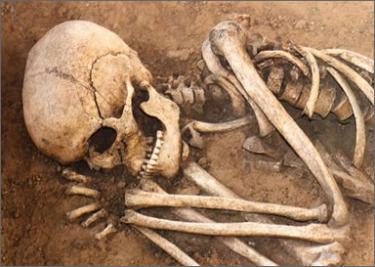
Right up front, without any preamble, Paul reminds the Christians in Ephesus that they used to be “dead in trespasses and sins,” (Eph 2:1). This is who we are without Christ; not physically dead but spiritually dead. This runs counter to what we want to believe about ourselves. We want to believe we’re “good” people.
However, what standard, or benchmark, are people using when they describe themselves as “good people?” Who says murder is wrong? Who says stealing purses from old ladies is a bad thing? Who says marriage is a sacred covenant, or agreement, between a man and a woman? Who says it is morally wrong to be unfaithful to your spouse? Without an anchor of som
e sort, some objective benchmark to ground morality and human “goodness,” then we’re left with a purely subjective mess.
Scripture teaches that all of creation was made by God, and more specifically that men and women are made in God’s image (Gen 1:27-28). Being His creatures, God’s standard is the benchmark for morality and behavior. Scripture teaches us that we’re not good people. Our entire concept of human morality is built on God’s word (Rom 2:14-15). God’s word tells us we’re dead in trespasses and sins without Christ.
Again, this isn’t something people like to hear. Many Christians like to deny the idea of “total depravity,” typically out of a sinful desire for autonomy from God or as a visceral reaction against what they perceive as Calvinism. As theologian Michael Horton wrote, “. . . pelagianism is the natural religion of humanity!” [1] Even compromising Christian counselors deny this doctrine. For example, one prominent Christian counselor boldly declares that his end-goal when assisting people through crisis is to restore self-esteem and instill more self-reliance in the individual! [2] He even goes so far as to declare:
“Jesus’ ministry was one of helping people achieve fullness of life and assisting them in developing their ability to deal with the problems, conflicts and burdens in life.” [3]
It is difficult to imagine a more un-Biblical and ridiculous concept of Christ’s ministry. So much for repenting and believing in the Gospel (Mk 1:15)! Self-reliance is what doomed Adam and Eve in the Garden; they chose to follow their desires over God’s command. This has been man’s natural state ever since (Rom 5:12-21); we don’t want to rely on God, we want to rely on ourselves.
Consider what Paul wrote in the Book of Romans:
“For the wrath of God is revealed from heaven against all ungodliness and unrighteousness of men, who by their unrighteousness suppress the truth. For what can be known about God is plain to them, because God has shown it to them. For his invisible attributes, namely, his eternal power and divine nature, have been clearly perceived, ever since the creation of the world in the things that have been made. So they are without excuse,” (Rom 1:18-21).
We can see from Paul’s words that knowledge of God is everywhere, but men hold back, crush down and suppress this truth in unrighteousness. We don’t want to acknowledge that God is there, because then we’re accountable for what he says. Paul went on to paint a clear picture of all people, Jew and Gentile, knowing the truth about God but glorifying themselves instead:
“Because that, when they knew God, they glorified him not as God, neither were thankful; but became vain in their imaginations, and their foolish heart was darkened,” (Rom 1:21).
Also, remember the testimony of Romans 3:9-18, where Paul once again explains the spiritual plight of any unregenerate person, Jew or Gentile. Pay particular attention to these two verses:
“As it is written, There is none righteous, no, not one,” (Rom 3:10).
“There is no fear of God before their eyes,” (Rom 3:18).
People are not wandering around, desperately seeking God. Spiritual things are foolish to them. I can recall my own father chiding me with a knowing smile when I was on my way to church one Sunday morning,
“Go ahead and go to church,” he said wistfully. “You’ll soon see there’s nothing to all that nonsense. I figured it out. You will too.”
Paul’s words stand true here; “But the natural man receiveth not the things of the Spirit of God: for they are foolishness unto him: neither can he know them, because they are spiritually discerned,” (1 Cor 2:14). The fact that any man does seek God is evidence of the Holy Spirit working in your heart
This is what “dead” in trespasses and sins means. It means that unsaved, unregenerate rebel sinners are spiritual corpses. A dead body cannot rise up again! I was a Military Police officer for 10 years and saw many dead bodies in the course of duty; I can assure you none of those bodies was capable of rising up and walking away. They were dead. This is our spiritual condition without Christ; dead and gone without any hope in the world. It means knowing God is there and pushing that knowledge away, crushing it under false hopes, cynicism, etc. Knowing this makes us accountable for our own sin. Our inherent sin places an unbridgeable gap between us and God. Christ came to fill this gap and save sinners who don’t even want to be saved.
Paul continues describing the spiritual state of the Ephesian Christians before their salvation. This also describes modern Christians before they were saved by Christ. It describes you right now if you have not been saved by Christ.
People without Christ walk “according to the prince of this world, according to the prince of the power of the air.” Christians used to act this way, and were formerly energized and influenced by Satan. Numerous places in Scripture testify that this “prince of the power of the air” is most certainly Satan himself. In Jn 12:31, Christ discloses that by His death on the cross, Satan will be eventually cast out. His hold on people will be broken. [4] Likewise, in Jn 16:11, Christ comforts His disciples and promises to send the Holy Spirit as a Counselor or Helper for them after He ascended to the Father. Christ explained the role of the Holy Spirit in a Christian’s life, and said the Holy Spirit convicts men of judgment, because “the prince of this world is judged.”
What Paul says about Satan’s activity is so very important. Satan is “the spirit that now worketh in the children of disobedience.” Notice that Paul describes unsaved, rebellious men and women as “children of disobedience.” The natural man is inherently rebellious against God. Satan is active and working in the lives of people who are unsaved and “the whole world lieth in wickedness,” (1 Jn 5:19). He does the same in a Christian’s life. The critical difference is that a Christian doesn’t belong to him anymore.
Romans 6 brings this out quite clearly. A person belongs in either one of two spiritual spheres; to Satan or God. People are by nature “children of disobedience” and belong to Satan without saving faith in Christ. After salvation, a person’s headship or spiritual ownership transfers to God. This is a legal, forensic decision by Christ to declare believers righteous when He is under no obligation to do so! Do you belong to Satan or God today?
Paul goes on, describing our actions before salvation. Our “conversation” (or daily conduct) was about the lusts of the flesh. There was little to no thought about God’s standards, our own sin, and repentance for that sin. We lived our own lives for ourselves, not for God who created us. Our goal was to fulfill our own desires of the flesh and the mind. We know when bad and sinful things pop into our minds. We’ve all acted on some of these thoughts and made mistakes we’ve regretted and done things we’re not proud of. All of us know our hearts, and realize we’re sinful people. We all know about this gap between us and God.
Again, Paul makes no apologies for portraying men and men as the rebellious sinners they are. He writes that we are “by nature the children of wrath.” We are born as rebellious sinners, suppressing the truth and knowledge of God. It is our natural state. You and I weren’t born with a disposition to obey God and worship Him as Lord! We were born with a disposition to sinful thoughts and actions, which are opposed to God in every possible way!
“For there is not a just man upon earth, that doeth good, and sinneth not,” (Ecc 7:20).
This doesn’t mean that unsaved people aren’t nice people who do nice things. It does mean that, because of our rebellious, sinful nature, nothing we do gains us any points with God in any way.[5] It is a matter of perspective. It’s a matter of standards.
“Depravity as a doctrine does not stand or fall on the ground of man’s estimation of himself; it rather reflects God’s estimation of man.” [6]
By our own standards, I like to think I’m a pretty good guy. By God’s standard, I’m a rebellious sinner. We’re not sinners by our actions; we’re sinners by our very nature. This encompasses both thoughts and actions.

Think about the significance of this small word, “but.” [7] God is “rich in mercy.” He didn’t have to provide a way of salvation for us, but He did anyway. He was not obligated to do this. Our just punishment for rebellion is instant destruction. So many Christians have a small conception of our just and Holy God. They emphasize God’s love, but denigrate His holiness and terribly underestimate the depths of human sinfulness. This salvation He provided showed the “great love” He has for us. This is undeserved love. Because we’re spiritually dead to God, His love is shown by the fact that He even bothered with us in the first place.[8] Again, salvation in Christ transfers us from one category to another – from Satan’s control to God’s control. Sin no longer has absolute dominion over a Christian; this is a promise unbelievers cannot claim as their own:
“For sin shall not have dominion over you: for ye are not under the law, but under grace,” (Rom 6:14).
What does this tell us about God? He is holy, loving and just. We are sinful, rebellious and undeserving people. We should praise His name in every aspect of our lives.
Paul writes that this salvation in Christ “hath raised us up together, and made us sit together in heavenly places in Christ Jesus,” (Eph 2:6). He is reminding the Ephesians, and us, about where our future home is. We are strangers and pilgrims on this earth (1 Pet 2:11), ambassadors for Christ (2 Cor 5:20). This world is not our eternal home; our hope is beyond this temporal world:
“For our conversation is in heaven; from whence also we look for the Saviour, the Lord Jesus Christ: Who shall change our vile body, that it may be fashioned like unto his glorious body, according to the working whereby he is able even to subdue all things unto himself,” (Phil 3:20-21).
If we call ourselves Christians, we ought to act and think like it! We don’t have to bring sacrifices to an altar as an offering for God anymore; the ceremonial law has passed away in this dispensation. Instead, Paul tell us our reasonable service is to offer ourselves to God (Rom 12:1). This is the only proper response to the glorious gift of salvation.
“I beseech you therefore, brethren, by the mercies of God, that ye present your bodies a living sacrifice, holy, acceptable unto God, which is your reasonable service,” (Rom 12:1).
God desires to be worshipped in spirit and truth (Jn 4:24). Our duty is to try our level best to fulfill this calling, looking forward to glorious eternity when we can do so, without possibility of sin.

Paul reminds us what God’s entire purpose in human history is. Some people believe the main point, or synopsis, of Scripture is that God saves us from sin. This is man-centered thinking and it is terribly wrong. It isn’t about us; it’s about Him. The entire arc of Scripture is about God bringing about His kingdom for His glory.
Christ’s sacrifice for sinners demonstrated His great love. But what was the point of Christ’s sacrifice? Why did God provide a way of salvation and elect to save anybody at all? For our sake? Surely not! He did it so that it would glorify His name and lead a grateful and undeserving people to worship Him the way we ought to have done all along – the way He deserves to be worshipped. Consider the following Scripture passages which plainly show that God works in human history for His own glory, not our own:
Christ’s sacrifice on the cross and our salvation isn’t about us. It’s about God, and the honor and glory due to Him. So few Christians have any idea what the phrase “grace of God” even means. To them, Jesus is a Sunday School character sitting on a green field, surrounded by fluffy white sheep with a child on His lap and a dove floating above Him in the sky! Christians must be committed to really deepen their faith and move beyond crayon Christianity and really understand and appreciate who God is, and reorient our lives to show it.
We are saved by grace through faith, which is unmerited or undeserved favor. Salvation is a gift from God, and Christians did not earn or deserve this gift in any way. I’ll turn from Ephesians at this point, and briefly discuss what the Gospel actually is. I’ve referenced it enough in this little paper, and it must be heard.
I believe there is one verse from the Gospel of Mark that is the clearest, most comprehensive passage on salvation in the Scripture:
“Now after that John was put in prison, Jesus came into Galilee, preaching the gospel of the kingdom of God, And saying, The time is fulfilled, and the kingdom of God is at hand: repent ye, and believe the gospel,” (Mk 1:14-15).
This is the simplest Gospel verse in the Bible. Salvation isn’t a fast food menu where anybody can pick what they like. You can’t pick and choose from a potpourri of man-made religions, choose whichever suits you best and receive your own version of salvation when you roll forward to the pick-up window. God does not present an inclusivist view in Scripture:
Salvation entails both repentance and belief, or saving faith. Repentance means a change of mind (1 Thess 1:9). This involves a turn away from sin (Heb 6:1; Rev 9:21) and towards God (Acts 20:21). It is also so much more than mere regret.[9] Repentance is genuine sorrow for one’s sin, accompanied by a resolution to turn from it. It is sorrow for one’s sin because of the wrong done to God and the hurt inflicted upon Him. In other words, there must be a real alteration of the inner person. This is the gracious work of the Holy Spirit in men’s hearts; Ezekiel described this process as God changing a heart of stone to a heart of flesh (Eze 11:19-20).
Salvation is also about believing in the Gospel, placing saving faith in Christ. Saving faith is understanding what Christ did for you in an intellectual and emotional way, and acting on it. It is more than some cold, intellectual understanding. “Thou believest that there is one God; thou doest well: the devils also believe, and tremble,” (Jas 2:19).
It does include intellectual understanding (e.g. “Christ is the Son of God!”). However, it also includes emotional understanding (e.g. “Christ died for my sins!”). And finally, it is voluntary action (“I will trust Christ as my Lord and Savior!”).
We cannot save ourselves. Dead people can’t do much of anything. Dead men can’t cooperate with God in salvation, in some kind of ridiculous synergistic fashion. We are totally dependent on the grace of God for our salvation, and I wish more preachers would bring this marvelous truth out. Praise Him that He provided Christ for sinners. He didn’t have to.
———————————————————————————————–
1. Michael Horton, The Christian Faith: A Systematic Theology for Pilgrims Along on Way (Grand Rapids, MI: Zondervan, 2011), 561.
2. H. Norman Wright, The Complete Guide to Crisis & Trauma Counseling: What To Do And Say When It Matters Most! (Ventura, CA: Regal, 2011), 183.
3. Ibid, 24.
4. Edwin A. Blum, John, in The Bible Knowledge Commentary, ed. John Walvoord and Roy Zuck (Wheaton, IL: Victor, 1983), 318. “The Cross was also the means of Satan’s defeat. The prince of this world, Jesus said, will be driven out. His power over people by sin and death was defeated and they can now be delivered out of his domain of spiritual darkness and slavery to sin.”
5. Lewis S. Chafer, Systematic Theology, 8 vols. (Grand Rapids, MI: Kregel, 1976), 7:119. “Theologians employ the phrase total depravity, which does not mean that there is nothing good in any unregenerate person as seen by himself or other people; it means that there is nothing in fallen man which God can find pleasure in or accept.” Emphasis mine.
6. Ibid, 2:219.
7. Grateful for this insight to John Phillips, Exploring Ephesians & Philippians (Grand Rapids, MI: Kregel, 1993), 63.
8. Harold W. Hoehner, Ephesians, in The Bible Knowledge Commentary, ed. John Walvoord and Roy Zuck (Wheaton, IL: Victor, 1983), 623. “Since sinners are spiritually dead toward God, they have nothing to commend them to God. This is why Paul described this love as being ‘great.’ ”
9. Millard J. Erickson, Christian Theology, 2nd ed. (Grand Rapids, MI: Baker, 1998), 950.

——————————————————————————
CHAPTER VII THE PERSONAL TESTIMONY OF CHARLES T. STUDD
I was brought up in the Church of England and was pretty religious—so most people thought. I was taken to church and baptized the right day, and after a time I was confirmed and took communion. But I did not know anything about Jesus Christ personally. I knew a little about Him, as I may know a little about President Taft, but I did not know Him. There was not a moment in my life when I ever doubted that there was a God, or that Jesus Christ was the Saviour of the world; but I did not know Him as my personal Saviour. We boys were brought up to go to church regularly, but, although we had a kind of religion, it was not a religion that amounted to much. It was just like having a toothache. We were always sorry to have Sunday come, and glad when we came to Monday morning. The Sabbath was the dullest day of the whole week, and just because we got hold of the wrong end of religion. A man may get hold of the wrong end of a poker, and I got hold of the wrong end of religion and had to pay dearly for it. We had lots of ministers and lots of churches all around us, but we never saw such a thing as a real convert. We didn’t believe much in converts in those days. We thought that the Chinese and Africans had to be converted; but the idea of an Englishman being converted was absurd, because it made him out a heathen before he was converted.
My father was just a man of the world, loving all sorts of worldly things. He had made a fortune in India and had come back to England to spend it. He was very fond of sports of all kinds. He would go into regular training that he might go fox hunting, but above all he was an enthusiast on horse racing. He was passionately fond of horses to begin with and when he saw fine horses he would buy them and train them, and then he would race them. He had a large place in the country, where he made a race course, and he won the biggest steeple-chase in London three times. At last he got hold of a horse better than anyone he had ever had, and so certain was he of winning the race that he wrote to a friend in London and said, “If you are a wise man you will come to the race tomorrow and put every penny you have on my horse.”
Unknown to my father this man had been converted. Mr. Moody had come to England and had been preaching. Nobody believed very much at that time in a man getting up to preach the Gospel unless he had two things—the title of Reverend, and a white tie round his neck. The papers could not understand such a preacher as Mr. Moody, who had neither, and of course they printed column after column against him. But they could not help seeing that he could get more people to his meetings than half a dozen archbishops, and that more were converted than by twenty ordinary ministers. Of course they did not put the right construction on things. They said that Mr. Sankey had come over to sell organs, and Mr. Moody to sell his hymn books. My father read the papers day after day and these things tickled him immensely. I remember one evening he threw the paper down and said, “Well, anyhow, when this man comes to London I am going to hear him. There must be some good about the man or he would never be abused so much by the papers.”
Well, father went up to London the next day according to promise, and met his friend. This man had been over to Ireland when Mr. Moody was there, and as he was about to leave Dublin had missed his train. God was even in that, missing a train. It was Saturday night, and the man had to remain over Sunday. As he was looking about the streets that evening he saw the big bills advertising Moody and Sankey, and he thought, “I will just go and hear those Americans.” He went and God met him; he went again and God converted him. He was a new man, and yet when my father wrote that letter he never said anything about it. When they met and drove along in a carriage father talked of nothing but horses, and told this man if he were a wise man he would put up every penny he had on that horse. After father had finished his business he came back to this friend and said, “How much money have you put on my horse?” “Nothing.” My father said, “You are the biggest fool I ever saw; didn’t I tell you what a good horse he was? But though you are a fool, come along with me to dinner.” After dinner my father said, “Now, where shall we go to amuse ourselves?” His friend said, “Anywhere.” My father said, “Well, you are the guest; you shall choose where we shall go.” “Well, we will go and hear Moody.” My father said, “Oh, no, this isn’t Sunday. We will go to the theater, or concert.” But the man said, “You promised to go wherever I chose.” So my father had to go. They found the building was full and there were no seats in the hall except special ones. This man knew he would never get my father there again, so he worked himself into the crowd until he came across one of the committee. He said to him, “Look here; I have brought a wealthy sporting gentleman here, but I will never get him here again if we do not get a seat.” The man took them in and put them right straight in front of Mr. Moody. My father never took his eyes off Mr. Moody until he finished his address. After the meeting my father said, “I will come and hear this man again. He just told me everything I had ever done.” My father kept going until he was right soundly converted.
That afternoon my father had been full of a thing that takes possession of a man’s heart and head more than anything else—that passion for horse racing; and in the evening he was a changed man. It was the same skin, but a new man altogether inside. When we boys came home from college we didn’t understand what had come over him, but father kept continually telling us that he was born again. We thought he was just born upside down, because he was always asking us about our souls, and we didn’t like it. Of course, he took us to hear Mr. Moody, and we were impressed a good deal, but were not converted.
When my father was converted of course he could not go on living the same life as before. He could not go to balls, card parties, and all that sort of thing. His conscience told him so, and he said to Mr. Moody: “I want to be straight with you. If I become a Christian will I have to give up racing, and shooting, and hunting, and theaters, and balls?” “Well,” Mr. Moody said, “Mr. Studd, you have been straight with me; I will be straight with you. Racing means betting, and betting means gambling, and I don’t see how a gambler is going to be a Christian. Do the other things as long as you like.” My father asked again about the theater and cards, and Mr. Moody said, “Mr. Studd, you have children and people you love; and now you are a saved man yourself, and you want to get them saved. God will give you some souls and as soon as ever you have won a soul you won’t care about any of the other things.” Sure enough, we found to our astonishment that father didn’t care for any of those things any longer; he only cared about one thing, and that was saving souls.
He took us to hear Mr. Moody and other men, and when Mr. Moody left England my father opened his country house, and held meetings there in the evenings. He asked ministers and business men from London to come down and speak to the people about their souls. The people would come for miles to attend the meetings, and many were converted. One of these gentlemen came down to preach one day and as 1 was going out to play cricket he caught me unawares and said, “Are you a Christian?” I said, “I am not what you call a Christian. I have believed on Jesus Christ since I was knee high. Of course I believe in the church, too.” I thought by answering him pretty close I would get rid of him, but he stuck tight as wax and said, “Look here, God so loved the world that He gave His only begotten Son, that whosoever believeth on Him should not perish, but have everlasting life. You believe Jesus Christ died?” “Yes.” “You believe He died for you?” “Yes.” “Do you believe the other half of the verse—‘shall have everlasting life?’” “No,” I said, “I don’t believe that.” He said, “Don’t you think you are a bit inconsistent, believing one half of the verse and not the other half?” “I suppose I am.” “Well,” he said, “are you always going to be inconsistent?” “No,” I said, “I suppose not always.” He said, “Will you be consistent now?” I saw that I was cornered and I began to think, “If I go out of this room inconsistent, I won’t carry very much self-respect.” I said, “Yes, I will be consistent.” “Well, don’t you see that eternal life is a gift? When somebody gives you a present at Christmas, what do you do?” “I take it and say, ‘Thank you.’” He said, “Will you say ‘Thank you’ to God for this gift?” Then I got down on my knees and I did say “Thank you” to God. And right then and there joy and peace came into my soul. I knew then what it was to be born again, and the Bible, which had been so dry to me before, became everything.
One day when I was in London, a friend asked me to come to tea with him and his wife who were Christians. After tea, when we were talking about the Bible around the open fire, this friend said, “Have you heard of the wonderful blessing Mrs. Watson has got lately?” I said, “Why, she has been a Christian a long time.” He said, “Yes, but she is quite different now.” I had heard people talking about getting other blessings besides conversion, but I would not believe it. Then my friend opened his Bible and showed plainly enough from the Scriptures that there were other blessings besides conversion. Then he said, “Have you these other blessings?” I said, “No, I have not.” I was just angry because I wanted to know what I was going to do for God. We knelt down and asked God very simply that God would give us all He had for us. When I went back to my room I got hold of “The Christian’s Secret of a Happy Life.” That night I just meant business, and it seemed to come so plain—old truths, it may be, but they seemed to grip me that time. I had known about Jesus Christ’s dying for me, but I had never understood that if he had died for me, then I didn’t belong to myself. Redemption means “buying back” so that if I belonged to Him, either I had to be a thief and keep what wasn’t mine, or else I had to give up everything to God. When I came to see that Jesus Christ had died for me, it didn’t seem hard to give up all to Him. It seemed just common, ordinary honesty. Then I read in the book: “When you have surrendered all to God, you have given him all the responsibility, as well as everything else. It is God who is responsible to look after you and all you have to do is to trust. Put your hand in His and the Lord will lead you. It seemed quite a different thing after that and in a very short time God had told me what to do and where to go. God doesn’t tell a person first by his head; He tells him first by the heart. God put it in my heart and made me long to go to China.
There were lots of difficulties in the way. Possibly some of you have difficulties in your way. Don’t you turn aside because of the difficulties. There was not one of all my relatives but thought that I had gone clean mad. My elder brother, who was a true Christian, said to me one evening, “Charlie, I think you are making a great mistake.” I said, “There is no mistake about it.” He said: “You are away every night at the meetings and you do not see mother. I see her, and this is just breaking her heart. I think you are wrong.” I said, “Let us ask God. I do not want to be pig-headed and go out there of my own accord. I just want to do God’s will.” It was hard to have this brother, who had been such a help, think it was a mistake. We got down on our knees and put the whole matter in God’s hands. That night I could not get to sleep, but it seemed as though I heard someone say this verse over and over, “Ask of me and I will give thee the heathen for thine inheritance and the uttermost parts of the earth for thy possession.” I knew it was God’s voice speaking to me. When I got to China I knew why He said that verse so often. Winning souls out there is the same thing as here, only more difficult. The devil comes to one and says, “Why don’t you go home? You can save more souls there than here.” But I had received marching orders to go to China and I had God to give them as plain to go back. Not only did God make it right with the brother, but the night I was leaving home God made my mother willing that I should go to China.
My father made me become of age at twenty-five. I was twenty-three when I went to China; and for two or three years it seemed as if God kept me walking up and down that country. Finally I was sent to a station where there had been a riot. Every missionary’s house had been knocked down, and they had been sent away; but the British consul was there, although he had been nearly killed. When a friend and myself got into that town we meant to hold the fort. When the consul saw us it was as though he had seen a couple of ghosts. He said, “However did you get here? There are guards in every gate of the city to prevent any foreign devil from coming in.” We said that God had brought us in and told him what we had come for. He said, “No; you cannot stay here; I can give you a passport up or down the river, but no foreigners are allowed here except myself.” After a little he said, “If you would like to stay in that hovel there you can; but there is not room for more than one.” Then we began to discuss which should stay. My friend was going to be married and I was not, but he wanted to stay. Finally, the consul asked us to dinner, and in the midst of dinner he turned to me and said, “Studd, will you stay with me?” That settled the matter. I didn’t know why God had sent me to that place until some time afterwards.
One day when I was reading the harmony of the Gospels I came to where Christ talked with the rich young man. Then God seemed to bring all the vows I had made back to me. A few days later the post, which came only every half-month, brought letters from the solicitor and banker to show what I had become heir to. Then God made me just ordinarily honest and told me what to do. Then I learned why I had been sent to that particular place. I needed to draw up papers giving the “power of attorney,” and for that I had to have the signature of one of Her Majesty’s officers. I went to this consul and when he saw the paper he said, “I won’t sign it. You don’t know what you are doing.” Finally, he said that he would give me two weeks to think it over and then if I wished he would sign it. I took it back at the end of two weeks and he signed it and off the stuff went.
God has promised to give a hundredfold for everything we give to him. An hundredfold is a wonderful percentage; it is ten thousand per cent. God began to give me back the hundredfold wonderfully quick. Not long after this I was sent down to Shanghai. My brother, who had been very ill, had gone right back into the world again. On account of his health the doctors sent him round the world in search of better. He thought he would just come and touch at Shanghai and see me. He said he was not going to stay very long for he was mighty afraid he would get too much religion. He took his berth for Japan about the next day after he arrived. But God soon gave him as much religion as he could hold and he cancelled that passage to Japan and stayed with me six months. When I saw that brother right soundly converted I said, “This is ten thousand per cent and more.”

In this sermon, preached on Sunday morning in my church, I completed the account on legalism which spans from Mark 7:1-23. Here, Jesus answers the Pharisees’ accusation about why His disciples ate food with hands that were “defiled.” The Pharisees, in a misguided attempt to preserve their Jewishness in a culture and time that was not Jewish any longer, had built up an oppressive edifice of oral traditions that had come to almost take the place of the law.
The point of this account is that the Pharisees were concerned with external appearance, with cultic, ritual purity. They was no emphasis on internal purity of heart. The admonitions of Moses to love the Lord with all their heart, soul and might had been seemingly forgotten (Deut 6:5). The exhortation to be an Israelite in heart, not merely in outward show, was not being obeyed. God desired a not merely an external circumcision (Gen 17:11), but an inward circumcision of the heart as well (Deut 10:16). The outward conformity was supposed to be the fruit of an inward love for God.
Christ makes it very clear in this account that it is what comes out of a man’s heart that defiles him, not what comes from the outside (Mk 7:15). Our hearts prove that we are all morally unclean, and no matter what we do on the outside to try to clean ourselves up in the eyes of men, the very thoughts (let alone actions) of our own hearts betrays our sin and our moral “uncleanness.”
The inevitable conclusion here, left unsaid but Christ but implicit in His instruction, is that we are all morally unclean! We cannot make ourselves clean – we do not possess that power. We can only be cleansed by Jesus Christ, upon sincere repentance from sin and saving faith in Him (Mk 1:15).
The legalistic society of the Pharisees was perhaps as far from the love of God as it is possible to get. I spend a few minutes giving a handful of cursory examples of just how legalistic normal life was like in Inter-testamental Judaism. The bottom line is that it was not a happy life. There was no love for God, no happiness or joy in serving Him. How could there be, in such an oppressive, tradition-bound society such as this!? A quotation from Emil Schurer makes the point pretty clearly;
Nothing was left to free personality, everything was placed under the bondage of the letter. The Israelite, zealous for the law, was obligated at every impulse and movement to ask himself, what is commanded? At every step, at the work of his calling, at prayer, at meals, at home and abroad, from early morning till late evening, from youth to old age, the dead, the deadening formula followed him. A healthy moral life could not flourish under such a burden, action was nowhere the result of inward motive, all was, on the contrary, weighed and measured. Life was a continual torment to the earnest man, who felt at every moment that he was in danger of transgressing the law; and where so much depended on external form, he was often left in uncertainty whether he had really fulfilled its requirements. On the other hand, pride and conceit were almost inevitable for one who had attained to mastership in the knowledge and treatment of the law. He could indeed say that he had done his duty, had neglected nothing, and had fulfilled all righteousness. But all the more certain it is, that this righteousness of the scribes and Pharisees which looked down with proud thanks to God upon the sinner, and pompously displayed its works before the eyes of the world, was not that true righteousness which was well-pleasing to God.[1]
[1] Emil Schurer, A History of the Jewish People in the Time of Jesus Christ, 2nd division, vol. 2 (Peabody, MS: 2012), 125.

Part 2b on my series on the sufficiency of the Scripture as the sole, infallible authority for Christian faith and life. Part #1 was an introduction to set the stage. Part #2a was the first part of what different books of the New Testament have to say on the matter.
Paul grounded the Gospel of Jesus Christ in the authority of the OT Scriptures. He tied the Gospel to that which God “promised beforehand through his prophets in the holy Scriptures,” (Rom 1:2). The Book of Romans is literally saturated with references to OT Scriptures to make theological points,[1] far more so than a brief biblical theology here can hope to demonstrate. Once again, Paul does not base his arguments on philosophy or tradition – he bases them on Scripture.
It is not the hearers of the law who are justified, but the doers (Rom 2:12-29). None are righteous (Rom 3:9-18); “there is no fear of God before their eyes,” (Rom 3:18). Knowledge of the OT law brings about conviction and knowledge of sin (Rom 3:19-20; 4:15; 7:7-25). The Law and Prophets bore witness to Christ (Rom 3:21-22). Abraham was justified by faith (Rom 4). We are dead in Adam but alive in Christ (Rom 5:12-21). God’s sovereignty in election is grounded in His corporate election of Israel and the individual, single election of individuals (Rom 9).
Israel refuses to respond to the present provision of salvation through Jesus Christ (Rom 10), and Paul bolstered his argument by citing examples of Israel’s previous rebellion (Rom 10:18-21). Gentiles have been grafted into the promises given to Abraham (Rom 11), “so as to make Israel jealous,” (Rom 11:11). Her rejection is not final and her restoration is assured. Paul’s appeal for Christians to present themselves as living sacrifices (Rom 12:1) is rooted in the OT concept of a sacrifice to God. Christ came to the Jews in the form of a servant “in order to confirm the promises given to the patriarchs,” (Rom 15:8-9).
Paul presents the new doctrine he received from Christ (Gal 1:12) as explicitly progressive revelation. This gospel and preaching of Jesus Christ, in complete accord with all which has come before it, is a “revelation of the mystery that was kept secret for long ages, but has now been disclosed and through the prophetic writings has been made known to all nations, according to the command of the eternal God,” (Rom 16:25-26).
Peter writes his epistle to Jewish Christians (1 Pet 1:1 – “elect exiles of the Dispersion”), demonstrating a clear connection in his mind between the OT and the Gospel of Jesus Christ. He stated that Christ fulfilled the OT prophesies.[2]
The prophets prophesized about the grace of God in salvation in Jesus Christ (1 Pet 1:10). These OT prophets sought to discern when the prophesy of Christ’s sufferings and subsequent glories would come to pass (1 Pet 1:11). It was revealed to these great men, presumably through the Spirit, that these prophesies were intended for a future time. Peter identified that time period as “now,” or the dispensation of grace in the church age.[3] The OT prophesies take on clearer, concrete and unmistakable meaning in light of the progressive revelation of the Gospel of Jesus Christ (1 Pet 1:12).
It was revealed to them that they were serving not themselves but you, in the things that have now been announced to you through those who preached the good news to you by the Holy Spirit sent from heaven, things into which angels long to look (1 Pet 1:12).
The context of 1 Pet 1 is that his readers could rejoice in their sufferings even though they could not see exactly how or when their present trials would end. Just as the OT prophets had limited understanding of their own prophesies, they trusted God to sovereignty work out all things according to good (Rom 8:28). God’s answer to Habakkuk’s plea for understanding of God’s ways was to live by faith (Hab 2:4). In the midst of suffering (1 Pet 1:6), it is very significant that Peter points his readers to Scriptures as the source of assurance. Several conclusions can be drawn:
Peter quotes the OT to make theological points, underscoring the authority of the OT.[4] He quoted from Isaiah 40:6, 8 (1 Pet 1:24-25) and stated “the word of the Lord remains forever.” He concluded by noting “and this word is the good news that was preached to you,” (1 Pet 1:25b). Peter describes the role of the Christian in terms of Israel’s covenant responsibility similar to Ex 19:5-6 (1 Pet 2:9).
James also writes his epistle to Jewish Christians (Jas 1:1). His theology is steeped in the OT Scriptures. Without his unwavering reliance upon them as an infallible revelation from God, James could not have written his epistle. His theology of God’s character is one of holiness (Jas 1:13), and perfectly in tune with the OT description of His character (Lev 11:45, 19:2; Ps 99:9).
Pure religion, or piety,[5] consists of proper conduct and character. James’ example of proper religious conduct is to “visit orphans and widows in their afflictions,” (Jas 1:27), an admonition which is soaked in the context of the OT law regarding social justice (Ex 22:22; Deut 14:29). His exhortation to proper character is to “keep oneself unstained from the world,” (Jas 1:27), which likewise has its roots in the OT command for Israelites to remain separate and uncontaminated by the pagans round about them (Lev 18:24-19:2).
James’ overarching point is to contrast mere ritualistic observances with actual reverence for God; to illustrate what “religion that is pure and undefiled before God” (Jas 1:27) really is. It is merely a stepping stone from here to a contrast between mere outward circumcision and a true circumcision of the heart (Deut 10:12-16).
James quoted repeatedly from Scripture to condemn the sin of partiality (Jas 2:8, 11). James used the example of both Abraham and Rahab to make the point that faith without works is dead (Jas 2:14-26). He quoted Proverbs 3:34 to emphasize the need for humility and separation from worldliness (Jas 4:1-6). He pointed to the example of Job and exhorts his readers to have patience in the midst of suffering and trials (Jas 5:10-11). James cited the fervent prayers of Elijah as he exhorted his readers to pray diligently for one another (Jas 5:16-18).
Like his brother James, Jude’s theology simply would not exist without the OT Scriptures. Jude wrote of “the faith that was once for all delivered to the saints,” (v. 3). This faith Jude spoke of was the body of truth taught by the apostles.[6] This underscores the progressive nature of God’s revelation, and is perfectly harmonious with Peter’s (1 Pet 1:10-12), Paul’s (Eph 3:1-13) and the writer to the Hebrew’s (Heb 1:1) comments in their own epistles on this point.
Jude noted the presence of false teachers who “long ago were designated for this condemnation” (v. 4). This refers to previously written prophesies regarding the doom of apostates (e.g. Isa 8:19-22; Jer 5:13-14).[7]
Jude notes God’s righteous pattern of punishing those who apostatize from the true faith, such unbelieving Israelites, angels and the inhabitants of Sodom and Gomorrah and the surrounding cities (v. 5-7). These “serve as an example by undergoing a punishment of eternal fire,” (v. 7). Jude then moves to his present day and condemns contemporary false teachers of these very sins! (v. 8). He mentions the archangel Michael, compares the false teacher’s way to that of Cain and Balaam, and compares their eventual end to that of Korah (v. 11). Jude also accurately puts Enoch as the “seventh from Adam,” (v. 14).[8]
[1] Rom (3:4, 10-18); (4:7-8, 17); (8:36); (9:25-29, 33); (10:5, 18-21); (11:8-10); (12:19); (13:8-9); (14:11); (15:3, 9-12); (16:21).
[2] 1 Peter (1:10-12); (2:6-8).
[3] See also 1 Pet 1:20 – “He was foreknown before the foundation of the world but was made manifest in the last times for the sake of you.”
[4] 1 Peter (1:16, 24-25); (2:9); (3:5-6, 10-12); (4:18).
[5] William D. Mounce, Complete Expository Dictionary of Old and New Testament Words (Grand Rapids, MI: Zondervan 2006), 1170. Θρησκεια, or “religion,” may better be termed “piety.”
[6] Edward C. Pentecost, “Jude,” in The Bible Knowledge Commentary, ed. John Walvoord and Roy Zuck (Wheaton, IL: Victor, 1983), 919.
[7] Edwin Blum, Jude, vol. 12, The Expositor’s Bible Commentary, ed. Frank Gaebelein (Grand Rapids, MI: Zondervan, 1981), 389.
[8] See 1 Chr 1:1-3

Here, we see the disciples’ complete failure to appreciate or acknowledge who Christ was after the clear and unmistakable miracle of feeding the 5000 (actually, more like 15,000 – 25,000!). There is a limit to how much they could have understood of Christ before His death, burial, resurrection and ascension, but still – why did these many miracles not make them understand?
Amidst the disciples’ confusion, Christ is faced with a large crowd which likewise misapprehends who He is, or more likely, simply doesn’t care. They only want a solution to a political problem, not the Kingdom He was preaching and offering. They wanted no part of this Gospel of repentance and belief (Mk 1:15). As they finished their meal, miraculously provided by Christ, their only thought was to seize Him by force and make Him their King (Jn 6:15). Here we see only one of three instances where Christ retreats alone to pray, disconsolate and beset with a very human need to speak to His Father.
This is a very powerful message of faith; it is about understanding who Christ really is. The disciples were not ready for ministry and had a long road ahead of them, for Scripture tells us they did not apprehend who Christ was “for their heart was hardened,” (Mk 6:52).
Do you have a true and full appreciation and understanding of Jesus Christ today?
I preached this message for teen Sunday School at my church this morning.
Sermon notes – Mark 6:45-52

This is another sermon by the great George Whitefield (1714-1770), an evangelist from the Great Awakening
———————————————————–
Two different significations have been given of these words. Some have supposed, that the question here put, is, Whether these disciples, whom St. Paul found at Ephesus, had received the Holy Ghost by imposition of hands at confirmation? Others think, these disciples had been already baptized into John’s baptism; which not being attended with an immediate effusion of the Holy Spirit, the Apostle here asks them, Whether they had received the Holy Ghost by being baptized into Jesus Christ? And upon their answering in the negative, he first baptized, and then confirmed them in the name of the Lord Jesus.
Which of these interpretations is the most true, is neither easy nor very necessary to determine. However, as the words contain a most important inquiry, without any reference to the context, I shall from them,
I am to show who the Holy Ghost spoken of in the text, is; and that we must all receive him before we can be stiled true believers.
By the Holy Ghost is plainly signified the Holy Spirit, the third Person in the ever-blessed Trinity, consubstantial and co-eternal with the Father and the Son, proceeding from, yet equal to them both. He is emphatically called Holy, because infinitely holy in himself, and the author and finisher of all holiness in us.
This blessed Spirit, who once moved on the face of the great deep; who over-shadowed the blessed Virgin before that holy child was born of her; who descended in a bodily shape, like a dove, on our blessed Lord, when he came up out of the water at his baptism; and afterwards came down in fiery tongues on the heads of all his Apostles at the day of Pentecost: this is the Holy Ghost, who must move on the faces of our souls; this power of the Most High, must come upon us, and we must be baptized with his baptism and refining fire, before we can be stiled true members of Christ’s mystical body.
Thus says the Apostle Paul, “Know ye not that Jesus Christ is in you, (that is, by his Spirit) unless you are reprobates?” And, “If any man hath not the Spirit of Christ, he is none of his,” And again, says St. John, “We know that we are his, by the Spirit that he hath given us.”
It is not, indeed, necessary that we should have the Spirit now given in that miraculous manner, in which he was at first given to our Lord’s Apostles, by signs and wonders, but it is absolutely necessary, that we should receive the Holy Ghost in his sanctifying graces, as really as they did: and so will it continue to be till the end of the world.
For this stands the case between God and man: God at first made man upright, or as the sacred Penman expresses it, “In the image of God made he man;” that is, his soul was the very copy, the transcript of the divine nature. He, who before, by his almighty fiat, spoke the world into being, breathed into man the breath of spiritual life, and his soul was adorned with a resemblance of the perfections of Deity. This was the finishing stroke of the creation: the perfection both of the moral and material world. And so near did man resemble his divine Original, that God could not but rejoice and take pleasure in his own likeness: And therefore we read, that when God had finished the inanimate and brutish part of the creation, he looked upon it, and beheld it was good; but when that lovely, God-like creature man was made, behold it was very good.
Happy, unspeakably happy must man needs be, when thus a partaker of the divine nature. And thus might he have still continued, had he continued holy. But God placed him in a state of probation, with a free grant to eat of every tree in the garden of Eden, except the tree of knowledge of good and evil: the day he should eat thereof, he was surely to die; that is, not only to be subject to temporal, but spiritual death; and consequently, to lose that divine image, that spiritual life God had not long since breathed into him, and which was as much his happiness as his glory.
These, one would imagine, were easy conditions for a finite creature’s happiness to depend on. But man, unhappy man, being seduced by the devil, and desiring, like him, to be equal with his Maker, did eat of the forbidden fruit; and thereby became liable to that curse, which the eternal God, who cannot lie, had denounced against his disobedience.
Accordingly we read, that soon after Adam had fallen, he complained that he was naked; naked, not only as to his body, but naked and destitute of those divine graces which, before decked and beautified his soul. The unhappy mutiny, and disorder which the visible creation fell into, the briars and thorns which not sprung up and overspread the earth, were but poor emblems, lifeless representations of that confusion and rebellion, and those divers lusts and passions which sprung up in, and quite overwhelmed the soul of man immediately after the fall. Alas! he was now no longer the image of the invisible God; but as he had imitated the devil’s sin, he became as it were a partaker of the devil’s nature, and from an union with, sunk into a state of direct enmity against God.
Now in this dreadful disordered condition, are all of us brought into the world: for as the root is, such must the branches be. Accordingly we are told, “That Adam beget a son in his own likeness;” or, with the same corrupt nature which he himself had, after he had eaten the forbidden fruit. And experience as well as scripture proves, that we also are altogether born in sin and corruption; and therefore incapable, whilst in such a state, to hole communion with God. For as light cannot have communion with darkness, so God can have no communion with such polluted sons of Belial.
Here then appears the end and design why Christ was manifest in the flesh; to put an end to these disorders, and to restore us to that primitive dignity in which we were at first created. Accordingly he shed his precious blood to satisfy his Father’s justice for our sins; and thereby also he procured for us the Holy Ghost, who should once more re- instamp the divine image upon our hearts, and make us capable of living with and enjoying the blessed God.
This was the great end of our Lord’s coming into the world; nay, this is the only end why the world itself is now kept in being. For as soon as a sufficient number are sanctified out of it, the heavens shall be wrapped up like a scroll, the elements shall melt with fervent heat, the earth, and all that therein is, shall be burnt up.
This sanctification of the Spirit, is that new birth mentioned by our blessed Lord to Nicodemus, “without which we cannot see the kingdom of God.” This is what St. Paul calls being “renewed in the spirit of our minds;” and it is the spring of that holiness, without which no man shall see the Lord.
Thus then, it is undeniably certain, we must receive the Holy Ghost ere we can be stiled true members of Christ’s mystical body.
I come in the Second place to lay down some scriptural marks, whereby we may easily judge, whether we have thus received the Holy Ghost or not.
No sooner was Paul converted, but “behold he prayeth.” And this was urged as an argument, to convince Ananias that he was converted. And God’s elect are also said to “cry to him day and night.”
And since one great work of the Holy Spirit is to convince us of sin, and to set us upon seeking pardon and renewing grace, through the all- sufficient merits of a crucified Redeemer, whosoever has felt the power of the world to come, awakening him from his spiritual lethargy, cannot but be always crying out, “Lord, what wouldst thou have me to do?” Or, in the language of the importunate blind Bartimeus, “Jesus, thou Son of David, have mercy upon me.”
The blessed Jesus, as he received the Holy Ghost without measure, so he evidenced it by nothing more, than his frequent addresses at the throne of grace. Accordingly we read, that he was often alone on the mountain praying; that he rose a great while before day to pray: nay, that he spent whole nights in prayer. And whosoever is made partaker of the same Spirit which the holy Jesus, will be of the same mind, and delight in nothing so much, as to “draw nigh unto God,” and lift up holy hands and hearts in frequent and devout prayer.
It must be confessed, indeed, that this spirit of supplication is often as it were sensibly lost, and decays, for some time, even in those who have actually received the Holy Ghost. Through spiritual dryness and barrenness of soul, they find in themselves a listlessness and backwardness to this duty of prayer; but then they esteem it as their cross, and still persevere in seeking Jesus, though it be sorrowing: and their hearts, notwithstanding, are fixed upon God, though they cannot exert their affections so strongly as usual, on account of that spiritual deadness, which God, for wise reasons, has suffered to benumb their souls.
But as for the formal believer, it is not so with him: no; he either prays not at all, or if he does enter into his closet, it is with reluctance, out of custom, or to satisfy the checks of his conscience. Whereas, the true believer can no more live without prayer, than without food day by day. And he finds his soul as really and perceptibly fed by the one, as his body is nourished and supported by the other.
“Whosoever is born of God, (says St. John) sinneth not, neither can he sin, because his seed remaineth in him.” Neither can he sin. This expression does not imply the impossibility of a Christian’s sinning: for we are told, that “in many things we offend all:” It only means thus much: that a man who is really born again of God, doth not willfully commit sin, much less live in the habitual practice of it. For how shall he that is dead to sin, as every converted person is, live any longer therein?
It is true, a man that is born again of God, may, through surprise, or the violence of a temptation, fall into an act of sin: witness the adultery of David, and Peter’s denial of his Master. But then, like them, he quickly rises again, goes out from the world, and weeps bitterly; washes the guilt of sin away by the tears of sincere repentance, joined with faith in the blood of Jesus Christ; takes double heed to his ways for the future, and perfects holiness in the fear of God.
The meaning of this expression of the Apostle, that “a man who is born of God, cannot commit sin,” has been fitly illustrated, by the example of a covetous worldling, to the general bent of whose inclinations, liberality and profuseness are directly opposite: but if, upon some unexpected, sudden occasion, he does play the prodigal, he immediately repents him of his fault, and returns with double care to his niggardliness again. And so is every one that is born again: to commit sin, is as contrary to the habitual frame and tendency of his mind, as generosity is to the inclinations of a miser; but if at any time, he is drawn into sin, he immediately, with double zeal, returns to his duty, and brings forth fruits meet for repentance. Whereas, the unconverted sinner is quite dead in trespasses and sins: or if he does abstain from gross acts of it, through worldly selfish motives, yet, there is some right eye he will not pluck out; some right- hand which he will not cut off; some specious Agag that he will not sacrifice for God; and thereby he is convinced that he is but a mere Saul: and consequently, whatever pretensions he may make to the contrary, he has not yet received the Holy Ghost.
“For whosoever is born of God, (says the Apostle) overcometh the world.” By the world, we are to understand, as St. John expressed it, “all that is in the world, the lust of the eye, the lust of the flesh, and the pride of life:” And by overcoming of it, is meant, our renouncing these, so as not to follow or be led by them: for whosoever is born from above, has his affections set on things above: he feels a divine attraction in his soul, which forcibly draws his mind heavenwards; and as the hart panteth after the water-brooks, so doth it make his soul so long after the enjoyment of his God.
Not that he is so taken up with the affairs of another life, as to neglect the business of this: No; a truly spiritual man dares not stand any day idle; but then he takes care, though he laboreth for the meat which perisheth, first to secure that which endureth to everlasting life. Or, if God has exalted him above his brethren, yet, like Moses, Joseph, and Daniel, he, notwithstanding, looks upon himself as a stranger and pilgrim upon earth: having received a principle of new life, he walks by faith and not by sight; and his hopes being full of immortality, he can look on all things here below as vanity and vexation of spirit: In short, though he is in, yet he is not of the world; and as he was made for the enjoyment of God, so nothing but God can satisfy his soul.
The ever-blessed Jesus was a perfect instance of overcoming the world. For though he went about continually doing good, and always lived as in a press and throng; yet, wherever he was, his conversation tended heavenwards. In like manner, he that is joined to the Lord in one spirit, will so order his thoughts, words, and actions, that he will evidence to all, that his conversation is in heaven.
On the contrary, an unconverted man being of the earth, is earthy; and having no spiritual eye to discern spiritual things, he is always seeking for happiness in this life, where it never was, will, or can be found. Being not born again from above, he is bowed down by a spirit of natural infirmity: the serpent’s curse becomes his choice, and he eats of the dust of the earth all the days of his life.
“We know (says St. John) we are passed from death unto life, because we love the brethren.” “And by this (says Christ himself) shall all men know that ye are my disciples, if ye have love one towards another.” Love is the fulfilling of the gospel, as well as of the law: for “God is love; and whosoever dwelleth in love, dwelleth in God.”
But by this love we are not to understand a softness and tenderness of mere nature, or a love founded on worldly motives (for this a natural man may have); but a love of our brethren, proceeding from love towards God: loving all men in general, because to their relation to God; and loving good men in particular, for the grace we see in them, and because they love our Lord Jesus in sincerity.
This is Christian charity, and that new commandment which Chris gave to his disciples. New, not in its object, but in the motive and example whereon it is founded, even Jesus Christ. This is that love which the primitive Christians were so renowned for, that it became a proverb, see how these Christians love one another. And without this love, though we should give all our goods to feed the poor, and our bodies to be burnt, it would profit us nothing.
Further, this love is not confined to any particular set of men, but is impartial and catholic: A love that embraces God’s image wherever it beholds it, and that delights in nothing so much as to see Christ’s kingdom come.
This is the love wherewith Jesus Christ loved mankind: He loved all, even the worst of men, as appears by his weeping over the obstinately perverse; but wherever he saw the least appearance of the divine likeness, that soul he loved in particular. Thus we read, that when he heard the young man say, “All these things have I kept from my youth,” that so far he loved him. And when he saw any noble instance of faith, though in a Centurion and a Syrophonecian, aliens to the commonwealth of Israel, how is he said to marvel at, to rejoice in, speak of, and commend it? So every spiritual disciple of Jesus Christ will cordially embrace all who worship God in spirit and in truth, however they may differ as to the appendages of religion, and in things not essentially necessary to salvation.
I confess, indeed, that the heart of a natural man is not thus enlarged all at once; and a person may really have received the Holy Ghost, (as Peter, no doubt, had when he was unwilling to go to Cornelius) though he be not arrived to this: but then, where a person is truly in Christ, all narrowness of spirit decreases in him daily; the partition wall of bigotry and party zeal is broken down more and more; and the nearer he comes to heaven, the more his heart is enlarged with that love, which there will make no difference between any people, nation, or language, but we shall all, with one heart, and one voice, sing praises to him that sitteth upon the throne for ever.
“I say unto you, (says Jesus Christ) Love your enemies, bless them that curse you, do good to those that hate you, ad pray for them that despitefully use you and persecute you.” And this duty of loving your enemies is so necessary, that without it, our righteousness does not exceed the righteousness of the Scribes and Pharisees, or even of Publicans and sinners: “For if you do good to them only, who do good to you, what do you more than others?” What do you extraordinary? “Do not even the Publicans the same?” And these precepts our Lord confirmed by his own example; when he wept over the bloody city; when he suffered himself to be led as a sheep to the slaughter; when he made that mile reply to the traitor Judas, “Judas, betrayest thou the Son of man with a kiss?” and more especially, when in the agonies and pangs of death, he prayed for his very murderers, “Father, forgive them, for they know not what they do.”
This is a difficult duty to the natural man; but whosoever is made partaker of the promise of the Spirit, will find it practicable and easy: for if we are born again of God, we must be like him, and consequently delight to be perfect in this duty of doing good to our worst enemies in the same manner, though not in the same degree as he is perfect: He sends his rain on the evil and the good; causeth his sun to shine on the just and unjust; and more especially commended his love towards us, that whilst we were his enemies, he sent forth his Son, born of a woman, made under the law, that he might become a curse for us.
Many other marks are scattered up and down the scriptures, whereby we may know whether or not we have received the Holy Ghost: such as, “to be carnally minded, is death, but to be spiritually minded is life and peace.” “Now the fruits of the Spirit are joy, peace, long-suffering, meekness,” with a multitude of texts to the same purpose. But as most, if not all of them, are comprehended in the duties already laid down, I dare affirm, whosoever upon an impartial examination, can find the aforesaid marks on his soul, may be as certain, as though an angel was to tell him, that his pardon is sealed in heaven.
As for my own part, I had rather see these divine graces, and this heavenly temper stamped upon my soul, than to hear an angel from heaven saying unto me, Son, be of good cheer, thy sins are forgiven thee.
These are infallible witnesses; these are Emmanuel, God with and in us; these make up that white stone, which none knoweth, saving he who hath receiveth it; these are the earnests of the heavenly inheritance in our hearts: In short, these are glory begun, and are that good thing, that better part, and which if you continue to stir up this gift of God, neither men nor devils shall ever be able to take from us.
I proceed, as was proposed, in the Third place, to make an application of the doctrine delivered, to several distinct classes of professors. And
I shall address myself to those who are dead in trespasses and sins. And, O how could I weep over you, as our Lord wept over Jerusalem? For, alas! how distant must you be from God? What a prodigious work have you to finish, who, instead of praying day and night, seldom or never pray at all? And, instead of being born again of God, so as not to commit sin, are so deeply sunk into the nature of devils, as to make a mock at it? Or, instead of overcoming the world, so as not to follow or be led by it, are continually making provision for the flesh, to fulfill the lusts thereof. And, instead of being endued with the god-like disposition of loving all men, even your enemies, have your hearts full of hatred, malice, and revenge, and deride those who are the sincere followers of the lowly Jesus. But think you, O sinners, that God will admit such polluted wretches into his sight? Or should he admit you, do you imagine you could take any pleasure in him? No; heaven itself would be no heaven to you; the devilish dispositions which are in your hearts, would render all the spiritual enjoyments of those blessed mansions, ineffectual to make you happy. To qualify you to be blissful partakers of that heavenly inheritance with the saints in light, there is a meetness required: to attain which, ought to be the chief business of your lives.
It is true, you, as well as the righteous, in one sense, shall see God; (for we must all appear before the judgment-seat of Christ) but you must see him once, never to see him more. For as you carry about in you the devil’s image, with devils you must dwell: being of the same nature, you must share the same doom. “Repent, therefore, and be converted, that your sins may be blotted out.” See that you receive the Holy Ghost, before you go hence: for otherwise, how can you escape the damnation of hell?
Let me apply myself to those who deceive themselves with false hopes of salvation. Some, through the influence of a good education, or other providential restraints, have not run into the same excess of riot with other men, and they think they have no need to receive the Holy Ghost, but flatter themselves that they are really born again.
But do you show it by bringing forth the fruits of the Spirit? Do you pray without ceasing? Do you not commit sin? Have you overcome the world? And do you love your enemies, and all mankind, in the same manner, as Jesus Christ loved them?
If these things, brethren, be in you and abound, then may you have confidence towards God; but if not, although you may be civilized, yet you are not converted: no, you are yet in your sins. The nature of the old Adam still reigneth in your souls; and unless the nature of the second Adam be grafted in its room, you can never see God.
Think not, therefore, to dress yourselves up in the ornaments of a good nature, and civil education, and say with Agag, “surely the bitterness of death is past;” For God’s justice, notwithstanding that, like Samuel, shall hew you to pieces. However you may be highly esteemed in the sight of men, yet, in the sight of God, you are but like the apples of Sodom, dunghills covered over with snow, mere whited sepulchers, appearing a little beautiful without, but inwardly full of corruption and of all uncleanness: and consequently will be dismissed at the last day with a “Verily, I know you not.”
But the word of God is profitable for comfort as well as correction.
Therefore I address myself to those who are under the drawings of the Father, and are exercised with the Spirit of bondage, and not finding the marks before mentioned, are crying out, Who shall deliver us from the body of this death?
But fear not, little flock; for notwithstanding your present infant state of grace, it shall be your father’s good pleasure to give you the kingdom. The grace of God, through Jesus Christ, shall deliver you, and give you what you thirst after: He hath promised, he will also do it. Ye shall receive the spirit of adoption, that promise of the Father, if you faint not: only persevere in seeking it; and determine not to be at rest in you soul, till you know and feel that you are thus born again from above, and God’s Spirit witnesseth with your spirits that you are the children of God.
and Lastly, I address myself to those who have received the Holy Ghost in all his sanctifying graces, and are almost ripe for glory.
Hail, happy saints! For your heaven is begun on earth: you have already received the first fruits of the Spirit, and are patiently waiting till that blessed change come, when your harvest shall be complete. I see and admire you, though, alas! at so great a distance from you: your life, I know, is hid with Christ in God. You have comforts, you have meat to eat, which a sinful, carnal, ridiculing world knows nothing of. Christ’s yoke is not become easy to you, and his burden light. You have passed through the pangs of the new birth, and now rejoice that Christ Jesus is spiritually formed in your hearts. You know what it is to dwell in Christ, and Christ in you. Like Jacob’s ladder, although your bodies are on earth, yet your souls and hearts are in heaven: and by your faith and constant recollection, like the blessed angels, you do always behold the face of your Father which is in heaven.
I need not exhort you to press forward, for you know that in walking in the Spirit there is a great reward. Rather will I exhort you, in patience to possess your souls yet a little while, and Jesus Christ will deliver you from the burden of the flesh, and an abundant entrance shall be administered to you, into the eternal joy and uninterrupted felicity of his heavenly kingdom.
Which God of his infinite mercy grant, through Jesus Christ our Lord: To whom, with the Father, and the Holy Ghost, three Persons and one God, be ascribed all honor, power, and glory, for ever and ever.
This is the full text of a sermon by George Whitefield (1714-1770), that incomparable preacher of the Great Awakening.
———————————————————-

