The prophet Micah wrote a wonderful prophesy about Jesus Christ, the One who would come forth for God to be the ruler par excellence in Israel. I’ve spent some time translating the passage from the Septuagint; the Greek translation of the Hebrew Scriptures which Jesus and the early Christian used. I plan to write a bit about this passage soon. For now, I’ll just leave you with the translation.
There are some differences from the English translation in your Bibles, because they’re translated from Hebrew, not Greek. The verse numbers from the Septuagint are also different, sometimes. This is one of those times. In your English Bibles, this passage will be Micah 5:2-4. Here, it’s Micah 5:1-3:
You can find more of my pitiful translations from the New Testament, the Septuagint and an ancient creed or two here.
The Textus Receptus is a printed Greek text. It’s a product of textual criticism, and (depending on which version you prefer) generally dates from the early 16th – mid 17th century. It is based on a very small number of late Greek manuscripts. It’s the printed Greek text which (in various forms) underlies William Tyndale’s translation, the KJV, NKJV and the newer MEV.
Because the Textus Receptus is based on such a small number of manuscripts, it has some unique readings that the other, more modern printed texts (which are based on many, many more manuscripts) don’t have. For example, I was translating 1 Peter 3:1-6 recently. I wondered why the Textus Receptus (F.H.A. Scrivener’s 1894 version, to be exact) had a subjunctive verb at a certain point, which no other printed text had. It was such an obscure reading that none of my standard textual critical resources even mentioned this variant. I looked at a more detailed database (CNTTS), and found this strange reading came from a single Greek manuscript from the 15th century. It hadn’t been found anywhere else. No. Where. Else.
Many people realize there are problems with the Textus Receptus. It’s like preferring an old tricycle when you have a Ferrari in the driveway. The tricycle works, no doubt about it. The Ferrari just works a lot better . . .
I’ll let a good book explain a bit more:
While the TR has been the dominant New Testament text for the past centuries, those who espouse this tradition today must squarely meet four challenges.
First, there has not been a plain consensus as to which TR text is best. For example, while England followed Stephanus’ 3rd edition (1550), and it eventually became the source for the Geneva Bible (1557), the European continent followed Elzever’s 2nd edition (1633) which more closely aligned with Stephanus’ 4th edition (1551). Therefore, however small the deviations, neither TR text is identical. Surely, both cannot be the pure representative of the autographa.
Second, when Theodore de Beza edited Stephanus’ fourth edition in two separate editions (1588/ 89 and 1598), he did so making some changes to each text. It is very difficult to see how one writer could dogmatically conclude, “This author believes that Beza’s 1598 Greek Edition of the New Testament is essentially equivalent to the very words of the NT autographa.” This is especially thorny when one considers that the 1611 KJV translators made extensive use of both the 1588/ 9 and 1598 editions of Beza.
Third, John Mills (1645-1707), a Greek scholar from Oxford, spent thirty years of his life studying thirty-two printed Greek New Testaments, nearly 100 manuscripts, and voluminous patristic citations of the New Testament. His work was published two weeks before his death at age sixty-two (June 23, 1707). Using Stephanus’ 3rd edition as his base he collected and calculated some 30,000 differences among the Greek texts and references. His work is a critical blow to the entire TR tradition which seeks to find a consensus in some single text that fully and accurately reflects the autographa. Mills’ research affirms that such a text did not exist in his day (almost 200 years after Erasmus’ first edition).
Finally, with such observable data, TR supporters like Hills relegate the “changes” and “emendations” to Erasmus’ 5th edition by Stephanus, Calvin, and Beza as either “humanistic tendency” or the overruling of the “common faith,” which ultimately protected the TR text from their variant readings. In their terminology, the TR has been supernaturally sheltered by God, and any textual changes (or protection from change) has been God-directed.
There are good and godly folks who prefer the KJV (for example) because they prefer the Textus Receptus. Some of these people genuinely trust that printed Greek text. However, in other cases, this position is just a smokescreen for King James Only-ism.
A very helpful book to read which defends the Textus Receptus position and takes a hostile approach towards modern printed Greek texts (e.g. UBS-5, NA28, SBLGNT) is here. I don’t agree with much of the book, but it’s an excellent and passionate representation of the position.
Life is messy. The Apostle Peter understood that. And, because he wrote what God wanted him to write, that means God understands it, too.
In theory, a Christian shouldn’t marry a non-Christian. Doesn’t always work out that way. Never mind why it doesn’t – we can all agree that, sometimes, it doesn’t happen that way. What if one person becomes a Christian when she’s already married? Should she pack up and hit the road? Not at all.
These are the gritty questions of real life. Life is messy. Life is hard. Life isn’t neat and tidy. As I said, Peter understands that. He has some practical advice for us on that score (1 Peter 3:1-6; from my own translation):
In the same way, you wives must submit yourselves to your own husbands, so that even if some are being disobedient to the word, they might be won over without a word by your way of life when they see your holy conduct, along with your respect towards God.
Don’t let your beauty be simply external, like the braiding of hair and wearing of gold, or putting on [fancy] clothes. Instead, let your beauty be [from] the inner person, from the heart, through the immortal [character] of a gentle and peaceful spirit, which is very precious in God’s eyes. Because this is also how the holy women from the past who hoped in God made themselves beautiful – by submitting themselves to their own husbands. That’s what Sarah did; she obeyed Abraham by calling him, “Sir.”
You’ve now become her daughters! So, do what’s right and don’t fear any husband who is intimidating.
Why does Peter call the Christian spouse to stay in the relationship? So that the believer might win the unbeliever to Christ. He tells the Christian not to lord it over the spouse, not to be filled with self-righteousness. He tells the believer to be patient and, if necessary, not say anything at all – to let her Christ-like way of life and holy conduct speak for itself.
There’s much more to be said. I’ll get there in Sunday School . . . in about two months or so!
There are a lot of dying churches out there. Some of them deserve to die, because their pastors are charlatans, or inept, or incompetent, or unregenerate, or hateful – maybe all of the above. But, some of these churches are dying because they’re living in the past.
These churches are filled with older members (the younger ones fled long ago). These good folks remember the glory days, usually back when Nixon, Ford or Reagan (or perhaps Bush #1) was in office. The pews were filled, children ran in the aisles, Vacation Bible School was a big event, and things were happening!
Now . . . well, things are different.
Everybody in the congregation has white or gray hair. Many of those children are gone. Some have remained, now in their fifties and above – forlorn and melancholy about what once was. The pews are empty. The sermons grow more and more pitiful and desperate with each passing Sunday. Everybody knows the church is dying. An air of sadness pervades the congregation, an aura of inevitable doom. Rooms are closed off; nobody has used them in years. The last time you had a visitor was that one Thanksgiving . . . was it last year, or the year before?
These churches often live in the past. They revel in it. If only they could recapture those glory days. Springsteen could have been singing about them. Maybe he was.
Churches like this will probably die. It’s common in churchy circles to double down on failure, to spiritualize it and claim you’re “suffering for the Lord.” But of course you are. Nobody can whitewash failure quite like a Christian.
Thom Rainer, in his outstanding book Autopsy of a Deceased Church, wrote about this kind of dying church:
The most pervasive and common thread of our autopsies was that the deceased churches lived for a long time with the past as hero. They held on more tightly with each progressive year. They often clung to things of the past with desperation and fear. And when any internal or external force tried to change the past, they responded with anger and resolution: “We will die before we change.” And they did.
It’s easy to lose your perspective. We live in a very self-absorbed, historically ignorant culture. We know, intellectually at least, that we can learn from people who have come before us. We get it. But, functionally, we don’t get it. We often act as though what’s happening right now is momentous, unprecedented, and unparalleled. That’s often not the case at all.
We live in a very politically charged atmosphere. Old mores are being toppled, the “shackles” of a Puritan-esque Christian ethic (though, to be sure, our society left Puritanism behind a long time ago, but never mind the facts) and are being cast off with glee. Our society has formerly transformed from a false “Christian Americana,” to outright secularism. To be sure, America has been secular for quite a while, but now she feels free to revel in it, without the rusty, embarrassing remnants of a Christian ethical compass to hold her back.
The historian George Marsden wrote about this bygone age in American culture, which he believes was at its height in the later quarter of the 19th century. He described it well; very well. Those who grew up in the old “Bible Belt” will understand exactly what Marsden was getting at. He wrote:
A veneer of evangelical Sunday-school piety covered almost everything in the culture, but no longer did the rhetoric of idealism and virtue seem to touch the core of the materialism of the political and business interests. It was a dime store millennium.[1]
This dimestore millennium endured for a while. I believe we saw its last gasp this past decade. Now, it’s gone. Russell Moore, a Southern Baptist leader and minister a generation older than me, wrote this about his Boy Scout troop and the cultural Christianity of his childhood in the South:
The “God and Country” badge wasn’t really about conforming us to the gospel, or to the Bible, to any confessional Christian tradition, or even, for that matter, to the “mere Christianity” of the ancient creeds and councils. This project didn’t want to immerse us (or even sprinkle us) into the strange world of the Bible, with its fiery spirits and burning bushes and empty tombs. We were here for the right kind of Christianity, the sort that was a means to an end. We were to have enough Christianity to fight the Communists and save the Republic, as long as we didn’t take it all too seriously.[2]
That version of America is gone, and it’ll never come back.
So, Christians in America are in a quandary. How should we live, work and minister in a culture which is so adamantly pagan and secular? The Apostle Peter tells us how. And (to return to my point about perspective), Peter is a guy who wrote and ministered in a much more secular time than we live in today, in the West.
Not long after Peter died for his faith (likely on the orders of the Roman Emperor, Nero), Christians were periodically ordered to declare their allegiance to the Emperor by offering incense to him, and worshipping him. Now, that’s a quandary. Do you think our political climate is unprecedented? Peter faced Nero. You face MSNBC. Children, please . . .
Our text for next few week is very practical; it speaks to real life, in the real world, and how Christians should think about and deal with the government (really, all people in authority).
Who are you supposed to submit yourself to?
What does it mean to “submit yourself?”
How should this inform how you interact with government officials, or refer to them in private conversations, public conversations, and your posts on social media?
Take a listen to the audio (below), and let’s see what Peter has to say about all this. It will take us several weeks to discuss this passage, and some of its implications. The teaching notes for the passage are here. All audio and teaching notes for the 1 & 2 Peter series so far are here. Feel free to contact me with any questions, or to comment below.
Notes
[1] George Marsden, Understanding Fundamentalism and Evangelicalism (Grand Rapids, MI: Eerdmans, 1991), 10.
[2] Russell D. Moore, Onward: Engaging the Culture without Losing the Gospel (Nashville, TN: B&H, 2015), 11-12.
Is the prophet Micah referring to Mary (Jesus’ mother in the incarnation), or to Israel? Here is the text (Micah 5:1-4):
1 Now you are walled about with a wall;
siege is laid against us;
with a rod they strike upon the cheek
the ruler of Israel.
2 But you, O Bethlehem Ephrathah,
who are little to be among the clans of Judah,
from you shall come forth for me
one who is to be ruler in Israel,
whose origin is from of old,
from ancient days.
3 Therefore he shall give them up until the time when she who is in travail has brought forth;
then the rest of his brethren shall return
to the people of Israel.
4 And he shall stand and feed his flock in the strength of the LORD,
in the majesty of the name of the LORD his God.
And they shall dwell secure, for now he shall be great
to the ends of the earth.
A very brief survey of the text
Micah has circled back from encouragement to dire warnings. The time will come when Jerusalem will be surrounded, besieged, and its king abused. The bit about the “king” is likely a prophetic prediction of Zedekiah’s fate (2 Kings 25:1-7), although Christ could be in view, too. The perpetrators are the Babylonians.
But, in contrast to this gloomy future, the time will come when God will raise up a true king for Himself. This king will come from the little town of Bethlehem, a small city in Judah. The Jews understood this was a Messianic prophesy (see Matthew 2:1-6). This ruler will “come forth from me,” meaning He will be uniquely sent from God. This man’s origin is from the distant past, from ancient days. Whoever He is, He isn’t an ordinary ruler.
Therefore, God will give the Israelites up until this time comes. He’ll abandon them to their enemies, to suffer the covenant curses He warned them about in the wilderness (see Deuteronomy 28-29).
Who is it?
So . . . who is the woman who is in travail, who will bring forth this ruler? Is it a prophesy of Mary, the favored Jewish girl whom God chose to bear His incarnate Son? Or, is Micah referring to Israel as a woman who “brings forth” Jesus?
Part of me wishes to avoid proving the sordid truth: that preaching today is ordinarily poor. But I have come to recognize that many, many individuals today have never been under a steady diet of competent preaching. As a consequence, they are satisfied with what they hear because they have nothing better with which to compare it.
Therefore, for many individuals, the kettle in which they live has always been at the boiling point, and they’ve simply adjusted to it. As starving children in Manila sift through the landfill for food, Christians in many churches today have never experienced genuinely soul-nourishing preaching, and so they just pick away at what is available to them, trying to find a morsel of spiritual sustenance or helpful counsel here or there. So let me provide just some of the lines of evidence that have persuaded me that preaching today is in substantial disarray.
I candidly admit that one line of evidence is subjective and anecdotal. For twenty-five years or more, I routinely have found myself asking my wife, “What was that sermon about?”—to which she has responded: “I’m not really sure.” And when we have both been able to discern what the sermon was about, I have then asked: “Do you think it was responsibly based on the text read?” and the answer has ordinarily been negative (matching my own opinion that the point of the message was entirely unsatisfactory).
I would guess that of the sermons I’ve heard in the last twenty-five years, 15 percent had a discernible point; I could say, “The sermon was about X.” Of those 15 percent, however, less than 10 percent demonstrably based the point on the text read. That is, no competent effort was made to persuade the hearer that God’s Word required a particular thing; it was simply asserted.
Most Christians don’t ever share the Gospel. If you’re a Christian, you should start planning to stop this failure. You should decide to do something about that, to change it. But, I really mean that you should plan to stop. Don’t plan for this the same way you “plan” to start a new workout program. We all know how that last time went, don’t we?
Mark Dever, in his wonderful little book The Gospel and Personal Evangelism, offers some advice on how to plan to start doing evangelism in your daily life:
Pray. I think many times we don’t evangelize because we undertake everything in our own power. We attempt to leave God out of it. We forget that it is His will and pleasure for His gospel to be known. He wants sinners to be saved. Simply put, we don’t pray for opportunities to share the gospel, so how surprised should we be when they don’t come? If you’re not evangelizing because you think you lack opportunities, pray and be amazed as God answers your prayers.
In 1969, the band Led Zeppelin released its first album. On that album, there was a little song entitled “Communication Breakdown.” It’s about a man who likes a girl, but can’t bring himself to actually speak to her. Now, as every married man knows, if you’re too terrified to ever speak to a pretty girl, then you have a potentially fatal problem . . .
For Christians, there is another kind of communication breakdown happening. Most Christians have never done anything concrete to give somebody the Gospel, at all. Now, I don’t intend to shame you into anything – there’s been enough of that over the years. Instead, I want to encourage you.
82 percent of the unchurched are at least “somewhat likely” to attend church if they are invited. Perhaps we need to pause on this response. Perhaps we need to restate it: More than eight out of ten of the unchurched said they would come to church if they were invited. If you take anything from this book, please remember this point.
What constitutes an invitation? For many of the unchurched, it was a simple statement of invitation to come to one’s church. For others, it was an invitation that included the offer to meet someone at church to show them around. In either case, the process was pretty basic. If we invite them, they will come.
The next obvious question is: Are Christians inviting non-Christians to church? The heartbreaking answer is no. Only 21 percent of active churchgoers invite anyone to church in the course of a year. But only 2 percent of church members invite an unchurched person to church.
If you’re a Christian, I predict one of these two scenarios probably describes your experience with evangelism:
Scenario #1: You’ve never been taught evangelism at all. Your Pastor talks about it sometimes, you know it’s important, but nobody in church leadership has ever taught you how to do it, what it’s about, what it entails, what it means, and what “success” actually is.
Scenario #2: You’ve been taught a pre-scripted, rote, memorized way to share the Gospel. You know, deep down, that you sound like a cheesy salesman, so you don’t usually bother to do it.
Scenario #1 is unacceptable, and your church leadership should put some energy and effort into fixing this – now. Scenario #2 is unhelpful, and very bad. Pre-scripted approaches are unhelpful because you cannot script a conversation. It’s more important you actually understand doctrine, so you can better explain it to people with the time you have. For more on this, see my lesson entitled “Teaching the Gospel to Kids” (audio and handout are at the link).
The truth is, Christians are not salesmen – we’re farmers. I’ll let a good book explain the rest:
Many Christians learned a mechanical, aggressive approach to evangelism. We attended workshops and read books based on techniques developed by people who have the gift of evangelism. That is the problem. When those of us who are not gifted evangelists muster up the courage to try these techniques, the results are usually disappointing— which makes us feel guilty and often offends others. We begin to think of ourselves as substandard disciples who are simply not able to share our faith. Although we want to see friends and colleagues come to Christ, we stop trying out of fear and frustration.
According to a 2009 Barna Group survey, since 1995, the proportion of born again adults claiming the gift of evangelism dropped from four percent to one percent. The problem is one of perspective, not inability. We tend to think of evangelism as an event, a point in time when we explain the gospel message and individuals put their faith in Jesus on the spot. Done!
However, according to the Bible, evangelism is an organic process, more like farming than selling. A person’s decision to trust Christ is the climactic step, following a series of smaller steps God orchestrates to draw a person to Himself. He typically enlists a number of people with a variety of gifts. Each person plays a different but vital role to help a nonbeliever take one step closer to Jesus.
Bill Kraftson of Search Ministries observes that each Christian in a nonbeliever’s journey to faith is like a link in a chain. “It’s great to be the last link in the chain,” Kraftson says, “but it’s not more important than any other link. We just need to make sure we’re not the missing link.”
 You can find more of my pitiful translations from the New Testament, the Septuagint and an ancient creed or two here.
 The Textus Receptus is a printed Greek text. It’s a product of textual criticism, and (depending on which version you prefer) generally dates from the early 16th – mid 17th century. It is based on a very small number of late Greek manuscripts. It’s the printed Greek text which (in various forms) underlies William Tyndale’s translation, the KJV, NKJV and the newer MEV.
 Life is messy. The Apostle Peter understood that. And, because he wrote what God wanted him to write, that means God understands it, too.
 There are a lot of dying churches out there. Some of them deserve to die, because their pastors are charlatans, or inept, or incompetent, or unregenerate, or hateful – maybe all of the above. But, some of these churches are dying because they’re living in the past.


 Is the prophet Micah referring to Mary (Jesus’ mother in the incarnation), or to Israel? Here is the text (Micah 5:1-4):
 T. David Gordon doesn’t think so:
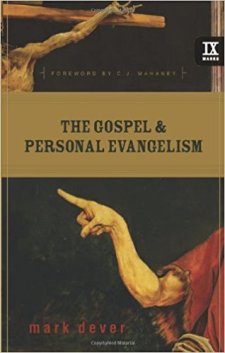 Most Christians don’t ever share the Gospel. If you’re a Christian, you should start planning to stop this failure. You should decide to do something about that, to change it. But, I really mean that you should plan to stop. Don’t plan for this the same way you “plan” to start a new workout program. We all know how that last time went, don’t we?
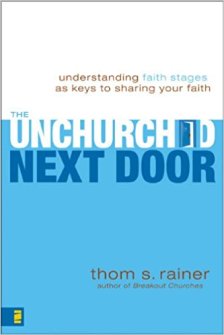 In 1969, the band Led Zeppelin released its first album. On that album, there was a little song entitled “Communication Breakdown.” It’s about a man who likes a girl, but can’t bring himself to actually speak to her. Now, as every married man knows, if you’re too terrified to ever speak to a pretty girl, then you have a potentially fatal problem . . .
 If you’re a Christian, I predict one of these two scenarios probably describes your experience with evangelism:
 The Eccentric Fundamentalist